

It’s 3:00 AM, and the persistent cough that started as a minor tickle is now keeping the entire household awake. You’re likely staring at the ceiling, wondering if this is a simple cold or if it’s time to worry about complications like pneumonia. It’s common to feel anxious when you can’t tell the difference between a standard virus and something requiring professional upper respiratory infection treatment.
We understand how exhausting it is to manage these symptoms while trying to decide if a medical consultation is necessary. That’s why we’ve developed this comprehensive guide to help you find fast relief and gain peace of mind. You’ll learn how to effectively manage your recovery at home and identify the exact moment you need professional intervention.
We’ll cover the latest 2026 clinical guidelines regarding antibiotic use, provide a clear checklist for when to seek an urgent care evaluation, and offer insights into distinguishing between the flu, COVID-19, and other common respiratory illnesses. Our goal is to provide the disciplined, expert information you need to move from confusion to a steady, confident recovery.
Key Takeaways
- Understand that URIs encompass several conditions, including the common cold and sinusitis, which primarily affect the nose, throat, and sinuses.
- Learn how to manage symptoms effectively using over-the-counter options as a core part of your upper respiratory infection treatment plan.
- Identify the “Testing Gap” to understand why professional diagnostics are necessary to distinguish between viral infections and conditions like strep throat.
- Recognize critical “Red Flag” symptoms and the 10-day rule that indicate when it’s time to transition from home care to a medical evaluation.
- Access streamlined, walk-in care at our Clovis, Selma, and Fresno locations for a professional diagnosis without the long wait times of an emergency room.
What is an Upper Respiratory Infection (URI)?
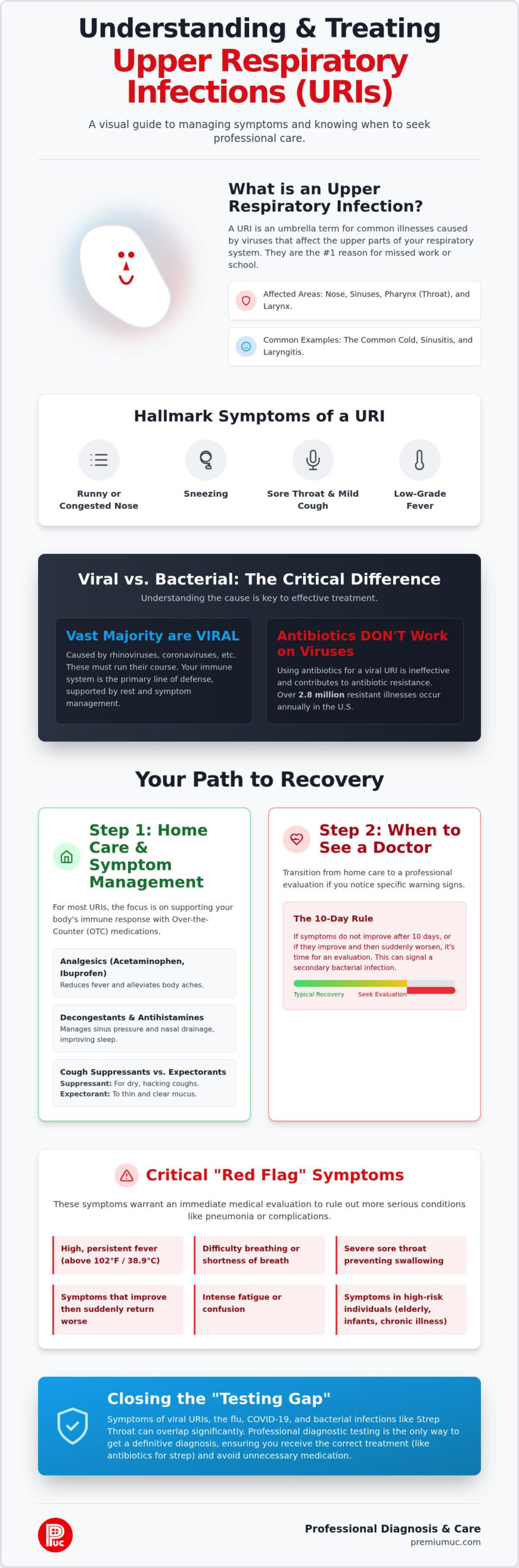
An Upper respiratory tract infection (URI) is an umbrella term for illnesses that target the upper parts of the respiratory system. This includes the nasal cavity, the pharynx, the sinuses, and the larynx. These infections are incredibly common. They’re the leading reason for outpatient medical visits and missed days at school or work. Common conditions categorized as URIs include the common cold, sinusitis, pharyngitis (sore throat), and laryngitis.
Viruses are responsible for the vast majority of these cases. Rhinoviruses, coronaviruses, and adenoviruses are the most frequent culprits. Because these illnesses are viral, they’re highly contagious. They spread through respiratory droplets produced when an infected person coughs, sneezes, or talks. These droplets can land on surfaces or be inhaled directly by others. Understanding this viral origin is the first step in determining the correct upper respiratory infection treatment path.
Common Symptoms of Respiratory Distress
Most patients experience a predictable set of hallmark signs. These include a runny or congested nose, sneezing, a sore throat, and a mild, persistent cough. You might also notice a low-grade fever. This is a natural immune response. It indicates your body is actively working to neutralize the pathogen. The timing of these symptoms provides a vital clue for diagnosis. A standard cold typically has a gradual onset, with symptoms worsening over 24 to 48 hours. The flu, however, often hits suddenly, causing intense fatigue and high fever within a very short window.
Viral vs. Bacterial URIs: Why it Matters
Distinguishing between viral and bacterial pathogens is essential for effective upper respiratory infection treatment. Antibiotics are only effective against bacteria. They’re used for conditions like Strep throat or specific bacterial sinus infections. They won’t help a viral cold. Most viral URIs simply need to run their course while you focus on supportive care and symptom management.
There’s also the risk of a secondary bacterial infection. This happens when bacteria colonize the respiratory tract after a virus has already weakened the immune system. If your symptoms seem to improve but then suddenly return with greater intensity, it’s often a sign that a secondary infection has taken hold. In these cases, a professional medical evaluation is necessary to determine if a prescription is required to prevent further complications.
Effective Treatment Options for URI Symptoms
The primary objective of upper respiratory infection treatment is to support the body while the immune system neutralizes the virus. Since most cases are self-limiting, medical professionals prioritize managing discomfort and preventing complications. This approach requires a disciplined use of medications based on specific symptoms rather than a “one size fits all” strategy. It’s about finding the right balance between rest and active symptom management.
We must address the “Antibiotic Myth.” Many patients feel an urgent need for a prescription, yet the 2026 ACE Clinical Guideline strongly advises against antibiotics for uncomplicated URIs. Overuse contributes to the 2.8 million antibiotic-resistant illnesses reported annually in the United States. However, clinical evaluation remains vital for high-risk individuals. The elderly, young children, and those with chronic conditions like asthma require professional oversight to ensure a standard virus doesn’t escalate into secondary pneumonia. For a detailed Upper Respiratory Infection Overview, clinical resources provide excellent foundational data on how these viruses behave and why they require specific care strategies.
OTC Medication Guide for Relief
Over-the-counter (OTC) options are the cornerstone of home-based recovery. Selecting the right class of medication depends on your primary complaints:
- Analgesics: Acetaminophen and ibuprofen are essential for reducing fevers and alleviating the dull body aches often associated with viral infections.
- Decongestants and Antihistamines: These help manage the pressure of swollen sinus tissues and control excessive nasal drainage. They’re particularly useful for improving sleep quality when congestion is at its peak.
- Cough Suppressants vs. Expectorants: Use a suppressant for a dry, hacking cough that prevents rest. Choose an expectorant, like guaifenesin, when you need to thin and clear thick mucus from the chest or throat.
The Role of Prescription Interventions
While home care is often sufficient, certain scenarios require prescription-strength upper respiratory infection treatment. Providers may prescribe corticosteroids to reduce severe inflammation in the throat or airways. If a bacterial cause is clinically suspected, such as in cases of acute pharyngotonsillitis, a targeted course of antibiotics is appropriate. For patients experiencing wheezing or reactive airway symptoms, a provider might recommend a rescue inhaler or a nebulizer treatment to restore clear breathing. If you’re unsure which path is right for your symptoms, a quick urgent care consultation can provide the professional clarity you need to recover safely.
Home Care vs. Professional Medical Evaluation
Most upper respiratory infections begin with a period of home observation. For healthy adults with mild symptoms, this initial phase is often sufficient. Validating the effectiveness of home care doesn’t diminish the importance of medical expertise; rather, it acknowledges that the body’s immune system is highly capable of managing minor viral loads. However, a critical transition point exists where home remedies reach their limit and professional upper respiratory infection treatment becomes necessary.
The primary challenge for patients is the “Testing Gap.” While you can monitor your temperature and cough at home, you cannot visually distinguish between viral pharyngitis and bacterial strep throat. Similarly, the early symptoms of the flu and COVID-19 overlap so significantly that self-diagnosis is effectively impossible. For those with underlying respiratory issues like asthma or COPD, the “wait and see” approach carries higher risks. Delaying a professional evaluation can allow minor inflammation to progress into significant respiratory distress or secondary pneumonia.
Evidence-Based Home Remedies
When symptoms are manageable, certain interventions provide measurable relief and support the recovery process:
- Hydration: Consuming water, herbal teas, and broth is essential. Proper hydration helps thin mucus secretions, making them easier to clear from the throat and sinuses.
- Environmental Adjustments: Using a cool-mist humidifier adds moisture to the air, which soothes irritated nasal passages. Saline nasal rinses are also highly effective for physically flushing out allergens and excess mucus.
- Natural Soothers: Clinical studies have shown that honey can be as effective as some OTC cough suppressants for adults. It provides a protective film over the throat, reducing the urge to cough during the night.
The Benefits of a Walk-In Consultation
Seeking a professional evaluation at an urgent care center provides access to tools that aren’t available in a home setting. A provider performs lung auscultation, using a stethoscope to listen for the rales or rhonchi that suggest fluid in the lungs or early-stage pneumonia. This physical exam, combined with rapid diagnostic testing for Flu, COVID-19, and Strep, ensures your upper respiratory infection treatment is based on data rather than guesswork.
Beyond clinical safety, there is a significant logistical and psychological benefit to a professional consultation. Receiving a clear diagnosis and a “clearance” note for work or school provides peace of mind. It ensures you aren’t returning to public spaces while contagious and gives you a structured recovery plan that prevents the need for an expensive emergency room visit later. For workers in the Central Valley who develop a respiratory illness following a workplace exposure, our team also conducts worker’s compensation evaluations to help document symptoms and support return-to-work planning.
When to Visit Urgent Care for a Respiratory Infection
Determining when to transition from home care to professional upper respiratory infection treatment often comes down to timing. Timing is everything. A primary guideline used by medical professionals is the “10-day rule.” Most viral infections peak within three to five days and resolve within a week. If your symptoms persist beyond 10 days without improvement, or if they seem to resolve only to return with greater intensity, it suggests a secondary bacterial infection. Don’t ignore these signals.
Urgent care serves as the most efficient bridge between home care and the emergency room. The ER is for emergencies. While the hospital is necessary for life-threatening events, an urgent care evaluation provides a faster, more affordable path for acute respiratory distress. We provide clarity. Choosing the right facility ensures you receive high-level care without the extended wait times common in hospital settings.
Local Environmental Factors in the Central Valley
The environmental landscape of the Central Valley significantly influences respiratory health. Residents of Fresno, Clovis, and Selma face unique challenges during recovery. During harvest seasons in Selma or high-pollen months in Clovis, the respiratory tract is already under stress. PM2.5 particles can penetrate deep into the lungs, causing persistent inflammation that makes it difficult for the body to clear a viral infection. This environmental load means a cough that might last five days elsewhere could linger for two weeks here. Professional guidance helps determine if your symptoms are purely viral or if local environmental triggers are complicating your upper respiratory infection treatment. Local experts are also better at distinguishing regional concerns like Valley Fever from a standard URI.
Symptom Red Flags for Urgent Care
Certain symptoms indicate that your body needs clinical support to manage the infection. You should seek an evaluation if you experience any of the following:
- High Fever: A temperature over 103°F or a fever that breaks and then returns.
- Respiratory Distress: Shortness of breath or wheezing that makes it difficult to speak in full sentences.
- Severe Dysphagia: Throat pain so intense that it prevents you from swallowing liquids or staying hydrated.
- Localized Pain: Intense pressure or pain in the chest or ears, which may indicate a secondary infection. Facial pressure and congestion that worsens after several days may also signal a developing sinus infection requiring professional sinusitis treatment.
If you are experiencing these red flags, visit us for a walk-in evaluation to receive a precise diagnosis and an effective recovery plan.
URI Treatment at Premium Urgent Care
Premium Urgent Care provides a disciplined and patient-centered environment for those seeking upper respiratory infection treatment across the Central Valley. With locations in Fresno, Clovis, and Selma, our facilities are designed to handle acute respiratory concerns with clinical precision. We recognize that when you’re struggling with a persistent cough or a painful sinus infection, you need reliable answers without the logistical hurdles of a traditional primary care appointment. Our streamlined walk-in process ensures that sick visits are prioritized, requiring no advance appointment to see a qualified provider.
This accessibility is balanced by a steadfast commitment to professional standards. Our team, led by Medical Director Dr. Erick Green, treats every patient with a calm and steady approach. We focus on providing a transparent flow of information, ensuring you understand your diagnosis and the logic behind your recovery plan. We act as a bridge between high-level medical environments and the personalized care you expect from a local expert.
Our Diagnostic and Testing Capabilities
Bridging the testing gap requires more than just a physical exam; it requires immediate access to clinical data. At our clinics, we utilize rapid diagnostic tools to provide answers during your visit. We offer rapid testing for Strep A, Influenza, and COVID-19, allowing us to tailor your upper respiratory infection treatment to the specific pathogen involved. This data-driven approach removes the guesswork from your recovery.
Beyond laboratory tests, our providers conduct thorough physical evaluations. This includes detailed examinations for sinus complaints and ear pain, which are common complications of a primary URI. We also manage mild asthma exacerbations and provide professional lung auscultation to ensure your symptoms haven’t progressed into something more serious. By having these tools on-site, we eliminate the need for external lab referrals, accelerating your path to relief. Our team is also equipped to handle acute injuries alongside illness-related visits, offering wound care in Fresno for lacerations and other injuries that may occur alongside or independently of a respiratory illness.
Why Choose Us for Your Respiratory Care?
Choosing the right facility is a matter of both efficiency and expertise. While hospital emergency rooms are vital for life-threatening situations, they often involve long wait times and high costs for non-emergency respiratory issues. Premium Urgent Care Clovis CA offers a faster, more affordable alternative. We specialize in acute care, providing the intensity of a high-level medical environment with the personalized touch of a community provider.
Our goal is to get you back to your daily routine in the Central Valley as quickly and safely as possible. By combining precise medical terminology with accessible care, we ensure you feel supported throughout your experience. Whether you’re a busy professional in Fresno or a family in Selma, you can rely on our disciplined approach to help you recover from respiratory illness with confidence. We take our responsibility to the community seriously, maintaining high performance standards for every patient who walks through our doors.
Take Control of Your Respiratory Recovery
Successful recovery from a respiratory illness requires a balance of patient-led home comfort and professional medical data. While hydration and rest form the foundation of a healthy immune response, they cannot replace the diagnostic precision of a clinical evaluation. Understanding the 10-day rule and identifying symptom red flags ensures that you don’t allow a standard virus to progress into a more serious complication.
When home remedies aren’t enough, finding the right upper respiratory infection treatment starts with accurate testing. Our clinics in Clovis, Selma, and Fresno provide rapid diagnostics for Flu, COVID-19, and Strep on-site. We specialize in expert care for non-emergency respiratory illnesses, offering a faster and more affordable alternative to the emergency room. Visit Premium Urgent Care for immediate respiratory relief and testing. Walk-ins are always welcome at all our locations, ensuring you get the answers you need without the wait.
You don’t have to navigate your recovery alone. Our team is here to provide the disciplined care and reassurance you need to get back to your daily life in the Central Valley with confidence.
Frequently Asked Questions
How long does a typical upper respiratory infection last?
A typical upper respiratory infection usually resolves within 7 to 10 days. Most patients experience the most intense symptoms between day three and day five of the illness. In the Central Valley, environmental factors like air quality can sometimes prolong a lingering cough. If your symptoms don’t improve after 10 days, visit our clinics in Fresno, Clovis, or Selma to ensure a secondary infection hasn’t developed.
Can I get antibiotics for a cough at urgent care?
Antibiotics are only prescribed if a provider determines the infection is bacterial. Since most coughs result from viral pathogens, antibiotics are often ineffective. Our providers follow the 2026 clinical guidelines to prevent antibiotic resistance while ensuring you receive appropriate upper respiratory infection treatment. We focus on managing your specific symptoms through a disciplined clinical evaluation to determine if a prescription is medically necessary for your recovery.
What is the fastest way to get rid of a respiratory infection?
There isn’t an instant cure for a viral infection; the fastest recovery involves supporting your immune system. This includes aggressive hydration, significant rest, and targeted over-the-counter medications to manage inflammation. Our providers in Clovis and Selma can recommend a specific upper respiratory infection treatment plan to alleviate discomfort while your body clears the virus. Managing your symptoms effectively prevents the exhaustion that often leads to longer recovery times.
Is an upper respiratory infection the same as a cold?
A common cold is a specific type of upper respiratory infection, but the terms aren’t identical. URI is a broad medical category that includes any infection of the nose, throat, or sinuses. This umbrella term covers conditions like sinusitis, laryngitis, and pharyngitis. While a cold is the most frequent URI, a professional evaluation at our Fresno facility helps determine which specific area of your respiratory tract is affected.
When is a sore throat serious enough for a strep test?
You should seek a strep test if your sore throat is accompanied by a high fever, visible white patches on the tonsils, or difficulty swallowing. These symptoms often indicate a bacterial infection rather than a standard virus. At Premium Urgent Care, we provide rapid Strep A testing on-site for residents in Clovis and Selma. Getting an accurate diagnosis quickly ensures you start the correct treatment and avoid spreading the infection.
Should I go to the ER or Urgent Care for a high fever?
Most high fevers can be safely evaluated at an urgent care center rather than an emergency room. If your fever is under 103°F and you aren’t experiencing chest pain or severe shortness of breath, our walk-in clinics in Fresno and Selma offer a faster, more affordable evaluation. However, you should choose the ER for life-threatening symptoms, such as seizures, extreme confusion, or a fever that doesn’t respond to any medication.
Are upper respiratory infections contagious?
Yes, these infections are highly contagious and spread through respiratory droplets when an infected person sneezes, coughs, or speaks. In community settings across the Central Valley, close contact in offices and schools facilitates rapid transmission. We recommend frequent handwashing and staying home until you’ve been fever-free for at least 24 hours. Our providers can provide the necessary medical clearance for your return to work or school in Clovis.
How can I tell the difference between a cold and the flu?
The primary difference is the speed and intensity of the symptoms. A cold usually develops gradually over several days with mild congestion and a sore throat. In contrast, the flu often hits suddenly with a high fever, intense body aches, and extreme fatigue. Because these symptoms can overlap, the only definitive way to tell is through rapid diagnostic testing, which we offer at all our local Central Valley locations.