
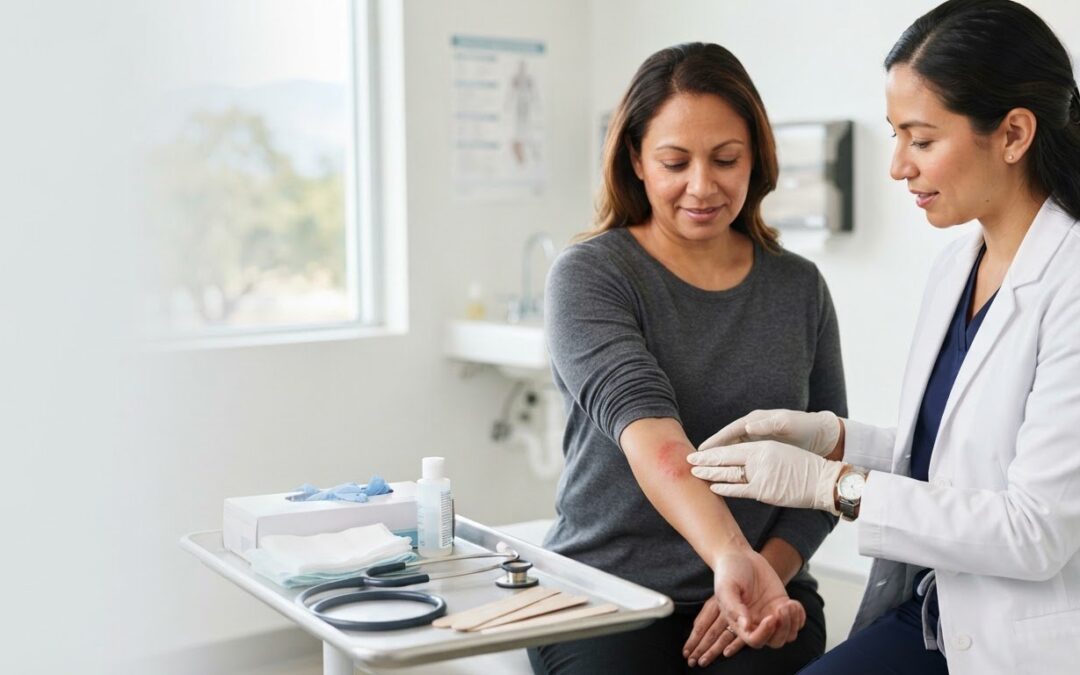
Could a red, itchy patch be simple irritation, or a skin infection that needs attention? Rashes and skin infections can look similar, so appearance alone may not reveal the cause. How symptoms develop and whether they’re getting worse can offer useful clues.
It’s understandable to feel uncertain, especially when a rash is painful, spreading, or affecting someone else in your household. This guide explains common examples without asking you to diagnose the problem yourself. You’ll learn which warning signs deserve prompt evaluation, how to reduce the chance of spreading a possible infection, and when urgent care may be appropriate for a non-emergency concern.
We’ll cover symptoms such as redness, warmth, swelling, drainage, and fever, along with practical next steps. A clinician can assess concerning or changing skin symptoms and help determine appropriate care. Premium Urgent Care provides evaluations for rashes and skin infections, including abscess incision and drainage. If symptoms are severe or rapidly worsening, seek urgent medical attention.
Key Takeaways
- A rash describes a visible skin change, not a specific diagnosis. Irritation, allergy, inflammation, or infection may cause similar-looking symptoms.
- Examples of rashes and skin infections can help you understand possibilities, but a clinician is needed to assess concerning or changing symptoms.
- Notice how symptoms change over time. Itch, pain, warmth, spreading, or drainage alone can’t confirm the cause.
- Know which changes may call for professional evaluation and which severe symptoms warrant emergency care.
- A clinician may ask about symptom timing, exposures, and health history, then examine the affected area to guide next steps.
Rashes and Skin Infections: What Skin Changes Can Mean
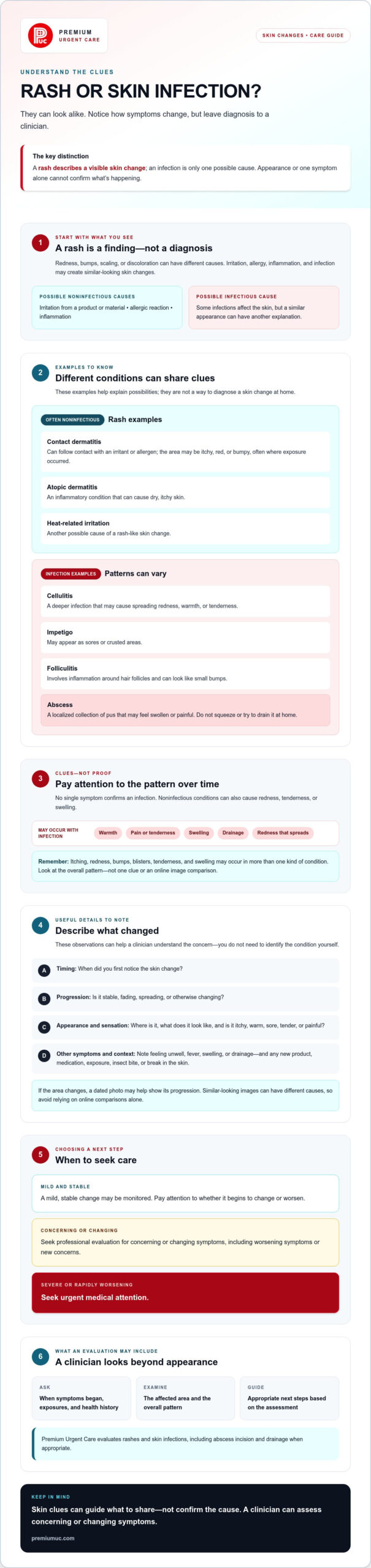
A rash is a visible change in the skin, such as redness, bumps, scaling, or discoloration. It describes how the skin looks or feels, not a diagnosis or a single disease. As the overview of Rashes explains, skin changes can have varied causes, and a clinician considers more than appearance when assessing them.
Possible causes include irritation from a product or material, an allergic reaction, inflammation, or infection. These causes can produce similar-looking changes, so a photo or one symptom may not be enough to identify what’s happening. With rashes and skin infections, changes over time and other symptoms can help guide next steps, but they can’t confirm the cause on their own.
How does a rash differ from a skin infection?
A rash is a finding; an infection is one possible explanation. Some skin infections cause warmth, pain, swelling, drainage, or redness that spreads. Noninfectious conditions can also cause redness, tenderness, or swelling. No single clue proves an infection is present, so a clinician may need to assess the area and the overall pattern.
Which details help describe a new skin change?
Note when the change began and whether it’s stable, fading, or spreading. Describe where it appears, what it looks like, and whether it itches, feels tender, or hurts. Also note other symptoms, such as feeling unwell or having a fever. These details can help a clinician understand the concern without requiring you to identify the condition yourself.
Relevant context may include a new soap, lotion, detergent, medication, or other exposure, as well as an insect bite or break in the skin. If the area changes, a dated photo may help show its progression. Avoid relying on online image comparisons alone. Similar appearances can have different causes and may call for different next steps.
- Timing: When did you first notice it?
- Progression: Is it spreading or changing?
- Sensation: Is it itchy, warm, sore, or tender?
- Other symptoms: Do you feel unwell, or notice drainage or swelling?
These observations can help you decide whether to monitor a mild, stable change or seek professional evaluation. Worsening symptoms or new concerns deserve closer attention. The next sections cover common examples and warning signs. Only an appropriate clinical evaluation can help clarify the cause.
Common Rash and Skin Infection Examples, From Irritation to Cellulitis
The examples below describe possible causes, but they aren’t a way to diagnose a skin change at home. Conditions can look different from person to person, and several may share symptoms. A clinician considers appearance alongside location, progression, and any other symptoms.
Examples of noninfectious rashes
Contact dermatitis can develop after skin touches an irritating substance or an allergen. The area may become itchy, red, or bumpy, often where the exposure occurred. Atopic dermatitis is an inflammatory condition that can cause dry, itchy skin. Heat-related irritation is another possibility. See this guide to heat rash treatment for more information.
Examples of skin infections
Infections can affect different parts of the skin. Cellulitis is a deeper infection that may cause spreading redness, warmth, or tenderness. Impetigo may appear as sores or crusted areas, while folliculitis involves inflammation around hair follicles and can look like small bumps. These patterns vary, and a description or image alone can’t establish the cause. MedlinePlus provides an overview of different Skin infections and their symptoms.
An abscess is a localized collection of pus that may feel swollen or painful. Don’t squeeze or try to drain it at home, since this can worsen irritation or cause further problems. A clinician can assess a concerning lump and determine whether professional care is appropriate. Premium Urgent Care evaluates rashes and skin infections, including abscess incision and drainage. For a non-emergency concern, learn more about rash and skin infection evaluations.
Why similar-looking conditions can be confusing
Redness, itching, bumps, and blisters can occur with both infectious and noninfectious conditions. Even a familiar-looking rash may have a different cause than expected. Changes over time, spreading, and other symptoms such as pain, warmth, or feeling unwell can help guide next steps, but no single clue confirms a diagnosis.
Treat these examples as context, not conclusions. If a skin change is worsening, spreading, or causing concern, seek clinical assessment rather than relying on a symptom list or photograph to identify it.
Rash or Skin Infection? Clues That Help, but Cannot Confirm, the Cause
Symptoms can offer useful context, but none can reliably distinguish a rash from an infection on its own. Itch, pain, warmth, or redness can occur for different reasons, and patterns can overlap. A red or itchy area isn’t automatically infected or contagious. The MedlinePlus overview of skin infections describes symptoms that can include skin changes, swelling, or pain, but a clinician must consider the full picture.
| Clue | What to observe |
|---|---|
| Itch | Note whether itching is present, mild, or interfering with daily activities. It can occur with irritation and other skin conditions, not just infection. |
| Pain or tenderness | Record whether the area hurts and whether discomfort is worsening or occurs when touched. |
| Warmth | Notice whether the skin feels warmer than nearby skin. Warmth alone doesn’t establish the cause. |
| Spread | Track whether redness or other changes are expanding, staying in place, or fading. |
| Drainage | Note any fluid or pus, and whether swelling is also present. |
| Timing | Consider when it started and how quickly it has changed. |
Which changes should prompt closer attention?
Seek clinical assessment if redness is expanding quickly, warmth is increasing, pain is worsening, or new drainage appears. Fever or feeling generally unwell alongside a skin change also deserves attention. Note whether symptoms are progressing, since a single snapshot may not show the full pattern. If you have a health condition that affects immunity, circulation, or healing, contact a clinician for guidance about how promptly to be assessed.
Can you tell whether a rash is contagious by looking?
No. Appearance alone can’t reliably show whether a condition is contagious. If you suspect an infection, avoid sharing towels and limit direct contact with the affected area until you’ve received appropriate guidance. This is a sensible precaution, not proof that the condition can spread.
For rashes and skin infections, the combination of symptoms and their progression matters more than one visual clue. If changes are widespread, worsening, or uncertain, seek professional advice rather than trying to confirm the cause from a photograph or symptom list.
When to Seek Care for a Rash or Possible Skin Infection
Where to seek help depends on how the skin change is progressing and how you feel overall. A mild, stable area without other symptoms may not need emergency care, but worsening symptoms should be assessed rather than watched indefinitely. If you have a health condition that affects your immune system, circulation, or ability to heal, ask a clinician for individualized advice sooner.
When might urgent care be appropriate?
Urgent care may be an option for a non-emergency rash or suspected infection that needs professional evaluation. Examples include localized redness that’s getting worse, increasing tenderness, or a possible abscess. A clinician can assess the area and advise on appropriate next steps. An evaluation doesn’t guarantee that a particular test or treatment will be needed or available.
Premium Urgent Care evaluates rashes and skin infections and offers abscess incision and drainage. If you have a concerning but non-emergency skin change, seek an urgent-care evaluation to discuss whether this setting is appropriate.
When should you seek emergency help?
Use emergency services for severe symptoms or rapid deterioration rather than waiting for a routine clinic assessment. Examples that warrant immediate attention can include confusion, fainting, difficulty breathing, or signs of severe illness. This clinic doesn’t provide 24/7 emergency care. If you’re unsure whether symptoms are an emergency, contact emergency services or a qualified clinician for guidance.
Seek prompt medical assessment if redness is spreading rapidly, pain is significant or worsening, drainage is concerning, or fever accompanies the skin change. A clinician can determine which symptoms require emergency care in your situation. Don’t delay seeking help if the condition is noticeably deteriorating, even if it looked less concerning earlier.
As you decide what to do, consider how the area has changed from the start, not just how it looks now. Note when symptoms began, how quickly they’re changing, and whether you feel unwell. This information can help a clinician guide next steps for rashes and skin infections without relying on appearance alone.
What to Expect When a Clinician Evaluates a Rash or Skin Infection
An evaluation starts with understanding how the skin change began and developed. A clinician may ask when you first noticed it, whether it has spread or changed, what symptoms you’ve experienced, and whether you’ve had relevant exposures, skin injuries, or new products. They may also ask about your health history, medicines, and allergies.
The clinician will examine the affected area and consider your description of its progression and any other symptoms. This helps assess the concern and decide whether further evaluation is appropriate. The process doesn’t guarantee a particular diagnosis, test, or treatment. For a possible abscess, Premium Urgent Care offers incision and drainage when clinically appropriate.
How can you prepare for a skin-symptom visit?
A few notes can make it easier to explain what’s changed. Before the visit, consider recording:
- When symptoms began and how they have changed
- Where the affected area is, and whether it has spread
- Possible exposures, such as a new skin product, or any recent injury
- Relevant medicines, allergies, and health conditions
If the appearance varies, dated photographs may help show how it has changed since you first noticed it. They’re useful context, not a substitute for an in-person assessment.
How does urgent care fit into skin and wound concerns?
Urgent care can be a setting for assessing non-emergency skin concerns. The clinician considers your symptoms and examination findings to determine suitable next steps. Premium Urgent Care provides evaluations for rashes and skin infections, but appropriate care depends on the individual concern. For cuts, wounds, and related concerns, see the guide to wound care in Fresno.
For a non-emergency concern, Premium Urgent Care serves patients in Clovis, Selma, and Fresno. Contact the clinic for current location and visit information: contact Premium Urgent Care.
Take the Next Step With Confidence
Rashes and skin infections can share visible signs, so appearance alone may not reveal the cause. Pay attention to how symptoms change, note any accompanying concerns, and seek professional guidance for worsening or concerning skin changes. Severe or rapidly deteriorating symptoms call for emergency services.
For non-emergency concerns, Premium Urgent Care offers evaluations for rashes and skin infections, as well as abscess incision and drainage when clinically appropriate. An evaluation can help a clinician assess the affected area and determine suitable next steps, without guaranteeing a specific diagnosis or treatment.
If you’re unsure whether an urgent-care visit is appropriate, contact Premium Urgent Care for current visit information. The clinic serves Clovis, Selma, and Fresno. Share clear observations about how the skin change has developed so the clinician can assess your concern.
Frequently Asked Questions
What are common examples of rashes and skin infections?
Common noninfectious rashes include contact dermatitis, which can follow exposure to an irritant or allergen, and atopic dermatitis, an inflammatory condition that may cause dry, itchy skin. Examples of skin infections include cellulitis, impetigo, folliculitis, and abscesses. Their appearance can vary and overlap, so these examples can’t confirm what’s causing a particular skin change. Seek clinical guidance if symptoms are worsening or concerning.
How can you tell whether a rash is infected?
You can’t reliably confirm an infection by looking at a rash or checking one symptom. Increasing warmth, tenderness, swelling, spreading redness, or drainage may be reasons to seek clinical assessment, especially if symptoms are worsening or you also have a fever or feel unwell. These signs can have different causes, so a clinician considers the affected area, how it has changed, and your other symptoms.
Can a skin infection start as a rash?
Yes, some skin infections may first appear as a visible change such as redness, bumps, or a tender area. Appearance alone doesn’t establish that an infection is present, and noninfectious conditions can look similar. Pay attention to whether the area is spreading, becoming more painful or warm, or developing drainage. Seek assessment if symptoms worsen or you’re concerned about the change.
Are rashes and skin infections contagious?
Some infections can spread, but not every rash or skin infection is contagious. Irritation and inflammatory conditions, for example, aren’t spread through contact with another person. You can’t reliably determine contagiousness by appearance alone. If infection is possible, avoid sharing towels and limit direct contact with the affected area until you receive guidance. A clinician can help assess uncertain, worsening, or widespread symptoms.
When should you go to urgent care for a rash?
Consider urgent care for a non-emergency rash that’s worsening, becoming tender, or raising concern about a possible infection or abscess. Seek prompt medical assessment for rapidly spreading redness, significant or increasing pain, concerning drainage, or fever. If symptoms are severe or rapidly deteriorating, use emergency services instead. People with health conditions that affect immunity, circulation, or healing should ask a clinician for individualized advice sooner.
What happens if a skin infection is left untreated?
An untreated skin infection may worsen or spread, and the consequences depend on its cause, location, and your health. Increasing redness, pain, warmth, swelling, drainage, fever, or feeling unwell can signal a need for prompt medical assessment. Don’t try to diagnose or treat a suspected infection based only on appearance. A clinician can evaluate the area and advise on appropriate next steps.
Can urgent care evaluate an abscess or skin infection?
Yes. Urgent care can be an option for evaluation of a non-emergency skin infection or possible abscess. Premium Urgent Care offers rash and skin infection evaluations and abscess incision and drainage when clinically appropriate. The assessment helps determine suitable next steps, but doesn’t guarantee a particular test or treatment. The clinic serves patients in Clovis, Selma, and Fresno. Check current visit information before going.