

The first step in heat rash treatment is usually to cool the skin and keep it dry. This can ease prickling and itching while reducing the heat and moisture that contribute to irritation. Heavy or greasy products may hold moisture against the skin, so a simple, gentle approach is often best.
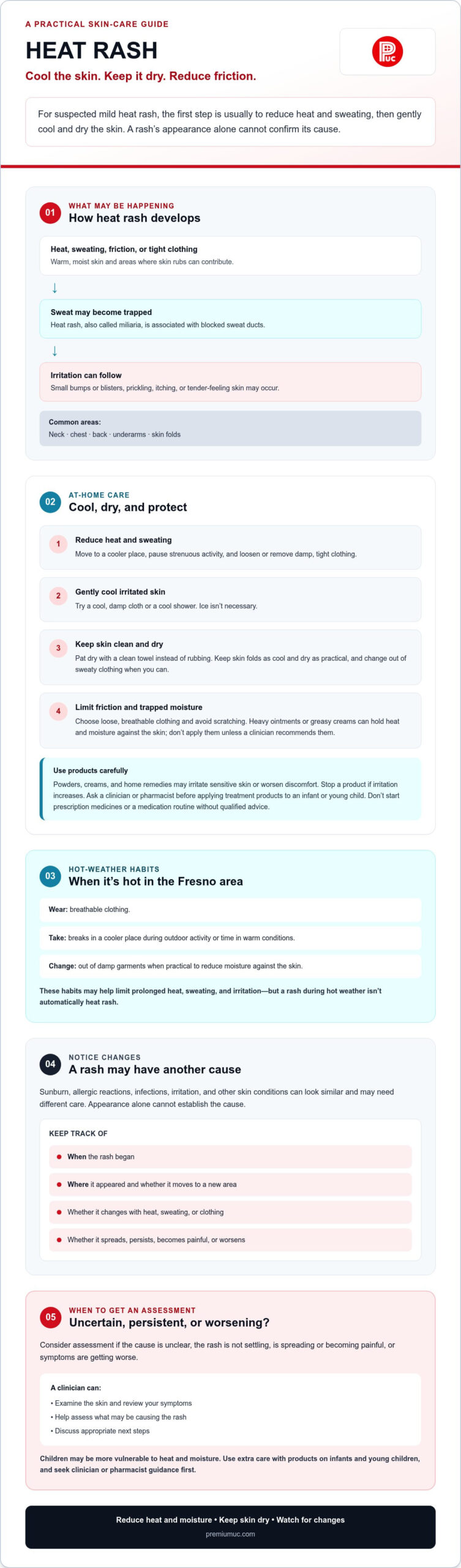
Heat rash often appears where sweat and friction collect, but other skin conditions can look similar. It can also affect children, whose skin may be more vulnerable to heat and moisture. This guide covers common symptoms and triggers, practical ways to cool and soothe irritated skin at home, and precautions to consider when caring for a child.
You’ll also learn when a persistent or worsening rash should be assessed by a clinician, and which accompanying symptoms may signal a more serious heat-related illness. If the cause isn’t clear or symptoms are getting worse, a clinician can evaluate the rash and help determine the next step.
Key Takeaways
- Blocked sweat ducts can cause prickling, itching, and bumps in areas prone to heat and friction.
- For suspected heat rash, reduce heat and sweating, keep the skin dry, and choose loose, breathable clothing.
- During Fresno-area hot weather, take breaks in cooler places and change out of damp clothing when practical to limit irritation.
- Other skin conditions can look similar, so note whether a rash spreads, persists, hurts, or worsens.
- A clinician can assess an uncertain or worsening rash, examine the skin, review your symptoms, and discuss next steps.
What Does Heat Rash Look Like, and Why Does It Develop?
Heat rash, also called miliaria, is skin irritation associated with blocked sweat ducts. When sweat becomes trapped beneath the skin, it can cause small bumps or blisters and an uncomfortable prickling or itchy sensation. The affected skin may feel irritated or tender, especially after sweating. Its appearance varies, so no single pattern confirms heat rash in every person.
Miliaria, commonly known as heat rash, can occur in different forms. Appearance alone can’t establish the cause of a rash. Irritation, infection, an allergic reaction, or another skin condition may look similar and may need different care. Note when the rash began, where it appeared, and whether it changes with heat, sweating, or clothing. This information can help a clinician assess it if the cause is uncertain.
Common Heat Rash Symptoms and Patterns
Heat rash often appears as small bumps or irritated patches where sweat collects or skin rubs together, such as the neck, chest, back, underarms, or skin folds. Some people notice itching, while others mainly feel prickling or discomfort. The rash can look different from person to person, and its appearance may change over time.
Track when the rash began, where it is, and how it changes. Note whether it is spreading, becoming painful, or appearing in a new area. This timeline gives useful context, but it can’t replace an assessment if symptoms persist or worsen.
Why Hot Weather Can Trigger Skin Irritation
In hot weather, the body sweats to cool itself. If sweat can’t reach the skin’s surface and evaporate easily, it may become trapped and irritate the surrounding skin. Prolonged sweating, tight clothing, friction, and warm, moist skin folds can contribute. These conditions make heat rash more likely, but a rash that appears during hot weather isn’t automatically caused by heat.
Fresno and the surrounding Central Valley can have very hot days. During outdoor activity or time in warm conditions, wear breathable clothing and take breaks in a cooler place to limit prolonged heat and sweating. Changing out of damp garments when practical can also reduce moisture against the skin. These habits may help keep skin comfortable, but they don’t confirm or treat every rash. If the cause is unclear, effective heat rash treatment depends on identifying what is causing the rash.
Heat Rash Treatment at Home: Cool, Dry, and Protect the Skin
For mild irritation that may be heat rash, start by reducing the conditions that keep sweat against the skin. Move to a cooler place, pause strenuous activity, and loosen or remove damp, tight clothing. Gently cool the affected area, then keep it clean and dry. These steps are the foundation of heat rash treatment at home, but they can’t confirm that a rash is caused by heat.
Simple Ways to Soothe Irritated Skin
Try a cool, damp cloth or a cool shower to settle uncomfortable skin. Pat the area dry with a clean towel rather than rubbing, which may add friction. Choose loose, breathable clothing and take breaks from hot environments and activities that increase sweating while symptoms settle. Ice isn’t necessary. For practical guidance on cooling the skin and responding to heat-related symptoms, see the CDC’s advice on first aid for heat rash.
Keep skin folds as cool and dry as practical, and change out of sweaty clothing when you can. Avoid scratching, since broken or irritated skin may become more uncomfortable. Heavy ointments and greasy creams can hold heat and moisture against the skin, so don’t apply them unless a clinician recommends them.
Products and Remedies to Use Carefully
Powders, creams, and home remedies aren’t suitable for every person or every rash. Some may irritate sensitive skin or worsen discomfort, particularly if they trap moisture. If you try a product, use it cautiously and stop if the skin becomes more irritated. Ask a clinician or pharmacist for guidance before applying treatment products to an infant or young child.
Don’t start prescription medicines or a specific medication routine without advice from a qualified clinician. Seek an assessment if the rash is getting worse, becoming painful, not settling, or you’re unsure what’s causing it. A clinician can examine the skin and help determine appropriate next steps. For a non-emergency rash concern, check current details before arranging a rash evaluation at Premium Urgent Care.
Is It Heat Rash or Something Else? Signs That Need Attention
A rash that appears after sweating may be heat rash, but timing alone can’t confirm its cause. Sunburn, allergic reactions, infections, and other skin conditions can look similar and may need different care. Heat rash often involves small bumps in areas that become hot or damp, while sunburn commonly causes tender, red skin on sun-exposed areas. Allergic reactions may appear more widely. These clues aren’t a diagnosis. For a clinical overview, see the Mayo Clinic’s information on symptoms and causes of heat rash.
When a Rash May Need a Clinician’s Assessment
Consider clinical assessment if you’re unsure what caused the rash, it is spreading or worsening, or it isn’t improving after a few days. Seek prompt advice if it becomes significantly painful or you notice increasing warmth, swelling, drainage or pus, or fever. These changes can indicate infection or another issue that needs assessment rather than continued home care.
The next step can depend on the person’s age, medical history, and where the rash is located. Be especially cautious with a young child, a rash near the eyes, or symptoms that are changing quickly. A clinician can review when the rash began, examine the skin, and advise whether a different approach to heat rash treatment or further care is appropriate. If you’re uncertain whether you’re dealing with simple irritation or something more serious, learning about rashes and skin infections, common examples, and when to seek care can help you recognize warning signs.
Heat Illness Warning Signs Are Different
A rash is a skin concern. Confusion, fainting, or other serious symptoms during heat exposure may signal a broader heat-related illness. Fever, dizziness, or nausea alongside heat exposure also deserves attention. Don’t assume these symptoms are part of a mild rash. Move the person away from heat while arranging appropriate help, and don’t delay if their condition is deteriorating.
Call 911 for suspected heat stroke, confusion, fainting, or another life-threatening emergency. Urgent care is not a substitute for emergency services in a severe emergency. For a worsening or uncertain rash without emergency symptoms, a clinician can assess the skin and guide next steps.
How to Prevent Heat Rash During Fresno-Area Hot Weather
Hot Central Valley days can make it harder to avoid prolonged sweating, especially during outdoor work, exercise, or errands. Prevention focuses on reducing heat and moisture on the skin where practical. No routine can prevent every rash, and a new or persistent rash may have a cause other than heat.
Reduce Heat and Moisture on the Skin
Plan cooling breaks during time spent outdoors. Use shade, air conditioning, or another cooler indoor space when available, and adjust activity to your comfort and heat tolerance. Check local weather advisories before planning strenuous outdoor activity, and consider moving it to a cooler part of the day when conditions allow. If you begin to feel unwell in the heat, stop and move somewhere cooler.
Clothing choices can affect how much heat and moisture stay against the skin. Choose lightweight, breathable fabrics and avoid unnecessarily tight garments that rub or hold sweat close to the body. During exercise or outdoor work, take breaks to cool down rather than pushing through rising discomfort.
Build a Practical Warm-Weather Routine
After sweating, change out of damp clothing when practical. Gently dry areas where moisture collects, including skin folds, and keep them clean without vigorous scrubbing. Rubbing can irritate already sensitive skin. These small habits may reduce lingering moisture, but they don’t guarantee that heat rash won’t develop.
Caregivers can check whether infants and children seem too warm and look for irritation in areas that stay covered or damp. Dress them in light, breathable layers suited to the conditions, and avoid bundling them unnecessarily. If a child develops a rash, or you’re unsure whether a product is appropriate, ask a clinician rather than assuming it’s heat rash.
Even with careful planning, skin irritation can occur during hot weather. Home prevention steps aren’t a substitute for assessment if a rash is worsening, persistent, or difficult to identify. Premium Urgent Care evaluates rashes and skin infections in Clovis, Selma, and Fresno. Arrange a rash evaluation if you need a clinician to assess the concern. Check current location and availability details before visiting.
When to Seek Heat Rash Treatment at a Local Urgent Care Clinic
Home care may be reasonable for mild irritation, but seek an assessment if the rash is getting worse, isn’t improving, becomes painful, or has an uncertain cause. A clinician can check whether the skin changes are consistent with heat rash or may need a different approach. An evaluation can be especially useful if symptoms are changing despite efforts to cool and protect the skin.
At a visit, the clinician will generally ask about your symptoms and examine the affected area. They may ask when the rash started, what might have triggered it, and whether you have other symptoms before explaining appropriate next steps. The purpose is to clarify what may be causing the rash and whether further care is needed, not to assume every rash requires the same heat rash treatment.
What to Share During a Rash Evaluation
A few details can make the conversation more useful. Before the visit, note when the rash began, where it appeared, and whether it has spread or changed. Think about recent heat exposure, sweating, new skin products, or new medicines. Mention accompanying symptoms such as fever, pain, swelling, or drainage, and share relevant health history. If you use medicines, bring a list or the product details, including any creams applied to the rash.
Choosing the Right Level of Care
Urgent care may be an option for a concerning but non-emergency rash that needs evaluation. Premium Urgent Care provides walk-in urgent care consultations and assesses rashes and skin infections in Clovis, Selma, and Fresno. Check current location details, hours, and walk-in availability before visiting. A clinician can review your symptoms, examine the skin, and guide you on what to do next.
Severe symptoms call for a different response. Confusion, fainting, suspected heat stroke, or another life-threatening emergency should not wait for an urgent care visit. Call 911 or your local emergency services. Urgent care is not a substitute for emergency services in these situations.
If you have a non-emergency rash concern that is persistent, worsening, or difficult to identify, find local urgent care information and check current visit details.
Take the Next Step Toward More Comfortable Skin
For mild irritation that may be heat rash, focus on cooling the skin, reducing sweating, and keeping the affected area clean and dry. These steps can ease discomfort, but they can’t confirm the cause. Since other skin conditions may look similar, watch for a rash that persists, spreads, becomes painful, or worsens.
Safe heat rash treatment starts with simple care and knowing when to seek an assessment. A clinician can examine an uncertain or worsening rash and advise you on appropriate next steps. Confusion, fainting, or suspected heat stroke requires emergency help, not an urgent care visit.
Premium Urgent Care evaluates rashes and skin infections in Clovis, Selma, and Fresno. If a non-emergency rash needs evaluation, find local urgent care information and verify current location and hours before visiting. With practical skin care and timely guidance when needed, you can take an informed approach to irritation in hot weather.
Frequently Asked Questions
How do you treat heat rash at home?
Cool the skin and keep it dry. Move to a cooler place, pause activities that cause sweating, and use a cool shower or damp cloth. Pat the area dry, wear loose, breathable clothing, and avoid scratching or applying heavy, greasy products that may trap moisture. If the rash worsens, becomes painful, or doesn’t improve, seek clinical advice. For infants and young children, check with a clinician before using treatment products.
How long does heat rash usually last?
Mild heat rash often settles within a few days after the skin is kept cool and dry and sweating is reduced. The time can vary. A rash that doesn’t improve within three to four days, persists, or worsens should be assessed by a clinician. Seek advice sooner if you notice increasing pain, swelling, warmth, pus, or fever, as these symptoms may point to another problem or infection.
Can heat rash become infected?
Heat rash itself isn’t an infection, but irritated or scratched skin can become infected. Watch for increasing pain, warmth, swelling, spreading redness, drainage or pus, or fever. These signs need clinical assessment rather than continued scratching or trying additional products at home. Keep the area gently clean and avoid rubbing it. If symptoms are worsening quickly or you feel seriously unwell, seek prompt medical help.
Is heat rash contagious?
No. Heat rash isn’t contagious and doesn’t spread from person to person. It develops when sweat becomes trapped and irritates the skin, often in hot conditions or areas where moisture and friction collect. However, not every rash that appears in warm weather is heat rash. If you’re unsure of the cause, or the rash spreads, persists, or becomes painful, a clinician can assess it and advise on appropriate care.
When should I see a doctor for heat rash?
Seek clinical advice if the rash is worsening, persistent, painful, spreading, difficult to identify, or doesn’t improve after a few days of cooling and drying the skin. Fever, increasing warmth or swelling, and pus also warrant assessment. Check current location details and hours before visiting. For confusion, fainting, or suspected heat stroke, call 911.
What is the fastest way to get rid of heat rash?
The most helpful first step is to remove the heat and moisture contributing to irritation. Move somewhere cooler, stop strenuous activity, gently cool the skin, and wear loose, breathable clothing. Keep the area clean and dry, and avoid heavy ointments that may hold in moisture. There’s no guaranteed instant fix. If the rash worsens or doesn’t begin to improve after a few days, seek clinical advice to confirm the cause.
Should I use hydrocortisone or calamine for heat rash?
Calamine may soothe discomfort, while 1% hydrocortisone may help with itching and inflammation in some cases. These products aren’t right for every rash or every person. Don’t apply hydrocortisone to the face or under a diaper without a doctor’s advice, and check with a clinician before using treatment products on an infant or young child. Stop using any product that irritates the skin and ask a clinician or pharmacist for guidance.