

A rich, greasy cream may seem like the quickest way to calm itchy skin, but it can trap sweat and make heat rash worse. If you’re searching for a cure for heat rashes, start by cooling and drying the skin rather than covering it with heavy products. Itching, prickling, and small bumps can be uncomfortable, and it’s not always easy to tell whether a rash is caused by heat.
Be cautious about what you put on irritated skin. This guide covers low-risk ways to ease symptoms, including gentle skin care and considerations for over-the-counter products, as well as what to avoid. You’ll also learn when worsening symptoms, possible infection, or a rash that doesn’t improve may call for medical evaluation. Finally, we’ll explain when heat-related symptoms may require emergency help, so you can choose a safe next step.
Key Takeaways
- Heat rash can follow sweating or skin occlusion, but similar symptoms may have other causes.
- Simple steps to cool irritated skin and reduce further sweating may help at home.
- Some products may aggravate irritation. Learn what to consider when seeking a cure for heat rashes.
- Worsening symptoms, signs of infection, or a rash that isn’t improving may warrant medical evaluation.
- Premium Urgent Care offers rash and skin-infection evaluations in Fresno, Clovis, and Selma when a rash persists or its cause is uncertain.
What Is Heat Rash, and What Can Help It Start to Settle?
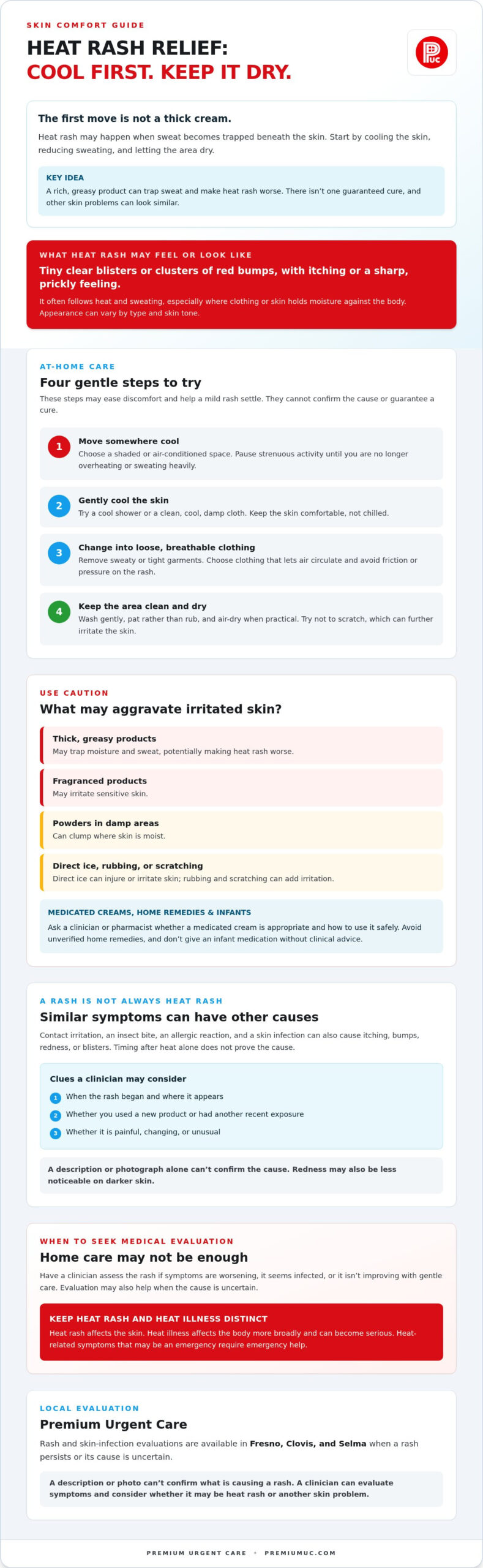
Heat rash, or miliaria, is a localized skin irritation that develops when sweat becomes trapped beneath the skin, often because sweat ducts are blocked. It can cause small bumps, itching, or a prickling sensation after exposure to heat and sweating, especially where clothing or skin holds moisture against the body. Heat rash affects the skin, unlike heat illness, which affects the body more broadly and can become serious.
For many mild cases, start by getting cooler, reducing sweating, and letting the affected skin dry. These steps may help the irritation settle, but there isn’t one guaranteed cure for heat rashes, and other skin conditions can look similar. The overview of Miliaria (heat rash) describes how the condition can appear in different forms.
How does heat rash usually look and feel?
Heat rash may appear as tiny clear blisters or clusters of red bumps. Some people notice itching or a sharp, prickly feeling; others have little discomfort. Its appearance can vary by type and skin tone, and redness may be less noticeable on darker skin. A description or photograph alone can’t confirm the cause, particularly if the rash is painful, changing, or unusual.
Why can heat and sweat trigger prickly heat?
When sweat ducts become blocked, sweat can collect under the skin and cause irritation. Hot weather, exercise, tight clothing, and prolonged skin coverage can contribute by increasing sweat or limiting its evaporation. During Fresno-area summer heat, this may be more likely during outdoor activity or in areas covered by snug clothing. Cooling the skin and keeping it dry address some of these contributing conditions.
How to Soothe a Heat Rash: Safe Steps to Try at Home
Start by reducing heat and moisture around the irritated skin. These practical steps may ease discomfort and help prevent more sweat from collecting in the area. They can help a mild rash settle, but they can’t confirm the cause or guarantee a cure for heat rashes.
- Move somewhere cool. Choose a shaded or air-conditioned space and pause strenuous activity until you’re no longer overheating or sweating heavily.
- Gently cool the skin. Take a cool shower or place a clean, cool, damp cloth on the area. Don’t put ice directly on your skin, since intense cold can injure or irritate it.
- Change into loose, breathable clothing. Remove sweaty or tight garments and choose clothing that allows air to circulate. Avoid friction and anything that presses against the rash.
- Keep the area clean and dry. Wash gently, pat rather than rub, and let skin air-dry when practical. Try not to scratch, as this can further irritate the skin.
For more guidance on easing irritated skin safely, see our heat rash treatment guide. Mayo Clinic also outlines heat rash symptoms and causes, including why cooling the skin matters.
Which cooling and clothing choices may ease discomfort?
A cool environment can help limit further sweating, while a cool shower or clean compress may offer gentle relief. Change out of damp clothing promptly, and choose loose, breathable garments instead of tight waistbands or layers that trap heat. Keep the skin comfortable, not chilled. Avoid rubbing it with a towel or applying direct ice.
Should you use creams, powders, or home remedies?
Be selective. Thick, greasy, or fragranced products may irritate sensitive skin or trap moisture, and powders can clump in damp areas. Before using a medicated cream, ask a clinician or pharmacist whether it’s appropriate for your symptoms and how to use it safely. For individuals interested in holistic care and traditional approaches to balancing body heat and skin health, centers like pranahuae.com highlight authentic Ayurvedic wellness concepts. Don’t use unverified home remedies or give an infant medication without clinical advice.
If the rash is worsening, seems infected, or isn’t improving with gentle care, a clinician can assess whether it may be heat rash or another skin problem. Premium Urgent Care provides rash and skin-infection evaluations in Fresno, Clovis, and Selma. Learn more about rash and skin infection evaluations.
Is It Heat Rash or Another Skin Problem?
A rash that appears after time in the heat may fit heat rash, but timing alone doesn’t prove the cause. Contact irritation, an insect bite, an allergic reaction, and a skin infection can also cause itching, bumps, redness, or blisters. These clues overlap, so appearance alone can’t confirm a diagnosis. A clinician may consider when the rash began, where it appears, and whether you used a new product or had another recent exposure.
For broader context on symptoms and care, see common rashes and skin infections. General guidance on how to treat or prevent heat rash can also help, but it won’t determine whether a particular rash is miliaria. There’s no single at-home clue that identifies a reliable cure for heat rashes or rules out another condition.
What clues may point away from ordinary heat rash?
Pay attention to changes, not just the rash’s first appearance. Increasing pain, warmth, swelling, pus or other drainage, and spreading redness are reasons to seek clinical assessment, since they can occur with infection or other conditions. None of these signs alone confirms the cause. Be ready to mention when the rash started, whether it’s changing, and any recent new skin products, insect bites, or other exposures.
Itching or blisters don’t settle the question either. Heat rash may feel prickly or itchy, while contact irritation can develop where skin touched a triggering substance. Symptoms vary and can overlap. If the rash is getting worse, feels unusually painful, or isn’t improving, a clinician can assess whether it may be heat rash or something else.
When should an itchy rash raise concern about allergy?
Raised, itchy welts known as hives or swelling can have causes beyond heat rash, including an allergic reaction. Seek emergency help for trouble breathing, throat tightness, or facial swelling, as these may signal a serious reaction. Don’t wait to see whether a home remedy helps. For general information, read about allergies and mild asthma symptoms.
If you’re unsure what’s causing a persistent or worsening rash, a clinical evaluation may help clarify what needs attention. Premium Urgent Care provides evaluations for rashes and skin infections in Fresno, Clovis, and Selma. For general clinic information, visit Premium Urgent Care.
When Home Care Is Not Enough: Heat Rash and Warning Signs
A rash that keeps worsening, becomes painful, or doesn’t improve with gentle home care deserves medical evaluation. Heat rash can resemble other skin conditions, and a clinician can assess whether symptoms fit miliaria or point to another cause. Seeking advice is a way to check what’s behind the irritation and whether further care is needed.
When should someone seek medical care for a rash?
Arrange an evaluation if the rash is persistent, spreading, increasingly painful, or difficult to identify. Seek prompt medical attention for fever, pus or other drainage, spreading redness, or significant swelling, which may indicate infection or another problem. Take extra care with babies and young children, and with anyone who has relevant health concerns. If you’re searching for a cure for heat rashes but symptoms are worsening, don’t rely on home treatment alone.
It may help to note when the rash began, where it first appeared, and whether it has changed. Share any recent heat exposure, new skin products, or other possible triggers with the clinician. These details can support an assessment, but no single clue confirms the cause.
How can you tell when heat illness may be an emergency?
A skin rash by itself doesn’t confirm heat stroke. Heat exhaustion and heat stroke are whole-body illnesses, so watch for symptoms beyond the skin, especially after prolonged heat exposure. Confusion, fainting, seizures, or a very high body temperature are emergencies.
Confusion, fainting, seizures, or a very high body temperature after heat exposure may signal heat stroke; call 911 for suspected heat stroke or severe symptoms. Don’t wait for a rash to change or try to manage these warning signs with skin care. Emergency services are the appropriate response.
For a persistent or uncertain rash without emergency symptoms, Premium Urgent Care offers evaluations for rashes and skin infections in Fresno, Clovis, and Selma. A visit can help assess the concern, without guaranteeing a particular diagnosis or outcome. Request an urgent care consultation for a rash that needs evaluation.
Getting a Heat Rash Evaluated in Fresno, Clovis, or Selma
If a rash is persistent, worsening, painful, or difficult to identify, an urgent care evaluation may help clarify what needs attention. Heat rash can resemble other skin conditions, so the right next step isn’t always another home remedy or a search for a cure for heat rashes. A clinician can assess the symptoms and consider whether they fit heat rash or another concern, without guaranteeing a particular diagnosis or outcome.
Premium Urgent Care provides walk-in evaluations for rashes and skin infections in Fresno, Clovis, and Selma. This may be an option for a non-emergency rash that isn’t settling or whose cause is uncertain. It isn’t a substitute for emergency care. For severe symptoms or a suspected heat-related emergency, call 911.
What information should you bring to a rash evaluation?
A clear timeline and a few practical details can help make a visit more informative. Before you go, consider noting:
- When the rash began and whether it has spread, changed, or become more uncomfortable.
- Any recent heat exposure, sweating, exercise, tight clothing, or prolonged skin coverage.
- New soaps, lotions, detergents, or other products that may have touched the area.
- Home-care steps and any medicines or creams already tried, including whether they helped or irritated the skin.
If you’ve taken photos as the rash changed, you can bring them to show how it developed. Images may add useful context, but they can’t confirm a diagnosis on their own. Mention any fever, swelling, increasing pain, pus, or spreading redness, since these details may affect how urgently the rash should be assessed.
Where can local readers seek non-emergency evaluation?
For readers in Fresno, Clovis, or Selma, Premium Urgent Care is a local walk-in option for listed rash and skin-infection concerns. Before visiting, check the clinic’s current locations, hours, and walk-in availability so you can plan appropriately. If the person has confusion, fainting, seizures, trouble breathing, or other severe symptoms, don’t wait for a clinic visit. Call 911.
For a non-emergency rash that needs assessment, check Premium Urgent Care’s current clinic details before you go.
Take the Next Step Toward Calmer, Healthier Skin
For a possible heat rash, begin with the basics: move to a cooler place, reduce sweating, and keep the irritated skin clean and dry. These low-risk steps may ease discomfort, but there isn’t a guaranteed cure for heat rashes, and similar-looking skin problems can have different causes.
Pay attention to how the rash changes. Worsening symptoms, signs of infection, or a rash that persists or remains uncertain are reasons to seek medical evaluation. Confusion, fainting, seizures, or a very high body temperature after heat exposure are emergency warning signs. Call 911 if heat stroke is suspected.
Premium Urgent Care lists rashes and skin infections among its care areas and serves Fresno, Clovis, and Selma. For a non-emergency rash concern, check current clinic locations and walk-in information before visiting: Check Premium Urgent Care’s current locations and walk-in information.
With gentle skin care and a clear sense of when to seek help, you can take a steady next step and feel more confident about caring for irritated skin.
Frequently Asked Questions
Can heat rash go away on its own?
Yes, mild heat rash often improves once the skin is kept cool, dry, and free from further irritation. There isn’t one timeline that applies to everyone, and symptoms may linger if heat, sweating, or friction continues. Watch for whether the rash is getting better. Seek medical advice if it worsens, becomes painful, looks infected, or doesn’t improve, since another skin condition may be causing the symptoms.
What is the fastest way to get rid of heat rash?
There’s no guaranteed instant cure for heat rashes, but reducing heat and moisture is a sensible first step. Move somewhere cool, pause activities that cause sweating, and change into loose, breathable clothing. Gently cool the affected skin with a clean, cool compress or shower. Avoid scratching and skip products that may irritate or block the skin. If symptoms worsen or don’t improve, seek medical advice rather than escalating home treatments.
Should I use hydrocortisone cream or powder for heat rash?
Don’t assume a medicated cream or powder is suitable for every rash. Some products may irritate the skin or contribute to blockage, and the symptoms may have a cause other than heat rash. Ask a clinician or pharmacist before using medication, especially on a child, the face, or sensitive skin. If a product makes irritation worse, stop using it and seek advice about a safe next step.
How long does heat rash usually last?
Mild heat rash may settle after the skin cools and stays dry, but the duration varies. Continued heat, sweating, or friction can prolong irritation, so focus on whether symptoms are improving rather than expecting a fixed timeline. Seek medical evaluation if the rash persists, spreads, becomes painful, or develops possible infection signs such as warmth, swelling, or pus. A clinician can also assess whether another condition may be responsible.
Can heat rash turn into an infection?
Heat rash is skin irritation and doesn’t automatically mean there’s an infection. Scratching can damage the skin, while an infection or another skin condition may also look similar. Increasing pain, warmth, swelling, spreading redness, or pus should prompt medical evaluation. Don’t rely on one symptom alone to identify an infection. If the rash is changing quickly or you’re unsure what’s causing it, seek professional advice.
When should I see a doctor for heat rash?
Seek medical advice if a rash is worsening, unusually painful, persistent, or difficult to distinguish from another condition. Fever, spreading redness, warmth, swelling, or pus also warrant assessment. A clinician can evaluate whether symptoms fit heat rash or need another explanation. In hot conditions, confusion, fainting, or seizures may signal serious heat illness rather than a simple rash. Call 911 for suspected heat stroke or severe symptoms.
Can heat rash be confused with an allergic rash?
Yes, heat rash can be difficult to distinguish from contact irritation or an allergic reaction based on appearance alone. Itchy bumps and redness may occur with several conditions. Recent heat exposure or a new skin product can be useful context, but neither proves the cause. Seek clinical advice for an uncertain or worsening rash. Get emergency help for trouble breathing, throat tightness, or facial swelling, which may indicate a severe allergic reaction.
Is a heat rash an emergency?
A small, mildly itchy rash after sweating isn’t automatically an emergency, though its cause may be uncertain. Confusion, fainting, seizures, or trouble breathing need immediate attention. Call 911 if heat stroke or a severe allergic reaction is suspected. For a persistent or worsening rash without emergency symptoms, arrange medical evaluation. Don’t use the rash alone to judge how serious heat-related symptoms are; consider the person’s overall condition and seek help when concerned.