

How severe your symptoms are, not just how often you’re running to the bathroom, should guide where you seek care. If you have nausea vomiting and diarrhea, it can be difficult to tell whether rest and fluids are enough or whether you need medical attention.
That uncertainty is understandable, especially when it’s hard to keep fluids down and dehydration is a concern. A practical checklist can help you spot warning signs and choose a level of care with greater confidence.
This guide covers what to monitor at home, when an urgent care evaluation may help, and which symptoms call for emergency care. It also outlines simple steps to support hydration while you monitor how you’re feeling. Premium Urgent Care provides walk-in evaluations for nausea, vomiting, and diarrhea. A clinician can assess your symptoms and determine appropriate next steps. Use the sections ahead to distinguish concerning but non-emergency symptoms from signs that need immediate attention.
Key Takeaways
- Use symptom severity, hydration, and personal risk factors to decide whether home monitoring or medical evaluation may be appropriate.
- With nausea vomiting and diarrhea, watch fluid intake and urination for possible signs of dehydration.
- Recognize emergency warning signs, including severe pain, blood in vomit or stool, fainting, and sudden confusion.
- Seek clinical advice if symptoms persist, worsen, or make it difficult to keep fluids down.
- A walk-in urgent care evaluation may help with concerning but non-emergency digestive symptoms in Clovis, Selma, or Fresno.
Nausea, vomiting, and diarrhea: Which symptoms should you check first?
Nausea, vomiting, and diarrhea can have different causes, and their severity can range from mild to serious. These symptoms alone don’t identify the cause. Nausea is an unsettled or queasy feeling in the stomach; vomiting is forceful emptying of the stomach through the mouth; and diarrhea means loose or watery stools that occur more often than usual. Gastroenteritis is one possible explanation for this combination, but similar symptoms can occur for other reasons.
Dehydration occurs when your body loses more fluid than it takes in. Repeated vomiting or diarrhea can lead to this fluid loss.
What to note about your symptoms
Write down when symptoms began and whether they’re improving, staying the same, or getting worse. Note how often you vomit or have diarrhea, but don’t rely on a single count to decide whether you need care. Also track whether you can keep fluids down, whether you’re urinating less often, and whether your urine looks darker than usual.
Include other symptoms and relevant context. These details can help a clinician assess your situation and determine appropriate next steps. If you’re also experiencing a headache, see this guide to headache warning signs and when to seek care.
- Fever, abdominal pain, or blood in vomit or stool
- Recent travel, contact with someone who is ill, or foods you suspect may be connected to your symptoms
- Changes in fluid intake, urination, or your ability to carry out usual activities
The phrase nausea vomiting and diarrhea describes a group of symptoms, not a diagnosis. The pattern and timing of symptoms, together with your overall health, can help guide what to do next.
Who may need a lower threshold for medical advice
Some people may become unwell more quickly or need individualized guidance. Infants, older adults, and pregnant people should consider seeking clinical advice earlier, especially if symptoms persist or it’s difficult to drink enough fluids.
Health conditions that affect the body’s ability to manage fluid loss, or a weakened immune system, can also increase concern. If your age or health status makes you unsure whether it’s safe to monitor symptoms at home, contact a clinician promptly for guidance. Don’t wait for symptoms to become severe if you’re concerned.
How vomiting and diarrhea can lead to dehydration
Each episode of vomiting or diarrhea can carry fluid out of the body. Frequent episodes may also reduce electrolytes, minerals that help regulate important body functions. If you’re losing fluid faster than you can replace it, dehydration can develop. The U.S. National Library of Medicine’s dehydration guidance describes common causes and symptoms, including fluid loss from vomiting and diarrhea.
Early signs can include dry mouth, increased thirst, dizziness, unusual weakness, or urinating less often than usual. Darker urine may also be a clue. Severe weakness, fainting, confusion, or being unable to keep fluids down are more concerning. Seek prompt medical care for these symptoms. Fainting or confusion may require emergency evaluation.
Keeping fluids down helps replace losses while you monitor whether symptoms are improving or getting worse.
Common causes do not all require the same response
Viral gastroenteritis and foodborne illness can cause vomiting and diarrhea, but symptoms alone can’t confirm either cause. Medications and other health conditions may also contribute to digestive symptoms, so don’t assume a recent meal or a particular symptom pattern explains what’s happening.
If symptoms began after a possible food exposure, read our food poisoning symptoms guide for related signs and care considerations. A clinician can assess your symptoms and help determine appropriate next steps.
Hydration steps and signs that need attention
If you can tolerate fluids, try small, frequent sips rather than drinking a large amount at once. If vomiting makes drinking difficult, pause briefly, then try again with smaller sips. Follow a clinician’s guidance for your individual needs, especially if you have a medical condition that affects fluid balance.
- Watch for reduced urination, dry mouth, dizziness, or unusual weakness.
- Notice whether you can keep fluids down and whether symptoms are worsening.
- Seek prompt care for severe weakness, fainting, confusion, or inability to keep fluids down.
For concerning symptoms that aren’t an emergency, a walk-in evaluation for nausea, vomiting, and diarrhea can help a clinician assess what’s happening and determine next steps. Learn about urgent care evaluations.
Home care, urgent care, or the ER: how to choose
For nausea vomiting and diarrhea, the right level of care depends on symptom severity, whether you can replace lost fluids, your health risks, and clinical judgment. Use this comparison as a guide, not a diagnosis. If you’re uncertain or symptoms change, seek medical advice.
| Home monitoring | Urgent care | Emergency care |
|---|---|---|
| Symptoms are mild and improving. You can keep fluids down, and you have no warning signs. | Symptoms persist, worsen, or interfere with drinking, or you’re concerned about dehydration but have no emergency warning signs. | Severe abdominal pain, blood in vomit or stool, fainting, confusion, collapse, or signs of shock are present. |
| Monitor fluid intake, urination, and changes in symptoms. Seek advice if new concerns appear. | A clinician can assess your symptoms and help determine appropriate next steps. | Call 911 or go to an emergency department for immediate assessment. |
When careful home monitoring may be reasonable
Home monitoring may be appropriate when symptoms are mild, trending better, and you’re able to keep fluids down without signs of significant dehydration. Track changes rather than assuming symptoms will follow a set recovery timeline. If you begin urinating much less, can’t maintain fluid intake, or develop new symptoms, contact a clinician for guidance. For additional information on when to see a doctor, consult Mayo Clinic’s dehydration guidance.
When to seek urgent care or emergency help
Persistent symptoms or concerns about dehydration may warrant prompt, non-emergency evaluation. Premium Urgent Care provides walk-in urgent care evaluations for nausea, vomiting, and diarrhea in Clovis, Selma, and Fresno. A clinician can assess your condition and determine next steps. Urgent care is not a substitute for emergency services.
Choose emergency care for severe symptoms. Severe pain, blood in vomit or stool, fainting, confusion, collapse, or signs of shock need emergency assessment. Call 911 if the person is difficult to wake, has collapsed, or appears to need immediate emergency help. Don’t delay emergency care to seek an urgent care visit.
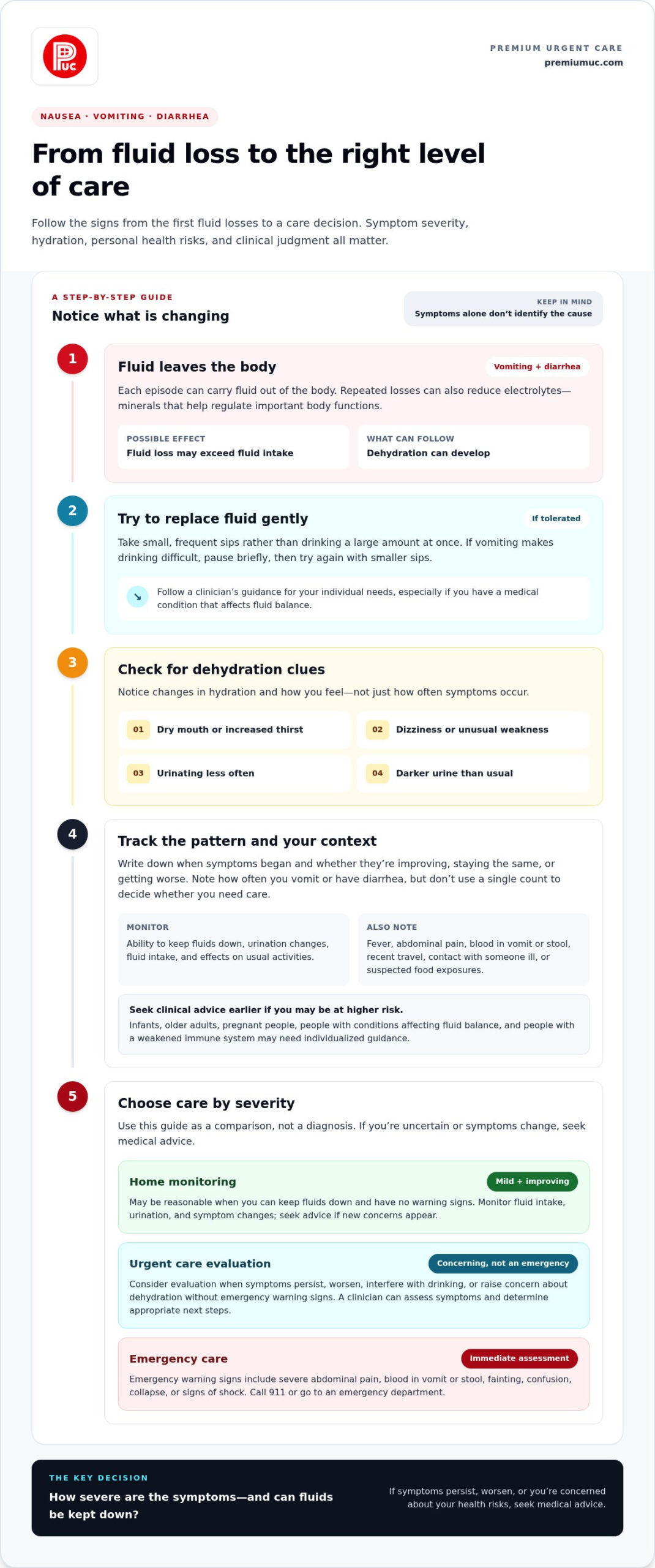
A practical checklist for deciding when to see a clinician
Use this checklist to organize your next step if you have nausea vomiting and diarrhea. It can support decision-making, but it can’t diagnose the cause or replace clinical advice. If symptoms are severe or you’re unsure what level of care is appropriate, seek professional guidance.
- Check for emergency warning signs first. Severe abdominal pain, blood in vomit or stool, fainting, confusion, collapse, or signs of shock call for emergency assessment. Call 911 or go to an emergency department rather than waiting for an urgent care evaluation.
- Assess hydration. Consider whether you can keep fluids down and whether you’re urinating less often than usual. Dry mouth, dizziness, dark urine, or unusual weakness can be signs of dehydration. Seek prompt clinical advice if fluid intake is difficult or these signs are developing.
- Consider how symptoms are changing and your personal risk. Contact a clinician if symptoms persist, worsen, or interfere with drinking. Infants, older adults, pregnant people, and those with chronic conditions or weakened immunity may need individualized advice sooner.
- Gather details to share. Note when symptoms began, how often vomiting or diarrhea occurs, what you’ve been able to drink, and any changes in urination or your overall condition. Include fever, abdominal pain, blood, recent meals, travel, sick contacts, and possible food exposures.
- Prepare your health history. Be ready to share pregnancy status, relevant medical conditions, allergies, and current medicines, including recent medication changes. These details can help the clinician understand your situation.
What to expect during an evaluation
A clinician may review your symptoms and health history, assess hydration, and consider findings from an examination. Tests or treatment aren’t automatic; next steps depend on your individual assessment. Bring your notes or have them ready on your phone so you can describe the timeline and changes clearly.
If symptoms are concerning but don’t appear to require emergency services, see urgent care options for concerning symptoms. Premium Urgent Care offers walk-in evaluations for nausea, vomiting, and diarrhea. A clinician can assess your symptoms and determine appropriate next steps.
Getting local urgent care for digestive symptoms in Clovis, Selma, or Fresno
If nausea, vomiting, or diarrhea persists, worsens, or makes it difficult to stay hydrated, a non-emergency urgent care evaluation may help clarify what to do next. Premium Urgent Care provides walk-in evaluations for these symptoms for people in Clovis, Selma, and Fresno. A clinician can assess your concerns and determine appropriate next steps based on your situation.
What to expect from an urgent care evaluation
The clinician will review when your symptoms began, how they’ve changed, and how often vomiting or diarrhea is occurring. They may also ask about your ability to drink and urinate, other symptoms, medications, and relevant medical history. An examination and any further evaluation depend on your presentation. A diagnosis, test, medication, or treatment can’t be determined in advance; decisions are based on clinical findings.
Choose the right next step and prepare to visit
Before an evaluation, gather a list of your current medicines and any recent changes. Bring notes about symptom timing and frequency, fluid intake, urination, fever or pain, and possible food or travel exposures. This information can help you explain what’s happening clearly, even if you’re feeling unwell.
Urgent care is for concerning symptoms that don’t appear to be an emergency. It isn’t a substitute for emergency services. Severe abdominal pain, blood in vomit or stool, fainting, confusion, collapse, or signs of shock need emergency assessment. Call 911 or go to an emergency department for severe or rapidly worsening symptoms rather than waiting for an urgent care visit.
For non-emergency nausea vomiting and diarrhea, visit Premium Urgent Care for information about an evaluation.
Use the warning signs to choose your next step
With nausea vomiting and diarrhea, track whether symptoms are improving, whether you can keep fluids down, and whether you’re urinating normally. Mild symptoms that are getting better may be monitored at home, while persistent or worsening symptoms and concerns about dehydration may call for clinical advice. Severe pain, blood in vomit or stool, fainting, confusion, or collapse require emergency assessment.
For concerning but non-emergency symptoms, Premium Urgent Care provides walk-in evaluations for nausea, vomiting, and diarrhea in Clovis, Selma, and Fresno. A clinician can review your symptoms and health history, assess your condition, and determine appropriate next steps based on clinical findings.
For a non-emergency evaluation, visit Premium Urgent Care. Keep notes about your symptoms and medicines ready, and seek emergency help if severe warning signs appear.
Frequently Asked Questions
Is nausea, vomiting, and diarrhea usually caused by food poisoning?
Not necessarily. Foodborne illness can cause these symptoms, but viral infections, medication effects, and other health conditions can, too. Symptoms alone can’t reliably identify the cause. Note when they began, what you ate beforehand, and whether anyone else who shared the food is ill. Similarly, if household pets also consume spoiled food and develop digestive distress, resources from London Veterinary Surgeries emphasize proactive monitoring for dehydration in animals. Seek medical advice if symptoms worsen, you’re concerned about dehydration, or you notice blood, severe pain, or another warning sign.
Can I treat vomiting and diarrhea at home?
Home monitoring may be reasonable if symptoms are mild and improving, you can keep fluids down, and you have no warning signs or higher-risk health conditions. Try small, frequent sips of fluid if tolerated, and watch for less urination, dizziness, or worsening weakness. Contact a clinician if symptoms persist or get worse. Confusion, fainting, severe signs of dehydration, or severe pain need urgent assessment.
How do I know if vomiting or diarrhea is causing dehydration?
Possible signs include urinating less often, dark urine, dry mouth, dizziness, and unusual weakness. Fainting, confusion, or being unable to keep fluids down are more serious concerns and warrant prompt assessment. Dehydration may become a concern sooner for infants, older adults, pregnant people, and those with certain health conditions. A clinician can assess symptoms and help determine an appropriate next step.
When should I go to urgent care for nausea, vomiting, and diarrhea?
Consider prompt urgent care evaluation if symptoms are worsening, drinking is difficult, dehydration is a concern, or a health condition increases your risk. Urgent care is for non-emergency evaluation, not a substitute for emergency services. Seek emergency care for severe pain, blood in vomit or stool, fainting, confusion, collapse, or other severe or rapidly worsening symptoms. Premium Urgent Care provides walk-in evaluations for these symptoms in Clovis, Selma, and Fresno.
What happens if I cannot keep liquids down?
Repeatedly being unable to keep fluids down can increase the risk of dehydration. The concern may be greater for young children, older adults, pregnant people, and those with certain health conditions. Contact a clinician promptly for guidance. Seek emergency assessment for fainting, confusion, severe weakness, or other severe symptoms. Don’t delay emergency care to try more home remedies when warning signs are present.
What information should I give a clinician about these symptoms?
Share when symptoms started, how often you’ve vomited or had diarrhea, whether you can keep fluids down, and any change in urination. Mention fever, abdominal pain, blood, recent meals or travel, sick contacts, medications, pregnancy, and relevant health conditions. These details help the clinician assess your situation and consider appropriate next steps. If you’re seeking in-person care, bring a current medication list and any symptom notes you’ve kept.