

Could a headache’s pattern suggest what’s causing it, or whether it needs urgent attention? Headaches can feel like steady pressure, throbbing pain, or discomfort with nausea and sensitivity to light, but symptoms often overlap. It can be hard to know whether to rest, seek an evaluation, or act immediately. The pattern matters, as do accompanying symptoms and changes over time.
This guide describes common headache patterns without using them to self-diagnose, explains warning signs such as sudden, severe pain, fever with a stiff neck, or new neurological symptoms, and outlines practical next steps. If a headache persists, worsens, or doesn’t improve without emergency warning signs, an urgent care evaluation may be appropriate. Premium Urgent Care provides walk-in evaluations for non-emergency headache concerns in Clovis, Selma, and Fresno. Use the guidance below to decide when to seek medical advice and when emergency care is the safer choice.
Key Takeaways
- Headache patterns can offer useful clues, but symptoms alone can’t confirm the cause.
- Changes in sleep, stress, hydration, meals, or illness may help explain when a headache began.
- Sudden, severe pain or new neurological symptoms can signal the need for emergency care.
- Track symptoms, watch for warning signs, and consider simple comfort measures when appropriate.
- For a non-emergency concern that persists or isn’t improving, a walk-in urgent care evaluation may help guide your next step.
What Is a Headache, and Which Common Patterns Can You Recognize?
A headache is pain in the head or face. It can feel like pressure, aching, throbbing, or sharp pain, and its location and intensity can vary. Headaches may be primary, meaning the headache itself is the central condition, or secondary, meaning the pain is associated with another condition, such as an illness. A symptom pattern can help guide a clinical evaluation, but it can’t confirm the cause on its own. The Headache overview describes these broad classifications and common types.
Not every headache follows a textbook pattern. Similar symptoms can have different causes, and a person’s episodes may vary. Use the descriptions below as general clues, not a way to diagnose yourself.
How Do Tension-Type Headaches, Migraines, and Cluster Headaches Differ?
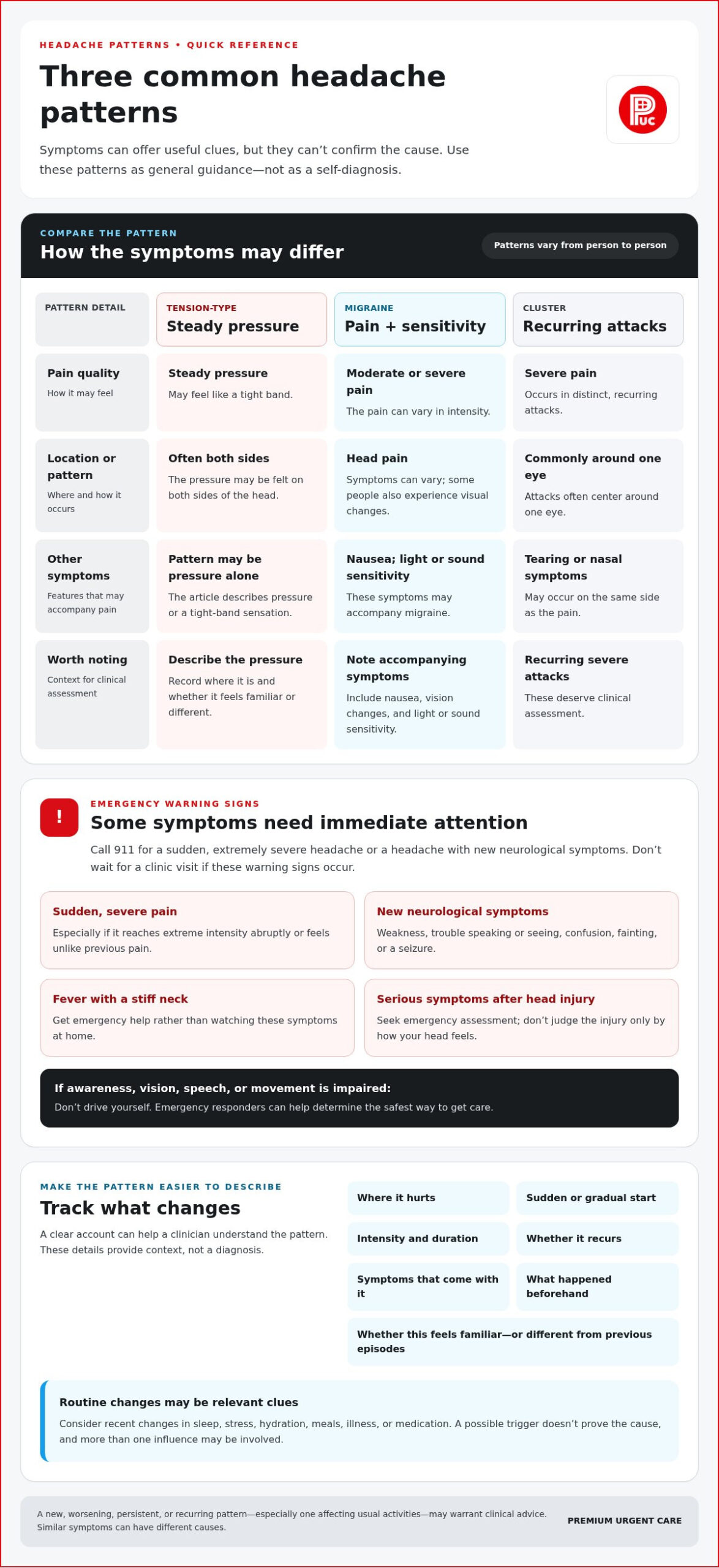
Tension-type headaches often feel like steady pressure or a tight band, sometimes on both sides of the head, and are frequently linked to physical strain in the neck and spine—an area where providers like Adjusted Chiropractic Studios offer targeted care. Migraine can involve moderate or severe head pain, often with nausea or sensitivity to light and sound; some people also experience visual changes. Cluster headaches involve distinct, recurring attacks of severe pain, commonly around one eye and sometimes accompanied by tearing or nasal symptoms on that side. Recurring severe attacks deserve clinical assessment.
What Details Help Describe a Headache Pattern?
Useful details include where the pain is, whether it began suddenly or gradually, how intense it feels, how long it lasts, and whether it recurs. Note associated symptoms such as nausea, vision changes, or sensitivity to light and sound. No single feature proves a headache type, but a clear account can help a clinician understand the pattern.
If you’re tracking symptoms, record when the pain starts and stops, what you were doing beforehand, and whether anything seems to change it. Note whether this feels familiar or different from previous episodes. These observations can make a clinical conversation more focused, especially when the pattern is new, changing, or interfering with everyday activities. They provide context, not a substitute for assessment.
What Can Cause Headaches, and What Changes the Pattern?
Head pain can arise for different reasons, and an ordinary episode is not automatically an emergency. Dehydration, disrupted sleep, stress, skipped meals, or an illness may contribute for some people, but a possible trigger doesn’t prove the medical cause. The same factor may affect one person and not another, and a headache may have more than one influence. Consider recent changes in your routine alongside your symptoms rather than deciding on a cause yourself.
Tracking when pain occurs and what accompanies it can help a clinician assess the pattern and decide what questions to ask. Look for changes over time, not just what happened before one episode.
Can Dehydration, Stress, Sleep, or Illness Contribute to Headaches?
They can be relevant clues. Consider whether the pain followed a night of poor sleep, a stressful day, missed meals, or less fluid intake than usual. Note whether you also feel unwell or have other symptoms. These observations can help describe the circumstances, but they can’t establish why the pain occurred. If you’re thirsty, drinking fluids at a normal, comfortable pace may be reasonable. Don’t force excessive amounts or rely on routine measures instead of medical evaluation when symptoms warrant care.
When Should a New or Changing Headache Pattern Be Assessed?
Seek clinical advice for a headache pattern that is new, worsening, persistent, or recurring, particularly if it affects your usual activities. A recent illness, head injury, or change in medication may be important context. Record when the pain began, how it has changed, what symptoms came with it, and any recent changes in health or routine. The National Library of Medicine’s guide to when to see a doctor for a headache also explains when symptoms call for prompt attention.
For a non-emergency concern that isn’t improving or feels different from your usual pattern, a clinician can evaluate your symptoms and relevant context. Premium Urgent Care provides walk-in evaluations for headache concerns in Clovis, Selma, and Fresno. Learn more about headache evaluations at Premium Urgent Care.
Which Headache Warning Signs Need Emergency Care?
Most head pain does not mean an emergency, but certain symptoms need immediate attention. Call 911 for a sudden, extremely severe headache or a headache with new neurological symptoms. Don’t wait for a clinic visit to see whether these warning signs pass. Emergency assessment is especially important if symptoms are intense, begin abruptly, or affect awareness, movement, speech, or vision.
Warning signs can have different causes, and this list can’t identify what’s happening or cover every emergency. If symptoms seem severe or worsen rapidly, err on the side of getting emergency help.
Is a Sudden, Severe Headache an Emergency?
Yes. A headache that reaches extreme intensity suddenly, particularly if it feels unlike previous pain, warrants immediate emergency assessment. Call 911 if it begins abruptly or occurs with weakness, trouble speaking or seeing, confusion, fainting, or a seizure. If your awareness, vision, speech, or movement is impaired, don’t drive yourself. Emergency responders can help determine the safest way to get care.
Which Other Symptoms Should Not Be Watched at Home?
Get emergency help for a headache accompanied by fever and a stiff neck, a seizure, fainting, confusion, or new weakness. Trouble speaking or seeing is also concerning, even if the headache itself doesn’t feel severe. These symptoms need prompt attention rather than home monitoring.
A serious symptom after a head injury also warrants emergency assessment. Don’t judge the injury’s severity only by how your head feels or whether the pain seems to improve. Call 911 if symptoms are severe, alertness changes, or safe transport is uncertain.
- Call 911: sudden, extremely severe headache; new neurological symptoms; seizure; fainting; or confusion.
- Seek emergency assessment: headache with fever and stiff neck, or concerning symptoms after a head injury.
This is not a complete list of possible emergencies. If a headache comes with severe or rapidly changing symptoms, don’t delay care to arrange a routine or urgent care visit. Headaches without emergency warning signs may still deserve clinical evaluation, particularly if the pattern is new or worsening. Emergency symptoms call for emergency services first.
What Can You Do for a Headache, and When Is a Clinician Visit Appropriate?
A sensible next step starts with safety, followed by a quick check of what’s happening. If emergency warning signs are present, call 911 rather than trying home care or waiting for a clinic visit. Otherwise, note your symptoms, consider simple comfort measures, and pay attention to whether the pain is improving, persisting, or changing.
Resting in a quiet, calm environment and drinking fluids when appropriate may help you feel more comfortable, but these steps won’t address every cause. For tension or postural strain that contributes to frequent headaches, some individuals explore supportive care and gentle bodywork through wellness practices like livelovelifechiropractic.com.au. Use any over-the-counter medicine only as directed on its label. If you’re unsure whether it’s suitable for you, ask a clinician or pharmacist, especially if you take other medicines or have health conditions.
What Information Should You Record Before Seeking Care?
A brief symptom record can make a clinical conversation more useful. Note when the headache began, how long it lasts, where it hurts, how severe it feels, and whether it has happened before. Include accompanying symptoms and any recent illness, injury, medication use, sleep changes, or possible triggers. You don’t need a detailed diary; a few clear observations can show what has changed.
If nausea, vomiting, or diarrhea occurs alongside head pain, keep track of those symptoms too. The nausea, vomiting, and diarrhea care checklist offers additional guidance on when those symptoms may need attention.
When Can Urgent Care Be a Reasonable Next Step?
Consider a clinician evaluation if the pain persists, keeps recurring, worsens, or concerns you, even without emergency warning signs. A new pattern or one that interferes with daily activities also deserves attention. Reassess how you feel rather than assuming a routine measure will resolve the problem.
Premium Urgent Care provides walk-in evaluations for non-emergency headache concerns in Clovis, Selma, and Fresno. A clinician can consider your symptoms and relevant context. Urgent care is different from emergency care: for sudden, severe symptoms or other possible emergency signs, call 911 instead of going to urgent care.
For more information about walk-in evaluations at Premium Urgent Care, visit the clinic’s website.
How Can Premium Urgent Care Help With a Non-Emergency Headache?
A headache that persists, returns, or feels concerning may warrant evaluation even when there are no emergency warning signs. Premium Urgent Care provides walk-in evaluations for headache concerns appropriate for urgent care. The visit gives you an opportunity to discuss what you’re experiencing and consider next steps suited to your circumstances.
What Should Patients Expect During a Headache Evaluation?
A clinician may ask when the pain began, how it has changed, where it occurs, and whether it comes with symptoms such as nausea or sensitivity to light. They may also discuss relevant health history, recent illness or injury, and medication use. Sharing a brief symptom record can make that conversation clearer. The evaluation and any next steps depend on the clinician’s assessment and individual circumstances.
An evaluation doesn’t mean a particular test, diagnosis, or treatment is guaranteed. The clinician considers the information available and discusses appropriate next steps for the situation. If nausea, vomiting, or diarrhea is also part of the concern, the food poisoning symptoms and care guide may help you understand when those gastrointestinal symptoms need attention.
Where Can Local Patients Seek Non-Emergency Headache Care?
Premium Urgent Care serves Clovis, Selma, and Fresno, with walk-in evaluations for non-emergency headache concerns. Consider an evaluation if the pain is persistent, recurring, worsening, or affecting your usual activities. Bring notes about timing, associated symptoms, recent changes, and medicines you’ve taken. These details can help the clinician understand your concern.
Urgent care is for concerns appropriate for a clinic evaluation. A sudden, extremely severe headache, new neurological symptoms, or other possible emergency signs require emergency services instead. Call 911 when an emergency may be occurring rather than waiting for a routine clinic visit. For a non-emergency concern that merits assessment, Premium Urgent Care can evaluate your symptoms and discuss next steps.
Use Your Symptoms to Choose a Sensible Next Step
Headaches vary in pattern and possible contributors, so symptoms can offer useful clues without confirming a diagnosis. Notice what has changed: when the pain began, how it feels, whether it keeps returning, and what other symptoms accompany it. This information can make a clinical conversation more focused.
Keep emergency signs in view. A sudden, extremely severe headache or new neurological symptoms, such as weakness or trouble speaking or seeing, may require emergency care. Call 911 rather than waiting for a clinic visit when an emergency may be occurring. If there are no emergency signs but pain persists, worsens, recurs, or concerns you, an evaluation may be a reasonable next step.
Premium Urgent Care offers walk-in evaluations for headache concerns appropriate for urgent care in Clovis, Selma, and Fresno. A clinician can assess your symptoms and context and discuss appropriate next steps. Visit Premium Urgent Care for a walk-in headache evaluation.
Paying attention to changes and choosing the right level of care can help you move forward with greater confidence.
Frequently Asked Questions
What are the most common types of headaches?
Common primary headache patterns include tension-type headaches, migraine, and cluster headaches. Tension-type pain may feel like pressure or tightness, while migraine can include nausea and sensitivity to light or sound. Cluster headaches involve recurring attacks of severe pain, often around one eye. Secondary headaches are associated with another condition. These patterns can offer clues, but symptoms overlap, so they can’t confirm a diagnosis by themselves.
When should I go to the emergency room for a headache?
Seek emergency care for a sudden, extremely severe headache or head pain with new neurological symptoms. Warning signs include weakness, trouble speaking or seeing, confusion, fainting, or seizure. A headache with fever and a stiff neck, or concerning symptoms after a head injury, also needs urgent attention. Call 911 if an emergency may be occurring, especially if symptoms affect awareness or movement. Don’t wait for a routine clinic visit.
Can dehydration cause a headache?
Dehydration may contribute to a headache, but it isn’t the only possible explanation, and noticing it doesn’t confirm the cause. Consider whether you’ve had less fluid than usual, along with changes in sleep, meals, or general health. If you’re thirsty, drinking fluids at a comfortable pace may be reasonable. Don’t force excessive amounts, and seek clinical advice if the pain persists, worsens, recurs, or comes with concerning symptoms.
How long should a headache last before I seek medical care?
There isn’t one duration that applies to every headache. Consider seeking clinical advice if pain persists, keeps returning, worsens, feels different from your usual pattern, or interferes with daily activities. Don’t wait for a certain number of hours if symptoms are severe or concerning. A sudden, extremely severe headache or new neurological symptoms may require emergency care. Call 911 for possible emergencies rather than waiting for a clinic evaluation.
Can urgent care treat a headache?
Urgent care can evaluate appropriate non-emergency headache concerns. A clinician considers your symptoms and relevant context before discussing next steps; a particular diagnosis, test, or treatment isn’t guaranteed. Premium Urgent Care provides walk-in evaluations for headaches in Clovis, Selma, and Fresno. If the headache is sudden and extremely severe or comes with new neurological symptoms, call 911 instead of going to urgent care.
What should I do if a headache comes with nausea or vomiting?
Note when the headache and stomach symptoms began, whether vomiting continues, and any other symptoms. If you can drink, take fluids at a comfortable pace, but don’t rely on home care if symptoms persist or worsen. Seek emergency help for a sudden, extremely severe headache, new neurological symptoms, confusion, fainting, or seizure. For ongoing non-emergency concerns, a clinician can assess the symptoms and relevant context.
What information should I tell a clinician about my headache?
Describe when the pain started, how long it lasts, where it’s located, how severe it feels, and whether it has happened before. Mention associated symptoms such as nausea, vision changes, or sensitivity to light and sound. Share relevant details about recent illness or injury, medication use, sleep changes, and possible triggers. A brief record of these details can help a clinician understand how the pattern has changed and assess what to do next.