

Sudden nausea, vomiting, or diarrhea can be food poisoning, but other illnesses can cause similar symptoms. Food poisoning symptoms vary from person to person. They may begin within hours or take days to appear, so it is not always clear what caused them or when exposure happened. Fluid loss can also become a concern while you are trying to recover.
Knowing what symptoms commonly occur and which changes need prompt attention can help you decide what to do next. Watch for bloody diarrhea, a fever above 102°F, vomiting that prevents you from keeping liquids down, and signs of dehydration. This article explains when a non-emergency evaluation may be appropriate and when symptoms call for emergency services instead.
For concerning but non-life-threatening symptoms, Premium Urgent Care provides walk-in evaluations for nausea, vomiting, and diarrhea in Clovis, Selma, and Fresno. The guidance below can help you assess the situation and choose the right level of care.
Key Takeaways
- Food poisoning symptoms can overlap across infections, and timing alone cannot identify the cause.
- Recognize which changes call for prompt medical evaluation and which require emergency care.
- At home, rest, take frequent small sips, and monitor urination and changes in symptoms.
- Oral rehydration solutions may help replace fluids when vomiting or diarrhea causes significant fluid loss.
- Urgent care can evaluate concerning, non-life-threatening symptoms. Life-threatening symptoms need emergency services.
Food poisoning symptoms: what they feel like and when they begin
Food poisoning is an illness that follows eating or drinking something contaminated by germs or harmful substances. This foodborne illness can affect the digestive system in different ways. A familiar pattern of symptoms may offer clues, but it cannot confirm the cause. Other conditions can cause similar symptoms.
Which symptoms are most common?
Common symptoms include diarrhea, abdominal cramps, nausea, and vomiting. They may occur separately or together, and their intensity can vary. Some people also develop a fever, though fever is not present in every case. Appetite loss or fatigue may accompany digestive symptoms, particularly when feeling unwell makes it difficult to eat or drink normally.
Mild digestive symptoms may be monitored, but bloody diarrhea, a high fever, or difficulty keeping liquids down are warning signs that need medical attention. A symptom list cannot confirm food poisoning or show how serious an illness is. Pay attention to how symptoms change, not just which ones appear.
How soon can food poisoning symptoms start?
Symptoms may begin within hours, take several days to appear, or start later for some causes. The timing depends on factors such as the contaminant and the amount consumed. Because different germs and harmful substances can cause similar symptoms, the time between eating and becoming ill cannot identify the specific cause.
It may also be difficult to know which meal was responsible. Someone can become sick after eating food earlier, while others who shared the meal may have no symptoms. Timing provides context, but it does not prove that a particular food caused the illness.
If you speak with a clinician, note when symptoms began, what they are, and what you ate in the days beforehand. This information can help you describe the illness clearly. Do not delay care to complete a food or symptom history if warning signs are present or symptoms are getting worse.
Why food poisoning symptoms differ by germ, exposure, and person
Bacteria, viruses, and toxins can cause overlapping digestive symptoms, but the time before symptoms appear and how a person feels can vary. Salmonella and some types of E. coli are bacteria, while norovirus is a virus. Each can cause gastrointestinal symptoms, but symptoms alone usually cannot tell which germ is responsible. The CDC’s guide to symptoms of food poisoning explains how illness patterns can differ by germ.
Onset timing can offer context, but it cannot reliably identify a specific pathogen or prove which food caused an illness. Some causes produce symptoms relatively soon after exposure; others take longer. The meal immediately before symptoms begin is not necessarily the source, so consider meals eaten earlier as well.
Why the same contaminated food may affect people differently
The amount consumed, a person’s age and general health, and the strength of their immune system can influence whether they become ill and how severely. People who shared a meal may have different symptoms, symptoms that begin at different times, or no noticeable illness. A shared meal can be a useful clue, but it does not confirm the source or establish that an outbreak has occurred.
Keep track of who feels unwell and when symptoms began, while focusing on each person’s condition. Repeated vomiting or diarrhea can cause fluid loss. Reduced urination, a dry mouth, or dizziness may signal dehydration, which deserves attention in addition to the digestive symptoms.
Food poisoning, stomach flu, or another illness?
“Stomach flu” commonly refers to viral gastroenteritis, not influenza. It can cause nausea, vomiting, diarrhea, and cramps similar to foodborne illness, but it may spread from person to person and is not necessarily linked to food. Other health conditions can also cause similar symptoms. A pattern may suggest a possibility, but it cannot confirm the cause without clinical assessment.
Consider medical evaluation if symptoms are severe, persistent, worsening, or concerning, especially if you are having trouble staying hydrated. Premium Urgent Care provides walk-in evaluations for non-life-threatening nausea, vomiting, and diarrhea in Clovis, Selma, and Fresno. Learn more about urgent care evaluations. Use emergency services for life-threatening symptoms.
When food poisoning symptoms need medical attention
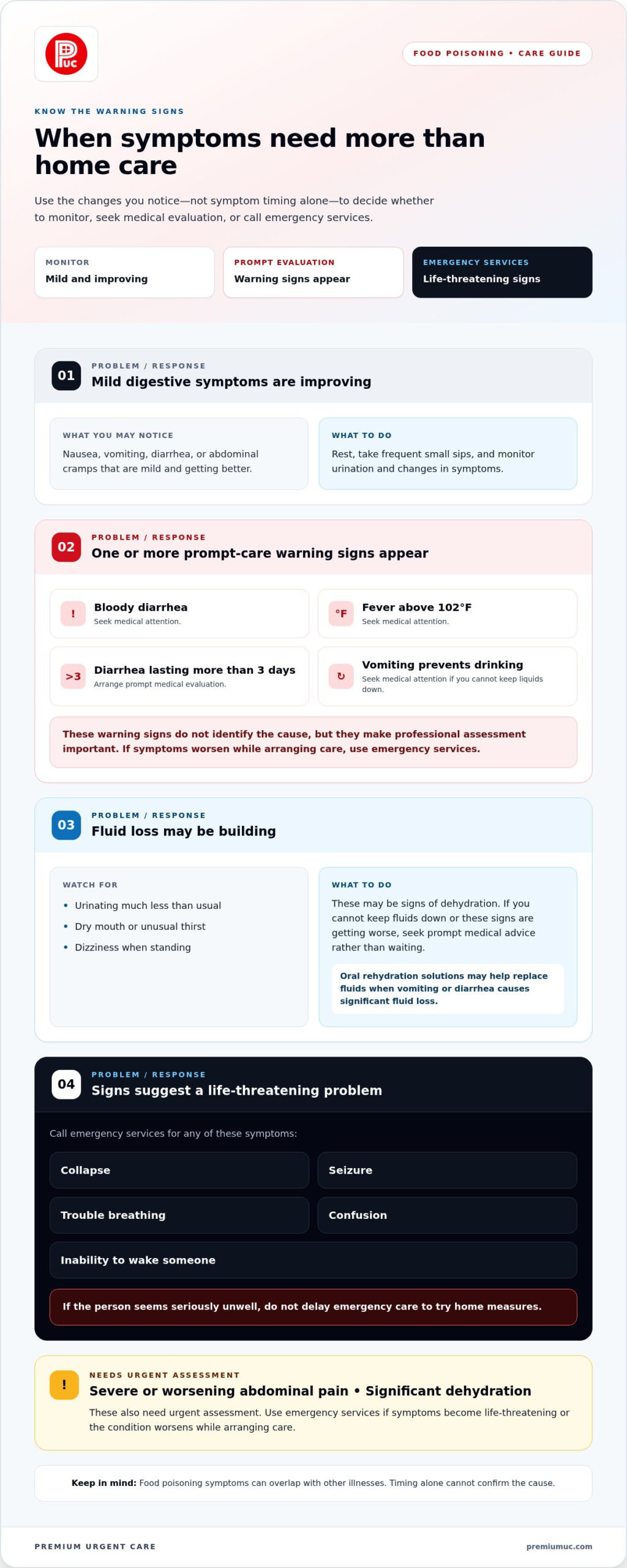
Mild digestive symptoms that are improving can often be monitored, but some changes call for medical care. The CDC lists food poisoning symptoms that warrant medical attention, including bloody diarrhea, diarrhea lasting more than three days, a fever above 102°F, and vomiting so frequent that you cannot keep liquids down.
Fluid loss can become a concern before symptoms feel severe. Watch for urinating much less than usual, a dry mouth, unusual thirst, or dizziness when standing. These may be signs of dehydration. If you cannot keep fluids down or these signs are getting worse, seek prompt medical advice rather than waiting for symptoms to pass.
Which warning signs should not wait?
Call emergency services for collapse, a seizure, trouble breathing, confusion, or inability to wake someone. These symptoms may indicate a life-threatening problem. Severe or worsening abdominal pain and significant dehydration also need urgent assessment. If the person seems seriously unwell, do not delay emergency care to try home measures.
Bloody diarrhea, a fever above 102°F, diarrhea continuing beyond three days, or repeated vomiting that prevents drinking are reasons to seek prompt medical evaluation. These signs do not identify the cause, but they make professional assessment important. If the condition worsens while you are arranging care, use emergency services.
Who may need earlier medical advice?
Some people can become seriously ill or dehydrated more quickly. Contact a healthcare professional earlier for an infant or young child, an older adult, or anyone with a weakened immune system. Pregnant people should contact a healthcare professional if they develop a fever or flu-like illness, even if digestive symptoms seem manageable.
Do not apply adult fever or symptom thresholds automatically to children. Their needs depend on age and overall condition. Seek age-appropriate professional guidance if a child is unwell, drinking poorly, urinating less, unusually sleepy, or getting worse.
When is monitoring reasonable?
If symptoms are mild, fluids stay down, urination remains close to normal, and the person is improving, careful home monitoring may be reasonable. Reassess regularly. Note changes in pain, fever, vomiting, diarrhea, and fluid intake so you can describe them clearly if you seek care. Choose a walk-in urgent care evaluation for concerning but non-life-threatening nausea, vomiting, or diarrhea. For a step-by-step list of warning signs, see this checklist for when to seek care for nausea, vomiting, and diarrhea. Use emergency services for life-threatening symptoms.
Managing Food Poisoning Symptoms at Home
For mild illness, simple steps can support comfort and help you notice changes. Home care is not a substitute for medical evaluation when symptoms are severe, worsening, or affecting your ability to stay hydrated.
- Rest. Give your body time to recover and avoid strenuous activity while you feel unwell.
- Take frequent small sips. Sip water often instead of drinking a large amount at once. An oral rehydration solution may be an option when vomiting or diarrhea causes substantial fluid loss. If you repeatedly vomit or cannot keep liquids down, seek medical advice promptly.
- Monitor hydration. Pay attention to how often you urinate, along with unusual thirst, dry mouth, or dizziness when standing. These changes may signal dehydration.
- Reduce the chance of spreading illness. Do not prepare food for others while you are sick. Wash your hands carefully and follow public-health hygiene guidance.
How to reduce dehydration risk
Small, frequent sips may be easier to tolerate than a full glass at once. Keep track of how much you drink and whether you can keep it down. If urination becomes much less frequent, your mouth feels dry, or you feel dizzy when standing, reassess whether you need care. If you cannot keep liquids down, do not rely on home monitoring alone.
Avoid taking anti-diarrheal medicine without clinician advice if you have a fever or blood in your stool. These symptoms may need medical assessment, and self-treatment could be inappropriate.
What to track and when to stop home monitoring
A brief written record can make it easier to explain what is happening if you seek care. Note when symptoms began, your temperature, what and how much you are able to drink, how often you urinate, and whether you see blood in your stool. Record any changes, such as worsening pain or more frequent vomiting.
Stop home monitoring and seek medical advice if symptoms worsen, persist, or match warning signs such as bloody diarrhea, a high fever, or inability to keep liquids down. For suspected chemical or medication exposure, contact Poison Control for guidance rather than treating it as routine foodborne illness. Call 911 for an emergency.
If nausea, vomiting, or diarrhea is concerning but not life-threatening, seek a walk-in urgent care evaluation at Premium Urgent Care in Clovis, Selma, or Fresno.
Where to seek care for food poisoning symptoms in Fresno County
The right care setting depends on how severe the illness is and whether the person is stable. Urgent care can evaluate concerning nausea, vomiting, and diarrhea when there are no life-threatening symptoms. Emergency care is for potentially life-threatening conditions and should not be delayed to visit a clinic.
When walk-in urgent care may be appropriate
If symptoms are concerning but the person is alert, breathing normally, and has no emergency warning signs, a walk-in urgent care evaluation may be a reasonable next step. A clinician can assess the symptoms and determine whether further care is needed. An evaluation may be useful when vomiting or diarrhea continues, symptoms are not improving, or you are unsure how to proceed, even if the person appears stable.
Premium Urgent Care provides walk-in evaluations for nausea, vomiting, and diarrhea, along with acute medical consultations in Clovis, Selma, and Fresno. For life-threatening symptoms, choose emergency services instead.
When to choose emergency care instead
Call 911 or go to the nearest emergency department for collapse, a seizure, difficulty breathing, altered consciousness, or severe dehydration. These signs need emergency attention. Do not delay by driving to urgent care or waiting for symptoms to improve. If you are uncertain but the person appears seriously unwell, call 911 and follow the dispatcher’s instructions.
Blood in the stool, persistent high fever, or repeated vomiting that prevents someone from keeping liquids down needs prompt medical attention. If the person is stable and has no emergency signs, urgent care may be able to evaluate concerning symptoms. If their condition worsens or they develop severe symptoms, choose emergency care.
For people in Clovis, Selma, or Fresno with concerning but non-life-threatening symptoms, Premium Urgent Care offers a local option for evaluation. Use emergency services for emergencies and urgent care for symptoms that need assessment but are not life-threatening.
Choose the right next step with confidence
Food poisoning symptoms can vary in timing and severity, so symptoms alone may not reveal the cause. Focus on how the person is doing: watch for dehydration, worsening symptoms, or warning signs such as bloody diarrhea, a high fever, or inability to keep liquids down. These changes call for medical advice. Collapse, trouble breathing, confusion, or other life-threatening symptoms require emergency services.
For concerning but non-emergency nausea, vomiting, or diarrhea, Premium Urgent Care provides walk-in evaluations and acute consultations in Clovis, Selma, and Fresno. If symptoms are severe or life-threatening, call 911 or go to the nearest emergency department.
For a non-emergency evaluation, find Premium Urgent Care. Pay attention to changes and act on warning signs to make a safer care decision.
Frequently Asked Questions
What are the first signs of food poisoning?
Early signs often include nausea, stomach cramps, vomiting, or diarrhea. Some people also develop a fever, but symptoms vary by cause and not everyone has the same combination. These symptoms can also occur with other illnesses, so they cannot confirm food poisoning or identify a contaminated food. Watch for worsening symptoms, blood in the stool, repeated vomiting, or signs of dehydration, and seek medical advice if warning signs appear.
How soon after eating do food poisoning symptoms start?
Food poisoning symptoms may begin within hours, but some foodborne illnesses take days or longer to appear. Timing depends on the germ or harmful substance and other factors. Because symptoms can be delayed, the most recent meal may not be the source. Note when symptoms began and what you ate, but do not wait to identify a specific food if symptoms are severe or you are concerned.
Can food poisoning cause a fever?
Yes, food poisoning can cause a fever, although many cases do not include one. For adults, the CDC identifies a temperature above 102°F as a warning sign, especially if it occurs with bloody diarrhea, repeated vomiting, or worsening illness. Children need age-specific guidance, so do not rely on adult temperature thresholds for a young child. Contact a healthcare professional if a child has a fever or seems unwell.
How can I tell if food poisoning is causing dehydration?
Possible signs of dehydration include urinating less than usual, a dry mouth or throat, strong thirst, and dizziness when standing. Vomiting or diarrhea can cause fluid loss, and young children, older adults, and people with certain health conditions may become unwell more quickly. Seek prompt medical advice if these signs appear or fluids will not stay down. For collapse, confusion, or another emergency, call 911.
When should I go to urgent care for food poisoning symptoms?
Consider prompt evaluation when nausea, vomiting, or diarrhea is concerning but not immediately life-threatening, particularly if symptoms continue or you may be becoming dehydrated. Premium Urgent Care offers walk-in evaluations in Clovis, Selma, and Fresno. A clinician can assess your symptoms and determine whether further care is needed. Choose emergency care for life-threatening symptoms.
Should I go to the emergency room for food poisoning?
Emergency care is appropriate for severe or life-threatening symptoms, including collapse, seizure, trouble breathing, inability to awaken, or severe dehydration. Call 911 when immediate emergency help is needed. Bloody diarrhea, a persistent high fever, or being unable to keep fluids down also warrants prompt medical attention. If symptoms are worsening and you are unsure what to do, seek professional guidance rather than waiting for a definite cause.
Can food poisoning symptoms last more than a few days?
Yes. How long symptoms last depends on the cause and the person, and illness can continue beyond a few days. The CDC advises seeking medical help for diarrhea lasting more than three days, bloody diarrhea, a fever above 102°F, repeated vomiting, or signs of dehydration. Contact a clinician sooner if symptoms are severe or worsening, or if the person affected is at higher risk, such as a young child or older adult.