

What if congestion and coughing point to allergies, but chest tightness or wheezing needs closer attention? Allergies and mild asthma symptoms can overlap, so it isn’t always easy to tell what’s causing a change in your breathing. Pay attention to the pattern and severity, not just the suspected trigger. Nasal congestion and itchy eyes may fit an allergic reaction, while wheezing, chest tightness, or shortness of breath can signal airway involvement.
This guide explains how common allergy symptoms compare with mild asthma warning signs, which cautious self-care steps may help, and how to decide whether to monitor symptoms, seek urgent care, or call emergency services. Symptoms that persist, worsen, or interfere with breathing deserve clinical attention. Urgent care may be an option for non-emergency symptoms that need evaluation, but severe breathing difficulty requires emergency care. The aim is to help you choose a next step without dismissing symptoms that may be getting worse.
Key Takeaways
- Learn how sneezing, itchy eyes, and congestion differ from breathing changes that may point to asthma.
- When allergies and mild asthma symptoms overlap, take a cautious, step-by-step approach and follow your clinician’s instructions for prescribed medicines.
- Compare common symptom patterns, while remembering that only a qualified clinician can evaluate your individual symptoms.
- Prepare for an evaluation by noting when symptoms began, possible exposures, relevant health history, and current medicines.
- Know when monitoring may be reasonable, when non-emergency symptoms may need evaluation, and when to call 911. Premium Urgent Care offers walk-in evaluations for allergies and mild asthma symptoms.
How to Recognize Allergy Symptoms and Mild Asthma Symptoms
An allergy occurs when the immune system reacts to a substance that is usually harmless, such as pollen or pet dander. Asthma affects the airways, which can become inflamed or narrowed and make breathing more difficult. Allergies can sometimes accompany or trigger asthma symptoms, but nasal or eye irritation alone doesn’t establish that asthma is present. A general overview of an allergic reaction can explain the immune response, but it can’t determine what’s causing your symptoms.
Which symptoms are more typical of allergies?
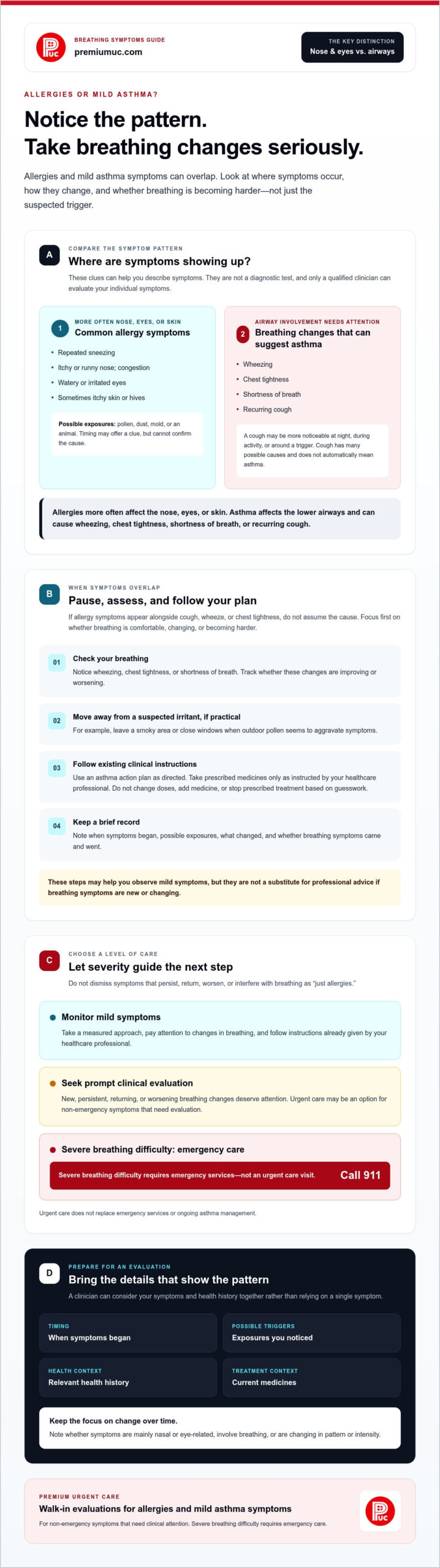
Allergies often affect the nose and eyes. Common symptoms include repeated sneezing, an itchy or runny nose, congestion, and watery or irritated eyes. Some people also develop itchy skin or hives. Symptoms may appear after contact with a suspected trigger, such as pollen, dust, mold, or an animal, but timing alone can’t confirm the cause. Similar symptoms can have other explanations, and patterns vary from person to person.
Which breathing changes can suggest asthma?
Asthma can cause wheezing, chest tightness, shortness of breath, or a recurring cough. A cough may be more noticeable at night, during activity, or around a trigger, but cough has many possible causes and doesn’t automatically mean asthma. Symptoms can come and go, and their pattern and intensity vary. New, persistent, or worsening breathing changes deserve attention from a qualified clinician.
Allergies more often cause nose, eye, or skin irritation; asthma affects the lower airways and can cause wheezing, chest tightness, shortness of breath, or recurring cough.
These clues can help you describe what you’re experiencing, but they aren’t a diagnostic test. Allergy symptoms and mild asthma symptoms may overlap, and one person can experience both. Note whether symptoms are mainly nasal or eye-related, involve breathing, or change over time. A clinician can consider the full pattern and your health history rather than relying on a single symptom.
What to Do When Allergies and Mild Asthma Symptoms Overlap
If allergy symptoms appear alongside a cough, wheeze, or chest tightness, pause and assess your breathing rather than assuming the cause. Allergies can affect asthma, but cough and breathing symptoms can also have other explanations. The Mayo Clinic’s overview of Allergies and asthma describes how the conditions can be connected. Focus first on whether breathing is comfortable, changing, or becoming harder.
Practical steps for mild symptoms
For mild symptoms, take a measured approach. If practical, move away from a suspected irritant or allergen, such as leaving a smoky area or closing windows when outdoor pollen seems to aggravate symptoms. Then follow any instructions your healthcare professional has already given you.
- Check your breathing. Notice whether you’re wheezing, feeling chest tightness, or becoming short of breath. Track whether those changes are improving or worsening.
- Follow your existing plan. If a clinician provided an asthma action plan, use it as directed. Take prescribed medicines only according to your healthcare professional’s instructions. Don’t change doses, add a medicine, or stop prescribed treatment based on guesswork.
- Keep a brief record. Note when symptoms began, possible exposures, what changed, and whether breathing symptoms came and went. These details can help guide a clinical evaluation.
These steps can help you observe a mild episode, but they aren’t a substitute for professional advice if breathing symptoms are new or changing.
When home measures are not enough
Don’t dismiss symptoms that persist, return, or worsen as “just allergies.” New wheezing or other breathing changes merit prompt professional assessment, especially if they differ from your usual pattern. Seek emergency help for severe breathing difficulty. Urgent care may be appropriate for non-emergency symptoms that need clinical attention, but it doesn’t replace emergency services or ongoing asthma management from primary care providers such as Quality Comprehensive Health Center.
A cough may also accompany an upper respiratory infection, among other causes. For more context, see this upper respiratory infection treatment guide. Premium Urgent Care offers walk-in evaluations for allergies and mild asthma symptoms. You can review Premium Urgent Care’s information when considering a non-emergency evaluation.
Allergies or Asthma: How to Compare Symptoms and Choose Care
A symptom pattern can help you explain what’s happening, but it can’t confirm the cause. A suspected allergy trigger doesn’t rule out asthma or another condition. Allergens can provoke asthma symptoms in some people, as described in MedlinePlus information about allergic asthma triggers. The combination of symptoms, how they change, and your medical history all matter.
Clues that can help describe the symptom pattern
Use the comparison below to organize your observations, not as a diagnostic test. Allergies and mild asthma symptoms may occur together, and a cough can have causes beyond asthma.
| Pattern | Symptoms to describe | Helpful details to note |
|---|---|---|
| Nose and eyes | Sneezing, congestion, runny nose, itchy or watery eyes | When symptoms began and whether they seem to follow a suspected exposure |
| Breathing and lower airways | Wheezing, chest tightness, shortness of breath, or recurring cough | Whether breathing is changing, when symptoms occur, and what makes them better or worse |
| Mixed symptoms | Nose or eye symptoms alongside cough or breathing changes | Which symptoms came first and whether they are improving, persisting, or worsening |
Share these details with a qualified clinician. They provide useful context, but they can’t establish whether symptoms are caused by allergies, asthma, an infection, or something else.
Urgent care or emergency help?
Urgent care may be an option when symptoms aren’t an emergency but still need clinical evaluation, such as persistent or new breathing changes that aren’t severe. Don’t use urgent care as a substitute for emergency services if breathing is seriously affected.
Call 911 for severe trouble breathing, blue or gray lips, confusion, or difficulty speaking normally because of breathlessness. These signs require emergency help. If you’re unsure how quickly symptoms are worsening, prioritize immediate safety and seek emergency assistance rather than waiting for a routine evaluation.
How to Prepare for an Allergy or Mild Asthma Evaluation
A little preparation can make an evaluation more focused. Symptoms may change before you’re seen, so a brief written record can help you describe what happened and when. For allergies and mild asthma symptoms, include both nose or eye complaints and any changes in breathing, even if one set of symptoms seems more noticeable.
Information to bring to a visit
Use this checklist to organize details for the clinician:
- Symptoms and timing: Write down what you noticed, when symptoms began, whether they come and go, and whether they’re improving, persisting, or worsening.
- Possible exposures: Note suspected triggers or changes in your surroundings before symptoms started. These details provide context, not proof of the cause.
- Relevant health history: Include known allergies, prior similar episodes, and other conditions that may help explain your symptoms.
- Medicines and care instructions: Bring a current list of medicines you use and any asthma action plan a clinician has provided. Follow that plan and use prescribed medicines only as directed by your healthcare professional.
If you need an evaluation for non-emergency symptoms, contact Premium Urgent Care to ask about a walk-in visit. Check current location and visit details before going.
What a walk-in urgent care visit can address
A clinician can evaluate acute, non-emergency allergy or mild asthma symptoms and decide whether an examination or further evaluation is appropriate. Next steps depend on your symptoms and individual circumstances, so an evaluation isn’t a promise of a particular diagnosis, test, prescription, or outcome. Bring your notes even if symptoms have eased; the timeline may still help explain the episode.
Urgent care is for symptoms that need clinical attention but aren’t emergencies. If breathing becomes severely difficult, seek emergency services instead of traveling to urgent care. Preparation helps you share a clearer account, but it shouldn’t delay emergency help when symptoms are serious.
Getting Local Help for Allergy and Mild Asthma Symptoms
Choose the level of care based on how symptoms are changing and how breathing is affected. If symptoms are mild and stable, monitoring them and following existing clinician instructions may be reasonable. If breathing changes persist, return, or concern you, arrange a professional evaluation. Severe or rapidly worsening breathing problems need emergency services, not an urgent care visit.
When a local urgent care visit may fit
Urgent care may be an option for non-emergency symptoms that need clinical evaluation, such as allergy symptoms that aren’t improving or new, mild breathing changes that remain stable. A clinician can evaluate the acute concern and determine appropriate next steps. An urgent care visit isn’t a substitute for emergency services or ongoing care for chronic asthma.
Premium Urgent Care offers walk-in evaluations for allergies and mild asthma symptoms in Clovis, Selma, and Fresno. Before visiting, check current location information, hours, and walk-in details. This helps you confirm practical arrangements, but don’t delay care if symptoms become severe.
Keep a note of when symptoms began, what you’ve noticed, and whether they’re improving or worsening. If you already have an asthma action plan, follow the instructions provided by your healthcare professional. A clear timeline can help a clinician understand the concern, though it can’t replace an individual evaluation.
When to seek emergency help instead
Call 911 for severe trouble breathing, blue or gray lips, confusion, or difficulty speaking normally because of breathlessness. These signs call for emergency help. Don’t wait to see whether symptoms settle, and don’t delay emergency care to contact a clinic or travel to urgent care.
For less severe symptoms, use the pattern as a guide: monitor mild, stable symptoms; seek evaluation for persistent or changing symptoms; and call 911 for emergency warning signs. If you’re uncertain and breathing is rapidly worsening, choose emergency help.
For non-emergency concerns, find Premium Urgent Care information and confirm current visit details before going. This can help you consider a local evaluation while keeping the distinction between urgent care and emergency care clear.
Use Your Symptoms to Choose the Next Step
Allergies and mild asthma symptoms can overlap, so pay attention to the full pattern rather than assuming a suspected trigger explains every change. Note when symptoms begin and whether they improve, persist, or worsen. Mild, stable symptoms may be monitored while you follow existing clinician instructions. New or ongoing breathing changes warrant professional evaluation, while severe breathing difficulty, blue or gray lips, confusion, or trouble speaking normally call for 911.
Premium Urgent Care lists allergies and mild asthma symptoms among its walk-in urgent care offerings for non-emergency concerns in Clovis, Selma, and Fresno. Confirm current locations, hours, and walk-in details before visiting. Urgent care is not a substitute for emergency services or ongoing chronic asthma management.
If you have a non-emergency concern that needs evaluation, contact Premium Urgent Care about your symptoms. Bring a clear record of what you’re experiencing and choose the level of care that fits your symptoms.
Frequently Asked Questions
Can allergies cause wheezing or shortness of breath?
Yes, allergies can occur alongside asthma, and some people experience wheezing or shortness of breath around triggers that affect their airways. But don’t automatically attribute breathing symptoms to allergies. New, persistent, or worsening symptoms call for prompt medical advice. Severe breathing difficulty is an emergency. Call 911, especially if the person is struggling to breathe or cannot speak normally.
How can I tell the difference between allergies and mild asthma symptoms?
Allergies often cause sneezing, an itchy or runny nose, congestion, and itchy or watery eyes. Asthma can affect the lower airways, causing wheezing, chest tightness, shortness of breath, or recurring cough. These patterns can overlap and can’t diagnose a condition on their own. Note when symptoms began, possible triggers, and how they’ve changed, then share those details with a clinician.
Is mild asthma an emergency?
Mild, stable symptoms may not require emergency services, but symptoms can change, and the label “mild” shouldn’t override what’s happening now. Seek prompt professional evaluation for new or worsening breathing symptoms, even if they don’t seem severe. Call 911 for severe trouble breathing, blue or gray lips, confusion, or difficulty speaking normally because of breathlessness. Don’t wait for symptoms to worsen before responding to serious warning signs.
What should I do if allergy symptoms make my asthma feel worse?
If practical, move away from a suspected trigger and follow your existing asthma action plan if a clinician provided one. Use prescribed medicines only as directed by your healthcare professional. Don’t change a dose, stop a medicine, or add treatment without professional advice. If breathing symptoms persist or worsen, seek prompt clinical guidance. For severe breathing difficulty, call 911 rather than waiting for a clinic visit.
Can urgent care evaluate allergies and mild asthma symptoms?
Yes. Premium Urgent Care lists evaluations for allergies and mild asthma symptoms among its services. A clinician can assess an acute, non-emergency concern and determine appropriate next steps, but a particular test, prescription, or outcome can’t be promised. The clinic doesn’t provide 24/7 emergency services or ongoing chronic disease management. For severe breathing symptoms, call 911 instead of going to urgent care.
When should I go to the ER instead of urgent care for breathing symptoms?
Call 911 for severe trouble breathing, blue or gray lips, confusion, or inability to speak normally because of breathing difficulty. Don’t drive yourself if symptoms are severe, and don’t delay emergency care to contact a clinic. Urgent care may be appropriate for non-emergency concerns that need evaluation, but it isn’t a substitute for emergency services when breathing is seriously affected.
What information should I bring to an urgent care visit for allergy or asthma symptoms?
Note when symptoms began, how they’ve changed, and any suspected exposure or trigger. Bring a current medication list, information about known allergies and relevant health history, and an existing asthma action plan if you have one. These details help the clinician understand your concern, but they don’t confirm a diagnosis or replace an examination. If symptoms become severe, seek emergency care rather than delaying to gather records.