
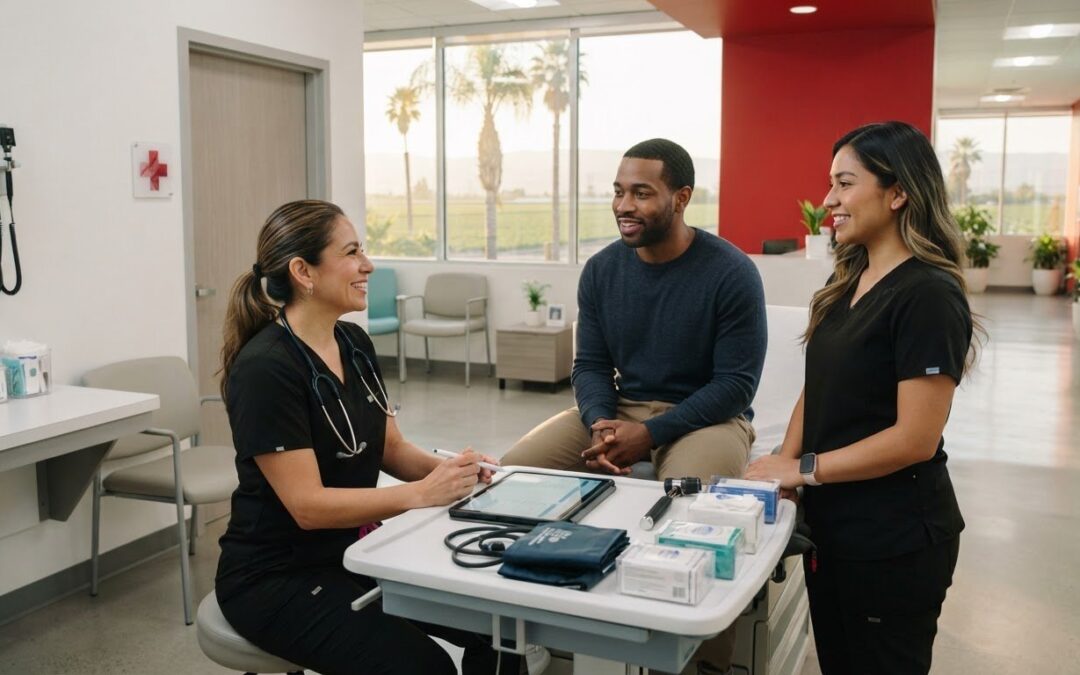
Is a new fever, painful ear, or small cut an emergency, or something a walk-in clinic can assess? People searching for a walk-in clinic Fresno can turn to often start with that question. The right setting depends on the concern: urgent care evaluates many acute, non-emergency illnesses and minor injuries, while life-threatening symptoms need emergency care.
It’s reasonable to want clear answers before you go, especially if you’re unsure what a clinic treats, how a visit works, or what to bring. Premium Urgent Care provides walk-in care in Fresno, Clovis, and Selma for concerns such as colds, flu-related illness, urinary symptoms, sprains, minor cuts, and skin infections. Care may also include procedures such as suturing a laceration or draining an abscess when appropriate after an assessment.
This guide explains what a Fresno walk-in clinic can treat, what to expect during a visit, and how urgent care differs from primary care and the emergency department. You’ll also find practical preparation tips and guidance on when emergency care is the more appropriate next step.
Key Takeaways
- Match your concern to the right level of care: urgent care is for acute, non-emergency issues, while severe or life-threatening symptoms require emergency care.
- A walk-in clinic Fresno patients visit may evaluate common illnesses, minor injuries, and concerns that need outpatient procedures.
- A clinician assesses your symptoms and decides whether testing, treatment, a procedure, or another next step is appropriate.
- Prepare for your visit by gathering identification, insurance information, medication details, and notes about your symptoms.
- Understand how walk-in urgent care differs from primary care and the emergency department to choose a setting that fits your needs.
What Can a Walk-In Clinic in Fresno Treat?
A walk-in urgent care clinic provides outpatient evaluation for acute concerns that need attention but aren’t life-threatening. The term “walk-in clinic” can describe different types of care, as explained in this overview of what a walk-in clinic is. At Premium Urgent Care, patients in Fresno, Clovis, and Selma can seek care for many sudden illnesses and minor injuries. A clinician’s assessment helps determine whether testing, treatment, a procedure, or another level of care is appropriate.
Common illnesses and minor injuries seen at urgent care
A walk-in clinic Fresno patients choose may assess coughs, colds, flu-related illness, sinus complaints, and mild asthma or allergy symptoms. Other concerns include sore throats or possible strep, ear pain, urinary symptoms, rashes, skin infections, pink eye, headaches, nausea, vomiting, and diarrhea. For more information about respiratory symptoms and care, read the upper respiratory infection treatment guide.
Urgent care can also evaluate sprains, strains, back or joint pain, minor burns, and cuts or wounds. The appropriate care depends on the injury and examination findings. These services are for concerns that can be assessed and managed in an outpatient setting, not severe injuries requiring emergency attention.
When a concern may need a procedure or another care setting
Some injuries need more than basic wound care. A clinician examines a cut and determines whether suturing is appropriate. Premium Urgent Care also provides abscess incision and drainage as an outpatient procedure when clinically indicated. The care plan depends on the evaluation. For more about urgent wound concerns, see the Fresno wound care guide.
Seek emergency care for severe or life-threatening symptoms rather than routine walk-in treatment. Examples include difficulty breathing, signs of a stroke, severe bleeding, or chest pain. Call 911 or go to an emergency department if symptoms suggest an immediate threat to life or serious harm. For an acute concern that isn’t an emergency, urgent care can provide an assessment and explain the next steps.
What Happens During a Walk-In Clinic Visit in Fresno?
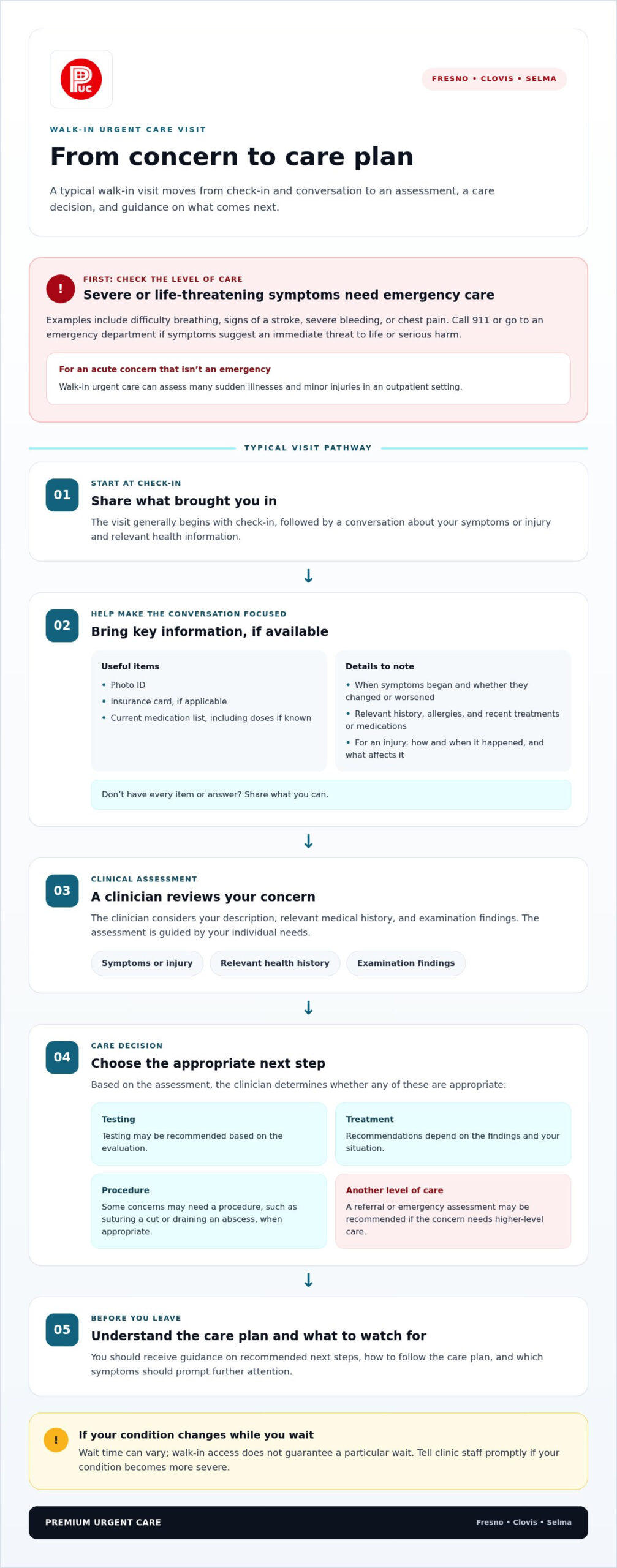
A walk-in clinic Fresno visit generally begins with check-in, followed by a conversation about what brought you in. You’ll describe your symptoms or injury and share relevant health information. A clinician reviews your concerns, performs an appropriate examination, and discusses possible next steps. The process is straightforward, but the assessment and recommendations are guided by your individual needs.
Walk-in access doesn’t guarantee a particular wait time. The time before you’re seen can vary, so don’t plan around an assumed appointment length. If your condition changes or becomes more severe while you’re waiting, tell clinic staff promptly.
What information and items should you bring?
Having key details ready can make check-in and the clinical conversation more focused. Bring a photo ID, your insurance card if applicable, and a current list of medications, including doses if you know them. You can also prepare a few notes:
- When symptoms started and whether they’ve changed or worsened.
- Relevant medical history, allergies, and recent treatments or medications.
- For an injury, how and when it happened, and which movements or activities affect it.
These details help the clinician understand the situation. If you don’t have every item or answer, share what you can.
How are evaluation and treatment decisions made?
The clinician considers your description of symptoms, relevant medical history, and examination findings. Based on that assessment, they determine whether testing, treatment, or a procedure is appropriate. Recommendations can differ for people with similar symptoms because the details of each case matter.
Before you leave, you should receive guidance on recommended next steps, such as how to follow the care plan or which symptoms should prompt further attention. If the evaluation suggests your concern needs a higher level of care, the clinician may recommend a referral or emergency assessment. Severe or life-threatening symptoms should be directed to 911 or an emergency department rather than routine walk-in care.
For acute, non-emergency concerns, Premium Urgent Care’s walk-in urgent care services provide evaluation in Fresno, Clovis, and Selma. Having your information organized can help you explain your concern clearly and understand the care plan.
Walk-In Clinic, Primary Care, or ER: Which Fresno Option Fits?
The right setting depends on how quickly you need care and whether the concern is ongoing, new, or potentially life-threatening. A walk-in clinic Fresno patients use for urgent care is suited to acute, non-emergency issues that need timely evaluation. Primary care supports routine and preventive health over time. The emergency department treats serious conditions that need immediate attention.
- Walk-in urgent care: For a new illness or minor injury that needs assessment but doesn’t appear life-threatening.
- Primary care: For preventive visits, routine health needs, and ongoing care with a clinician familiar with your health history.
- Emergency department: For severe or potentially life-threatening symptoms that require immediate emergency assessment.
When a walk-in clinic may be a practical choice
Consider urgent care for a new sprain, symptoms of a common infection, or an acute rash when the concern needs attention but isn’t an emergency. A clinician evaluates your symptoms and relevant health information before recommending next steps. The assessment helps determine whether treatment, testing, or another care setting is appropriate.
Urgent care can complement your regular primary care relationship, but the two settings serve different purposes. Primary care is generally the better fit for preventive visits and health concerns that need ongoing follow-up. Sharing relevant visit information with your regular clinician can help maintain continuity of care.
When to choose emergency care instead
Seek emergency care for symptoms that may signal a serious or immediate threat, such as severe difficulty breathing, uncontrolled bleeding, or sudden severe symptoms. Don’t delay emergency help to visit a routine walk-in clinic.
Call 911 if someone may be in immediate danger or has life-threatening symptoms. For other severe symptoms, go to an emergency department. If you’re uncertain and the person’s condition is worsening quickly, treat it as an emergency.
How to Prepare for Walk-In Care in Fresno
A little preparation can make it easier to explain your concern and help the care team understand what you need. Before heading to a walk-in clinic Fresno residents can use, gather the essentials and jot down details you might otherwise forget. You don’t need to have every answer ready. Share what you know, and let the clinician guide the conversation.
A simple checklist before your visit
Use this checklist to get organized:
- Identification and insurance: Bring a photo ID and your insurance card or other insurance information, if applicable.
- Medication and health details: Write down current medications, known allergies, and relevant medical conditions.
- Symptom notes: Record when the concern began, how it has changed, and what seems to make it better or worse.
- Injury information: Note how and when the injury happened, along with any changes in pain or movement since then.
Insurance benefits and the amount a patient may be responsible for vary by individual plan and circumstances. Having your insurance information available can help with the administrative process, but it doesn’t establish the final amount you may owe. Your plan documents explain the terms of your specific coverage.
Work-related injuries and physicals
For a work-related injury, bring relevant employer or claim details if you have them. Sharing when and how the injury occurred, what job task you were doing, and any claim information gives context for the evaluation. Premium Urgent Care provides workers’ compensation evaluations and work physicals. You can learn more in the workers’ compensation evaluation guide.
For a work physical, bring any paperwork or instructions you’ve received from your employer. Those details can clarify the purpose of the visit and the information being requested. Premium Urgent Care also provides sports physicals, so bring relevant forms for that visit as well.
Before leaving, gather your notes and documents, then describe your main concern clearly at check-in. Learn more about walk-in care at Premium Urgent Care and services for patients in Fresno, Clovis, and Selma.
Get Walk-In Urgent Care in Fresno With Premium Urgent Care
For an acute concern that needs attention but isn’t life-threatening, Premium Urgent Care provides walk-in consultations and outpatient care in Fresno, Clovis, and Selma. A walk-in clinic Fresno patients choose can be a practical option for sudden illnesses or minor injuries, but the appropriate care depends on the clinician’s evaluation. Your symptoms, health history, and examination findings guide recommendations.
Care for common acute concerns and minor injuries
Premium Urgent Care evaluates a range of non-emergency concerns, including:
- Common infections and symptoms such as cough, sore throat, ear pain, or urinary symptoms.
- Sprains, strains, and other minor injuries.
- Cuts, wounds, and minor burns.
- Rashes and other skin concerns.
When clinically appropriate, outpatient procedures may include suturing a laceration or incision and drainage of an abscess. These procedures aren’t needed for every concern, and an evaluation helps determine whether a specific treatment is suitable. If symptoms or an injury appear severe, emergency care may be the safer choice.
Take the next step for non-emergency care
Bring identification, insurance details if applicable, and a clear account of your symptoms or injury to help explain what’s going on. The care team can assess your concern and discuss appropriate next steps.
If you’re looking for non-emergency evaluation in Fresno, Clovis, or Selma, explore Premium Urgent Care’s services and clinic information. For a medical emergency or life-threatening symptoms, call 911 or go to an emergency department instead. Choosing care based on the urgency of the concern helps you seek an appropriate level of attention.
Choose the Right Care and Take Your Next Step
Choosing a walk-in clinic Fresno residents can turn to starts with matching the concern to the right level of care. Urgent care can assess many acute, non-emergency illnesses and minor injuries, while primary care remains important for preventive and ongoing health needs. Severe or potentially life-threatening symptoms require emergency care.
Before a visit, organize your identification, insurance information if applicable, medication details, and a brief note about your symptoms or injury. At the clinic, the clinician’s evaluation guides whether testing, treatment, a procedure, or another next step is appropriate. Recommendations are based on your individual concern.
Premium Urgent Care provides acute consultations, minor injury care, and outpatient procedures for patients in Fresno, Clovis, and Selma. Explore local care information and services at Explore walk-in care and services at Premium Urgent Care. If symptoms indicate an emergency, call 911 or go to an emergency department.
With a clear understanding of your options, you can feel more prepared to seek appropriate care and take the next step with confidence.
Frequently Asked Questions
What does a walk-in clinic in Fresno treat?
A walk-in clinic in Fresno evaluates many acute, non-emergency concerns, including coughs, sore throats, ear pain, urinary symptoms, rashes, sprains, and minor cuts or burns. Premium Urgent Care also provides outpatient procedures such as laceration suturing and abscess incision and drainage when appropriate. The right care depends on an assessment of your individual concern. A clinician determines whether treatment, a procedure, or another level of care is suitable.
Can I walk into Premium Urgent Care in Fresno without an appointment?
Premium Urgent Care provides walk-in consultations for acute, non-emergency concerns. A walk-in visit doesn’t guarantee a particular wait time, and recommended care depends on your condition and the clinician’s evaluation. If you’re experiencing a life-threatening emergency, call 911 rather than traveling to an urgent care clinic.
Is a walk-in clinic the same as an emergency room?
No. A walk-in urgent care clinic evaluates acute concerns that aren’t emergencies, while an emergency department assesses severe or potentially life-threatening conditions. Urgent care can evaluate many common illnesses and minor injuries, but it doesn’t replace emergency services. Call 911 for immediate danger, severe difficulty breathing, uncontrolled bleeding, or other symptoms that may be life-threatening. Don’t delay emergency help to seek routine walk-in care.
What should I bring to a walk-in clinic visit?
Bring a photo ID, your insurance card if applicable, and a list of current medications and known allergies. Notes about when symptoms began and how they’ve changed can help you explain your concern. For an injury, write down how and when it happened. If your visit is related to a workplace injury, bring relevant employer or claim information when available.
Does Premium Urgent Care in Fresno treat cuts that may need stitches?
Premium Urgent Care evaluates lacerations and provides suturing when appropriate. A clinician examines the wound and recommends next steps based on its characteristics and your condition. Some injuries may require emergency or specialty care instead. For severe bleeding or a serious injury, seek emergency care promptly or call 911. Don’t wait for a routine walk-in evaluation if the injury appears life-threatening or is rapidly worsening.
Can urgent care treat a work-related injury in Fresno?
Yes. Premium Urgent Care provides workers’ compensation evaluations for work-related injuries. Bring relevant employer or claim details if available, along with identification and information about how and when the injury occurred. The clinician evaluates the concern and determines appropriate next steps. For a serious or life-threatening workplace injury, call 911 or go to an emergency department rather than relying on a routine walk-in visit.
Does a walk-in clinic accept my insurance?
Insurance coverage and your responsibility for costs depend on your specific plan, benefits, and circumstances. Bring your insurance information if you plan to use coverage, and review your plan details to understand applicable requirements. Coverage can vary by plan and service. If you’re facing an emergency, seek emergency help first rather than delaying care over insurance questions.