

Did you know that more than 60% of women will face the sharp discomfort of a urinary tract infection at least once in their lives? When you first notice a persistent urge to go or a painful burning sensation, your focus shifts entirely to finding relief. We understand how disruptive uti symptoms can be to your daily routine and the anxiety that builds when you worry about the infection reaching your kidneys. It’s a stressful experience that requires a calm, clinical perspective to resolve effectively.
This guide will help you identify these warning signs early and explain when it’s time to transition from home management to professional medical care. You’ll learn the critical differences between mild cystitis and more severe infections that require immediate intervention. We’ll also preview the latest diagnostic standards and treatment options, including recently approved oral antibiotics, to ensure you have a clear path to a fast recovery. By understanding these clinical markers, you can take decisive action to protect your health and return to your normal activities without delay.
Key Takeaways
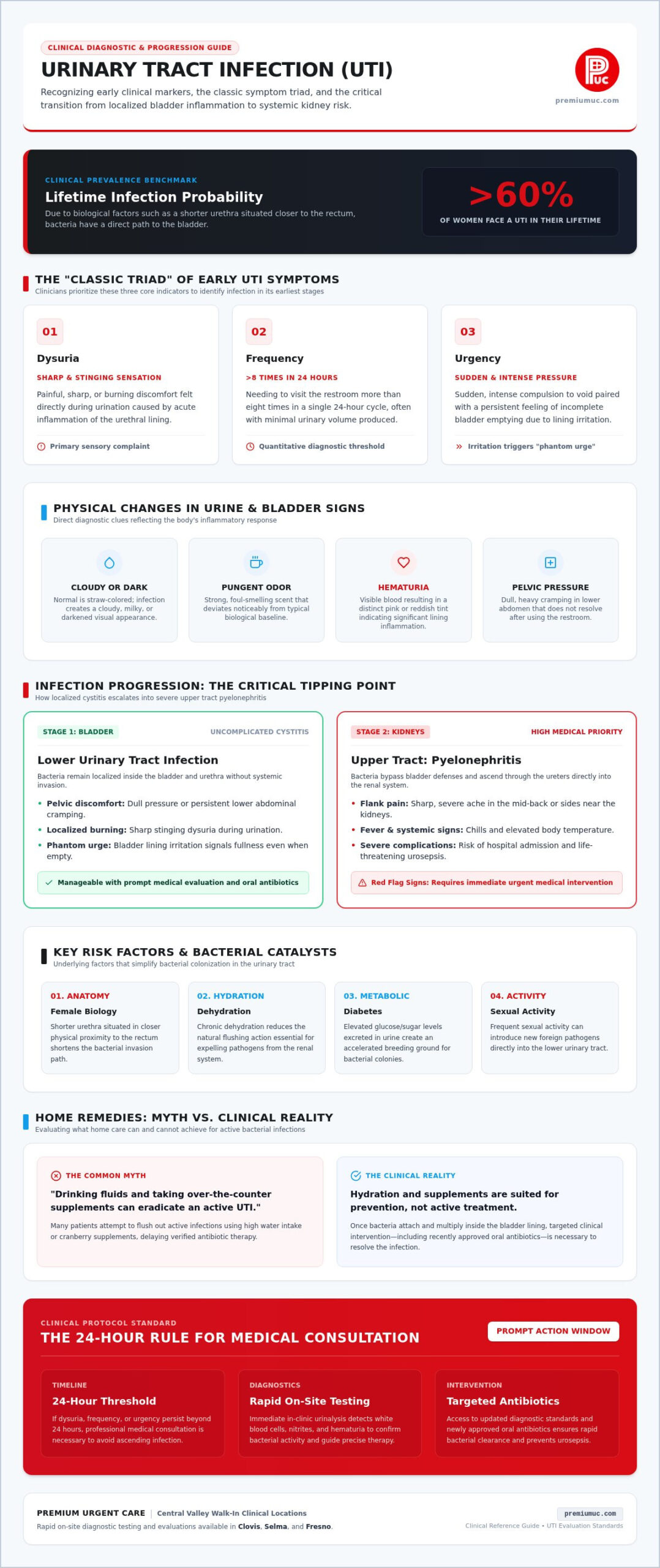
- Identify the “classic triad” of uti symptoms—frequency, urgency, and dysuria—to recognize an infection in its earliest stages.
- Differentiate between localized bladder discomfort and systemic kidney involvement by recognizing “red flag” warning signs like fever and flank pain.
- Evaluate the clinical reality of home remedies to understand why hydration and supplements are better suited for prevention than for treating active infections.
- Utilize the 24-hour rule to determine exactly when persistent symptoms require a professional consultation to avoid the risk of urosepsis.
- Access rapid, on-site diagnostic testing and expert evaluations through local walk-in clinics in Clovis, Selma, and Fresno for immediate relief.
Recognizing Common UTI Symptoms: Beyond the Burning Sensation
A urinary tract infection occurs when bacteria enter the renal system through the urethra and begin to multiply within the bladder or kidneys. For a detailed urinary tract infection overview, clinical data distinguishes between lower tract issues like cystitis and upper tract complications like pyelonephritis. While many people associate these infections only with pain, the clinical presentation is often more complex. Recognizing the full spectrum of uti symptoms is essential for seeking timely medical intervention.
Clinicians typically look for a “classic triad” of signs: frequency, urgency, and dysuria. Dysuria is the medical term for the sharp, stinging pain felt during urination. Frequency refers to the need to visit the restroom more than eight times in a 24-hour period, while urgency is the sudden, intense pressure that demands immediate attention. You might also experience a persistent sensation of incomplete bladder emptying. This occurs because the infection irritates the bladder lining, tricking the brain into feeling a desperate need to go even when the bladder is nearly empty.
Physical changes in the urine itself provide additional diagnostic clues. Healthy urine is typically clear and straw-colored, but an infection can make it appear cloudy, milky, or dark. You may also notice a strong, pungent odor that differs significantly from your normal baseline. In more advanced cases, you might see visible blood, known as hematuria, which gives the urine a pink or reddish tint. These changes are direct results of the body’s inflammatory response to bacterial invasion.
Primary Indicators of a Bladder Infection (Cystitis)
Lower urinary infections, or cystitis, often manifest as a dull, heavy pressure in the pelvic region or lower abdomen. This discomfort can feel like a persistent cramp that doesn’t resolve after using the restroom. Many patients describe a “phantom urge,” where they feel a crushing need to urinate but produce very little output. If you notice these specific uti symptoms alongside cloudy or blood-tinged urine, it’s a clear signal that the bladder lining is significantly inflamed and requires professional evaluation.
Who Is Most at Risk for Urinary Tract Symptoms?
Biological factors make women significantly more prone to these infections. The female urethra is shorter and situated closer to the rectum, which simplifies the path for bacteria to reach the bladder. Beyond anatomy, lifestyle factors play a major role. Chronic dehydration reduces the “flushing” action of the urinary system, while conditions like diabetes can elevate sugar levels in the urine, creating a breeding ground for bacteria. Frequent sexual activity can also introduce new pathogens into the tract.
As a trusted local expert in the Central Valley, the team at Premium Urgent Care focuses on identifying these recurring patterns. We look beyond the immediate infection to understand your specific risk factors, helping you manage your health with a disciplined, clinical approach.
The Progression of Urinary Tract Symptoms: From Mild to Severe
A urinary tract infection often begins as a localized irritation, but it’s a dynamic condition that can escalate without warning. While the initial discomfort may feel manageable, the transition from a lower tract infection to a systemic illness represents a critical clinical tipping point. Understanding how uti symptoms evolve allows you to intervene before the bacteria ascend to the kidneys, a progression that often leads to pyelonephritis and may require hospital admission if left untreated.
Early intervention is the most effective way to prevent complications. When bacteria remain in the bladder, the infection is typically categorized as uncomplicated cystitis. However, once the infection bypasses the bladder’s natural defenses, it can travel through the ureters. This shift marks the move from a localized nuisance to a serious medical priority. Recognizing the symptoms of a bladder infection early is the best defense against this upward migration.
Lower vs. Upper Urinary Tract Symptoms
Differentiating between lower and upper tract involvement is vital for determining the level of care required. Lower tract infections are characterized by pelvic pressure, localized burning, and increased frequency. In contrast, upper tract infections involve the kidneys and present with systemic indicators. You should monitor for these specific signs of progression:
- Lower Tract: Persistent urge to urinate, suprapubic pain, and dysuria.
- Upper Tract: High fever, shaking chills, nausea, and vomiting.
- The Flank Sign: Sharp pain in the back or side, just below the ribs, is a primary indicator of kidney involvement.
If you experience back pain combined with urinary changes, it’s no longer a simple bladder issue. This combination suggests that the infection has reached the kidneys and requires immediate professional evaluation.
Atypical Symptoms in Children and Seniors
Standard indicators aren’t always present in every patient. In seniors, uti symptoms frequently manifest as acute confusion, agitation, or sudden behavioral changes rather than physical pain. This “silent” presentation can delay diagnosis, making the infection more dangerous for the elderly. Children also present differently; they may become unusually irritable, experience new bedwetting episodes, or run an unexplained low-grade fever.
For these vulnerable groups, professional wound care and infection management is necessary to ensure the bacteria are fully eradicated. If you’re concerned about a loved one’s sudden change in health, you can consult with a medical professional at our local clinics to receive a definitive diagnosis and a disciplined treatment plan.
Myths vs. Reality: Can You Treat UTI Symptoms at Home?
When uncomfortable uti symptoms first appear, many people turn to home remedies in hopes of avoiding a clinical visit. While self-care strategies like increased hydration are beneficial for general health, they cannot eradicate an established bacterial colony. There is a common misconception that drinking large quantities of water can “wash away” an infection. While water helps dilute the urine and flush the bladder, it doesn’t address the bacteria adhering to the urothelial lining. Relying solely on hydration often delays necessary medical diagnosis and treatment for UTIs, allowing the condition to worsen.
Similarly, the science regarding cranberry juice is often misunderstood. Cranberries contain A-type proanthocyanidins, which help prevent bacteria from sticking to the bladder wall. However, clinical studies confirm that cranberry products are ineffective at treating an active infection once colonization has occurred. Over-the-counter (OTC) medications like Phenazopyridine are also frequently misused. These analgesics are designed to numb the urinary tract and provide temporary relief from burning, but they possess zero antimicrobial properties. By masking the pain, these products can create a false sense of security while the underlying infection continues to progress toward the kidneys.
The Danger of ‘Waiting It Out’
Procrastination in seeking care carries significant clinical risks. Under ideal conditions, common uropathogens like E. coli can multiply every 20 to 30 minutes. This rapid growth means that a minor irritation in the morning can become a severe systemic issue by the evening. If the bacteria enter the bloodstream, a condition known as urosepsis can develop, which is a life-threatening medical emergency. A professional evaluation is the only way to obtain a definitive cure and prevent these dangerous escalations.
Home Monitoring vs. Clinical Diagnosis
While home test kits are widely available, they are often unreliable for a definitive diagnosis. These kits typically measure nitrites and leukocyte esterase, but they have high rates of false negatives, especially if the infection is caused by non-nitrate-reducing bacteria. A professional urinalysis in a clinical setting provides a much higher level of accuracy through microscopic examination and culture. Just as upper respiratory infection treatment requires a disciplined diagnostic approach to distinguish between viral and bacterial causes, urinary tract care demands precise oversight to ensure the correct antibiotic is prescribed for your specific strain of bacteria.
When to Seek Medical Care for Urinary Tract Concerns
Managing your health requires a disciplined approach to recognizing when home care is no longer sufficient. While the instinct to wait for a primary care appointment is common, the rapid multiplication of bacteria means that time is a critical factor. We suggest a 24-hour rule: if your uti symptoms don’t show significant improvement after a day of increased hydration, you should seek a professional clinical evaluation. Waiting for a scheduled appointment that may be days away can allow a simple bladder infection to progress into a more complex systemic issue.
Urgent care centers play a vital role in the healthcare system by providing immediate diagnostic capabilities for acute conditions. Unlike primary care offices, which often have limited same-day availability, walk-in clinics are designed for efficiency. This is especially relevant for residents in the Central Valley, where wait times for traditional appointments can be lengthy. By choosing a walk-in facility, you ensure that you receive an accurate diagnosis and the necessary antibiotics within hours, not days.
Urgent Care vs. Emergency Room for UTIs
Choosing the right level of care ensures you receive the most appropriate treatment while avoiding unnecessary costs. For standard uti symptoms such as localized burning, urgency, or pelvic pressure, an urgent care consultation is the ideal choice. However, certain “Red Flag” indicators require the advanced diagnostic and stabilization capabilities of an emergency department. You should seek emergency care if you experience:
- Uncontrollable vomiting or the inability to keep down oral medications.
- A high fever exceeding 103°F or shaking chills.
- Severe, debilitating pain in the flank or lower back.
- Signs of confusion or extreme lethargy, particularly in elderly patients.
Premium Urgent Care provides a high-performance alternative for Clovis, Selma, and Fresno residents, offering the clinical expertise needed to manage acute urinary concerns without the long wait times of a hospital ER.
Preparing for Your Diagnostic Evaluation
To ensure a thorough and efficient consultation, you should arrive prepared with specific clinical details. Having this information ready allows our medical team to create a more precise treatment plan tailored to your history. Please be prepared to discuss:
- The exact onset and progression of your current symptoms.
- A list of all current medications, including supplements and OTC pain relievers.
- Your history of previous urinary tract infections or related renal issues.
- Any known allergies to antibiotics, specifically sulfonamides or penicillins.
A urinalysis is the gold standard for UTI detection, providing immediate data on the presence of bacteria, nitrites, and leukocyte esterase. If you are experiencing persistent discomfort, visit Premium Urgent Care today for a professional evaluation and rapid relief.
Rapid UTI Testing and Treatment at Premium Urgent Care
Managing uti symptoms shouldn’t involve a multi-day wait for a primary care physician. We recognize that when you’re in pain, every hour matters. Our clinics in Clovis, Selma, and Fresno operate with a disciplined focus on immediate access, providing a high-performance alternative to the logistical delays often found in traditional medical offices. By prioritizing walk-in consultations, we ensure you receive professional care exactly when the discomfort is most acute. This approach bridges the gap between home management and the emergency room, offering a level of care that is both accessible and clinically rigorous.
Our Diagnostic Process in Clovis, Selma, and Fresno
Efficiency is the foundation of our patient-centered approach. We utilize on-site diagnostic testing to provide same-day results, allowing our clinicians to initiate treatment immediately. Under the leadership of Dr. Erick Green, our medical team performs thorough evaluations to confirm the presence of infection and assess its severity. This streamlined process eliminates the need for external lab referrals, which often delay recovery by 24 to 48 hours. Our locations are strategically positioned to serve Central Valley residents with the reliability and expertise they expect from a local leader. We maintain a functional pace to ensure your wait is minimal while your consultation remains comprehensive and unhurried.
Why Professional Treatment Prevents Recurrence
Recurrent infections are a common concern, often stemming from incomplete treatment or the use of an ineffective antibiotic. A professional evaluation ensures that the medication prescribed is specifically targeted to the bacterial strain identified in your sample. This disciplined approach to antibiotic stewardship prevents the development of resistant bacteria and reduces the likelihood of the infection returning within weeks. It’s about finding the right clinical solution the first time, rather than relying on generalized treatments that may not be fully effective.
Beyond the prescription, our providers offer education on lifestyle adjustments that can lower your future risk. We analyze your history to identify triggers such as dehydration or specific health conditions, helping you move from reactive care to proactive health management. We believe that informed patients are healthier patients. If you are struggling with persistent or sudden uti symptoms, don’t wait for a scheduled appointment. Visit Premium Urgent Care for same-day UTI evaluation and treatment to secure a path toward rapid and lasting relief.
Securing Your Path to Recovery
Recognizing uti symptoms in their early stages is the most effective way to prevent a localized infection from escalating into a systemic health concern. While home management strategies provide comfort, they cannot replace the accuracy of a professional clinical evaluation. Delaying treatment only allows bacteria to multiply; this increases the risk of kidney involvement or more severe complications.
Under the leadership of Medical Director Dr. Erick Green, our team provides the disciplined care and diagnostic precision needed for a rapid recovery. With three convenient locations in Clovis, Selma, and Fresno, we offer on-site laboratory services to ensure you receive your results without unnecessary delays. You don’t need an appointment to access high-level medical expertise in your community. Our patient-centered approach ensures that your health is managed with the highest clinical standards.
Get fast relief from UTI symptoms at Premium Urgent Care—Walk in today!
Taking decisive action today ensures you return to your daily routine with confidence and peace of mind. We’re here to support your health with the reliable, high-performance care you deserve.
Frequently Asked Questions
How do I know if my symptoms are a UTI or something else?
Distinguishing between different conditions requires a professional diagnostic evaluation. While burning and frequency are common markers for a urinary tract infection, these signs can overlap with sexually transmitted infections or yeast infections. A clinician will use a urine sample to look for specific indicators like nitrites and leukocyte esterase. This objective data helps our team differentiate between simple bladder irritation and more complex pathology, ensuring you receive the correct medication for your specific condition.
Can a UTI go away on its own without antibiotics?
Most bacterial urinary tract infections don’t resolve without antibiotic intervention. While your body’s immune system attempts to fight the invasion, common uropathogens like E. coli multiply rapidly within the bladder. Relying on home remedies or hydration alone often allows the bacteria to ascend toward the kidneys. This progression can lead to pyelonephritis or systemic infection, making professional clinical oversight essential for a definitive and safe cure.
What are the first signs of a UTI starting?
The earliest uti symptoms typically include a persistent, sudden urge to urinate and a stinging sensation during the process. You might notice that you’re visiting the restroom much more frequently than usual, even if very little urine is produced. These signs indicate that the bladder lining is becoming inflamed. Recognizing these initial warning markers allows you to seek care before the infection spreads deeper into the renal system.
How long does it take for UTI symptoms to improve after starting treatment?
Most patients experience significant relief within 24 to 48 hours of starting a prescribed antibiotic course. However, the disappearance of pain doesn’t mean the bacteria are entirely eradicated. It’s critical to finish the entire prescription as directed by your provider to prevent the infection from returning. Stopping early can lead to antibiotic resistance and recurrent infections that are much more difficult to treat in the future.
Is it normal to have back pain with a UTI?
Back pain isn’t a standard symptom of a simple bladder infection; it often indicates the infection has reached the kidneys. This discomfort is usually felt in the flank area, just below the ribs on one or both sides. If you experience back pain alongside urinary changes, it’s a medical priority. This progression requires immediate clinical evaluation to prevent urosepsis, a dangerous condition where the infection enters the bloodstream.
Can men get UTI symptoms, or is it only common in women?
Men can definitely experience these infections, though they occur less frequently than in women due to anatomical differences. In male patients, any urinary infection is clinically classified as complicated and requires a thorough investigation. A provider must rule out underlying issues such as an enlarged prostate, kidney stones, or a urethral blockage. If you’re a man experiencing burning or frequency, a professional evaluation is necessary to identify the root cause.
What should I do if I have UTI symptoms but no fever?
You should seek medical care even if you don’t have a fever. A fever is a systemic response that often appears only after an infection has escalated or spread to the kidneys. Many localized bladder infections present with significant pain, urgency, and cloudiness without ever causing a rise in body temperature. Addressing the infection while it’s still localized prevents it from developing into a more severe, febrile illness.
Does Premium Urgent Care offer walk-in testing for UTIs in Fresno?
Premium Urgent Care provides walk-in testing and evaluations at all three locations in Fresno, Clovis, and Selma. Our clinics feature on-site diagnostic laboratories, which allow our medical team to generate rapid results during your visit. You don’t need an appointment to receive a professional consultation for uti symptoms. This accessibility ensures Central Valley residents can bridge the gap between home care and the emergency room for acute needs.