

According to the Centers for Disease Control and Prevention, urinary tract infections account for roughly 10.5 million outpatient visits across the country each year. When sudden urinary tract symptoms emerge, bringing intense burning, pelvic pressure, and constant urges to urinate, waiting days for an opening with your primary care provider simply isn’t an option.
You shouldn’t have to endure severe physical discomfort while worrying that a localized infection could travel upward to your kidneys. Facing scheduling delays when you need immediate answers only amplifies that stress. Getting fast, clinical confirmation and targeted relief shouldn’t feel like an uphill battle.
In this guide, you’ll learn how to identify serious urinary tract symptoms and discover why local urgent care is your fastest path to a professional diagnosis and effective treatment. We’ll review the warning signs that require immediate evaluation, explain how rapid on-site urinalysis pinpoints the issue, and show you what to expect during an efficient walk-in visit.
Key Takeaways
- Learn how to recognize early warning signs like persistent urgency and painful burning before mild discomfort escalates.
- Understand why prompt evaluation of acute urinary tract symptoms is vital to prevent lower bladder infections from spreading to the kidneys.
- Discover clear clinical criteria to help you determine when local urgent care is the right choice versus when severe symptoms require an emergency room.
- Find out what to expect during a clinical visit, from providing a clean-catch sample to receiving rapid on-site urinalysis and targeted prescription relief.
- Explore walk-in care options across Clovis, Selma, and Fresno for prompt medical attention led by Dr. Erick Green without long scheduling delays.
Common Urinary Tract Symptoms: Identifying the Warning Signs
Recognizing the onset of acute urinary tract symptoms is essential for getting timely, effective treatment. While a minor irritation might initially feel like temporary dehydration, true bacterial infections produce distinct clinical signals that rarely resolve on their own. Paying attention to how your body responds during urination helps distinguish between standard bladder inflammation and issues that require prompt clinical intervention.
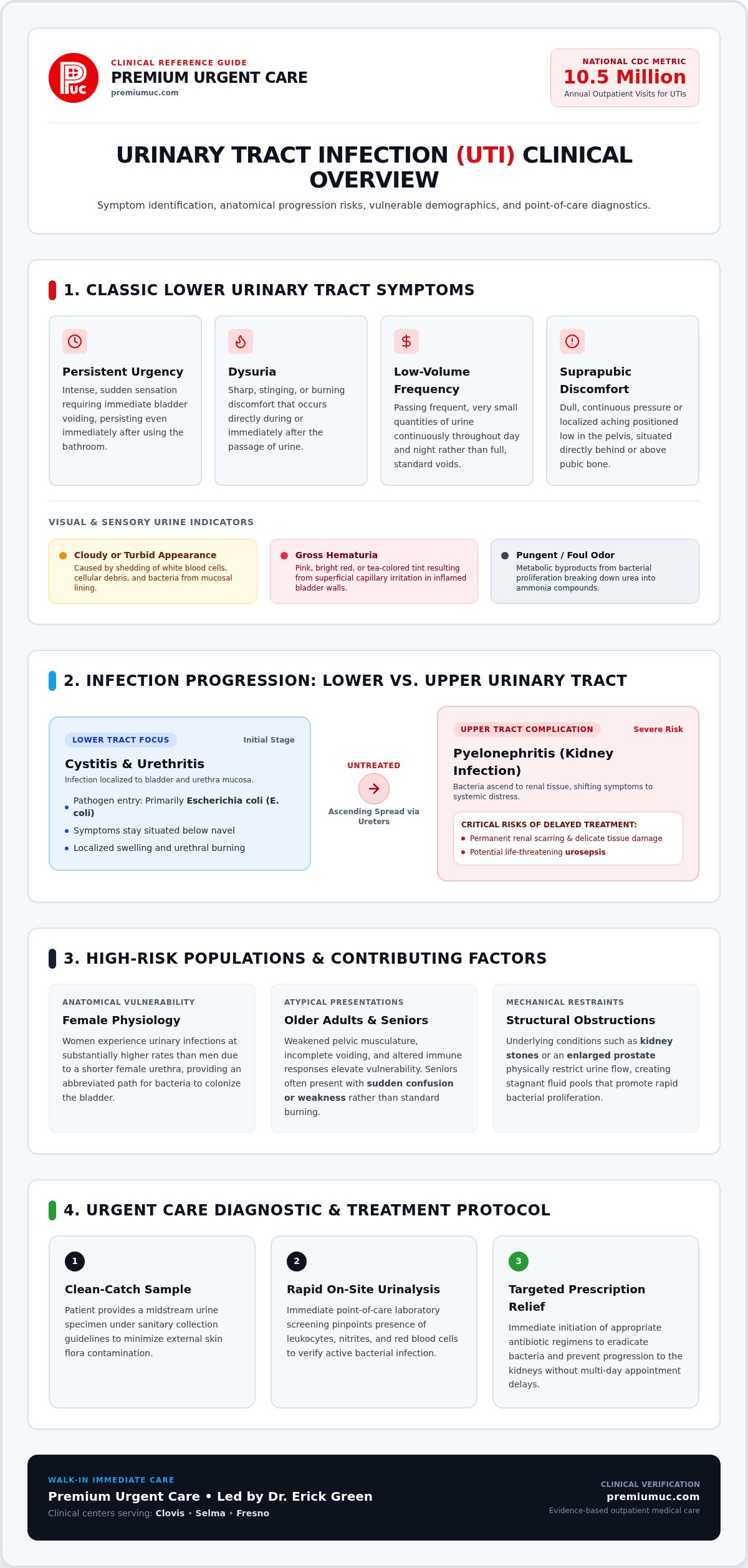
The classic presentation of a lower urinary tract infection typically involves several hallmark signs:
- Persistent urinary urgency: An intense, sudden sensation that you must empty your bladder immediately, persisting even right after you have used the bathroom.
- Dysuria: A sharp, stinging, or burning discomfort that occurs during or immediately after passing urine.
- Frequency without volume: Passing frequent, very small amounts of urine throughout the day and night rather than normal, full voids.
- Suprapubic discomfort: A dull, continuous pressure or ache centered low in the pelvis, directly behind or above the pubic bone.
Visual Changes in Your Urine
Visual presentation offers direct clues regarding urinary health. Healthy urine ranges from pale straw to amber and remains transparent. When bacteria colonize the urinary tract, urine often turns cloudy or turbid. This cloudiness is caused by the accumulation of white blood cells, cellular debris, and bacteria shed from the mucosal lining.
You may also observe gross hematuria, which tints the urine pink, bright red, or tea-colored. While alarming, small traces of blood often stem from superficial capillary irritation in an inflamed bladder wall. Strong, foul, or unusually pungent odors frequently accompany these color changes due to bacterial metabolic byproducts breaking down urea into ammonia compounds.
Lower vs. Upper Tract Symptoms
Clinicians separate urinary tract symptoms based on anatomical location. A standard lower tract issue, such as cystitis, remains confined to the bladder and urethra. The primary sensations involve localized swelling, urethral burning, and referred pelvic discomfort that stays situated below the navel.
By contrast, an upper urinary tract infection involves the ureters and kidneys. When bacteria ascend, the clinical picture shifts from localized pelvic pressure to systemic distress. Understanding this boundary ensures you seek appropriate evaluation before an uncomplicated lower infection advances into deeper renal tissue.
Causes and Complications: Why You Shouldn’t Ignore Urinary Pain
Most urinary infections occur when bacteria, predominantly Escherichia coli from the digestive tract, enter the urethra and multiply within the bladder lining. A healthy urinary system typically expels microbes through regular voiding, but pathogens can cling to the mucosal walls if they gain a foothold. Ignoring initial discomfort gives these microorganisms time to proliferate. Without timely medical care, localized inflammation can trigger severe health threats, including long-term renal scarring or life-threatening urosepsis.
The Danger of Ascending Infections
Cystitis, an acute inflammation of the bladder lining, serves as the most common precursor to more severe urinary complications. When lower infections go untreated, bacteria rarely stay confined. They advance upward through the ureters, the narrow muscular tubes that transport urine from the kidneys down to the bladder. This migration triggers pyelonephritis, a serious upper kidney infection that can permanently damage delicate renal structures. Following established CDC guidance on urinary tract infections, early medical treatment stops this ascending bacterial spread before deeper tissues become compromised.
Risk Factors and Recurrent Symptoms
Biological and structural differences leave certain patient groups significantly more vulnerable to developing urinary tract symptoms. Women experience infections at substantially higher rates than men because the shorter female urethra creates an abbreviated path for bacteria to reach the bladder. In older adults, weakened pelvic musculature, incomplete bladder emptying, and altered immune responses frequently elevate vulnerability. Seniors often present with atypical signs like sudden confusion or weakness rather than classic burning.
Underlying anatomical obstructions also play a direct role. Structural issues such as kidney stones or an enlarged prostate restrict urine flow, creating stagnant fluid pools that encourage bacterial growth. When you face recurring urinary tract symptoms, trying to wait out the pain or relying on home remedies only delays necessary relief. Arranging prompt medical attention through urgent care consultations provides a fast, accurate assessment to resolve the underlying source before complications develop.
Urgent Care vs. ER: Choosing the Right Level of Care
Deciding where to seek treatment for acute discomfort can feel stressful, but understanding clinical triage helps you make a swift, practical choice. Urgent care serves as an efficient bridge between routine doctor visits and hospital emergency departments. For standard, uncomplicated cases, an urgent walk-in clinic delivers rapid diagnostics and targeted pain management without the hours of waiting typical of overcrowded emergency rooms. While your primary care physician remains the right partner for managing long-term health, securing a timely appointment during an acute flare-up is often impossible.
When to Go to Premium Urgent Care
Walk-in clinics excel at diagnosing and treating localized bladder discomfort. If you experience classic burning during urination, urinary urgency, or mild pelvic pressure without severe whole-body illness, local urgent care is your most practical destination. Our clinics evaluate acute health concerns efficiently, whether you need immediate relief from painful urinary tract issues or walk-in Upper Respiratory Infection Treatment. Clinical teams assess your condition promptly, conduct diagnostic testing on site, and prescribe appropriate antibiotics when clinically indicated, sparing you the delay of primary care scheduling.
Red Flags Requiring Emergency Room Attention
Certain warning signs indicate that bacteria have spread beyond the lower urinary tract, turning a localized problem into a medical emergency. Reviewing clinical guidance on the symptoms and causes of bladder infections underscores the importance of monitoring how symptoms evolve. If your urinary tract symptoms progress to include high fevers over 102°F, severe rigors, or unyielding flank pain in your back and sides, an emergency room evaluation is essential.
These systemic indicators require immediate hospital-level intervention:
- Inability to retain oral fluids or medications due to persistent nausea and vomiting.
- Noticeable confusion, lethargy, or marked disorientation, particularly in older adults.
- Uncontrollable shaking chills, rapid heart rate, or significant dizziness indicating potential urosepsis.
Emergency departments possess the advanced imaging, intravenous medications, and inpatient admission capabilities necessary to treat complicated upper tract infections safely.
What to Expect During Your Evaluation for Urinary Symptoms
Seeking urgent care for acute discomfort is straightforward and designed for prompt relief. When you visit a walk-in clinic, your appointment follows a methodical, five-step clinical sequence:
- Clinical intake: A healthcare professional documents your current urinary tract symptoms, pain intensity, medication history, and recent infection history.
- Sample collection: You receive sterile collection materials and instructions to provide a clean-catch midstream urine sample to avoid surface skin contamination.
- On-site urinalysis: Clinicians test the specimen immediately for chemical markers, including leukocyte esterase, nitrites, red blood cells, and protein.
- Physical assessment: A provider performs a focused exam to evaluate your abdomen and lower back for costovertebral angle tenderness, confirming whether the infection remains localized.
- Prescription consultation: Your clinician explains the test findings and prescribes appropriate oral medication tailored to resolve the bacterial infection.
Diagnostic Testing at Premium Urgent Care
Rapid point-of-care urinalysis delivers clear findings within minutes, allowing treatment to begin before you leave the clinic. The presence of nitrites indicates gram-negative bacteria converting dietary nitrates, while elevated leukocyte esterase confirms active white blood cells fighting inflammation. In complex or recurrent cases, your provider sends a portion of the specimen out for urine culture and antimicrobial susceptibility testing to verify the precise bacterial strain. Our centers apply this same disciplined diagnostic precision across all services, including acute injury assessments and Wound Care in Fresno.
Treatment and Follow-Up Care
Clinical guidelines focus on short, targeted antibiotic regimens to effectively clear uncomplicated infections while practicing sound antimicrobial stewardship. Your clinician will select an evidence-based medication matching local bacterial sensitivity patterns. Alongside oral antibiotics, staying well-hydrated helps flush bacteria from the bladder lining, and over-the-counter urinary analgesics can temporarily relieve acute burning while the prescription takes effect.
You must finish every dose of the prescribed medication exactly as directed, even if your urinary tract symptoms disappear after forty-eight hours. Stopping treatment prematurely leaves resilient pathogens behind, which can trigger quick recurrence and increase the risk of antibiotic resistance. If painful burning or urinary urgency persists, stop by your nearest clinic or walk in for urgent care evaluation today.
Immediate Care for Urinary Symptoms in Clovis, Selma, and Fresno
Central Valley residents experiencing acute urinary discomfort shouldn’t have to wait days for an opening with a primary doctor or endure hours in a crowded emergency waiting room. Premium Urgent Care provides walk-in clinical evaluations across Clovis, Selma, and Fresno, delivering rapid relief tailored to community health needs. Under the medical direction of Dr. Erick Green, our clinics uphold rigorous diagnostic standards to ensure every patient receives prompt, accurate attention close to home.
Why Choose Premium Urgent Care for Your Symptoms?
Urinary discomfort is a sensitive, uncomfortable concern that demands discretion. Our clinics offer a reassuring, professional environment where patient privacy is respected at every step of intake and evaluation. With dedicated point-of-care diagnostics and experienced medical staff, we apply a disciplined clinical approach to manage acute infections efficiently.
Choosing an outpatient walk-in center also eases strain on local hospital networks. By delivering targeted evaluation and prescription management for lower urinary tract symptoms, we bridge the gap between primary care scheduling barriers and the high-intensity environment of the emergency room.
Getting Started with Your Visit
Receiving medical attention at our centers is simple and efficient. You do not need an appointment to be evaluated for acute symptoms. Our clinics welcome walk-ins during operational hours, ensuring you receive timely assessment when you need it most. To help our staff expedite your intake process, please bring:
- Identification: A valid government-issued photo ID.
- Insurance details: Your current health insurance card, if using coverage.
- Medical information: A complete list of your current medications, supplements, and known drug allergies.
You don’t have to endure burning pain, urgency, or pelvic pressure while waiting for symptoms to resolve on their own. If acute urinary tract symptoms are disrupting your day, visit our Clovis, Selma, or Fresno locations today for immediate, compassionate clinical relief.
Get Fast, Reliable Relief for Acute Urinary Discomfort
Living with sharp pain, burning, or constant pressure is physically exhausting, but you don’t have to wait out the discomfort or delay medical care. Recognizing sudden urinary tract symptoms early and pursuing prompt clinical evaluation prevents localized bladder infections from advancing upward into the kidneys. Choosing an outpatient walk-in center provides the direct medical attention you need without the scheduling hurdles of primary clinics or the long delays of hospital emergency departments.
Under the expert leadership of Medical Director Dr. Erick Green, Premium Urgent Care delivers rapid on-site diagnostics for acute infections to confirm the underlying cause and initiate targeted treatment immediately. Walk-ins are always welcome, meaning you can get evaluated without an appointment when pain strikes. You don’t have to suffer through worsening discomfort. Find a Premium Urgent Care location near you in Clovis, Selma, or Fresno for immediate help, and take the first confident step toward relief today.
Frequently Asked Questions
Can an urgent care clinic test for a UTI on-site?
Yes, urgent care clinics perform rapid point-of-care urinalysis on-site, providing preliminary results in minutes. When you arrive with acute urinary discomfort, clinical staff analyze your sample for key markers like leukocytes, red blood cells, and nitrites. This enables your provider to confirm an active infection and initiate targeted antibiotic treatment during the same visit without waiting days for standard laboratory cultures to process.
How long does it take for urinary symptoms to improve after starting treatment?
Most patients notice significant relief from urinary tract symptoms within 24 to 48 hours after starting prescribed antibiotics. As bacterial loads decrease, acute burning, frequency, and pelvic irritation quickly subside. Even so, you must finish the entire course of medication prescribed by your provider, even if you feel completely healthy, to prevent residual bacteria from multiplying and triggering antibiotic resistance.
What happens if I leave a urinary tract infection untreated?
Leaving an infection untreated allows bacteria to migrate from the lower bladder into the ureters and kidneys. This progression frequently leads to acute pyelonephritis, a severe kidney infection capable of causing permanent renal tissue scarring. In severe cases, unchecked pathogens can enter the bloodstream and cause urosepsis, a life-threatening systemic reaction that requires intensive inpatient hospital care and intravenous medical intervention.
Is blood in the urine always a sign of a serious infection?
Blood in the urine, known clinically as hematuria, is a common symptom of bladder infections caused by inflamed mucosal blood vessels. While visibly startling, it often resolves rapidly once targeted antibiotic therapy controls the bacterial growth. Still, visible blood shouldn’t be ignored; it requires prompt clinical evaluation to rule out kidney stones, anatomical trauma, or other structural urinary tract complications.
Can I get a prescription for urinary pain at an urgent care?
Yes, urgent care providers can prescribe targeted medications to alleviate acute discomfort. Alongside appropriate antibiotics to eradicate the underlying bacteria, clinicians frequently prescribe urinary analgesics such as phenazopyridine. This medication directly soothes the irritated lining of the urinary tract, providing rapid temporary relief from sharp burning sensations while the antibiotic takes effect over the first couple of days.
How do I know if my urinary symptoms are a kidney infection?
A kidney infection typically manifests with systemic illness rather than isolated bladder discomfort. If acute urinary tract symptoms are accompanied by a high fever, uncontrollable chills, persistent nausea, vomiting, or deep pain in your upper back and flank, the infection has likely ascended. These upper tract complications require urgent clinical assessment or emergency hospital intervention rather than basic home care.
Do I need an appointment at Premium Urgent Care for urinary symptoms?
No, you don’t need an appointment to receive medical care at Premium Urgent Care. Our walk-in clinics across Clovis, Selma, and Fresno welcome patients seeking rapid diagnostic testing and treatment for acute discomfort. Led by Dr. Erick Green, our medical team delivers prompt evaluations during regular operating hours so you can get fast relief without primary care scheduling delays.
What are the most common causes of recurrent urinary tract symptoms?
Recurrent symptoms frequently stem from anatomical vulnerabilities, incomplete antibiotic courses, or underlying health factors that impede complete bladder emptying. Structural issues like urinary stones, pelvic organ changes, or an enlarged prostate can trap bacteria within stagnant urine. Frequent sexual intercourse, specific hygiene habits, and post-menopausal hormonal shifts also alter local tissue barriers, creating an environment where bacterial reinfection occurs more easily.