
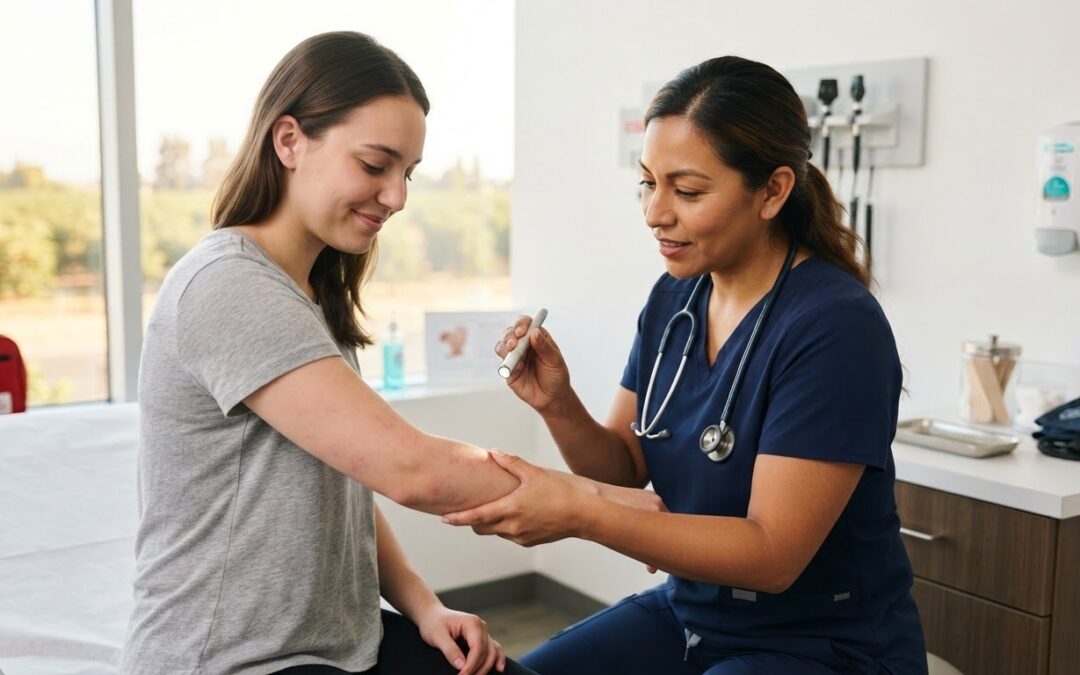
What soothes one rash could make another worse. Itching, redness, and irritation can disrupt your day, but different causes may look alike. That makes choosing a treatment for skin rashes less straightforward than reaching for the first cream in the cabinet. Irritation, an allergic response, and infection may call for different care.
It’s understandable to wonder whether a rash can be managed at home or needs medical attention. This guide covers common treatment approaches, low-risk steps that may ease mild symptoms, and warning signs that call for prompt evaluation. It also explains what details a clinician may ask about, such as when the rash began, what changed recently, and whether you have other symptoms. For an acute rash that needs assessment but isn’t an emergency, Premium Urgent Care offers walk-in evaluations in Clovis, Selma, and Fresno.
Key Takeaways
- A rash is a visible skin change, not a diagnosis. Its timing, location, appearance, and possible triggers can help guide assessment.
- Effective treatment for skin rashes depends on the likely cause. A clinician may review your symptoms and exposures before recommending care.
- Irritation, allergic responses, inflammatory conditions, and skin infections can require different treatment approaches.
- For mild symptoms, avoid known irritants and keep the area clean. Seek medical evaluation for a rash that is severe, persistent, painful, or accompanied by fever.
- Premium Urgent Care offers walk-in evaluations for acute rash and skin infection concerns in Clovis, Selma, and Fresno.
Treatment for Skin Rashes Starts With Understanding the Possible Cause
A rash is a visible change in the skin, not a diagnosis. Redness or itching can have different causes, so treatment for skin rashes should be guided by the full picture, not appearance alone. The rash’s shape, location, timing, symptoms, and possible exposures can help a clinician decide what to assess and what care may be appropriate.
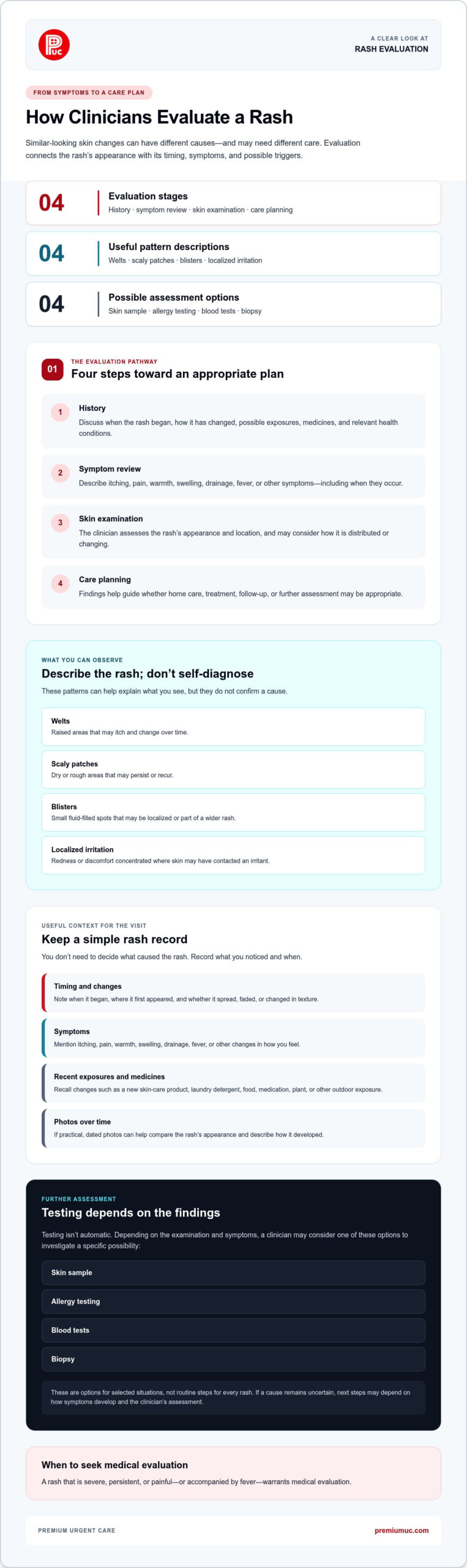
Some patterns offer clues, but they don’t confirm a cause. Raised welts may appear and fade or shift; scaly patches can develop gradually; blisters may form in one area or spread; and localized irritation may occur where skin touched a product or plant. These descriptions can help you explain what you see, but they don’t identify the condition. A general overview of a skin rash can explain common patterns, but it can’t determine what is causing your symptoms.
- Welts: Raised areas that may itch and change over time.
- Scaly patches: Dry or rough areas that may persist or recur.
- Blisters: Small fluid-filled spots that may be localized or part of a wider rash.
- Localized irritation: Redness or discomfort concentrated where the skin may have contacted an irritant.
Use these observations to describe the rash, not to self-diagnose. Its appearance may change, and whether it is spreading or accompanied by pain can matter as much as its initial pattern.
What details can help describe a new rash?
Note when the rash began, where it first appeared, and whether it has spread, faded, or changed in texture. Record symptoms such as itching, pain, warmth, swelling, or drainage, as well as any changes in how you feel. If practical, take a dated photo so you can compare its appearance over time and describe those changes during an evaluation.
Think about recent exposures, too. A new skin-care product, laundry detergent, plant, medication, or other change may be relevant. You don’t need to decide whether it caused the rash. Recording what changed and when gives a clinician useful context.
Why can different rash causes look alike?
Allergies, irritation, infections, and inflammatory conditions can overlap in appearance. Contact dermatitis, eczema, hives, and tinea, a fungal infection, are examples of conditions that can cause visible skin changes or discomfort. No single feature reliably separates every possibility, and similar-looking rashes may need different care.
A clinician may consider the pattern alongside the rash’s timing, location, spread, and possible triggers. Share your notes, including new exposures or medicines, and mention any symptoms that appeared alongside the rash. This helps guide the evaluation without relying on a guess based on a photo or a familiar-looking patch.
How Clinicians Evaluate a Rash Before Recommending Treatment
Rash evaluation usually starts with a review of your health and symptom history, followed by an examination of the affected skin. The clinician then considers the findings when discussing an appropriate care plan. The goal is to connect what the rash looks and feels like with when it began and what may have triggered it. Rash treatment should match the suspected cause because similar-looking changes can call for different care.
A clinician may ask where the rash started, whether it has spread, how it has changed, and whether you’ve used a new product, started a medicine, or had a relevant outdoor exposure. They’ll also consider other symptoms and your medical history. Clear details can help narrow possibilities, though they don’t guarantee that every cause can be identified in one visit.
- History: Discuss when the rash began, how it has changed, possible exposures, medicines, and relevant health conditions.
- Symptom review: Describe itching, pain, warmth, swelling, drainage, fever, or other symptoms, including when they occur.
- Skin examination: The clinician assesses the rash’s appearance and location, and may consider how it is distributed or changing.
- Care planning: Findings help guide whether home care, treatment, follow-up, or further assessment may be appropriate.
What information should you share during a rash evaluation?
Before the visit, make a simple timeline: when symptoms started, where you first noticed them, and whether the rash is spreading, fading, or changing. List recent medicines and changes to skin-care products, detergent, or foods, as well as relevant contact with plants or other outdoor exposures. Mention symptoms such as fever, pain, swelling, or itching, even if they seem unrelated.
If you’ve taken photos as the rash changed, they may help show how it developed. Describe what you observed without trying to assign a diagnosis. This context can help the clinician consider possible triggers during the examination.
When might an examination or testing be considered?
Your symptom history and skin examination help determine whether further assessment could be useful. Testing isn’t automatic. Depending on the findings, a clinician may consider a skin sample, allergy testing, blood tests, or a biopsy to investigate a specific possibility. These are options for selected situations, not routine steps for every rash. The American Academy of Dermatology on rashes also explains how clinicians assess rashes and approaches to care.
If the cause remains uncertain, next steps may depend on how symptoms develop and the clinician’s assessment. Follow the care guidance you receive, and report meaningful changes or new symptoms as advised. Some rashes need further evaluation if they persist or change.
For an acute rash that needs medical assessment but isn’t an emergency, Premium Urgent Care’s walk-in rash evaluations are available in Clovis, Selma, and Fresno.
How Treatment for Skin Rashes Differs by Likely Cause
There isn’t one remedy that suits every rash. Irritation, an allergic response, an inflammatory condition, and an infection can produce overlapping skin changes, yet the care approach may differ. A product that helps one problem may be ineffective or unsuitable for another. Treatment for skin rashes aims to address the suspected cause and symptoms, with a clinician guiding care when the cause isn’t clear.
This comparison can help explain what may prompt assessment, but it isn’t a way to diagnose yourself. A clinician considers the rash’s history and examination findings before recommending a plan.
| Possible cause | Clues that may prompt assessment | Clinician-guided treatment direction |
|---|---|---|
| Irritation or allergy | Rash follows contact with a product, detergent, plant, or other possible trigger; itching or redness may occur. | Review possible exposures and consider steps to reduce contact with a suspected trigger when safe and practical. |
| Inflammatory condition | Dry, scaly, or recurring patches may occur, though appearance alone can’t identify the condition. | Assess the pattern and symptoms, then consider care suited to the suspected inflammatory cause. |
| Possible infection | Increasing redness, pain, warmth, or drainage may warrant timely evaluation. | Examine the area and consider whether infection is involved before selecting appropriate care. |
Allergic or irritant rashes: identify and reduce the trigger
If a rash appeared after a new skin product, detergent, plant contact, or other exposure, note when it happened and where the skin was affected. A clinician may consider whether that contact is relevant. If safe and practical, avoid the suspected irritant while monitoring the area, but don’t assume that removing one exposure will resolve every rash. Seek clinical advice if symptoms persist or worsen, or if the likely trigger is difficult to identify.
Heat-related irritation has its own considerations. If heat or sweating may be contributing, the heat rash treatment guide offers more focused information about that distinct pattern. A clinician can assess an uncertain or changing rash rather than relying on appearance alone.
Possible infection or inflammatory rash: why assessment matters
Worsening redness, increasing pain or warmth, or drainage deserves timely clinical assessment. These signs can occur with infection, but they don’t prove the cause. Inflammatory conditions can also cause persistent or uncomfortable changes, and several problems may look similar. Avoid using leftover prescription medicines or unverified remedies, which may not suit the cause.
If the rash involves broken skin, mention that during an evaluation. Guidance on caring for cuts and other skin breaks is available in this wound care guide. An assessment can help determine whether the skin change or break needs additional care.
Matching care to the suspected cause matters more than choosing a treatment based on a familiar-looking rash. If symptoms are worsening or you’re unsure what may have triggered them, a clinician can evaluate the concern and guide next steps.
What You Can Do at Home and When to Seek Medical Care
For a mild rash without concerning symptoms, simple care may help protect irritated skin while you monitor it. Avoid a product or substance you suspect is irritating your skin, if doing so is safe and practical. Keep the area clean, and try not to scratch, since scratching can further irritate skin or break its surface.
Be cautious about what you apply. Unverified home remedies and leftover prescription medicines may be unsuitable for the cause and could irritate the skin or complicate assessment. Don’t start or stop a prescribed medicine on your own. Contact a clinician for advice if a rash appears after starting one. Home care shouldn’t delay evaluation if symptoms are worsening.
- Consider prompt medical advice if the rash is spreading, worsening quickly, significantly painful, or accompanied by fever.
- Seek timely assessment for increasing redness, warmth, swelling, or drainage, which may need evaluation for infection.
- Get clinician guidance if a rash begins after a new medicine or if new symptoms appear alongside it.
Which symptoms mean a rash should be assessed promptly?
Pay attention to how symptoms are changing, not only how the rash looks at one moment. Rapid worsening, spreading redness, significant pain, drainage, or fever are reasons to seek prompt medical advice. A rash that develops after starting a medicine also merits timely guidance, even if you’re unsure whether the medicine is related. Share when it began and what has changed.
If symptoms feel severe or are escalating, don’t wait to see whether home measures help. A clinician can assess whether the rash or accompanying symptoms need further care.
When is emergency care more appropriate than urgent care?
Trouble breathing or swelling of the face or throat that may affect the airway can signal a medical emergency. Call emergency services immediately rather than going to an urgent care clinic. Severe or rapidly escalating symptoms should not wait for a walk-in visit. If you’re unsure whether breathing or airway symptoms are present, treat the situation as urgent and seek emergency help.
For a non-emergency rash that needs prompt assessment, local urgent care can be an appropriate option. Premium Urgent Care provides walk-in evaluations for acute rash and skin infection concerns in Clovis, Selma, and Fresno. Urgent care is distinct from emergency care and isn’t a substitute when severe symptoms require an emergency response.
If your rash is worsening or you’re concerned about possible infection, seek a walk-in rash evaluation at Premium Urgent Care.
Rash Evaluation at Premium Urgent Care in Clovis, Selma, and Fresno
A rash that needs medical attention but isn’t a severe emergency may be appropriate for a local urgent care evaluation. Premium Urgent Care provides walk-in consultations for acute rash and skin infection concerns in Clovis, Selma, and Fresno. A clinician can assess the affected skin, consider possible causes such as infection or an allergic response, and discuss next steps based on the evaluation.
An assessment informs care, but it doesn’t guarantee that the cause will be identified or that a particular treatment will be right for you. Be ready to describe how the rash has changed and any symptoms that came with it. This context can help the clinician understand your concern and determine an appropriate plan for treatment for skin rashes.
What to bring and explain during a walk-in rash visit
A brief symptom timeline can make it easier to explain what’s happening: note when the rash began, where it appeared, and whether it’s spreading or changing. Share recent exposures, medication changes, and symptoms beyond the rash. If available, bring a list of medicines you take. These details can inform the evaluation, but gathering them should never delay emergency care.
- When symptoms began and how they’ve changed
- Recent medication changes or new skin and environmental exposures
- Other symptoms, such as fever, pain, swelling, or itching
Choosing a local next step for an acute rash
Consider urgent care when a rash is worsening, painful, spreading, or raising concern about a skin infection, but symptoms don’t appear to be a medical emergency. A clinician’s evaluation can help guide what to do next. If you have trouble breathing or swelling that affects your face or throat, call emergency services instead. Don’t delay emergency care to travel to a walk-in clinic or collect belongings.
Premium Urgent Care offers walk-in evaluations for acute rash concerns across Clovis, Selma, and Fresno. The clinic provides local assessment for non-emergency symptoms, not a replacement for emergency services. If you’re uncertain about the right level of care and symptoms are severe or rapidly escalating, seek emergency help.
For a non-emergency rash concern that needs assessment, visit the Premium Urgent Care website for local rash care information.
Choose a Clear Next Step for Your Skin
Uncertainty about a rash doesn’t mean you need to guess at treatment or try several remedies at once. Avoid further irritation where possible, pay attention to meaningful changes, and seek clinical guidance if symptoms are concerning or not improving. A measured approach can help you avoid steps that may not suit the cause.
The right treatment for skin rashes starts with understanding what may be behind the change, then deciding whether home care or an evaluation is the safer next move. If you have an acute rash or skin infection concern that needs non-emergency assessment, Premium Urgent Care offers walk-in consultations in Clovis, Selma, and Fresno. Visit Premium Urgent Care for local rash evaluation information.
With a thoughtful next step, you can move forward with appropriate support.
Frequently Asked Questions
What is the best treatment for a skin rash?
The best treatment depends on what’s causing the rash, so there isn’t one approach that works for every case. A moisturizer or other product that suits dry, irritated skin may not be appropriate for a rash caused by infection or an allergic response. Avoid choosing a medication based only on a photo or someone else’s experience. If the cause is unclear or symptoms are significant, a clinician can help guide treatment for skin rashes.
Can I treat a skin rash at home?
Some mild rashes without other concerning symptoms may be managed initially with gentle care. Try a cool, damp cloth for comfort, wash the area gently, and avoid a product you suspect is irritating your skin. Don’t apply several new products to see what works, and don’t stop prescribed medicine without medical advice. If the rash worsens, spreads, or becomes painful, contact a clinician rather than relying on home care alone.
When should I see a doctor for a skin rash?
Seek medical advice if a rash is spreading, worsening, painful, persistent, or accompanied by fever or other new symptoms. Get guidance if the rash appears after starting a medicine, since a clinician can advise what to do next. Trouble breathing or swelling of the face or throat requires emergency help, not a routine appointment. If symptoms are rapidly escalating, don’t wait for a walk-in visit.
How can I tell if a rash is infected?
You can’t confirm an infection by appearance alone, but increasing redness, warmth, pain, swelling, or drainage can be reasons to seek assessment. Fever or feeling unwell along with a changing skin area also deserves prompt medical advice. Don’t squeeze, puncture, or try to drain the rash yourself. A clinician can examine the skin and consider whether infection may be involved before recommending an appropriate next step.
Can an allergic reaction cause a skin rash?
Yes. Contact with a product, detergent, plant, or other trigger can cause an allergic rash, and reactions may also happen after exposure to something taken or eaten. Itchy raised welts are one possible pattern, but appearance alone can’t confirm an allergy. Note what changed before symptoms began and share that information with a clinician, especially if the rash is worsening or the suspected trigger isn’t clear.
Can urgent care treat a skin rash?
Yes. Premium Urgent Care provides walk-in consultations for acute rash and skin infection concerns in Clovis, Selma, and Fresno. A clinician can assess the rash and consider possible causes, including infection or an allergic response. The evaluation informs next steps, but it can’t guarantee a particular diagnosis or outcome. Urgent care is for concerns that need medical assessment but aren’t emergencies; severe symptoms require emergency services.
What happens if a skin rash keeps spreading?
A spreading rash should be assessed, particularly if it’s changing quickly, becoming painful, or accompanied by fever or other new symptoms. Expansion doesn’t identify the cause by itself, so avoid assuming it’s simply an allergy or infection. Note how quickly it’s spreading and whether new symptoms appear, then share those details with a clinician. If breathing becomes difficult or face or throat swelling occurs, seek emergency help immediately.