

Could a symptom that looks like an STI have another cause, or could an STI be present without symptoms? Both are possible. STI symptoms can offer useful clues, but they can’t confirm a diagnosis. If you notice a change or think you may have been exposed, a clinical evaluation can help you decide what to do next.
This guide covers symptoms that warrant attention, why symptoms alone can’t identify an STI, and when to seek urgent or emergency care. It also explains what to consider about testing and follow-up. Premium Urgent Care provides walk-in urgent care consultations for STI symptoms or exposure concerns in Clovis, Selma, and Fresno. You don’t need to know exactly what’s causing a symptom before seeking guidance.
Key Takeaways
- STI symptoms can vary, resemble other conditions, or be absent, so symptoms alone can’t identify an infection.
- Changes such as unusual discharge, sores, irritation, or pain when urinating are worth discussing with a clinician, especially after a possible exposure.
- Testing timing depends on the infection, exposure, symptoms, and clinical guidance. A clinician can help determine an appropriate next step.
- Seek emergency care for severe or rapidly worsening symptoms. The guidance below explains when prompt attention matters.
- For non-emergency STI symptoms or exposure concerns, walk-in urgent care consultations in Clovis, Selma, and Fresno can help you discuss next steps.
STI Symptoms: What Signs Can Mean, and What They Cannot Confirm
A change in your body can be unsettling, but it doesn’t automatically mean you have a sexually transmitted infection. Discharge, irritation, and pain can have several causes. Symptoms are useful details to share during an evaluation, not a basis for diagnosing yourself or assuming the worst.
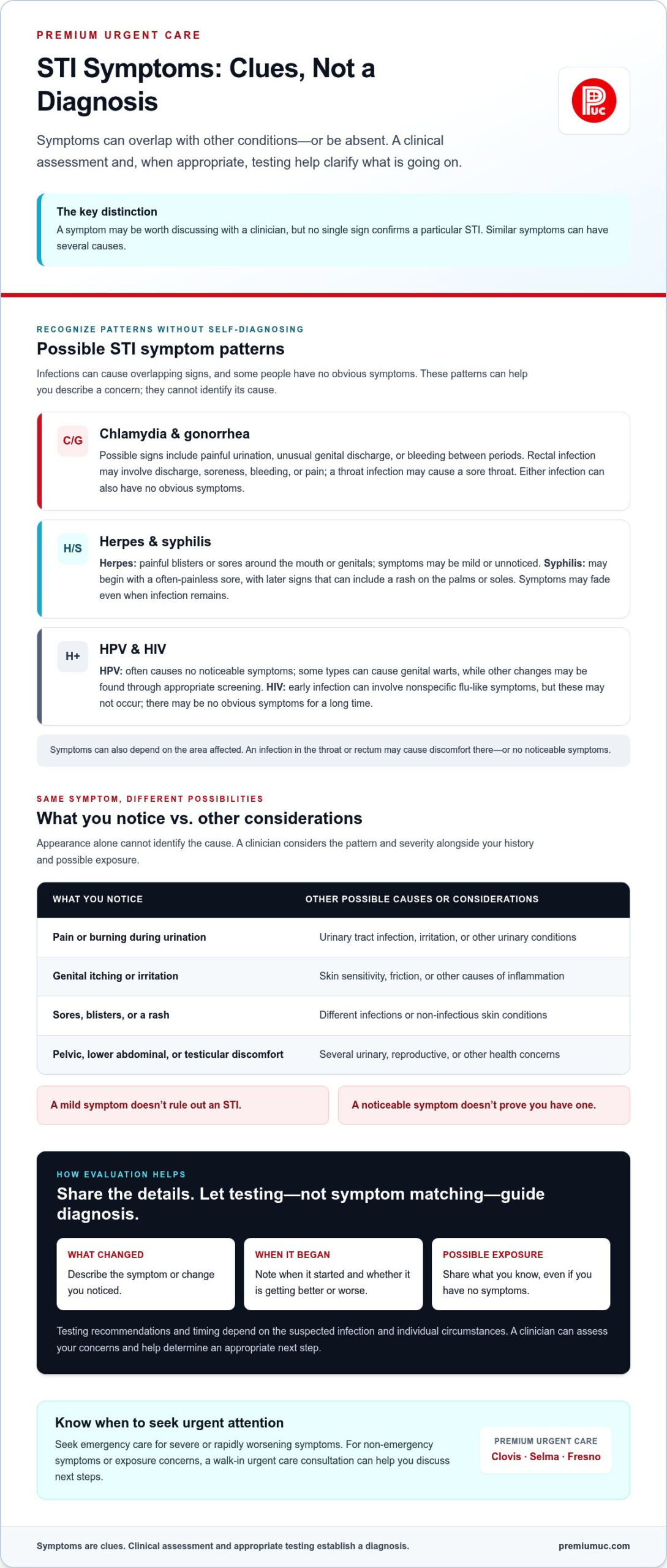
A symptom is a clue, not a diagnosis. Confirming an STI requires clinical assessment and, when appropriate, testing. Symptoms vary by infection and person. Some infections cause noticeable changes, while others cause none. A general overview of sexually transmitted infections explains the broad category, but it can’t determine what is causing an individual symptom.
Which symptoms can occur with sexually transmitted infections?
Possible signs include unusual genital discharge, pain or burning during urination, sores or blisters, itching, and irritation that feels different from usual. New or persistent lower abdominal or pelvic discomfort and testicular pain also deserve clinical attention. These symptoms can occur with STIs, but they can have other causes too. No single sign confirms a particular infection.
Before seeking care, note what changed, when it began, and whether it is getting better or worse. Painful urination, for example, can occur with an STI, a urinary tract infection, or another condition. Skin irritation and sores also have different possible explanations. Rather than trying to identify an infection from a symptom list, share your symptoms and possible exposure history with a clinician; community healthcare services such as Merali Pharmacy & Clinic highlight how accessible clinical settings can support individuals with private health assessments.
Can you have an STI without symptoms?
Yes. Some STIs may be present without obvious signs, so feeling well doesn’t reliably tell you whether you have an infection. Symptoms alone can’t confirm or rule out an STI. If you may have been exposed, you can discuss that concern with a qualified clinician even if you haven’t noticed any changes.
When you seek advice, share what you know about the possible exposure and any symptoms, including when they started. Testing recommendations and timing depend on the suspected infection and individual circumstances. A clinician can help determine an appropriate next step. If you’re searching for “sti symptoms,” remember that symptoms can prompt an evaluation, but they aren’t a diagnosis.
Common STI Symptoms by Infection: Patterns Worth Recognizing
Different infections can cause overlapping signs, and symptoms vary by person and by the area of the body affected. An infection in the throat or rectum may cause discomfort in that area or no noticeable symptoms. Patterns can help you describe a concern, but they can’t identify its cause.
Testing, not symptom matching, establishes an STI diagnosis. The CDC’s STI information offers an overview of infections and prevention. A clinician can consider your symptoms and exposure history in context.
How can chlamydia and gonorrhea symptoms appear?
Chlamydia and gonorrhea may cause painful urination, unusual genital discharge, or bleeding between periods. If the rectum is affected, symptoms can include discharge, soreness, bleeding, or pain. A throat infection may cause a sore throat. Either infection can also occur without obvious symptoms. Because similar signs have other possible causes, a symptom list can’t reliably distinguish one infection from another.
What signs may occur with herpes, syphilis, HPV, or HIV?
Herpes can cause painful blisters or sores around the mouth or genitals, though some people have mild or unnoticed symptoms. Syphilis may begin with a sore that is often painless; later signs can include a rash, including on the palms or soles. Symptoms may fade even when infection remains, so changes alone don’t show whether syphilis has resolved.
Because STI symptoms vary and overlap, describe what you’ve noticed, when it began, and any possible exposure instead of trying to name the infection yourself. For non-emergency symptoms or exposure concerns, a walk-in urgent care consultation can help you discuss next steps. A clinician can assess your concerns and recommend a course of action based on clinical judgment.
STI Symptoms or Another Condition? How Evaluation Helps
Urinary discomfort, skin changes, sores, and genital irritation can raise questions, but appearance alone can’t identify the cause. A urinary tract infection, irritation from products, a skin condition, or an STI may produce overlapping symptoms. The pattern and severity help a clinician decide what to consider, but they can’t reliably identify an infection on their own.
| What you notice | Other possible causes or considerations |
|---|---|
| Pain or burning during urination | Urinary tract infection, irritation, or other urinary conditions |
| Genital itching or irritation | Skin sensitivity, friction, or other causes of inflammation |
| Sores, blisters, or a rash | Different infections or non-infectious skin conditions |
| Pelvic, lower abdominal, or testicular discomfort | Several urinary, reproductive, or other health concerns |
Use this comparison as a starting point, not a diagnostic tool. The detailed breakdown of STD symptoms from Mayo Clinic describes possible patterns, but an online list can’t examine you, consider your full history, or establish a diagnosis. A mild symptom doesn’t rule out an STI, and a noticeable symptom doesn’t prove you have one.
Why can STI symptoms resemble other health concerns?
Different conditions can affect the same body areas and cause similar discomfort. Irritation, for example, may follow friction or contact with a product, while sores and skin changes can have infectious or non-infectious causes. How a symptom looks or feels isn’t enough to identify an infection or determine its seriousness. Seek clinical advice if symptoms persist, worsen, or occur after a possible exposure.
What may happen during an STI evaluation?
A clinician may ask what you’ve noticed, when symptoms began, whether they’re changing, and whether a possible exposure occurred. Those details help guide the evaluation. Depending on your circumstances, the clinician may recommend an examination, testing, or another next step. Many clinical settings rely on rapid diagnostic tests to assist in prompt on-site evaluations; learn more about Point of Care Medical to see how screening facilities source these essential diagnostic supplies.
Before your visit, note when symptoms began, how they have changed, and any relevant exposure details. Share medications you take, allergies, and other health information that may affect your care. This information helps the clinician assess your concern and explain practical next steps without relying on symptom matching alone.
When to Seek STI Testing or Urgent Medical Attention
If you’re concerned about an exposure or noticing possible STI symptoms, you don’t need to determine the cause before seeking advice. Testing timing depends on the suspected infection, when the exposure occurred, your symptoms, and the type of test a clinician considers appropriate. There isn’t one testing window that applies to every situation. Don’t wait for symptoms if you’re concerned about a possible exposure.
How soon should you get checked after possible exposure?
Contact a clinician promptly to discuss what happened and when. Some tests may not detect an infection immediately after exposure, while symptoms or other circumstances may affect the appropriate next steps. A clinician can give individualized guidance on testing timing and whether prevention measures should be considered. If you’ve already had a test, ask how to understand the result and whether follow-up is recommended.
Use this practical sequence:
- Consider the exposure. Note when it may have happened and what concerns you.
- Record symptoms. Write down when they started, whether they’re changing, and any relevant health details.
- Seek clinical advice. Share your concerns, even if you feel well or aren’t sure how to describe them.
- Follow recommendations. Ask about testing timing, follow-up, and any precautions that apply to your situation.
Which STI-related symptoms need emergency care?
Severe or sudden pain, fainting, heavy bleeding, or rapidly worsening illness calls for emergency evaluation. These warning signs need prompt attention, not a routine appointment. If you’re experiencing a life-threatening emergency, contact emergency services.
Urgent care can assess non-emergency concerns; severe or life-threatening warning signs require emergency care. Symptom intensity alone can’t identify an STI, but a sudden or serious change should not be ignored. If you’re unsure how serious your symptoms are, seek medical guidance promptly.
For non-emergency concerns, Premium Urgent Care provides walk-in urgent care consultations for STI symptoms or exposure concerns. A clinician can assess your situation and discuss appropriate next steps. Seek walk-in evaluation for STI concerns in Clovis, Selma, or Fresno.
Getting Help for STI Symptoms in Clovis, Selma, or Fresno
Possible STI symptoms or a suspected exposure can be difficult to bring up, but you don’t need a diagnosis before seeking care. A walk-in urgent care consultation offers a practical next step for non-emergency concerns. A clinician can hear what’s happening, assess your symptoms, and discuss recommendations based on your circumstances.
Care should be respectful and nonjudgmental. If privacy is on your mind, raise that concern during your visit and ask how your information is handled. Don’t let uncertainty about what to say keep you from describing the concern clearly.
What should you prepare before an urgent care visit?
A few details can make the conversation more useful. Before you go, consider noting:
- When symptoms began and whether they have changed
- What symptoms you’ve noticed, including where they occur
- When a possible exposure may have happened, if you know
- Relevant health information, medications, and allergies
Bring identification and insurance information if applicable. These details can help with your visit. Most important is sharing honest, relevant information with the clinician. If you’re unsure about dates or details, say so; an estimate is more useful than feeling you must have every answer.
Where can local patients seek an evaluation?
Premium Urgent Care serves Clovis, Selma, and Fresno, providing walk-in urgent care consultations for non-emergency STI symptoms or exposure concerns. During an evaluation, a clinician can consider your symptoms and history, then explain appropriate next steps.
You don’t need to be certain about the cause to take action. If you’re concerned about STI symptoms or a possible exposure, seek an evaluation and share what you know. For severe or sudden pain, fainting, heavy bleeding, or rapidly worsening illness, seek emergency care rather than urgent care. Explore Premium Urgent Care for a local next step.
Take a Calm, Practical Next Step
STI symptoms can offer clues, but they can’t confirm or rule out an infection. Some infections cause no noticeable changes, and similar symptoms may have other causes. If you’re concerned about a possible exposure, don’t wait for symptoms before seeking guidance. A clinician can consider your concerns and discuss appropriate next steps, including testing recommendations for your situation.
For non-emergency STI symptoms or exposure concerns, Premium Urgent Care provides urgent care consultations for people in Clovis, Selma, and Fresno. A clinician can assess your concerns and discuss next steps. Seek emergency care for severe or sudden pain, fainting, heavy bleeding, or rapidly worsening illness.
You deserve clear, respectful care, and you don’t need to have all the answers before asking for help. Get care for non-emergency STI concerns at Premium Urgent Care in Clovis, Selma, or Fresno.
Frequently Asked Questions
What are the most common STI symptoms?
Common possible STI symptoms include unusual genital discharge, pain or burning during urination, sores or blisters, itching, and genital irritation. Some people also experience pelvic or lower abdominal discomfort or testicular pain. These signs can have non-STI causes, and some infections cause no noticeable symptoms. Symptoms can guide a conversation with a clinician, but clinical assessment and, when appropriate, testing help determine what’s causing them.
Can you have an STI without knowing it?
Yes. An STI can be present without obvious symptoms. Feeling well doesn’t reliably establish whether you have an infection, and the absence of symptoms isn’t a substitute for testing when it’s recommended. If you think you may have been exposed, discuss the circumstances with a qualified clinician. They can help determine whether testing is appropriate and advise on timing based on the infection and your situation.
How soon do STI symptoms appear after exposure?
There isn’t one timeline that applies to every STI. Symptoms may appear at different times depending on the infection and the person, and some infections cause no noticeable symptoms. Testing timing also varies by infection and test type. If you’re concerned about a possible exposure, contact a clinician for individualized advice rather than waiting for symptoms or relying on a single testing window.
Can STI symptoms be mistaken for a urinary tract infection?
Yes. Pain or burning during urination can occur with an STI, a urinary tract infection, or another condition, so the symptom alone can’t distinguish between them. Unusual discharge or irritation may offer additional clues, but still can’t confirm the cause. If urinary symptoms persist, worsen, or follow a possible exposure, seek clinical advice about an appropriate evaluation and next steps.
Should I get tested for an STI if I have no symptoms?
Testing may be appropriate even if you feel well, particularly after a possible exposure or if screening is recommended for your circumstances. Some STIs cause no noticeable symptoms, so how you feel can’t reliably determine your infection status. A clinician can consider your health history and exposure concerns, then advise whether testing is appropriate and when.
When should STI symptoms be treated as an emergency?
Seek emergency evaluation for severe or sudden pain, fainting, heavy bleeding, or rapidly worsening illness. These warning signs need prompt attention rather than a routine urgent care visit. If symptoms are severe or life-threatening, contact emergency services. For non-emergency symptoms or exposure concerns, clinical evaluation can help determine an appropriate next step without assuming that a particular symptom confirms an STI.
Can urgent care help with STI symptoms or exposure concerns?
Yes. Premium Urgent Care provides walk-in urgent care consultations for non-emergency STI symptoms or exposure concerns in Clovis, Selma, and Fresno. A clinician can assess your concerns and discuss appropriate next steps based on your circumstances. If you have severe or sudden pain, fainting, heavy bleeding, or rapidly worsening illness, seek emergency care instead.