
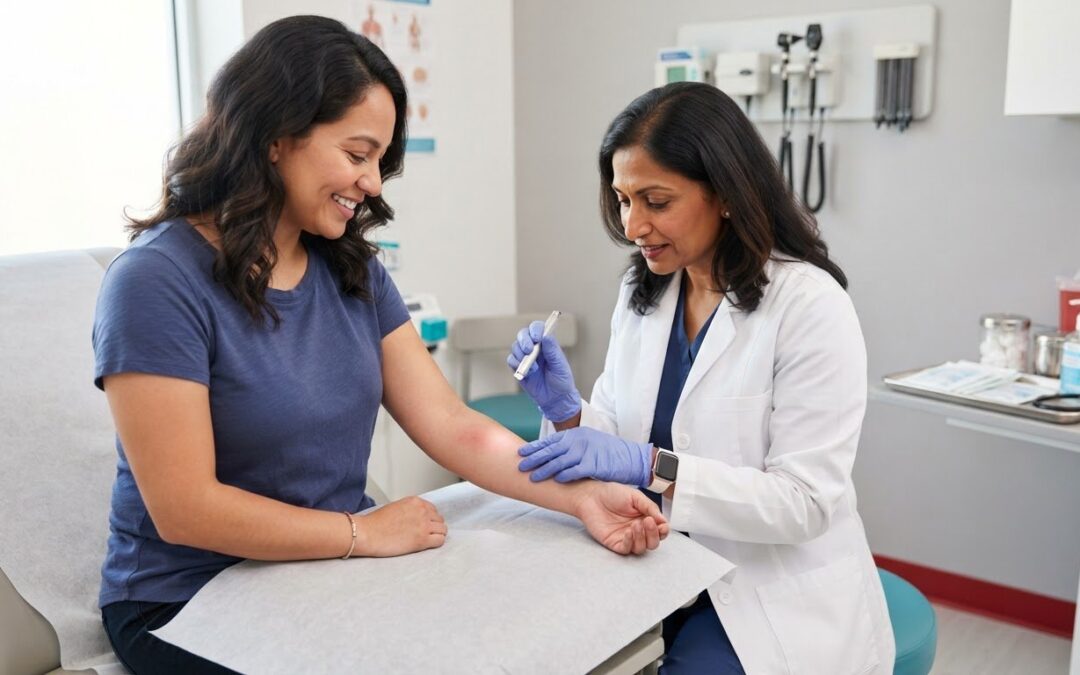
The right medical treatment for skin infection may not start with an antibiotic. A painful, red, or swollen area can have different causes, and treatment depends on what a clinician finds. It’s understandable to wonder whether a skin problem is infected, whether it could spread, or whether it needs a procedure. Choosing an ointment or using leftover antibiotics without knowing the cause may not address the problem.
In this guide, you’ll learn how clinicians assess skin infections, why care can differ for an abscess and cellulitis, and what treatment may involve, including antibiotics, home care, or drainage when clinically appropriate. You’ll also learn what to expect during an urgent care evaluation and which symptoms call for prompt attention.
Premium Urgent Care provides walk-in evaluations for rashes and skin infections, with abscess incision and drainage when appropriate, for patients in Clovis, Selma, and Fresno. For severe symptoms such as rapidly spreading redness, high fever, confusion, shortness of breath, or extreme pain, seek emergency care.
Key Takeaways
- Redness, warmth, swelling, tenderness, or drainage can have different causes, so consider symptoms in context.
- Clinicians use your symptom timeline, medical history, and an examination to guide medical treatment for skin infection. Testing may not always be needed.
- Know which concerns may be monitored briefly and which call for urgent or emergency evaluation.
- Gentle cleansing and covering the area can help while arranging care, but squeezing or trying to drain a suspected abscess at home can cause harm.
- An urgent care evaluation can help clarify appropriate next steps for a rash or suspected skin infection.
Medical treatment for skin infection starts with recognizing the problem
A skin infection develops when microbes, such as bacteria, viruses, or fungi, enter the skin or the tissue beneath it and multiply. Signs can include redness, warmth, swelling, tenderness, or drainage. These changes deserve attention, but they don’t automatically mean there’s an infection. A rash or sore can look different depending on its cause, location, and how it changes over time.
Appearance alone can’t reliably identify the organism or show which treatment is appropriate. Redness, for example, can occur with infection, irritation, or an allergic reaction. A clinician considers the full picture rather than selecting an ointment based only on color or appearance. The broad range of types of skin infections also helps explain why treatment choices differ.
Localized symptoms stay near the affected spot; spreading redness or feeling unwell can signal a more serious problem. Notice whether the area is enlarging, becoming more painful, or developing new symptoms. These changes help guide how promptly to seek care.
Which common skin infections may need medical treatment?
Cellulitis affects deeper layers of skin and may cause expanding redness, warmth, swelling, and tenderness. Impetigo often produces sores or crusted patches and can spread through contact, particularly among children. An abscess is a pocket of pus that may feel painful or swollen. A clinician can assess whether it needs drainage; squeezing or cutting it yourself isn’t a safe substitute for evaluation.
These examples aren’t a checklist for self-diagnosis. A tender, enlarging patch may need a different approach from a superficial sore or a defined pocket of pus. Medical treatment for skin infection depends on the suspected cause and extent of the problem, so a clinician’s assessment helps determine appropriate next steps.
When might a rash not be an infection?
Skin irritation, an allergic reaction, or heat rash can cause redness, bumps, or itching without a microbial infection. Itching, recent exposures such as a new skin product, and the pattern or location of the spots can inform an assessment, but none of these clues confirms the cause by itself. Similar-looking rashes may need different care.
If small bumps appear after heat or sweating, the heat rash treatment guide offers related information. Seek clinical advice if the rash is worsening, painful, draining, or accompanied by feeling unwell. Identifying what’s driving the skin change helps determine whether infection treatment is needed.
How clinicians diagnose a skin infection and choose treatment
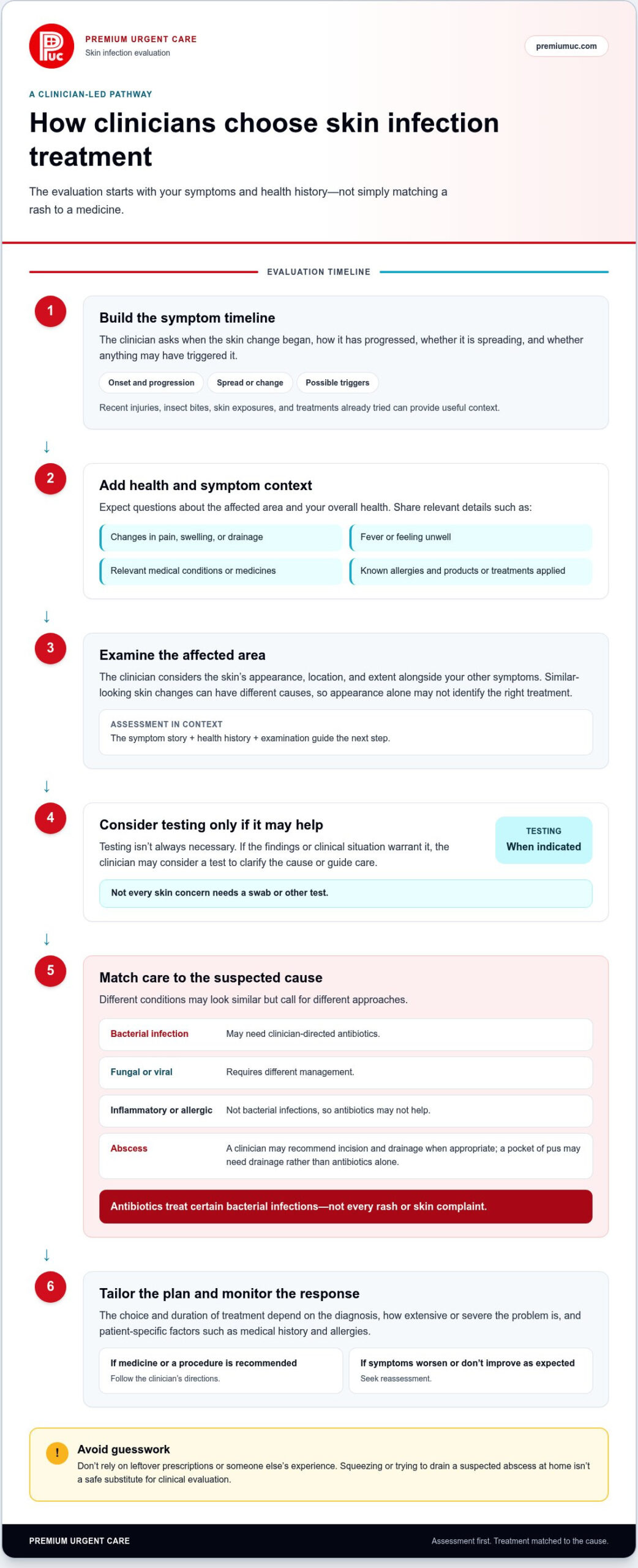
Choosing care starts with building a clear picture of the symptoms, not simply matching a rash to a medicine. During an evaluation, a clinician considers when the skin change began, how it has progressed, whether it is spreading, and whether anything may have triggered it. Recent injuries, insect bites, skin exposures, and treatments already tried can all provide useful context.
What happens during a skin-infection evaluation?
Expect questions about the affected area and your overall health. The clinician may ask whether pain, swelling, or drainage has changed, whether you have a fever or feel unwell, and whether you have relevant medical conditions or take medicines that affect your health. Share known allergies and describe any products or treatments you’ve applied. These details help guide a focused examination.
The clinician examines the area and considers its appearance, location, and extent alongside your other symptoms. Testing isn’t always necessary. If the findings or clinical situation warrant it, the clinician may consider a test to clarify the cause or guide care. Not every skin concern needs a swab or other test.
Why treatment depends on the cause
Different conditions can look similar but call for different approaches. Bacterial infections may need clinician-directed antibiotics, while fungal or viral conditions require different management. Inflammatory or allergic skin problems aren’t bacterial infections, so antibiotics may not help. Antibiotics treat certain bacterial infections, not every rash or skin complaint.
For an abscess, a clinician may recommend incision and drainage when appropriate. A pocket of pus may need this procedure rather than antibiotics alone. Other infections may be treated with medicine, while some rashes call for a different plan. The choice and duration of treatment depend on the diagnosis, how extensive or severe the problem is, and patient-specific factors such as medical history and allergies.
This is why medical treatment for skin infection shouldn’t be based on leftover prescriptions or someone else’s experience. The wrong medicine may not address the cause, and using antibiotics without clinical guidance can delay appropriate care. Follow the clinician’s directions if medicine or a procedure is recommended, and seek reassessment if symptoms worsen or don’t improve as expected.
For a non-emergency skin concern, an evaluation can help clarify the next step. Premium Urgent Care’s skin infection evaluations give a clinician the opportunity to assess symptoms and discuss an appropriate plan, including abscess drainage when clinically indicated.
Home, Urgent, or Emergency Care for Skin Infections?
Deciding where to go depends on how the skin problem is changing and how you feel overall. Medical treatment for skin infection may be appropriate when symptoms are worsening, but a mild, stable skin concern without signs of spreading illness may be monitored briefly. Home observation isn’t a substitute for an assessment if you’re unsure of the cause or the area changes.
| Symptom pattern | Suggested response | Reasons to escalate |
|---|---|---|
| Mild, localized skin change that is stable, with no significant pain or feeling unwell | Monitor closely and keep the area clean. Arrange clinical advice if you’re uncertain or it doesn’t settle. | Seek evaluation if redness expands, pain or swelling increases, drainage appears, or new symptoms develop. |
| Spreading redness, increasing tenderness or swelling, drainage, or a painful lump that may be an abscess | Seek timely evaluation at urgent care. A clinician can examine the area and discuss appropriate next steps. | Escalate to emergency care if symptoms rapidly worsen or severe whole-body symptoms appear. |
| Confusion, severe weakness, breathing difficulty, extreme pain, high fever, or rapidly worsening illness | Seek emergency care. Call 911 for life-threatening symptoms. | These symptoms may signal a serious illness that needs emergency assessment. |
When is urgent care appropriate for a skin infection?
Urgent care can provide a walk-in assessment for non-emergency symptoms that are concerning or getting worse. Don’t wait for a skin problem to become severe if redness is spreading, tenderness is increasing, or a painful lump suggests an abscess. Premium Urgent Care evaluates rashes and skin infections and performs incision and drainage for abscesses when clinically appropriate. The clinician assesses the problem before recommending a plan.
When should you seek emergency help instead?
Choose emergency care for severe symptoms that affect your overall condition, including confusion, severe weakness, breathing difficulty, extreme pain, or a high fever with rapidly worsening illness. Rapidly spreading redness can also be a warning sign, especially if you feel very unwell. If symptoms suggest a life-threatening emergency, call 911 rather than going to urgent care.
People with severely weakened immune systems should seek prompt medical guidance for a suspected infection, since their risk may be higher. If you’re monitoring a mild, stable concern, watch for changes rather than relying on appearance alone. Note whether the affected area grows, becomes more painful, or begins draining. Any worsening should shift the plan toward timely clinical evaluation.
Safe Steps While Arranging Skin Infection Care
Simple precautions can help protect irritated skin while you arrange an evaluation, but they don’t replace medical care when symptoms are worsening. Gently wash the area with clean water and mild soap, then pat it dry. If it’s draining, cover it with a clean dressing when practical and replace the dressing if it becomes wet or soiled.
Don’t squeeze, cut, or try to drain a suspected abscess at home. These actions can injure the skin and may worsen the problem. Avoid picking at sores, applying harsh products, or rubbing the area with tight clothing or other sources of friction. If pain, swelling, redness, or drainage increases, arrange prompt clinical assessment rather than relying on home measures.
How can you reduce irritation and limit spread?
Wash your hands before and after touching the affected skin or changing a dressing. If a sore is draining or may be contagious, don’t share towels, washcloths, or personal items that touch the area. Keep the skin gently clean and covered when practical, and avoid unnecessary contact with the sore. These steps support hygiene while a clinician assesses the cause.
Use a fresh dressing when covering drainage, and handle used dressings carefully. Don’t reuse a dressing that has become damp or dirty. If you’re unsure how to protect the area, focus on gentle cleansing and limiting contact rather than adding multiple creams or treatments before an evaluation. Worsening symptoms take priority: seek prompt care if the area spreads, becomes more painful, or you begin to feel unwell.
What information should you bring to an appointment?
A clear timeline can help the clinician understand how the problem is changing. Note when it began, whether the affected area has grown, and any symptoms such as fever or chills. Bring a list of medicines you take, allergies, relevant health conditions, and treatments or skin products you’ve already tried. Mention recent injuries or exposures that may be relevant.
If the concern involves a cut or other wound, details about how it happened and how you’ve cared for it can also help guide the assessment. Related wound concerns are covered in this Fresno wound-care guide.
Arranging medical treatment for skin infection is a sensible next step if symptoms are progressing or you’re uncertain what’s causing them. Premium Urgent Care provides evaluations for rashes and skin infections, with abscess drainage when clinically appropriate. Arrange an urgent care evaluation for a skin concern so a clinician can assess the area and discuss appropriate next steps.
Getting skin infection treatment at Premium Urgent Care
A rash, tender patch, or draining sore can be difficult to assess on your own. Premium Urgent Care offers walk-in evaluations for rashes and skin infections, giving a clinician the opportunity to review your symptoms and discuss appropriate next steps. The visit focuses on assessing what’s happening and determining a suitable plan based on the clinical findings, rather than assuming every skin concern needs the same treatment.
What can a walk-in skin-infection visit involve?
The clinician will ask when the problem began, how it has changed, and whether you’ve noticed pain, swelling, drainage, or other symptoms. They’ll examine the affected area and consider your overall health and relevant medical history. Sharing what you’ve already tried, any allergies, and whether symptoms are spreading can provide useful context for the evaluation.
After the assessment, the clinician can discuss next steps. Depending on the findings, that may involve a care plan, additional evaluation, or a procedure. An abscess may need incision and drainage if the clinician determines it’s appropriate. A prescription, test, or procedure isn’t automatic; recommendations depend on the individual situation.
It can help to bring a list of current medicines and allergies, along with a clear account of how the skin concern has progressed. If the area has changed since you first noticed it, explain what’s different. That information can help the clinician understand the timeline and make the visit more focused.
How to take the next step in Clovis, Selma, or Fresno
Premium Urgent Care serves patients in Clovis, Selma, and Fresno with walk-in urgent care evaluations. Seek timely assessment if redness is spreading, pain or swelling is increasing, drainage develops, or you’re concerned about a painful lump that could be an abscess. These changes merit clinical attention, even if you’re unsure what’s causing them.
While waiting to be evaluated, keep the area gently clean and covered if it’s draining. Don’t squeeze or attempt to open a lump yourself. If symptoms are rapidly worsening or you develop severe signs such as confusion or difficulty breathing, seek emergency care rather than waiting for an urgent care visit.
Medical treatment for skin infection starts with an appropriate assessment. A clinician can examine the concern and explain the next steps based on what they find. For information about Premium Urgent Care and its locations, find Premium Urgent Care.
Take the Next Step With Confidence
Don’t let uncertainty about a skin change keep you from acting if it’s getting worse. Make a note of when it began, what has changed, and any new symptoms. That record can help make a clinical conversation more focused. If symptoms are severe or rapidly worsening, seek emergency care rather than waiting for a routine evaluation.
The right medical treatment for skin infection depends on an assessment of the specific concern. An evaluation can help replace guesswork with a clearer understanding of what to do next. You don’t need to know the exact cause before seeking guidance.
For a non-emergency rash or suspected infection, Premium Urgent Care offers walk-in evaluations, with abscess incision and drainage when clinically appropriate. Care is available to patients in Clovis, Selma, and Fresno. Find Premium Urgent Care and take a practical next step toward having your skin concern assessed.
Frequently Asked Questions
What is the best medical treatment for a skin infection?
The best medical treatment for skin infection depends on the diagnosis, location, and severity. A clinician may recommend medicine, supportive care, or a procedure for a confirmed abscess. Don’t start antibiotics based on appearance alone or use medication prescribed to someone else. Before your visit, note when symptoms began and any changes, such as a new area of redness or increasing discomfort. Seek assessment if symptoms worsen or you develop a fever.
Can a skin infection go away without antibiotics?
Some minor skin problems improve without antibiotics, but certain bacterial infections need clinician-directed treatment. Antibiotics won’t help every rash or infection, and unnecessary use can cause side effects. A rash caused by irritation, for example, may need a different approach from a bacterial infection. A clinician can assess what’s most likely and advise on care. Arrange prompt evaluation if redness spreads, pain increases, drainage appears, or fever develops.
How do you know if a skin infection is serious?
Worsening pain, expanding redness, increasing warmth or swelling, and pus are reasons to seek medical attention. Fever, chills, or feeling increasingly unwell also warrant prompt evaluation. Confusion, severe weakness, or difficulty breathing can signal an emergency; call 911 for life-threatening symptoms. Don’t rely on a photograph or comparison with someone else’s symptoms to judge severity. If you’re uncertain, describe the changes to a clinician and seek guidance.
What happens if a skin infection is left untreated?
The outcome varies with the cause and how the condition progresses. Some infections can worsen or extend into nearby tissue, while a rash that looks infected may need another kind of care. Delaying assessment can make it harder to respond to a changing problem. If redness continues to expand, pain increases, or fever appears, seek clinical evaluation instead of waiting for the skin to improve on its own.
Can urgent care drain a skin abscess?
Urgent care may assess a suspected abscess and perform incision and drainage if a clinician determines it’s appropriate. A lump isn’t always an abscess, so examination matters before deciding on a procedure. Don’t try to open it with a needle or blade, even if it appears close to the surface. Seek assessment for a painful or enlarging lump, especially if it starts draining or you develop other symptoms.
Should I cover a skin infection with a bandage?
A clean dressing can protect a sore from rubbing against clothing and help contain drainage. Use a fresh one if it becomes wet or dirty, and wash your hands before and after changing it. Avoid picking at the area or sharing towels that touch it. If a dressing sticks, causes irritation, or can’t keep drainage contained, ask a clinician how best to protect the skin.
When should I go to the ER for a skin infection?
Go to the emergency room for severe or rapidly worsening symptoms, confusion, pronounced weakness, or difficulty breathing. Call 911 if symptoms appear life-threatening or the person can’t safely get emergency help. Fever or chills together with spreading redness also call for prompt medical evaluation. Urgent care can assess many skin concerns, but severe symptoms need emergency care. If you’re unsure where to go, prioritize emergency services when the person’s overall condition is deteriorating.