

A stuffy nose or facial pressure alone doesn’t confirm a sinus infection. Sinus infection symptoms can overlap with a cold or allergies, so the pattern over time matters. Symptoms that last more than 10 days without improving, or get worse after you start to feel better, may need medical attention.
Congestion, drainage, facial pain, and headache can be uncomfortable, but their duration and severity offer useful context rather than a diagnosis. If symptoms are persistent or concerning, an evaluation can help you decide what to do next.
This article explains common sinusitis symptoms, how they compare with cold and allergy symptoms, and which patterns may point to a need for care. You’ll also learn when to seek prompt or emergency attention and where to find local urgent care evaluation for sinus complaints in Clovis, Selma, and Fresno.
Key Takeaways
- Common sinus infection symptoms include congestion, drainage, facial pressure, headache, and a reduced sense of smell, but no single symptom confirms the cause.
- Sinusitis, colds, and allergies can share symptoms. The overall pattern and changes over time offer useful context.
- Severe symptoms, worsening after initial improvement, or symptoms lasting more than 10 days without improvement are reasons to seek medical care.
- Recurring episodes and ongoing symptoms are also worth discussing during an evaluation.
- Premium Urgent Care provides walk-in consultations for sinus complaints in Clovis, Selma, and Fresno.
What Are the Most Common Sinus Infection Symptoms?
Sinusitis is inflammation of the tissue lining the sinuses, the air-filled spaces around the nose, cheeks, and forehead. It can cause nasal blockage, drainage, facial pressure or discomfort, headache, and a reduced sense of smell. Symptoms vary in combination and intensity. No single sign confirms sinusitis or reveals its cause.
The phrase sinusitis, also known as a sinus infection, describes a condition that can make breathing through the nose difficult and everyday activities uncomfortable. Congestion and facial pressure may be more noticeable when bending forward, while drainage can be more troublesome at night. These details add context but don’t establish a diagnosis.
Not everyone with sinusitis experiences every common symptom. One person may mainly notice a blocked nose, while another may be bothered most by pressure, drainage, or a change in smell. The overall cluster of symptoms and how it develops are more informative than any single sign.
How sinus pressure, congestion, and drainage can feel
Facial pressure may feel like fullness, aching, or tenderness around the cheeks, forehead, or bridge of the nose. Nasal passages can feel blocked even when the nose is runny: swelling and mucus may restrict airflow while drainage continues. The amount and appearance of drainage vary, and appearance alone doesn’t identify the cause.
Mucus can also run down the back of the throat instead of out through the nose. This is called postnasal drip. It may leave the throat scratchy or irritated and trigger coughing, particularly when lying down. If you notice throat irritation with congestion, consider the whole symptom pattern rather than treating it as proof of a sinus infection.
- Nasal blockage: Breathing through the nose may feel difficult or restricted.
- Drainage: Mucus may come from the nose or travel down the throat.
- Facial pressure: Fullness or discomfort may occur around the cheeks, forehead, or nose.
Other symptoms that may occur with sinusitis
Headache can accompany facial pressure, and a reduced sense of smell may make food seem less flavorful. Bad breath may also occur. These symptoms aren’t unique to sinusitis, so their presence doesn’t confirm the condition. Note whether they appear with congestion or drainage and whether they affect sleep, eating, or other normal activities.
A sore throat can develop when drainage repeatedly irritates the throat, and coughing may happen for the same reason. Nasal symptoms may be most noticeable during the day, while throat irritation or coughing may become more apparent when resting. Timing and changes over time offer useful context.
Sinusitis commonly involves nasal blockage or drainage with facial pressure, and may also cause headache, reduced smell, throat irritation, or cough.
How Symptom Duration and Changes Can Help You Understand Sinusitis
Pay attention to more than how you feel today. How long symptoms have lasted, and whether they’re improving, staying steady, or getting worse, can help a clinician decide whether an evaluation is appropriate. These patterns offer context but can’t identify the cause on their own.
When symptoms persist or worsen after improving
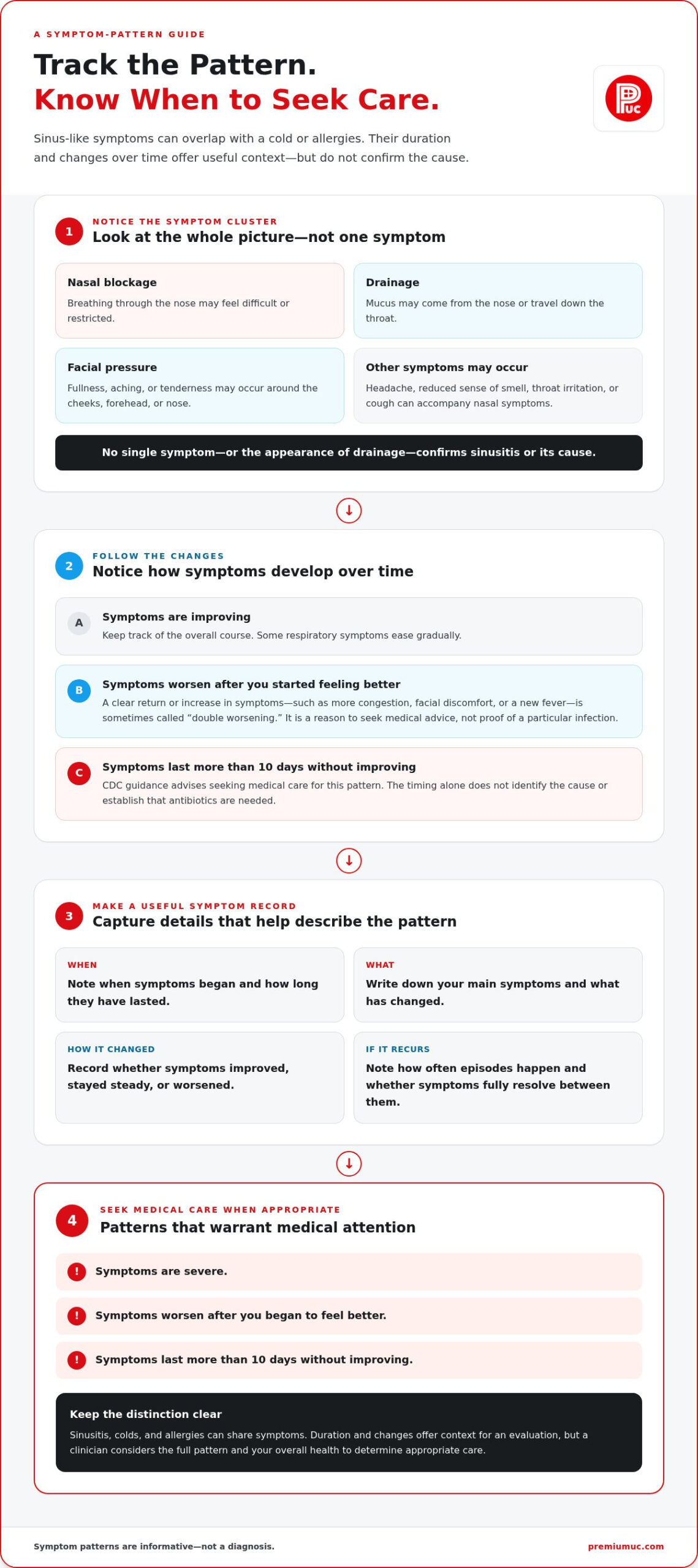
Some respiratory symptoms ease gradually. Another pattern is feeling better for a while, then noticing a clear return or increase in symptoms, such as more congestion, facial discomfort, or a new fever. This change is sometimes called “double worsening.” It’s a reason to seek medical advice, not proof of a particular infection.
The Centers for Disease Control and Prevention (CDC) advises seeking medical care if symptoms are severe, worsen after improving, or last more than 10 days without getting better. Its CDC guidance on sinus infections offers further information on symptoms and care. If you’re tracking how you feel, note when symptoms began, whether they eased, and what changed. Those details can help you describe the pattern during an evaluation.
The course of sinus infection symptoms can guide an evaluation, but duration and changes alone can’t identify the cause.
Why symptom duration does not reveal the cause by itself
Congestion, drainage, facial discomfort, and cough can occur with different conditions. A viral respiratory illness, a bacterial sinus infection, and allergies can share some features. Symptoms that continue beyond 10 days without improvement deserve medical attention under CDC guidance, but that timing doesn’t automatically establish a bacterial cause or mean antibiotics are needed.
A clinician considers the symptom pattern and your overall health to determine what evaluation or care may be appropriate. Don’t use the calendar alone to decide that a specific medication is necessary. Treatment depends on the clinical assessment, and antibiotics aren’t appropriate for every cause of sinus-like symptoms.
A simple symptom record can be more useful than relying on memory. Include the start date, your main symptoms, whether you’re feeling better or worse, and whether improvement was followed by a setback. If symptoms recur, note how often that happens and whether they fully resolve between episodes. This can make a conversation about next steps more focused.
Colds and other respiratory illnesses can produce overlapping symptoms. Read this upper respiratory infection guide for related information. If symptoms are persistent, worsening, or concerning, Premium Urgent Care provides walk-in consultations for sinus complaints in Clovis, Selma, and Fresno. Learn about Premium Urgent Care consultations for local evaluation.
Sinus Infection, Cold, or Allergies: What Symptoms Overlap?
A stuffy or runny nose can happen with sinusitis, a common cold, or allergies. Headache and facial discomfort may overlap, too. That makes it difficult to identify the cause from one symptom, or even a short list of symptoms, in isolation. Comparing patterns can be helpful, but it can’t confirm a diagnosis.
| Feature | Sinusitis | Common cold | Allergies |
|---|---|---|---|
| Nasal symptoms | Congestion and drainage may occur. | Congestion and a runny nose are common. | Congestion and a runny nose may occur, especially around familiar triggers. |
| Pressure or headache | Facial pressure or headache may occur. | Headache or facial discomfort can also occur. | Some people experience pressure or headache along with nasal symptoms. |
| Other clues | Symptoms may occur in a changing cluster. | A cold may include other respiratory symptoms and can precede sinus symptoms. | A known allergy history or symptoms around a recognizable trigger may be useful context. |
The descriptions in this table are general, not diagnostic rules. For more detail on symptoms and when to seek advice, see MedlinePlus information on sinusitis symptoms.
Symptoms shared by sinusitis and a common cold
Both conditions can involve nasal congestion, drainage, headache, and facial discomfort. A cold may come first, with nasal symptoms continuing or changing as you recover. That sequence doesn’t mean every cold has become a sinus infection. Consider whether symptoms are improving, persisting, or worsening instead of treating a familiar sign as a definite answer.
Because colds and sinusitis share symptoms, the overall pattern and its changes matter more than any one sign.
How allergies can resemble sinus symptoms
Allergies can also cause congestion and nasal drainage, making them hard to distinguish from sinusitis based on those symptoms alone. A history of allergies, or symptoms that tend to appear around a known trigger, offers useful context. It isn’t proof: symptoms can overlap, and more than one factor may be involved.
Mucus color isn’t a reliable way to decide that an infection is bacterial. Discolored drainage can occur during respiratory illnesses and doesn’t establish the cause or determine whether antibiotics are appropriate. The same caution applies to a single symptom, such as facial pressure. If symptoms are persistent, worsening, or concerning, a medical evaluation can help guide next steps.
When Should You Seek Medical Care for Sinus Infection Symptoms?
Use symptom severity and progression to guide your next step. A single symptom can’t tell you what’s causing the problem, so consider how long symptoms have lasted, whether they’re changing, and how much they affect daily activities. The CDC recommends medical care for severe symptoms, symptoms that worsen after improving, or symptoms lasting more than 10 days without improvement.
- Seek emergency help for warning signs. Vision changes, swelling around the eyes, a high fever, or severe or rapidly worsening symptoms need urgent attention. Contact emergency services or go to an emergency department rather than relying on routine urgent care.
- Arrange a medical evaluation for persistent symptoms. If symptoms have lasted more than 10 days without improvement, or you have a fever lasting more than three to four days, seek medical advice. These timeframes are reasons to be assessed, not a diagnosis.
- Get assessed if symptoms worsen after improving. A clear setback after you had begun to feel better is a reason to consult a clinician, particularly if pain, congestion, or fever increases.
- Discuss recurring episodes. If sinus-like symptoms keep returning or you experience multiple infections in a year, a clinician can help assess the pattern and consider appropriate next steps.
Symptoms that warrant a medical evaluation
Persistent, worsening, severe, or recurrent symptoms merit professional assessment, especially if they interfere with sleep, eating, or normal activities. The CDC’s thresholds can help you decide when to seek advice, but don’t wait for a particular number of days if symptoms feel severe or concerning. Describe the full pattern, including when symptoms began and whether they improved before worsening.
During an evaluation, share any fever, facial pain, drainage, and changes in how you feel over time. The combination matters more than one sign by itself. A clinician can assess your concerns and discuss next steps; the evaluation doesn’t guarantee a particular diagnosis or treatment.
When symptoms may need emergency attention
Eye-area swelling or changes in vision alongside sinus symptoms can signal a serious problem. A high fever or rapid, severe worsening also calls for emergency attention. These concerns differ from symptoms that are persistent but stable. If you’re unsure how serious a symptom is, seek immediate medical guidance rather than delaying care.
Premium Urgent Care provides walk-in consultations for non-emergency sinus complaints in Clovis, Selma, and Fresno. For persistent or worsening symptoms that don’t appear to be an emergency, seek a walk-in sinus evaluation.
Sinus Infection Evaluation at Premium Urgent Care in Fresno County
Persistent or worsening sinus symptoms can make it hard to know whether to keep monitoring them or seek medical advice. Premium Urgent Care provides walk-in medical consultations for sinus complaints in Clovis, Selma, and Fresno. An evaluation gives you an opportunity to describe what you’re experiencing and have a clinician assess your symptoms and discuss appropriate next steps.
Sinus infection symptoms can overlap with those of colds and allergies, so describe the full picture rather than focusing on one sign. A clinician’s assessment considers your concerns and symptom history. It doesn’t guarantee a particular diagnosis, test, prescription, or treatment plan.
What to share during a sinus symptom evaluation
A brief symptom timeline can make it easier to explain what has changed. Before your visit, note when symptoms began and whether they have improved, stayed about the same, or worsened. Include any period when you started feeling better and then experienced a setback.
Describe the symptoms that affect you most, such as facial pressure, nasal congestion, drainage, cough, sore throat, reduced sense of smell, or fever. Mention how symptoms are affecting sleep or everyday activities, and share whether similar episodes have occurred before. You don’t need to determine the cause before coming in. Clear observations help your clinician understand the concern and decide what steps are appropriate.
- When symptoms started and how they have changed
- Which symptoms are present and how severe or disruptive they feel
- Any fever, recent improvement followed by worsening, or recurring episodes
Finding non-emergency walk-in care near Clovis, Selma, or Fresno
For acute sinus complaints that are persistent, worsening, or concerning but not an emergency, a walk-in urgent care consultation can be a practical local option. Premium Urgent Care provides this evaluation for patients in Clovis, Selma, and Fresno. Explain your symptoms to a clinician and discuss appropriate next steps without assuming in advance that a specific treatment will be needed.
Keep the distinction between urgent care and emergency care clear. Vision changes, swelling around the eyes, or severe and rapidly worsening symptoms may need emergency attention. If you have emergency warning signs, contact emergency services or go to an emergency department rather than relying on routine walk-in care.
If symptoms are lingering, getting worse, or causing concern, visit Premium Urgent Care for a walk-in consultation in Clovis, Selma, or Fresno. Care is guided by your symptoms and clinical assessment.
Choose a Clear Next Step for Your Sinus Symptoms
You don’t need to determine the cause of sinus infection symptoms on your own. If symptoms are interfering with your routine or leaving you unsure what to do, an evaluation can help you discuss your concerns and understand appropriate next steps. It’s reasonable to seek guidance even when symptoms don’t fit neatly into one pattern.
Before seeking care, consider what you most want help with: discomfort, disrupted sleep, trouble getting through daily activities, or uncertainty about whether symptoms are changing. Sharing those concerns can make the conversation more useful and focused. If symptoms feel severe or rapidly worsen, seek emergency care rather than waiting for routine evaluation.
For non-emergency sinus concerns, Premium Urgent Care evaluates sinus complaints through walk-in consultations. Find walk-in care for sinus symptoms in Clovis, Selma, or Fresno.
A walk-in evaluation gives you a chance to discuss your symptoms and next steps with a clinician.
Frequently Asked Questions
What are the first signs of a sinus infection?
Early signs can include nasal stuffiness or a runny nose, facial pressure, headache, or mucus draining into the throat. You might also notice coughing, throat irritation, or a weaker sense of smell. These changes can also happen with a cold or allergies, so they don’t confirm sinusitis. For a useful record, note when each symptom began and whether it’s affecting sleep, appetite, or your usual activities.
How can I tell if I have a sinus infection or a cold?
You can’t reliably distinguish sinusitis from a cold by symptoms alone. Both may cause congestion, nasal drainage, headache, or facial discomfort, and cold symptoms can come before sinus complaints. Track whether you’re steadily improving, staying unwell, or getting worse after a period of improvement. If symptoms are interfering with your routine or causing concern, a clinician can assess your history and symptom pattern.
Does green or yellow mucus mean I need antibiotics?
No. Green or yellow mucus by itself doesn’t show that bacteria are causing your symptoms or that antibiotics are appropriate. Antibiotics don’t treat viral infections, and the choice to use medication depends on an overall clinical assessment. Don’t take leftover antibiotics or someone else’s prescription. If you’re concerned about drainage or other symptoms, note how long they’ve been present and discuss them with a healthcare professional.
When should I see a doctor for sinus infection symptoms?
Seek medical advice if symptoms are severe, worsen after beginning to improve, or last more than 10 days without getting better. A fever lasting longer than three to four days, or repeated sinus infections, is also a reason to arrange an evaluation. These are general care-seeking guideposts, not a way to diagnose yourself. If symptoms are severe or rapidly worsening, seek emergency care rather than waiting for routine evaluation.
Can allergies cause sinus infection symptoms?
Yes. Allergies can cause nasal congestion and drainage that resemble some sinus infection symptoms. Notice whether symptoms tend to appear around a familiar trigger or alongside other signs you associate with your allergies. That history can help explain the context, but it doesn’t prove what’s causing current symptoms, and more than one issue can overlap. If symptoms persist, worsen, or concern you, seek clinical advice.
Are sinus infection symptoms contagious?
Sinusitis itself is inflammation and isn’t necessarily contagious. However, a virus that causes cold symptoms and is followed by sinus complaints can spread between people. Since symptoms alone may not reveal the cause, use routine precautions such as washing your hands and covering coughs. If someone in your household becomes unwell, avoid sharing items that have direct contact with the mouth or nose while symptoms are active.
Can a sinus infection go away without treatment?
Some sinus symptoms improve over time, particularly when they’re associated with a viral illness, though the course varies. Feeling better doesn’t identify the original cause, and symptoms that persist or worsen may need assessment. Track changes rather than relying only on a single good or bad day. Seek medical advice for severe symptoms, worsening after improvement, or symptoms lasting more than 10 days without getting better.