
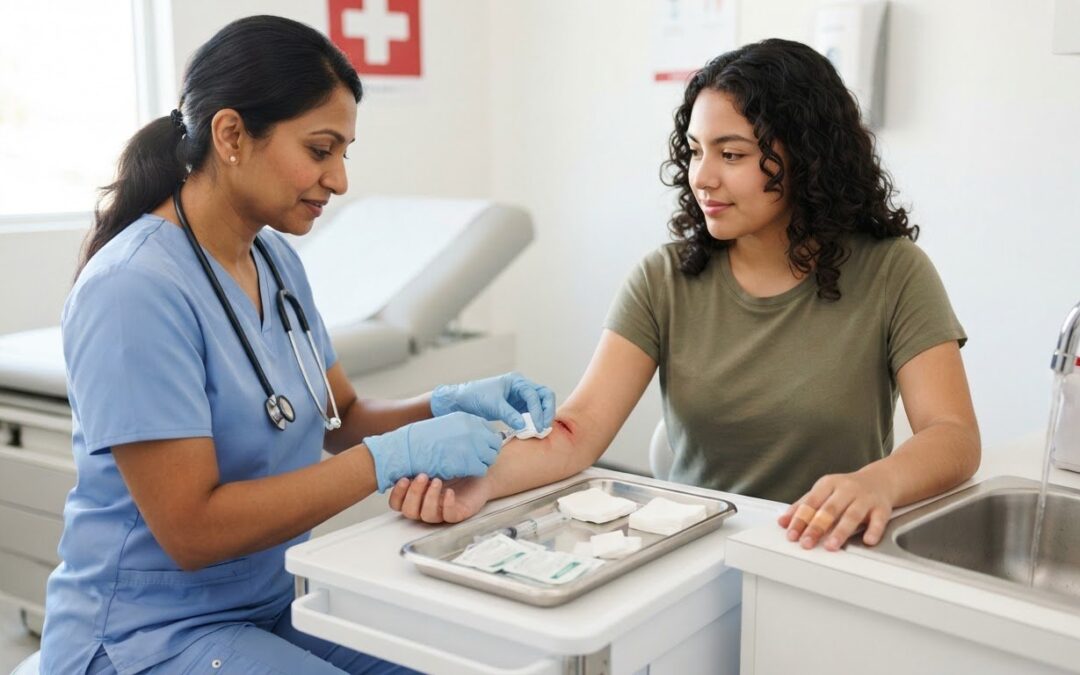
Did you know that seeking treatment for cuts wounds and minor burns at an emergency room often costs ten times more than receiving the same care at an urgent care center? It’s a staggering difference that highlights why understanding your options is so important during a medical mishap. When an accident happens, the immediate priority is stabilization; however, it’s common to feel overwhelmed by uncertainty.
You might worry about the risk of infection or whether a specific injury will leave a lasting scar. We understand that these moments are stressful. Having a disciplined plan can replace panic with focused action and ensure you receive high-level care. It’s our goal to provide the clinical authority you need to manage these situations safely at home or in a clinic.
This guide provides a professional roadmap for managing minor injuries using the latest 2026 clinical standards. You’ll learn how to properly clean a wound, why certain traditional antiseptics are no longer recommended, and how to identify the specific red flags that require a visit to a Central Valley medical expert. By the end of this article, you’ll have the clarity needed to protect your health and avoid unnecessary hospital wait times.
Key Takeaways
- Prioritize immediate bleeding control with firm, direct pressure and ensure the environment is safe before assessing the severity of the injury.
- Learn how to properly irrigate and dress cuts wounds and minor burns to prevent infection and promote optimal healing without using cytotoxic antiseptics.
- Identify the critical differences between first-degree and minor second-degree burns to ensure you follow the correct cooling and blister-preservation protocols.
- Utilize the “Gap Test” and location-based triage to determine when a laceration requires professional suturing rather than simple home care.
- Understand when to bypass the emergency room for expert walk-in care in the Central Valley to receive efficient, high-level treatment for non-emergent injuries.
Immediate First Aid: What to Do in the First 60 Seconds
When an injury occurs, the first minute is a critical window for stabilization. Staying calm is essential; it allows you to assess the safety of your environment and identify potential hazards like broken glass, chemical spills, or heat sources. Before addressing cuts wounds and minor burns, you must wash your hands thoroughly with soap and water. This simple step is the first line of defense against infection, ensuring you don’t introduce bacteria into broken skin while providing care.
Identifying the nature of the injury is the next priority. Lacerations often involve bleeding that requires immediate control, while punctures carry a higher risk of deep-tissue contamination. Thermal burns, conversely, require immediate cooling to stop the progression of tissue damage. Quick categorization helps you apply the correct clinical response immediately, which is the cornerstone of effective patient-centered care.
Step 1: Stopping the Bleeding
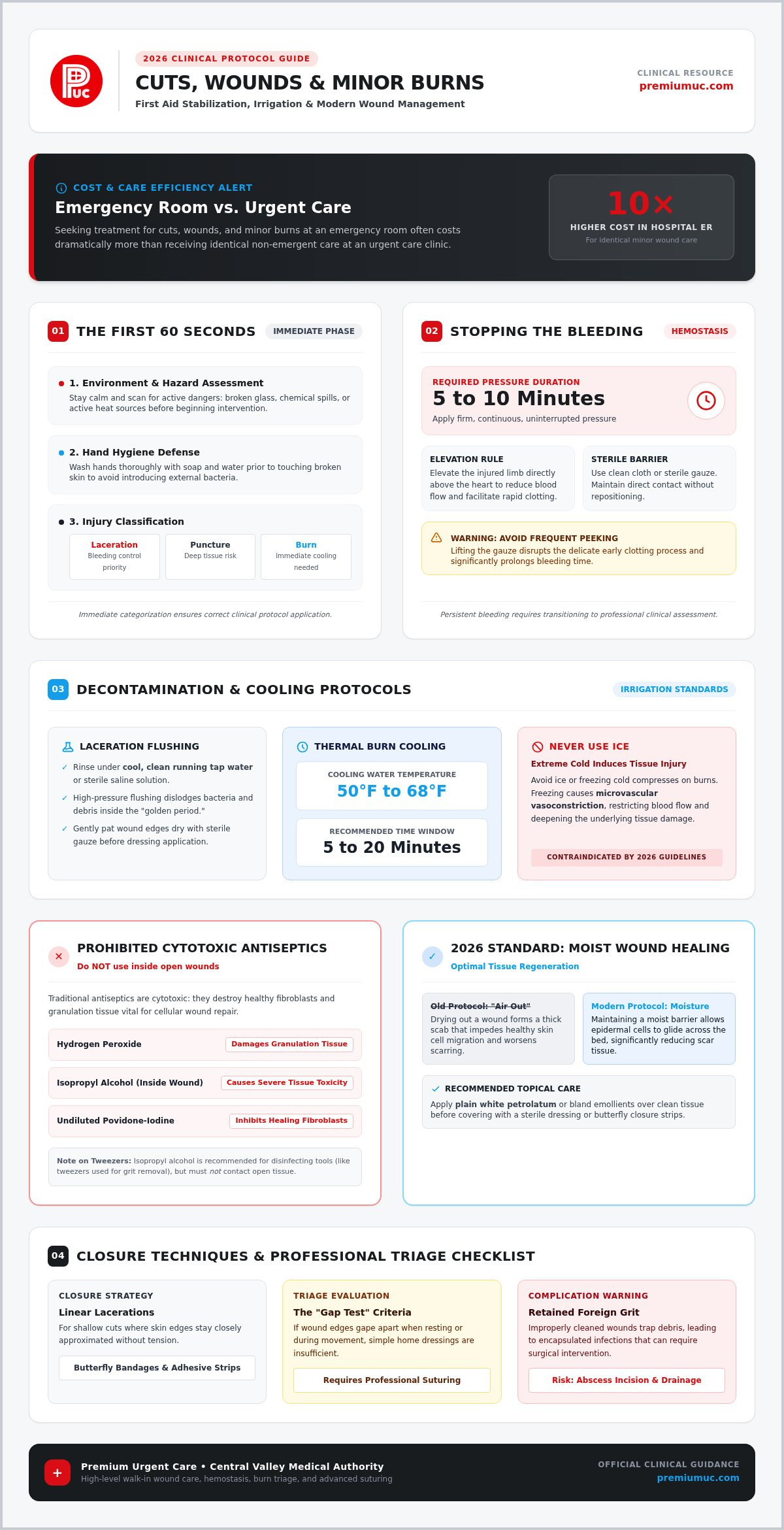
Effective hemostasis is achieved through firm, direct pressure using a clean cloth or sterile gauze. Elevate the injured limb above the heart to reduce blood flow and facilitate clotting. These steps align with the foundational principles of first aid, which focus on preserving life and preventing further injury. Apply firm, uninterrupted pressure for 5 to 10 full minutes before checking the wound’s status. Frequent peeking disrupts the clotting process and can prolong bleeding.
Step 2: Initial Cleaning and Assessment
Once bleeding is controlled, the focus shifts to decontamination. Rinse the area under cool, clean running tap water to flush out debris and bacteria. For thermal burns, current clinical guidelines recommend cooling the site for 5 to 20 minutes with water between 50°F and 68°F. Avoid using ice or freezing compresses, as extreme cold induces microvascular vasoconstriction and can deepen the injury by limiting blood flow to the affected tissue.
It’s vital to avoid harsh chemicals like hydrogen peroxide, isopropyl alcohol, or undiluted povidone-iodine inside an open wound. These substances are cytotoxic, meaning they damage the healthy granulation tissue and fibroblasts needed for repair. This initial irrigation is a vital part of the immediate care for cuts wounds and minor burns, as it significantly reduces the bacterial load during the “golden period” of wound management. If the injury involves deep tissue exposure, persistent bleeding, or significant blistering, it’s time to transition from home care to professional medical assessment.
Managing Cuts and Lacerations: Cleaning, Closing, and Monitoring
After the initial stabilization of cuts wounds and minor burns, the focus transitions to long-term tissue preservation and infection prevention. Meticulous irrigation is the most effective way to reduce bacterial load. High-pressure flushing with clean water or saline removes hidden debris that can cause complications later. While older protocols suggested letting a wound “air out” to form a scab, current 2026 clinical standards prioritize a moist healing environment. Using plain white petrolatum or bland emollients helps skin cells migrate across the wound surface more efficiently, which significantly reduces the risk of noticeable scarring.
How to Properly Clean a Laceration
Start the cleaning process by gently patting the wound edges dry with sterile gauze. If visible dirt or grit remains after irrigation, use tweezers cleaned with isopropyl alcohol to remove individual particles carefully. It’s vital to remove all foreign material; failing to do so can lead to encapsulated infections or localized inflammation. If a wound is not cleaned properly and becomes trapped under the skin, it may eventually require abscess incision and drainage to resolve the infection. While these steps focus on lacerations, similar principles of moisture retention apply to thermal injuries, as detailed in clinical guides for minor burn care and aftercare.
Bandaging Techniques for Different Wounds
The choice of dressing depends on the wound’s location and the amount of fluid it produces. For linear cuts where the edges are close together, butterfly bandages or adhesive strips can provide the necessary tension to hold the skin in place. In the Central Valley, residents in Fresno and Selma must be particularly diligent about environmental factors. Fine dust and agricultural irritants common in our region can easily penetrate a loose bandage. To ensure optimal protection, follow these steps:
- Change the dressing at least once daily to monitor for signs of infection.
- Replace the bandage immediately if it becomes wet, soiled, or loose.
- Ensure the adhesive seal is complete to block out airborne particulates.
Distinguishing between normal healing and an inflammatory response is key. It’s common to see slight pinkness or mild swelling around the edges during the first 48 hours. However, if you notice spreading redness, increased warmth, or red streaks extending from the injury, the wound may be infected. If you’re concerned about the depth of a cut or the risk of contamination, seeking a professional medical evaluation ensures the injury is managed under sterile conditions with expert oversight.
Assessing Minor Burns: Classification and Home Care Protocols
Properly managing cuts wounds and minor burns requires a precise understanding of tissue damage depth. A first-degree burn is superficial, affecting only the epidermis. It presents as red, dry skin that’s painful to the touch, similar to a typical sunburn, but it won’t produce blisters. In contrast, a minor second-degree burn involves the dermis and is characterized by intense pain, a weeping appearance, and the formation of blisters. Recognizing these distinctions ensures you apply the correct clinical protocol to facilitate healing and minimize discomfort.
Safety is the priority during home care. You should never pop blisters, as the intact skin serves as a sterile biological barrier against pathogens. Additionally, avoid applying butter, oils, or heavy ointments to a fresh burn. These substances trap heat within the tissue, potentially worsening the injury and increasing the risk of infection. While you monitor the site, referencing MedlinePlus guidelines for cuts and puncture wounds can provide helpful context for general wound monitoring and identifying secondary complications.
Immediate Cooling and Pain Relief
The most effective way to stop a burn from progressing is immediate cooling. Run cool, room-temperature tap water over the affected area for at least 10 to 20 minutes. Don’t use ice or freezing water, as extreme cold can cause further tissue ischemia and damage. For pain management, over-the-counter options like ibuprofen or acetaminophen are typically sufficient for minor thermal injuries. The Rule of Nines is a clinical tool used to estimate the percentage of total body surface area affected by a burn by dividing the body into sections of 9 percent.
Protecting the Burn Site
Once the site is cooled, protect the area with a loose, non-stick sterile bandage. This prevents friction and keeps environmental contaminants out of the sensitive burn bed. Monitor the site daily for signs of secondary infection, such as pus, increased swelling, or a fever. While many thermal injuries can be managed at home, a burn is a medical priority if it affects more than 10 percent of the body or involves the face, hands, feet, or major joints. If you’re unsure about the severity, a professional evaluation is the safest course of action for managing cuts wounds and minor burns effectively.
The Triage Checklist: When Home Care Isn’t Enough
While many minor injuries are manageable at home, certain clinical indicators suggest that a higher level of care is necessary. When managing cuts wounds and minor burns, the “Gap Test” is a reliable initial assessment tool. If the edges of a wound do not stay together naturally or if the wound “gapes” open despite gentle pressure, professional suturing is required to ensure proper healing. Location is another primary factor. Any injury involving the face, hands, feet, or skin over a major joint requires a professional review to preserve both cosmetic appearance and physical mobility.
Timing is critical for infection prevention and successful wound closure. For most lacerations on the limbs or trunk, the “Golden Period” for primary closure is typically 8 to 12 hours. Facial injuries, due to high vascularity, can often be repaired up to 24 hours post-injury. Beyond these windows, the risk of trapped bacteria increases significantly. Additionally, you must monitor for systemic signs of infection, such as a fever or red streaks extending from the wound site, which indicate that the inflammatory response has moved beyond the local area.
Red Flags for Immediate Professional Care
Certain injuries carry inherent risks that move them beyond the scope of basic first aid. You should seek medical attention immediately if a wound is deeper than half an inch or if you can see subcutaneous fat, muscle fascia, or bone. Animal and human bites are never considered minor because the high bacterial load in saliva makes infection almost certain without professional irrigation and prophylactic treatment. For thermal injuries, any burn that wraps around a limb or involves the face or genitals is a medical priority that requires specialized assessment.
Urgent Care vs. Emergency Room for Wounds
Choosing the correct facility ensures you receive efficient care while avoiding the extreme wait times and costs associated with a hospital. Most non-life-threatening lacerations and second-degree burns can be expertly managed at urgent care in Fresno, CA. This includes professional suturing, tetanus boosters, and advanced wound dressings. However, you should call 911 or visit an emergency room for uncontrolled, spurting bleeding, loss of consciousness, or if the patient shows signs of shock.
Understanding the nuances of wound care in Fresno helps you make informed decisions during a crisis. For clean wounds, a tetanus booster is required if ten years have passed since your last dose; for dirty or contaminated wounds, that window shrinks to five years. If you are unsure about the severity of an injury, visit our walk-in clinic for a professional evaluation to ensure your recovery is on the right track.
Professional Wound Management at Premium Urgent Care
Receiving professional medical attention for cuts wounds and minor burns shouldn’t involve the stress of a crowded emergency room. At Premium Urgent Care, we provide a disciplined and high-performing environment for residents in Clovis, Selma, and Fresno. Our clinics are designed to bridge the gap between high-level medical environments and community-focused care. We specialize in suturing lacerations and managing complex skin injuries with a focus on clinical excellence and patient comfort. By choosing a specialized walk-in center, you benefit from significantly shorter wait times compared to local ERs while receiving the same high standards of medical expertise.
Our approach to wound management is comprehensive. We don’t just close a wound; we implement a full protocol of infection prevention and tetanus prophylaxis. If a wound is contaminated or deep, we assess the need for a tetanus booster based on your vaccination history and the nature of the injury. Furthermore, we offer dedicated follow-up care and suture removal services. Proper timing for suture removal is critical for optimal scarring outcomes, as leaving stitches in too long can lead to permanent marks, while removing them too early can cause the wound to reopen.
What to Expect During Your Visit
When you arrive at our facility, the process begins with a professional assessment of the injury site. Our clinical team, led by Medical Director Dr. Erick Green, ensures that every patient receives a thorough evaluation. We prioritize your comfort by using local anesthetics to numb the area before performing deep irrigation and cleaning. This meticulous preparation is essential for removing debris and bacteria that could otherwise lead to abscess formation. Once the site is sterile, we utilize advanced suturing techniques or adhesive materials to close the injury. You’ll leave with clear, declarative aftercare instructions tailored to your specific injury to support a smooth recovery at home.
Convenient Care Across the Central Valley
We understand that accidents don’t happen on a schedule. That’s why we offer walk-in medical evaluations for acute injuries with no appointment necessary. Our facilities in Clovis, Selma, and Fresno are equipped to handle a wide range of minor procedures, including abscess incision and drainage if a previous injury has become infected. We accept most major insurance plans and worker’s compensation, making professional care accessible and straightforward. If you’re dealing with cuts wounds and minor burns, visit Premium Urgent Care today to receive the expert treatment you need for a fast and safe recovery.
Taking Control of Your Recovery
Managing cuts wounds and minor burns effectively requires a balance of immediate home stabilization and professional clinical oversight. By prioritizing bleeding control and proper irrigation in the first sixty seconds, you significantly reduce the risk of long-term complications. However, when an injury involves deep tissue exposure, persistent pain, or signs of infection, seeking expert care is the most responsible action you can take to ensure optimal healing and minimal scarring.
Premium Urgent Care, led by Medical Director Dr. Erick Green, provides a high-performing alternative to the long wait times of local emergency rooms. Our team specializes in precision procedures like suturing lacerations and abscess drainage, ensuring your injury is treated with clinical excellence. With convenient walk-in locations in Clovis, Selma, and Fresno, high-level medical support is always accessible when you need it most.
Don’t leave your recovery to chance. Visit Premium Urgent Care for Professional Wound and Burn Care today for a comprehensive evaluation and a personalized treatment plan tailored to your needs. Your safety and long-term health remain our top priority.
Frequently Asked Questions
How do I know if a cut needs stitches?
You generally need stitches if a wound is deeper than half an inch, has jagged edges that won’t stay together naturally, or exposes subcutaneous fat or muscle. Our clinical team in Fresno and Clovis performs professional suturing for lacerations to ensure proper closure and minimize the risk of significant scarring. If bleeding remains uncontrolled after ten minutes of firm, direct pressure, it’s a clear indicator that professional medical intervention is required.
Is it better to leave a wound open to the air or covered?
It’s medically superior to keep a wound covered with a sterile bandage to maintain a moist healing environment. Exposing cuts wounds and minor burns to the air can dry out the tissue and lead to hard scabbing, which actually slows the migration of new skin cells. In the Central Valley, covering a wound also provides a vital barrier against environmental irritants like agricultural dust and heat, which are known to increase infection risks.
What are the first signs of an infected wound?
The earliest signs of infection include a spreading margin of redness expanding more than two centimeters from the injury, increased warmth, and localized swelling. You might also observe purulent drainage, commonly known as pus, or red streaks extending from the site toward the heart. If these symptoms are accompanied by a systemic fever, the infection may be progressing. We recommend a prompt walk-in evaluation at our Selma or Fresno clinics to prevent further complications.
Can I treat a second-degree burn at home?
You can treat a minor second-degree burn at home if it affects a small surface area and excludes critical structures like the face, hands, or joints. The priority is cooling the site with room-temperature water for up to twenty minutes and ensuring all blisters remain intact. However, if the burn covers more than five to ten percent of your body or shows signs of deep tissue damage, you should seek a professional evaluation for specialized care.
How long can I wait to get stitches for a laceration?
You should ideally seek stitches within eight to twelve hours of the injury to minimize the risk of bacterial entrapment. This “golden period” is critical because wounds left open for too long are significantly more likely to develop complications like abscesses. While facial lacerations have a slightly longer window of up to 24 hours due to high vascularity, earlier intervention at an urgent care center always yields better cosmetic and clinical results.
Do I need a tetanus shot for a minor cut or burn?
Tetanus prophylaxis is necessary if it’s been more than ten years since your last booster for a clean injury, or five years for a dirty or puncture wound. Puncture wounds from soil, rusted metal, or animal bites carry a much higher risk of contamination. During an urgent care consultation, our clinical team evaluates your vaccination history and provides the appropriate booster to ensure you are fully protected against this serious bacterial toxin.
Why is my wound or burn not healing properly?
Wounds often fail to heal due to localized infection, poor circulation, or foreign debris that wasn’t fully removed during initial cleaning. In some cases, an untreated injury leads to an infection trapped under the skin, eventually requiring abscess incision and drainage to resolve the issue. If you notice that cuts wounds and minor burns are still weeping or show no improvement after five days, a professional medical evaluation is necessary to identify the cause.
What should I do if a wound starts bleeding again after I’ve bandaged it?
If a wound begins to bleed again, remove the soiled bandage and apply firm, uninterrupted pressure with a clean cloth for at least five to ten minutes. Elevate the injured limb above the level of your heart to reduce blood flow to the site. If the bleeding remains uncontrolled or continues to seep through multiple layers of gauze after ten minutes of steady pressure, you should seek immediate care at a medical facility for professional hemostasis.