

Waking up with red, irritated eyelids and sticky discharge is alarming, but reaching straight for prescription drops might not be the right move. Acute infectious conjunctivitis affects more than 6 million Americans every year, yet up to 80% of infectious pink eye cases are viral, meaning antibiotic eye drops won’t cure them.
Few things disrupt your routine faster than persistent itching, swelling discomfort, and the sudden anxiety over whether you can safely go to work or send your child to daycare. It’s completely natural to want clear answers, fast symptom relief, and a reliable plan to prevent spreading the infection to others.
This comprehensive guide will help you accurately recognize your pink eye symptoms, determine the true underlying cause, and find prompt relief safely. We examine the telltale differences between viral, bacterial, and allergic triggers, effective home care practices, and the clinical signs that warrant a professional walk-in medical evaluation.
Key Takeaways
- Understand how inflammation of the ocular membrane causes vascular dilation and hallmark redness, separating simple irritation from active infection.
- Learn how to evaluate discharge consistency and symptom patterns to distinguish whether your pink eye is viral, bacterial, or allergic.
- Master practical home management protocols, including proper compress hygiene, to relieve irritation without spreading infection across your household.
- Identify critical warning signs, such as moderate-to-severe pain or vision changes, that point to potential corneal involvement.
- Discover how walk-in urgent care consultations offer comprehensive physical exams and visual checks without the need for an appointment.
What Is Pink Eye and What Triggers It?
Conjunctivitis, also known as pink eye, is an inflammation of the conjunctiva, the transparent, delicate membrane that lines the inner surface of the eyelids and shields the white sclera of the eye. When this tissue becomes irritated or infected, the tiny blood vessels running throughout it engorge with blood. This vascular dilation produces the distinct pink or reddish hue that gives the condition its familiar name. Pink eye affects adults and children of all ages, disrupting daily routines across homes, classrooms, and workplaces. Underlying triggers range from highly contagious microbial pathogens to everyday environmental allergens and chemical irritants.
Anatomy of the Conjunctiva and How Inflammation Occurs
The conjunctiva serves as a primary protective barrier, producing mucus and tears to keep the ocular surface properly lubricated while trapping foreign debris. When a pathogen or irritant challenges this defense, the local immune system responds immediately. Capillaries widen rapidly, flooding the ocular surface with protective fluid and white blood cells. This process triggers visible ocular erythema, surface swelling, and a gritty sensation. Conjunctivitis remains a superficial inflammatory condition. Unlike deeper intraocular problems, such as uveitis, or corneal ulcers that threaten the clear dome of the eye, conjunctival swelling stays confined to the outermost mucosal layer.
Common Primary Causes: Pathogens, Allergens, and Irritants
Pinpointing the underlying trigger is the first step toward safe, effective relief. Conjunctival inflammation generally stems from three primary sources:
- Viruses: The most frequent culprit behind acute infectious cases, often accompanying the common cold or respiratory tract infections.
- Bacteria: Common bacterial strains produce thick, sticky yellow or green drainage that frequently crusts the eyelids shut overnight.
- Allergens and Irritants: Airborne tree pollens, pet dander, swimming pool chlorine, and wood smoke provoke acute non-infectious flare-ups, typically driving intense itching.
How to Differentiate Viral, Bacterial, and Allergic Conjunctivitis
Accurate triage is essential because the primary causes of pink eye demand completely different management strategies. Viral infections resolve on their own, while allergies require environmental control or antihistamines. Misdiagnosing a viral case as bacterial often leads to the unnecessary use of prescription antibiotic drops, which can disrupt natural ocular flora and increase drug resistance. Evaluating specific symptom patterns helps you identify the likely trigger before pursuing care.
Discharge Characteristics: Watery vs. Thick Mucopurulent Drainage
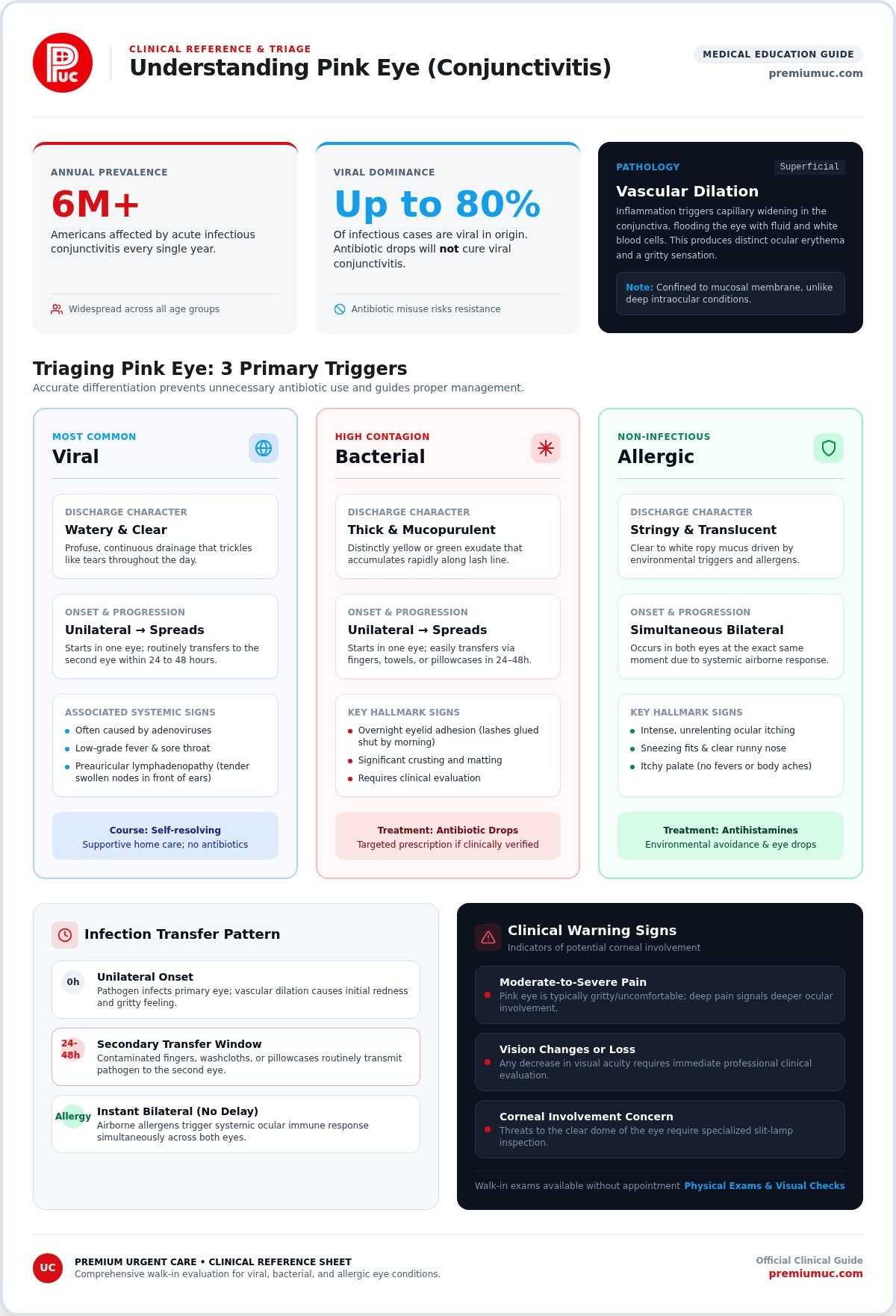
The type of fluid draining from the eye is the most reliable clinical clue. Viral pink eye typically produces watery, clear, and profuse drainage that trickles like tears throughout the day. Bacterial infections, by contrast, generate thick mucopurulent discharge that appears distinctly yellow or green. This heavier exudate frequently accumulates along the lash line during sleep, causing overnight eyelid adhesion that leaves lashes glued firmly together by morning. Allergic reactions typically produce stringy, translucent mucus accompanied by unrelenting ocular itching.
Bilateral vs. Unilateral Presentation: Where Symptoms Begin
Tracking whether symptoms start in one eye or both offers another clear diagnostic indicator:
- Infectious cases (Viral and Bacterial): These almost always begin unilaterally in one eye. Within 24 to 48 hours, infection routinely transfers to the second eye through contaminated fingers, washcloths, or pillowcases.
- Allergic reactions: Environmental triggers provoke a systemic ocular immune response, meaning symptoms appear bilaterally in both eyes at the exact same moment.
Co-Occurring Symptoms: Systemic Colds, Sneezing, and Swollen Nodes
Look beyond the eyes to your systemic health. Viral conjunctivitis commonly stems from adenoviruses, presenting alongside low-grade fevers, congestion, a sore throat, and tender, swollen lymph nodes directly in front of the ears (preauricular lymphadenopathy). When an infection pairs with broader respiratory complaints, coordinating comprehensive upper respiratory infection treatment helps target the illness at its source. Conversely, allergic cases pair with sneezing fits, itchy palates, and clear runny noses rather than body aches. If your symptoms remain ambiguous, an in-person urgent care consultation provides a swift, definitive physical exam so you can recover safely.
How to Safely Manage Symptoms and Prevent Transmission at Home
Relieving eye irritation starts with containment and gentle comfort measures. Because viral and bacterial forms of pink eye spread rapidly through direct contact, establishing strict hygiene barriers protects your household while your eyes heal.
Step-by-Step Eyelid Hygiene and Compress Application
Targeted compresses soothe swelling and clear crusting without irritating sensitive tissues. Always wash your hands with warm water and soap for at least 20 seconds before touching your face. While tracking your pink eye symptoms, follow these steps to keep the infection from spreading between eyes:
- Choose the right temperature: Apply a cool, damp compress to relieve allergic itching and swelling. Use a warm, moist compress to loosen dried bacterial discharge.
- Use separate pads: Dedicate an individual clean cloth or disposable cotton round to each eye. Never press a pad used on an infected eye onto an unaffected eye.
- Wipe in a single outward motion: Smooth the damp pad gently from the inner corner near the bridge of the nose outward toward the temple. Never scrub back and forth.
- Dispose immediately: Discard used cotton pads in a lined trash can right away, or drop reusable washcloths straight into the laundry hamper.
Contact Lens Safety and Eye Cosmetic Precautions
Remove contact lenses immediately at the first sign of ocular redness. Wearing contacts over inflamed conjunctival tissue dramatically increases the risk of secondary corneal abrasions and severe bacterial ulcers. Switch to eyeglasses until redness and discharge completely subside. Discard your current disposable lenses along with your storage case. Throw away any liquid cosmetics, such as mascara and liquid eyeliner, applied within 48 hours of symptom onset to eliminate lurking pathogens.
Home Sanitation Practices to Halt Household Spread
Infectious ocular pathogens survive on household surfaces for hours, creating easy transmission pathways between family members. Wash pillowcases, sheets, and bath towels daily in hot water with laundry detergent. Disinfect shared high-touch points, including doorknobs, faucets, and television remotes, using antibacterial wipes. Remind everyone in the home to use their own personal bath towels rather than sharing communal hand towels near the sink.
When to Seek Professional Medical Care for Pink Eye
Many mild cases run their course with basic supportive care, but assuming every red eye is harmless pink eye can jeopardize your vision. The conjunctiva lies directly over delicate corneal structures. When inflammation penetrates beyond superficial tissues, prompt outpatient evaluation is vital to rule out sight-threatening conditions.
Red Flag Symptoms: When to Get Evaluated Immediately
Mild conjunctivitis produces grittiness, mild burning, and irritation. Sharp ocular pain, severe light sensitivity (photophobia), or blurry vision indicate complications requiring direct clinical attention. Contact lens wearers are exceptionally susceptible to corneal ulceration and rapid microbial keratitis, which can permanently damage sight if left untreated. Other urgent warning signs include:
- Significant asymmetrical pupil dilation or altered light reactivity
- Noticeable soft-tissue swelling spreading to the eyelids or surrounding cheek
- Severe unilateral headache accompanying eye redness
- Active symptoms occurring in immunocompromised individuals
Lack of Improvement: The 48-to-72-Hour Clinical Rule
Monitor the progression of your symptoms closely during the first two days. While viral infections can take one to two weeks to run their course, initial swelling and discomfort should stabilize within 48 to 72 hours. If irritation worsens, redness intensifies, or purulent drainage increases after three days of supportive home care, professional assessment becomes necessary. Progressive deterioration often indicates an uncontrolled bacterial infection or an atypical pathogen requiring targeted ophthalmic therapy.
Clearance Requirements for Work, School, and Daycare Settings
Managing childcare attendance and workplace responsibilities adds logistical strain to an active infection. Standard public health protocols dictate that bacterial conjunctivitis ceases to be contagious 24 hours after starting appropriate prescription antibiotic eye drops. Schools, athletic leagues, and daycares frequently require an official medical note clearing a child before re-entry. Rather than losing days to uncertainty, walk in for an urgent care medical evaluation to receive a definitive diagnosis, targeted treatment plan, and prompt administrative clearance.
Professional Urgent Care Solutions for Fast, Reliable Eye Relief
When sudden ocular irritation flares, waiting days for an opening with a primary care doctor creates unnecessary disruption and prolonged discomfort. Hospital emergency rooms, on the other hand, are designed for systemic crises and represent an expensive alternative for non-emergency acute infections. Urgent care centers bridge this gap effectively. They deliver walk-in medical consultations for pink eye and acute ocular complaints, pairing thorough diagnostic capabilities with the convenience needed to restore your peace of mind quickly.
What to Expect During an Urgent Care Eye Examination
A professional evaluation begins with visual acuity testing to verify that your central vision remains intact and unaffected by deeper complications. The clinician then conducts a careful external penlight exam to inspect conjunctival vascular dilation, discharge quality, and pupillary reactivity. If you wear contact lenses or report a gritty sensation, the provider may administer a drop of fluorescein dye. Illuminated under a cobalt blue light, this painless test highlights corneal abrasions or foreign particles that require specialized protective care.
Targeted Medical Treatments: Antibiotics, Antihistamines, and Steroid Warnings
Accurate clinical classification dictates the appropriate medical intervention. When bacterial pink eye is confirmed, clinicians prescribe targeted topical antibiotic drops or ointments to clear active pathogens and halt transmission. Severe ocular allergies benefit from prescription antihistamine and mast cell stabilizer drops that block localized histamine release. Medical providers advise strongly against using unprescribed or leftover steroid drops; without specialized slit-lamp equipment, topical ocular steroids can accelerate undetected viral infections and dangerously elevate intraocular pressure.
Walk-In Relief at Premium Urgent Care in Fresno County
For patients seeking prompt relief from persistent ocular discomfort, Premium Urgent Care provides walk-in evaluations across three accessible Central Valley clinics in Fresno, Clovis, and Selma. Led by Medical Director Dr. Erick Green, our clinical team delivers comprehensive outpatient assessments and personalized treatment plans without the friction of appointment waitlists. You don’t have to navigate acute symptoms alone. Our clinics provide the diagnostic clarity, targeted remedies, and formal school or workplace clearance notes you need to recover safely.
Take Control of Your Eye Health and Recovery
Managing pink eye doesn’t have to mean days of uncomfortable guesswork or unnecessary worry over transmission. Accurate relief hinges on identifying whether your symptoms stem from a self-limiting virus, an allergic trigger, or a bacterial infection that requires prescription drops. Applying targeted compresses, discontinuing contact lenses, and maintaining clean hygiene practices protect your eyes while safeguarding those around you.
When irritation persists beyond 48 hours, or when you need reliable verification for work or daycare clearance, professional guidance makes all the difference. Supervised by Medical Director Dr. Erick Green, the team at Premium Urgent Care provides comprehensive, on-site diagnostic evaluations for acute eye infections and foreign body concerns. Walk in to any of our three accessible locations in Fresno, Clovis, and Selma today for prompt, compassionate medical evaluation, targeted therapies, and a clear path toward lasting comfort.
Frequently Asked Questions
Can pink eye go away on its own without prescription treatment?
Yes, many forms of pink eye resolve entirely on their own without prescription intervention. Viral conjunctivitis, the most frequent type, is self-limiting and clears naturally within one to two weeks as your immune system clears the virus. Mild allergic cases also improve once the offending allergen is removed. However, bacterial infections usually require targeted antibiotic drops to stop transmission and clear pus, making clinical evaluation prudent if symptoms don’t improve.
How long is a person contagious when they have pink eye?
A person remains contagious for as long as active symptoms persist in viral conjunctivitis, which typically lasts seven to fourteen days. For bacterial infections, contagiousness drops dramatically after starting prescription antibiotic therapy; individuals are generally no longer contagious after 24 hours of proper medication. Allergic conjunctivitis is driven entirely by immune reactions and isn’t contagious. Rigorous hand hygiene significantly reduces transmission risks in any shared environment.
Is bacterial pink eye treatable with over-the-counter eye drops?
No, over-the-counter eye drops cannot cure a bacterial eye infection. Over-the-counter products, like lubricating artificial tears, only provide temporary comfort and flush out surface debris. Redness-relieving drops merely constrict surface blood vessels without addressing the bacterial source. True bacterial infections require targeted prescription antibacterial drops or ophthalmic ointments to eradicate multiplying bacteria, prevent corneal complications, and safely clear the infection.
Can I wear contact lenses while recovering from pink eye?
You should stop wearing contact lenses immediately until your symptoms have fully resolved and any prescribed treatment is complete. Inserting contacts over an inflamed ocular surface traps pathogens directly against the cornea, substantially increasing your risk of corneal ulcers and severe bacterial keratitis. Switch entirely to eyeglasses during recovery. Throw away the contaminated lenses you were wearing, dispose of your storage case, and wait for clinical clearance.
How do I know if my pink eye is viral or bacterial?
Discharge consistency and systemic symptoms offer the clearest indicators between viral and bacterial pink eye. Viral infections produce watery, clear drainage, often accompany cold symptoms or tender lymph nodes, and spread readily between eyes. Bacterial conjunctivitis generates thick yellow or green discharge that crusts the eyelashes shut overnight. Because clinical presentations sometimes overlap, an in-person physical examination provides the most reliable way to confirm the diagnosis.
What happens if pink eye is left completely untreated?
While mild viral and allergic cases often subside, untreated bacterial infections can spread to deeper ocular structures and lead to serious complications. Unchecked bacterial growth can cause persistent tissue inflammation, chronic eyelid irritation, or invade the cornea to cause painful keratitis and ulcers that permanently impair vision. Delaying care also prolongs the contagious window, increasing the likelihood of spreading the infection to family members or coworkers.
Can an urgent care clinic prescribe medication for pink eye?
Yes, urgent care clinicians can thoroughly diagnose the condition and prescribe appropriate ophthalmic medications during your visit. Outpatient clinics provide visual acuity assessments and ocular penlight exams to confirm whether an active infection or foreign debris is present. If you need targeted antibiotic drops or prescription allergy relief, clinicians send prescriptions directly to your pharmacy. Walk-in clinics across Fresno, Clovis, and Selma also provide necessary clearance documentation.