

The most common response to sudden ear pain is reaching for over-the-counter ear drops, but liquid cannot penetrate an intact eardrum to resolve a middle ear infection. When you are dealing with a sharp, throbbing ache, muffled hearing, or intense canal pressure, waiting days for an opening with your primary doctor simply isn’t practical. It is completely understandable to feel anxious about potential complications like a ruptured eardrum, especially when simple actions like chewing or swallowing intensify the distress.
Effective relief requires a targeted clinical evaluation because recovery depends entirely on pinpointing whether the issue stems from an outer canal infection, middle ear fluid, or impacted cerumen. You will discover the root causes of acute symptoms, how to spot urgent red flags, and why a walk-in medical evaluation offers the fastest route to lasting comfort. Here is what you need to know about distinguishing infection types, managing symptoms safely, and protecting your long-term hearing health.
Key Takeaways
- Pinpoint whether your ear pain originates directly within the ear canal or stems from referred nerve irritation in surrounding structures like the jaw and sinuses.
- Recognize the mechanics behind common symptoms, including why fluid accumulation behind the tympanic membrane creates uncomfortable pressure and temporary muffled hearing.
- Identify safe home comfort measures like anti-inflammatory pain relief while avoiding hazardous practices that risk canal damage or eardrum injury.
- Establish clear triage benchmarks so you know when walk-in medical evaluation is appropriate and when severe red flags require emergency care.
- Learn what to expect during a gentle otoscopic examination and how direct visualization leads to targeted, lasting symptom relief.
What Causes Sudden Ear Pain in Adults and Children?
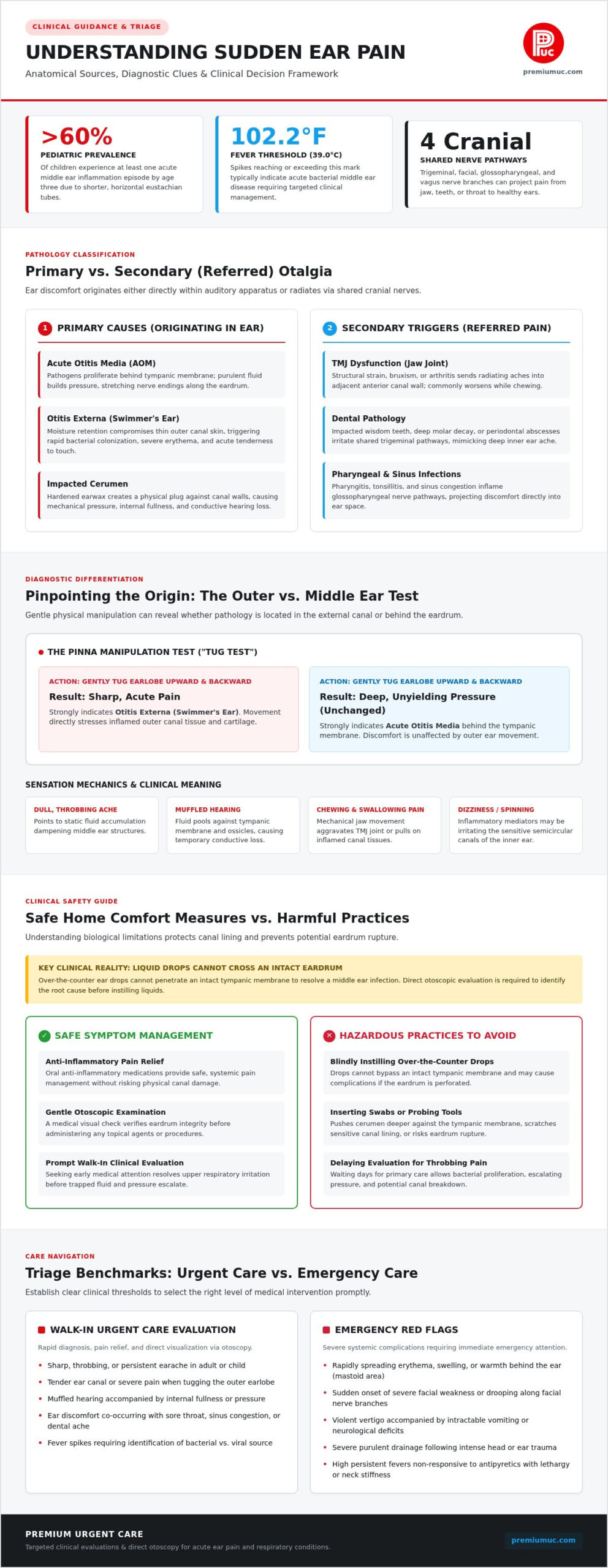
Clinicians classify ear discomfort under the medical term otalgia. This sensation originates either directly within the auditory apparatus or radiates from adjacent anatomical structures sharing shared neural pathways. Distinguishing between primary and referred ear pain is essential because the location where you perceive discomfort doesn’t always reflect where the underlying problem began. Pediatric anatomy is particularly vulnerable; children have shorter, more horizontal eustachian tubes that struggle to drain fluid efficiently. In fact, over 60% of children experience at least one episode of acute middle ear inflammation by age three. Regardless of age, persistent ear pain indicates active inflammation or mechanical obstruction that warrants a clear clinical diagnosis.
Primary Causes Originating in the Ear
Primary otalgia stems directly from disease processes within the external or middle ear anatomy. The most frequent clinical triggers include:
- Acute Otitis Media (AOM): Bacterial or viral pathogens proliferate behind the tympanic membrane. The resulting purulent fluid increases middle ear pressure, stretching sensitive nerve endings along the eardrum.
- Otitis Externa (Swimmer’s Ear): Moisture retention breaks down the thin protective skin barrier of the outer ear canal, enabling rapid bacterial colonization, severe erythema, and acute tenderness when touching the outer ear.
- Impacted Cerumen: Hardened earwax creates a physical plug against the canal walls. This obstruction causes sudden mechanical pressure, feelings of internal fullness, and conductive hearing loss.
Secondary and Referred Ear Pain Triggers
Secondary otalgia occurs when distant inflammation irritates shared cranial nerves, projecting painful signals back to an otherwise healthy ear canal. The sensory innervation of the ear is complex, intertwining branches of the trigeminal, facial, glossopharyngeal, and vagus nerves. Common non-ear sources include:
- Temporomandibular Joint (TMJ) Dysfunction: Structural strain, bruxism, or arthritis in the jaw joint sends radiating aches into the adjacent anterior canal wall, frequently worsening during chewing.
- Dental Pathology: Impacted wisdom teeth, deep molar decay, or periodontal abscesses trigger shared trigeminal pathways, mimicking deep inner ear ache.
- Pharyngeal and Sinus Infections: Severe pharyngitis, tonsillitis, and sinus congestion inflame the glossopharyngeal nerve. If a lingering cold triggers throat discomfort alongside your ear symptoms, seeking timely upper respiratory infection treatment helps resolve the primary source of irritation before pressure escalates.
Common Symptoms Accompanying Ear Pain and What They Mean
Ear discomfort rarely occurs in isolation. The specific sensations accompanying acute ear pain provide vital clues about which anatomical compartment is compromised. A dull, constant throbbing generally points to static fluid accumulation, whereas sharp, stabbing sensations often reflect acute pressure shifts or direct skin irritation. When fluid pools in the middle ear cavity, it dampens the mechanical movement of the tympanic membrane and ossicles, causing temporary conductive hearing loss that makes speech sound muffled. If you also notice dizziness or a spinning sensation, inflammatory mediators may be irritating the semicircular canals of the inner ear. Spreading erythema and warmth around the auricle suggest expanding soft tissue involvement.
Recognizing Middle vs. Outer Ear Infection Clues
A simple physical manipulation helps distinguish between outer and middle ear pathology. Gently tug your earlobe upward and backward: sharp pain during this movement strongly suggests swimmer’s ear (otitis externa), where the canal lining is inflamed. Conversely, deep, unyielding pressure unaffected by touching the outer ear points to acute otitis media behind the eardrum. These middle ear episodes frequently follow seasonal viral congestion, as inflammatory swelling traps mucus in the eustachian space.
Systemic Signs: Fever, Fatigue, and Drainage
Systemic reactions offer insight into whether an infection is superficial or spreading through deeper tissues:
- Fever Patterns: Low-grade fevers often accompany viral respiratory infections. Spikes reaching or exceeding 102.2°F (39.0°C) typically indicate acute bacterial middle ear disease requiring targeted management.
- Drainage Variations: Clear serous fluid often signals simple moisture buildup or resolving allergies. Thick yellow or cloudy green drainage indicates purulent bacterial exudate.
- Rupture Dynamics: If an intense, throbbing earache suddenly vanishes and is instantly replaced by fluid or bloody drainage, the tympanic membrane has likely perforated under built-up pressure.
Perforations often heal with appropriate clinical care, but leaving drainage unexamined risks persistent damage. Reviewing the MedlinePlus guide to earaches outlines standard clinical signs, yet an accurate diagnosis requires direct visualization of the canal. If worsening pressure or fluid discharge disrupts your routine, a walk-in visit to Premium Urgent Care provides direct otoscopic evaluation to protect your hearing and accelerate recovery.
Safe Home Remedies vs. Harmful Practices to Avoid
Supportive home care can ease discomfort, but it cannot eradicate an active bacterial infection lodged behind the eardrum. When sudden ear pain strikes outside clinic hours, your immediate goal should focus on reducing local inflammation and resting comfortably until a clinician evaluates the canal. Misguided self-treatment often turns a mild, localized issue into a severe complication, making it vital to separate safe symptom management from damaging habits.
Effective At-Home Comfort Measures
Evidence-based comfort strategies work systemically and externally to calm aggravated tissues:
- Oral Analgesics: Over-the-counter anti-inflammatory medications like ibuprofen actively target tissue swelling, while acetaminophen disrupts pain signaling. Always dose these medications strictly according to age and weight parameters, especially when referencing NIDCD guidelines on pediatric ear infections for young children.
- External Thermal Therapy: Hold a warm, damp washcloth or wrapped heating pad against the affected ear and upper jawline. This improves local microcirculation and helps relax secondary muscular spasms around the temporomandibular joint.
- Postural Elevation: Sleep with your head elevated on two pillows. Gravity assists passive middle ear drainage down the eustachian tube, relieving internal hydrostatic pressure while you rest.
Risky Habits That Can Worsen Ear Damage
Desperation for relief prompts many people to attempt unverified remedies that carry significant hazards. Avoid these dangerous practices under all circumstances:
- Inserting Cotton Swabs or Probes: Sticking cotton-tipped swabs, hairpins, or twisted tissue into the canal violates the clinical rule of never inserting anything smaller than your elbow. These instruments ram cerumen deeper against the tympanic membrane, stripping protective skin lipids and risking canal lacerations or eardrum rupture.
- Administering Unverified Ear Drops: The FDA strictly warns against unapproved homeopathic drops, and liquids cannot penetrate an intact eardrum to clear middle ear fluid anyway. If your eardrum has already perforated, instilling over-the-counter liquids or household oils can introduce chemical irritants directly into middle ear structures, inducing severe ototoxicity.
- Thermal Ear Candling: The FDA maintains an active import alert against ear candles, classifying them as dangerous, unapproved devices. Studies confirm they create zero vacuum extraction while posing high risks of candle wax occlusion, middle ear burns, and permanent structural perforations.
When to Seek Urgent Care vs. Emergency Medical Attention
Deciding where to seek care during an episode of acute ear pain often causes unnecessary confusion. While approximately 70% to 80% of uncomplicated middle ear infections resolve naturally within seven to eight days, self-monitoring is only safe for mild symptoms lasting under 48 hours in patients without high fevers. Waiting days for an open slot with a primary care provider carries real risks, leading many patients to turn to accessible local options or private practices like Ready Health that provide timely appointments when routine scheduling falls short. Lingering bacterial pressure can rupture the tympanic membrane or allow infection to spread deeper into local bone structures. Knowing whether to head to a walk-in clinic or an emergency department ensures you receive the correct level of medical attention without unnecessary delays.
Symptoms Perfectly Suited for Urgent Care Walk-Ins
Walk-in clinics are the ideal clinical bridge for rapid, non-life-threatening complaints. Consider this level of care for:
- Persistent Pain: Discomfort lasting longer than 24 to 48 hours that fails to respond to oral anti-inflammatory relievers.
- Sinus and Cold Complications: Ear congestion, fullness, or pain lingering alongside upper respiratory symptoms that show no sign of clearing up.
- External Canal Symptoms: Severe outer canal tenderness, pain following swimming, mild fluid drainage without neurological symptoms, or heavy cerumen impaction causing sudden hearing muffling.
Critical Red Flags Requiring Emergency Room Care
Certain warning signs indicate severe anatomical complications that require immediate hospital-level intervention. Bypass urgent care and proceed directly to an emergency department if you observe:
- Cranial Nerve VII Involvement: Facial drooping, asymmetry, or an inability to smile or close the eyelid on the affected side.
- Suspected Mastoiditis: Noticeable erythema, severe tenderness, or a boggy, warm swelling behind the ear that pushes the earflap forward.
- Meningeal or Systemic Signs: Sudden stiff neck, extreme lethargy, confusion, unyielding vomiting, or a high fever accompanying acute cranial pain.
- Trauma Markers: Clear cerebrospinal fluid or frank blood draining from the canal following a direct head injury.
For Fresno County residents facing sudden discomfort that does not involve emergency red flags, multi-day waits for appointments are unnecessary. Visit Premium Urgent Care for prompt, walk-in evaluations seven days a week across Clovis, Selma, and Fresno, ensuring fast clinical answers and targeted prescriptions.
What to Expect During an Ear Examination at Urgent Care
Walking into a clinic with intense ear pain can feel daunting, especially when the canal is already tender to the touch. Urgent care assessments are structured to be gentle, methodical, and informative. Providers understand that patients experiencing acute otalgia are often bracing against discomfort. By explaining each step before performing it, clinicians keep you relaxed while determining the exact cause of your distress within minutes.
Step-by-Step Clinical Assessment and Ear Lavage
The evaluation begins with a focused discussion regarding your symptom timeline, recent air travel, swimming habits, and any prior ear infections. Your clinician then uses an illuminated otoscope to examine the external canal, assessing tissue erythema, swelling, and discharge. A pneumatic attachment delivers a tiny, controlled puff of air against the tympanic membrane to test its mobility. A healthy eardrum moves freely in response to pressure changes; a rigid, bulging membrane indicates trapped fluid or purulent exudate in the middle ear.
If hardened cerumen completely obstructs the view of the eardrum, providers clear it safely before making a definitive diagnosis. Urgent care teams employ specialized visual micro-suction, manual extraction via miniature curettes, or gentle warm-water ear irrigation. Regulated warm water softens and flushes stubborn blockages without the painful canal trauma associated with home cotton swabs.
Tailored Treatment Plans and Local Walk-In Relief
Once clinicians directly visualize the canal and eardrum, they tailor a targeted treatment plan based on current medical standards:
- Targeted Otic Drops: For diagnosed swimmer’s ear (otitis externa), clinical guidelines prioritize topical antibiotic or antifungal drops, such as ciprofloxacin and dexamethasone combinations, directly targeting the infection without systemic side effects.
- Evidence-Based Oral Therapy: When acute bacterial otitis media is confirmed with high fever or severe pain, providers prescribe oral amoxicillin or appropriate alternatives to clear the middle ear cavity.
- Decongestants and Pressure Care: If the issue stems from eustachian tube dysfunction following a cold, clinicians recommend targeted nasal steroids, oral antihistamines, or decongestants to open drainage channels.
Under the guidance of Medical Director Dr. Erick Green, experienced clinical teams evaluate acute auditory symptoms with onsite diagnostic precision. When scheduling delays leave you waiting days for relief, residents in Clovis, Selma, and Fresno can walk into Premium Urgent Care seven days a week with no appointment needed.
Take Swift Action for Lasting Ear Relief
Sudden auditory discomfort should never be left to guesswork or risky at-home instruments. Distinguishing between a middle ear effusion, outer canal irritation, or referred jaw strain ensures you address the actual source rather than just masking symptoms. Protecting delicate auditory structures requires direct visualization, gentle technique, and timely clinical care before pressure escalates into preventable complications.
You don’t need to endure days of discomfort while waiting for a routine doctor appointment. With onsite diagnostic otoscopy and professional ear lavage, our clinical team under Medical Director Dr. Erick Green delivers clear answers and targeted treatment. If acute ear pain is disrupting your day, visit Premium Urgent Care for prompt walk-in relief across Clovis, Selma, and Fresno. Walk in seven days a week with no appointment necessary and restore your comfort today.
Frequently Asked Questions
How can I tell if ear pain is caused by an infection or earwax buildup?
Infections typically cause acute aching, canal redness, tenderness, or fever, while earwax buildup produces a painless sensation of ear fullness and muffled hearing. Cerumen impaction rarely throbs unless trapped water creates sudden canal pressure. An illuminated otoscopic examination at an urgent care clinic provides a definitive answer by confirming whether your canal is obstructed with cerumen or if your tympanic membrane is visibly inflamed.
Can an adult ear infection heal on its own without prescription antibiotics?
Yes, many adult middle ear infections resolve without systemic antibiotics, especially when caused by viral congestion following a common cold. Clinical guidelines support watchful waiting for 48 to 72 hours alongside oral anti-inflammatory relievers for mild discomfort. However, if your symptoms fail to improve or involve severe canal swelling, an in-person clinical assessment ensures bacterial complications don’t threaten delicate middle ear structures.
What does it mean if my ear pain suddenly stops and fluid drains out?
A sudden cessation of intense ear pain followed immediately by fluid or bloody drainage usually indicates a perforated eardrum. Accumulated middle ear pressure builds until the thin membrane ruptures, releasing trapped exudate and relieving pain. While small perforations frequently heal naturally with conservative care, having a clinician evaluate the tear protects your inner ear from infection and confirms whether prescription drops are necessary.
Is swimmers ear treated differently than a middle ear infection?
Yes, swimmer’s ear requires targeted topical prescription drops, whereas middle ear infections often require oral therapy or simple symptom monitoring. Because swimmer’s ear affects the external canal skin, antibacterial or corticosteroid drops deliver high local medicine concentrations directly to the site. Conversely, drops cannot penetrate an intact eardrum to clear middle ear fluid, requiring oral anti-inflammatory or systemic antibiotic medications instead.
Can sinus pressure or a sore throat cause severe pain inside the ear?
Yes, shared cranial nerve pathways frequently transmit radiating discomfort into the ear canal from inflamed sinuses or a sore throat. The glossopharyngeal and trigeminal nerves innervate both your throat tissues and the auditory canal. When pharyngeal structures swell with viral or bacterial inflammation, your brain interprets those signals as an earache, even when the ear canal itself is structurally healthy.
When is ear pain considered a medical emergency rather than urgent care?
Ear discomfort becomes an emergency if accompanied by neurological deficits, high fevers with neck stiffness, or swelling behind the ear flap. Signs like facial drooping, extreme lethargy, relentless vomiting, or boggy redness over the mastoid bone indicate serious complications like mastoiditis or intracranial spread. These acute presentations require immediate emergency room transport rather than a standard walk-in clinic visit.
What should I do if my child wakes up crying with sudden ear pain at night?
Administer age- and weight-appropriate acetaminophen or ibuprofen, apply an external warm compress, and elevate their head slightly to ease congestion. Nighttime pain flares because lying flat increases middle ear hydrostatic pressure. Once your child is resting comfortably, arrange a clinical evaluation. Families across Clovis, Selma, and Fresno can walk into Premium Urgent Care the next morning for prompt otoscopic care.