

Could a cold that seems manageable at home need a clinician’s attention? If you’re searching for “immediate care for cold symptoms Selma,” it can be hard to tell whether symptoms are following a routine course or getting worse. Premium Urgent Care provides walk-in evaluations for colds, coughs, and other upper respiratory symptoms in Selma.
It’s reasonable to want timely guidance without unnecessary testing or antibiotics. A clinical evaluation can help assess your symptoms and whether supportive care or further assessment may be appropriate. Antibiotics don’t treat the viruses that cause common colds, so treatment decisions depend on what the evaluation finds.
This article explains which symptoms warrant prompt medical attention, what to expect during an urgent-care visit, and how urgent care differs from emergency care. You’ll also learn which warning signs call for emergency help rather than a routine clinic evaluation. Use these guidelines to choose a next step when cold symptoms are concerning, persistent, or difficult to assess at home.
Key Takeaways
- Worsening, persistent, or unusually severe cold symptoms may warrant clinical evaluation rather than continued home monitoring.
- Know what to expect during a cold-symptom assessment and which details can help the clinician understand how your illness is progressing.
- For immediate care for cold symptoms Selma, a walk-in evaluation at Premium Urgent Care can help when symptoms are concerning or difficult to assess at home.
- Antibiotics don’t treat uncomplicated viral colds; treatment decisions depend on the clinical assessment.
- Recognize warning signs that call for emergency help, and prepare your symptom notes, medication list, allergies, and health history before seeking care.
When should you seek immediate care for cold symptoms in Selma?
It’s not always easy to tell whether a cold is taking its usual course or needs medical attention. Congestion, a sore throat, or a cough can disrupt sleep and daily activities, even when symptoms are manageable at home. If you’re considering immediate care for cold symptoms in Selma, notice whether symptoms are worsening, persisting without improvement, or becoming unusually severe.
Cold symptoms can overlap with those of other respiratory illnesses, so how you feel and how symptoms change both matter. The Common cold overview describes familiar symptoms and causes, but it can’t determine what’s causing your symptoms or assess their severity. A clinician can evaluate acute concerns in person.
Cold symptoms often managed at home
Mild congestion, a runny nose, a sore throat, and a cough are common cold symptoms. If symptoms are manageable and aren’t getting worse, rest and fluids may help you stay comfortable as you monitor how you feel. Symptom duration and severity vary, so there isn’t one recovery timeline that applies to everyone.
Consider whether symptoms are easing, staying about the same, or interfering more with basic activities. A change in direction can be more informative than one symptom on its own. If you’re unsure or home care no longer feels adequate, a non-emergency clinical evaluation can help clarify the next step.
Signs that deserve prompt medical attention
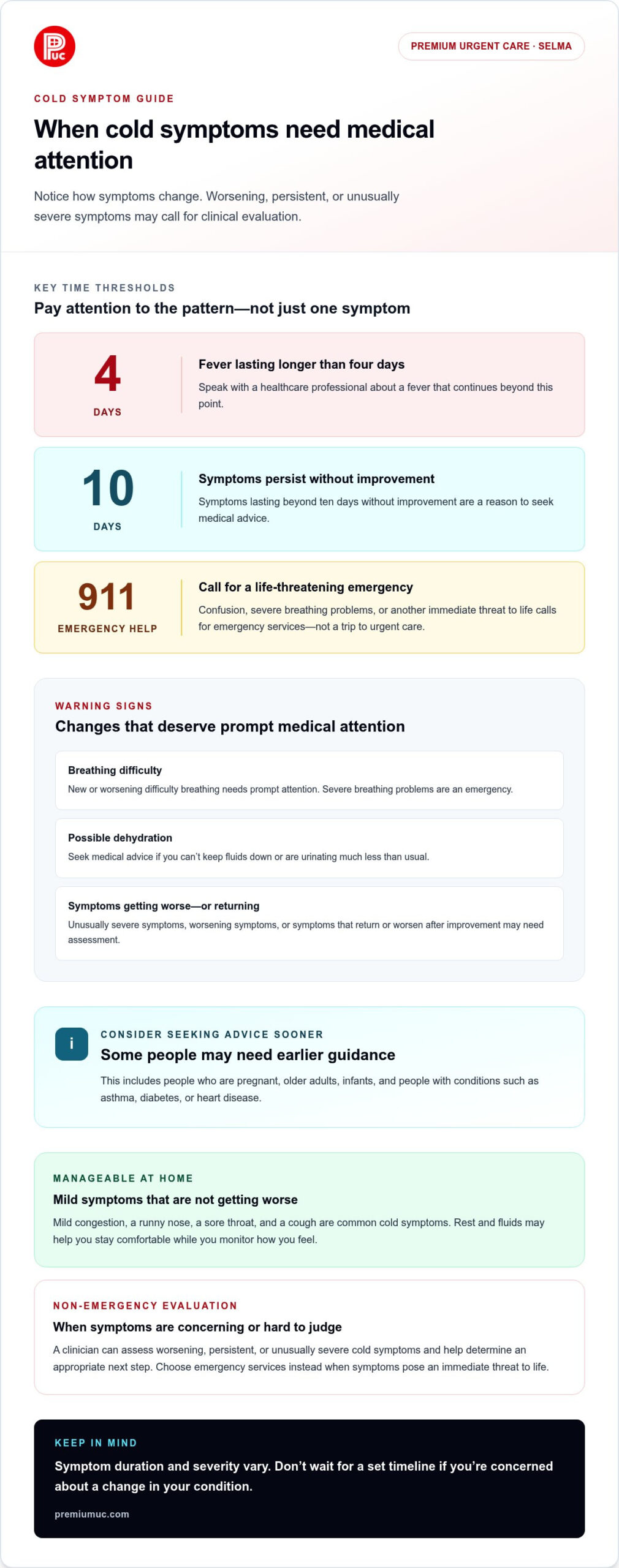
Seek prompt medical evaluation for breathing difficulty, signs of dehydration, or symptoms that are worsening rather than settling. A fever lasting longer than four days, symptoms that persist beyond ten days without improvement, or symptoms that improve and then return or worsen are also reasons to speak with a healthcare professional. Don’t wait for a set timeline if you’re concerned about a change in your condition.
- Breathing: New or worsening difficulty breathing needs prompt attention. Severe breathing problems are an emergency.
- Hydration: If you can’t keep fluids down or are urinating much less than usual, seek medical advice about possible dehydration.
- Progression: Symptoms that are unusually severe, worsening, or returning after improvement may need assessment.
People who are pregnant, older adults, infants, and people with conditions such as asthma, diabetes, or heart disease may need to seek advice sooner. If symptoms include confusion, severe breathing problems, or another immediate threat to life, call 911. Don’t travel to urgent care for an emergency; call emergency services instead.
Urgent care can assess non-emergency cold symptoms when they’re worsening, persistent, or difficult to judge at home. For Selma residents, Premium Urgent Care provides walk-in evaluations for colds, coughs, and upper respiratory symptoms. Choose a clinic evaluation for concerning changes that aren’t emergencies, and call 911 when urgent care isn’t the appropriate level of response.
What happens during a cold-symptom urgent-care evaluation?
A visit gives you a chance to explain what has changed and have your symptoms assessed in context. If you’re searching “immediate care for cold symptoms Selma,” knowing the basic steps can make the process feel more straightforward. At Premium Urgent Care, walk-in evaluations are available for colds, coughs, and upper respiratory symptoms.
The visit generally follows a simple sequence:
- Check in: Provide the information needed to begin your visit.
- Describe your symptoms: Share when they started, how they’ve changed, and what concerns you most.
- Receive an assessment: The clinician considers your symptom history, relevant medical information, and examination findings.
- Discuss next steps: Recommendations may include supportive care, further evaluation, or another level of care, depending on the assessment.
Testing isn’t automatic. Based on your symptoms and examination, a clinician may consider whether testing could help inform care. The appropriate evaluation varies from person to person. The CDC guidance on common cold explains that antibiotics don’t treat common colds, which are caused by viruses. An assessment helps guide care decisions but doesn’t guarantee a particular test or treatment.
Information to share with the clinician
A clear timeline can help the clinician understand how your illness has progressed. Before you arrive, note when symptoms began, whether they’re improving or worsening, and any fever or breathing concerns. Include medicines you’ve taken, allergies, and relevant medical conditions. Bring identification and insurance information if applicable. These details support the visit but don’t guarantee insurance coverage.
You don’t need to arrive with a diagnosis. Describe what you’ve noticed in everyday terms, including whether symptoms are affecting sleep, eating, drinking, or normal activities. If you’re unsure of a date or detail, say so rather than guessing.
How an evaluation informs care recommendations
Care recommendations depend on the examination and the suspected cause of your symptoms. If findings are consistent with a mild respiratory illness, the clinician may discuss supportive care and ways to monitor your symptoms. If the assessment raises concern about another cause or a complication, further evaluation may be recommended. The aim is to match next steps to your clinical picture, not to assume every cold requires testing or medication.
In short, your symptom history and examination findings guide whether home-care advice, additional evaluation, or referral is the appropriate next step. If an emergency concern emerges, the clinician may direct you to emergency services. For a non-emergency concern, learn more about walk-in cold and cough evaluations at Premium Urgent Care in Selma.
Do cold symptoms need antibiotics, testing, or urgent care?
Not every respiratory symptom calls for a test or prescription. The right next step depends on how severe your symptoms are, whether they’re changing, and whether there are signs of an emergency. If you’re considering immediate care for cold symptoms Selma, distinguish between monitoring manageable symptoms at home, getting a clinical assessment for non-emergency concerns, and calling emergency services for a serious or life-threatening problem.
- Home monitoring: May be reasonable when symptoms are mild, manageable, and not getting worse. Rest, fluids, and watching for changes can be part of supportive care.
- Urgent-care evaluation: Can help assess symptoms that are worsening, persistent, unusually severe, or difficult to interpret. A clinician can decide whether further evaluation or testing may be useful.
- Emergency response: Severe breathing problems, confusion, or another immediate threat require emergency services. Call 911 rather than traveling to urgent care.
A visit doesn’t mean you’ll automatically need medication or testing. The Mayo Clinic common cold diagnosis and treatment resource describes how common colds are assessed and managed, including supportive care. A clinician’s recommendations depend on your symptoms and examination.
Why a cold does not automatically require antibiotics
Viruses cause common colds, while antibiotics treat bacterial infections. Antibiotics don’t work against the viruses responsible for an uncomplicated cold, and taking them unnecessarily can cause side effects and contribute to antibiotic resistance. Mucus color by itself can’t establish that an illness is bacterial or determine whether antibiotics are appropriate. Cold symptoms don’t automatically call for antibiotics because the common cold is usually viral, and antibiotics treat bacteria, not viruses.
If symptoms are severe, persist, or change after seeming to improve, an assessment can help determine whether another cause or complication needs consideration. That decision should be based on the overall clinical picture, not one symptom alone.
When testing may be considered
Testing may be considered when your symptoms, possible exposure, and examination findings make the result useful to clinical decision-making. Flu and COVID-19 can cause symptoms that overlap with those of a cold, but similar symptoms don’t confirm any particular illness. A clinician considers your history and examination before deciding whether testing is appropriate.
There isn’t one testing approach for everyone with congestion or a cough, and an evaluation doesn’t guarantee a specific test. If symptoms are manageable and improving, monitoring at home may be appropriate. If you’re unsure whether your symptoms need assessment, a non-emergency urgent-care visit can help clarify the next step. If severe breathing difficulty or confusion develops, call 911.
How to prepare for immediate cold care in Selma
A little preparation can make a cold-symptom visit more focused, especially if you’re tired or feeling unwell. Before seeking immediate care for cold symptoms in Selma, gather a few details that can help the clinician understand what’s happening and how your symptoms have changed. Premium Urgent Care provides walk-in evaluations for colds, coughs, and upper respiratory symptoms.
The Selma clinic is at 3000 Floral Ave, Selma, CA 93662. Before setting out, review the clinic’s current hours and posted check-in instructions so you can plan your visit. For background on respiratory symptoms and care, see the upper respiratory infection treatment guide.
A practical checklist before leaving home
Write down when symptoms began and whether they’ve improved, stayed the same, or worsened. Include concerning episodes, such as a fever or breathing difficulty, and note what you’ve already tried. A brief timeline can be useful if you’re uncomfortable or find it hard to recall details during the visit.
- Symptoms: Note the start date, progression, and any changes that concern you.
- Medicines: List prescription medicines and nonprescription products you’ve taken, including their names if available.
- Allergies and health history: Record medication allergies and relevant conditions, such as asthma or heart disease.
- Visit essentials: Bring identification and insurance information if applicable.
Follow current clinic instructions for check-in and any precautions for respiratory symptoms. Those directions can help you arrive prepared and know what to do when you arrive. Avoid taking extra doses of medicines simply because symptoms persist; share what you’ve used with the clinician instead.
Choosing urgent care versus emergency services
Urgent care is intended for non-emergency acute concerns, including cold symptoms that are difficult to assess at home. A clinician can evaluate your symptoms and discuss appropriate next steps. Severe breathing distress, unresponsiveness, or another immediate danger requires emergency services. Call 911 rather than driving to urgent care in these situations.
The distinction is about the level of response needed, not whether symptoms feel disruptive. For more detail on where different concerns fit, see the urgent care versus emergency room guide. If your symptoms are concerning but not an emergency, you can plan a walk-in cold-symptom evaluation at Premium Urgent Care in Selma.
Cold Symptom Care at Premium Urgent Care in Selma
A cold can be hard to assess as it evolves. If symptoms are getting worse, aren’t improving as expected, or feel concerning, a walk-in clinical assessment can help you understand what to do next. Premium Urgent Care evaluates colds, coughs, and other upper respiratory symptoms for patients in Selma and nearby communities.
An evaluation is useful when you’re uncertain whether a change in symptoms needs attention. Describe what’s been happening, and the clinician can consider your history and examination findings before discussing appropriate next steps. Recommendations are individualized. They may focus on supportive care or indicate that further assessment is needed, depending on the clinical picture.
What local cold-symptom care can help address
At Premium Urgent Care, a visit provides professional assessment and guidance for acute respiratory symptoms that aren’t an emergency. This can help if a cough is worsening, symptoms return after improving, or you’re unsure whether your illness needs evaluation. The purpose is to assess your current concerns, not to promise a particular test, prescription, or outcome.
The Selma clinic is located at 3000 Floral Ave, Selma, CA 93662. Review the clinic’s current hours and walk-in information before heading out so you can plan your visit. If your symptoms seem more consistent with flu, the flu symptoms and urgent-care guide provides information focused on that illness.
Your next step for care in Selma
If you’re weighing immediate care for cold symptoms Selma, use the severity and direction of your symptoms to guide your next step. For a concerning but non-emergency change, review current visit information and consider a walk-in assessment. Jot down what has changed so you can explain your concern clearly during the evaluation.
Severe breathing distress, unresponsiveness, or another immediate threat is not appropriate for a routine urgent-care visit. Call 911 for emergency help rather than traveling to the clinic. If your symptoms are non-emergency and you’d like to review clinic location and visit information, visit Premium Urgent Care’s website. Seek an assessment when symptoms are worsening or you need help deciding what care is appropriate.
Choose a Clear Next Step for Your Health
You don’t need to have every answer before deciding to seek care. If you’re uncertain whether a change in your symptoms matters, consider what would help you feel informed: continued home monitoring or a clinical assessment. Seeking guidance isn’t an overreaction when you’re worried or symptoms aren’t following the course you expected.
For immediate care for cold symptoms Selma, focus on the next practical step rather than trying to diagnose yourself. Review current visit information, keep a brief record of symptom changes, and share your concerns during an evaluation. If symptoms become an emergency, call 911 instead of heading to urgent care.
Premium Urgent Care is a local option for non-emergency cold-symptom concerns in Selma, Clovis, and Fresno. Visit Premium Urgent Care’s website to learn about walk-in evaluations and plan your next step.
Frequently Asked Questions
Can urgent care treat cold symptoms in Selma?
Yes. Premium Urgent Care provides walk-in evaluations for colds, coughs, and upper respiratory symptoms in Selma. An assessment can help if you’re uncertain what your symptoms mean or need guidance on what to do next. Care is based on your concerns and clinical findings. The clinic also serves Clovis and Fresno, offering people in these communities a local option for non-emergency urgent-care consultations.
When should I go to urgent care for a cold?
Consider urgent care if symptoms are worsening, unusually disruptive, or leaving you unsure whether home monitoring is enough. A practical signal is when a change in your condition makes ordinary activities, such as drinking fluids or resting, difficult. Bring a brief note about what changed and when. That context can help the clinician understand your concern and decide whether an assessment or another next step is appropriate.
Can a doctor prescribe antibiotics for a common cold?
A clinician can prescribe antibiotics when a bacterial infection is suspected and treatment is appropriate, but antibiotics don’t treat the viruses that cause common colds. Requesting antibiotics alone doesn’t establish that they’ll help. Tell the clinician about any medicines you’ve already taken and how symptoms have changed. This supports a more informed discussion of likely causes, potential benefits, and whether another care approach makes sense.
Do I need a flu or COVID test if I have cold symptoms?
Not necessarily. Flu, COVID-19, and other respiratory illnesses can share symptoms, so symptoms alone may not identify the cause. A clinician can consider your symptom pattern, possible exposure, and examination findings when deciding whether testing could inform care. Mentioning a recent close contact or a sudden change in how you feel may provide useful context. Testing and next steps depend on the individual assessment.
What should I bring to urgent care for cold symptoms?
Bring identification and insurance information if applicable, along with a list or photos of medicines and products you’ve used. Include medication allergies and relevant health conditions, such as asthma. If someone is helping you explain your symptoms, they may be able to add details you’ve missed. You don’t need to prepare a medical summary; concise notes and clear answers to questions are useful.
Should I go to urgent care or the ER for trouble breathing?
For severe trouble breathing, call 911 rather than driving to urgent care. Emergency services are the appropriate response when breathing distress is intense, rapidly worsening, or accompanied by unresponsiveness or immediate danger. If breathing feels uncomfortable but isn’t an emergency, seek prompt medical guidance so the appropriate level of care can be determined. Don’t delay emergency help while trying to decide whether a routine clinic visit is sufficient.
Can I walk in for cold symptoms at Premium Urgent Care in Selma?
Yes. Premium Urgent Care provides walk-in urgent-care evaluations for cold symptoms in Selma. Before leaving, review the clinic’s current location, hours, and visit information so you can plan your arrival. If you’re in Selma, Clovis, or Fresno, use the clinic’s current information to identify the appropriate location. For severe or rapidly worsening symptoms, call 911 instead of traveling to urgent care.