
Most sprains occur when a joint extends beyond its normal range of motion. You’re hiking and slip on mud. You catch your fall with your wrist, but your wrist snaps backward. That’s one of the most common sprains we see, and it’s one that many people feel they need to tough it out.
You should always see a doctor to have your injury assessed and treated. Ideally, see a doctor within a day or two. The sooner you seek care, the better it is for healing and avoiding chronic pain.
The Anatomy of a Sprain
Timing is essential when it comes to a sprain. However, to understand why, you need to know what a sprain is.
When two bones meet and form a joint, it’s supported by bands of tissue known as ligaments. Those tissue bands stabilize the joint through each movement. If the movement exceeds the normal range of motion, those ligaments can stretch and tear. That’s a sprain.
Sprains occur for many reasons, with these five being the most common.
- Ankle sprains – Stepping on uneven terrain or rolling the foot inward
- Knee sprains – Twisting or pivoting suddenly
- Wrist – Falling and using your hands to break your fall
- Finger – Overextension or impact from a blow or other forceful impact starting at the fingertip
- Thumb – Overextension
There are three grades of sprains:
- Mild (Grade I) – Microscoping tears with minimal swelling
- Moderate (Grade II) – Partial tears with bruises and noticeable swelling
- Severe (Grade III) – Complete tear (rupture) with pain, joint instability, swelling, and bruising
The severity determines how long it will take you to recover from the sprain. A mild sprain typically heals in a few weeks. A moderate sprain takes 3 to 6 weeks to heal. A severe sprain can take 8 or more weeks to heal, and surgery to stabilize the joint may be necessary.
Compare that to a fracture, where the damage affects the bone, resulting in hairline cracks or complete breaks. Damage to ligaments and tendons may also occur with a fracture, but the bone must be stabilized, either surgically or with a splint, to ensure proper healing.
The Importance of the First 48 Hours
As soon as you’re injured, your body kicks the healing process into action. There are several stages of healing.
- Bleeding – With a minor sprain, bleeding may not be apparent. If you see bruising, however, that’s the bleeding stage of healing. Bleeding occurs when the small blood vessels in the soft tissue rupture. It’s an essential step because clotting sets the stage for the next steps in healing.
- Inflammation – The body’s inflammatory “acute” response occurs to get healing started and form scar tissue in the injured area. Fluids and white blood cells flood the area to help with healing. It lasts for up to four days, though it usually switches to proliferation after 24 to 48 hours. Medical care is advised before the next stage.
- Proliferation – New “immature” connective tissue forms to repair the damage. Inflammation decreases, but the healing process can last up to 21 days after the injury.
- Remodeling – The immature tissue matures into the final tissue type that can withstand activity again. It usually takes place about 21 days after the injury.
Self-diagnosing a sprain is never recommended. You could have a minor fracture and not know it. An avulsion fracture resembles a sprain, but the ligament damage pulls away a small piece of bone.
If you don’t get an avulsion fracture treated by a doctor, you risk chronic pain and joint stiffness. It can also make the joint unstable, which increases the risk of new injuries in the months and years to come.
The Value of Urgent Care for Sprains
You’ve fallen or twisted something and think you might have a sprain. Go to urgent care to see whether X-rays are recommended. If the sprain is mild, you might not need imaging. In most cases, it’s best to rule out a fracture to ensure the treatment plan helps your joint heal properly.
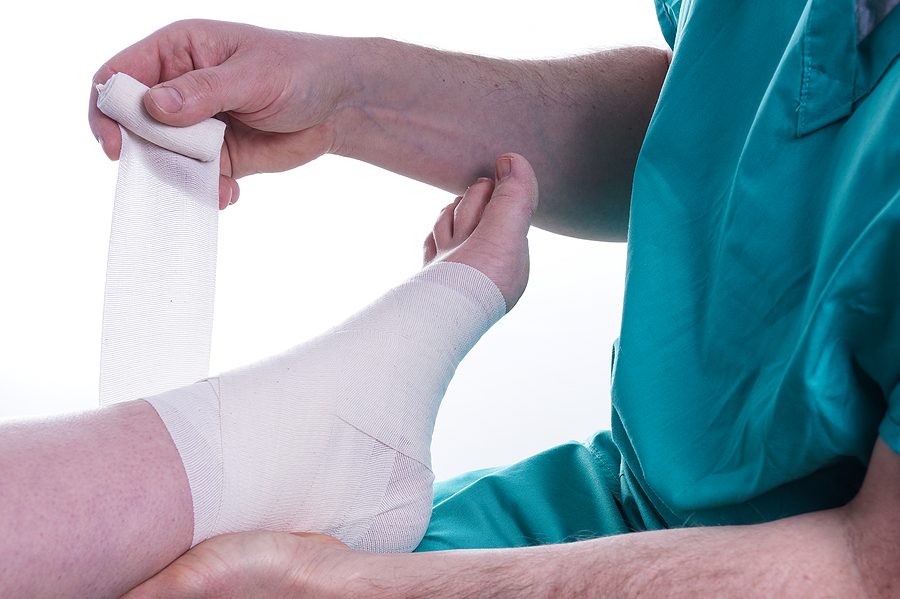
Urgent care clinics have the specialized imaging equipment needed to assess sprains. Urgent care clinics also have access to medical equipment, such as elbow or wrist braces, that you don’t. Your doctor makes sure the joint is supported for optimal healing. As compression bandages are used to limit severe swelling, doctors know how to wrap your joint to ensure blood flow isn’t impacted.
Shifting From RICE to PEACE & LOVE
For years, RICE, PRICE, and even POLICE were the recommended treatment acronyms for soft-tissue injuries like sprains. Times have changed, and a new recommendation has been introduced in the British Journal of Sports Medicine. PEACE & LOVE is more in-depth when it comes to sprain treatments.
What exactly does PEACE & LOVE entail?
P – Protect your joint or limb by avoiding movement and activity.
E – Elevate your sprain higher than your heart.
A – Avoid anti-inflammatory medications like ibuprofen that impede tissue repair, use acetaminophen instead, and avoid ice.
C – Compression using elastic bandages or medical tape to reduce swelling.
E – Educate yourself by listening to your body.
L – Load increases should only happen when your body feels it’s ready.
O – Optimism and positive thoughts aid the healing process.
V – Vascular (cardio) activities that are pain-free increase blood flow to the tissue, which helps with damage repair.
E – Exercise is important for restoring strength, flexibility, and mobility.
The Value in Urgent Care for Sprains
When you experience an injury and suspect a sprain, time is essential. Your doctor may not have X-ray equipment in the office. You must go to the hospital or an urgent care clinic for diagnostic imaging. Save time and frustration and go to urgent care.
Premium Urgent Care has diagnostic imaging equipment on-site, so you won’t be sent to another location when you’re in pain. There are three distinct advantages you get when you head to urgent care:
- Cost – ER visits cost significantly more than urgent care. Urgent care accepts most insurance plans, so you’ll only have to pay a standard co-pay for specialist visits.
- Doctor’s Notes – Some injuries require a doctor’s note to go on light duty at work or to get approval to sit out games for as long as needed. An urgent care doctor provides that documentation.
- Wait Times – California emergency departments often have long wait times for patient care. Severe injuries are prioritized over minor sprains. The average wait in a California ER is 4.5 hours. Urgent care doctors see you much faster and can have you in and out in as little as an hour.
Sprains aren’t an injury you should ignore. While it might not seem as severe as a broken bone, it’s still painful, and improper care can worsen the injury. Seeking medical care within 24 to 48 hours is essential. When your doctor is unavailable, you don’t have to forgo sprain treatment.
Premium Urgent Care has multiple offices with weekend hours. We’re open later than most doctors’ offices, too. See one of our doctors to have your injury assessed to ensure it’s not a fracture. Our doctor immobilizes the joint to prevent further injury to the ligaments and tendons.
No appointment is needed. Walk in and get the medical care you need to ensure your sprain heals well. Online check-in saves time. We welcome you to print out forms in advance and bring them to the registration desk when you arrive.