
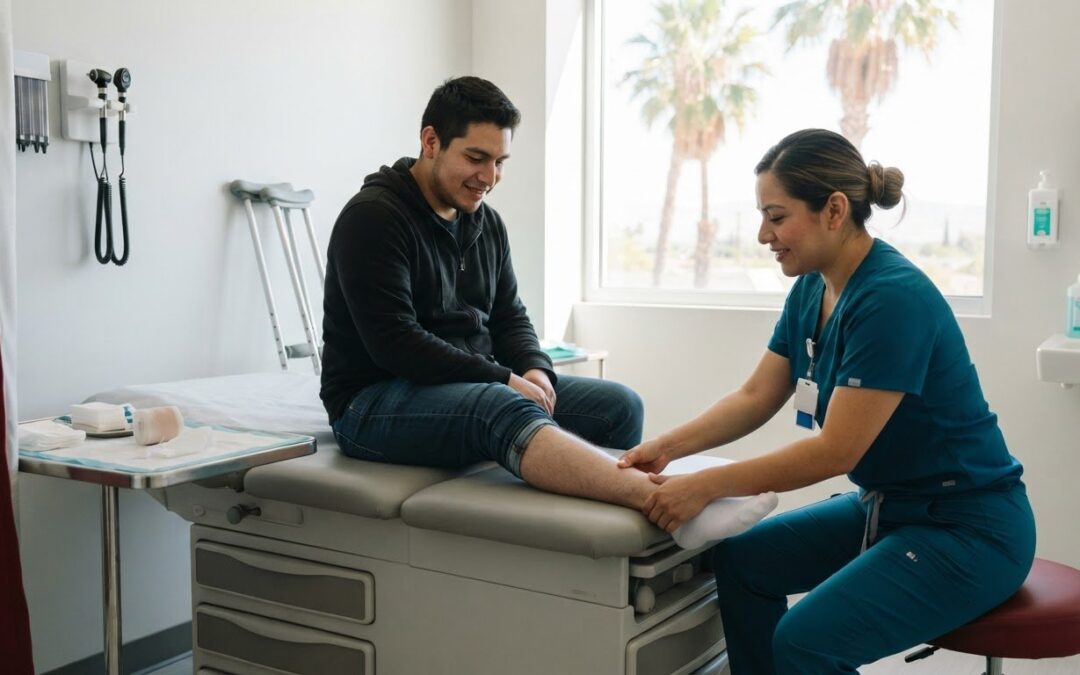
A painful, swollen ankle may be sprained, but appearance alone can’t rule out a fracture. A walk-in clinic for minor sprains can assess a non-emergency injury when you need care and can’t see your regular doctor. Seek medical care promptly if the limb looks bent, misshapen, or discolored, or you can’t bear weight on it.
It’s understandable to want to know whether an injury may be sprained or broken and what care could involve. This guide explains how clinicians assess a possible sprain, when urgent care may be appropriate, and when emergency care is safer. It also covers practical points about clinic visits, insurance, self-pay, and possible treatment, along with signs that call for medical attention.
Key Takeaways
- Know which injury signs call for emergency care and when primary care or urgent care may be a better fit.
- Use pain, swelling, ability to bear weight, and how the injury happened to guide your next step.
- Understand how insurance coverage, self-pay, and the services needed can affect your visit costs.
- Learn when a splint, cast, or crutches may be considered and how each can support an injured joint.
- Plan around clinic hours and understand what a walk-in visit for a sprain may involve.
When to use primary care, urgent care, or the emergency department
A walk-in clinic for minor sprains can assess a non-life-threatening injury when your regular doctor isn’t available. A clinician examines the joint, considers whether further evaluation is needed, and recommends care based on your symptoms and how the injury happened.
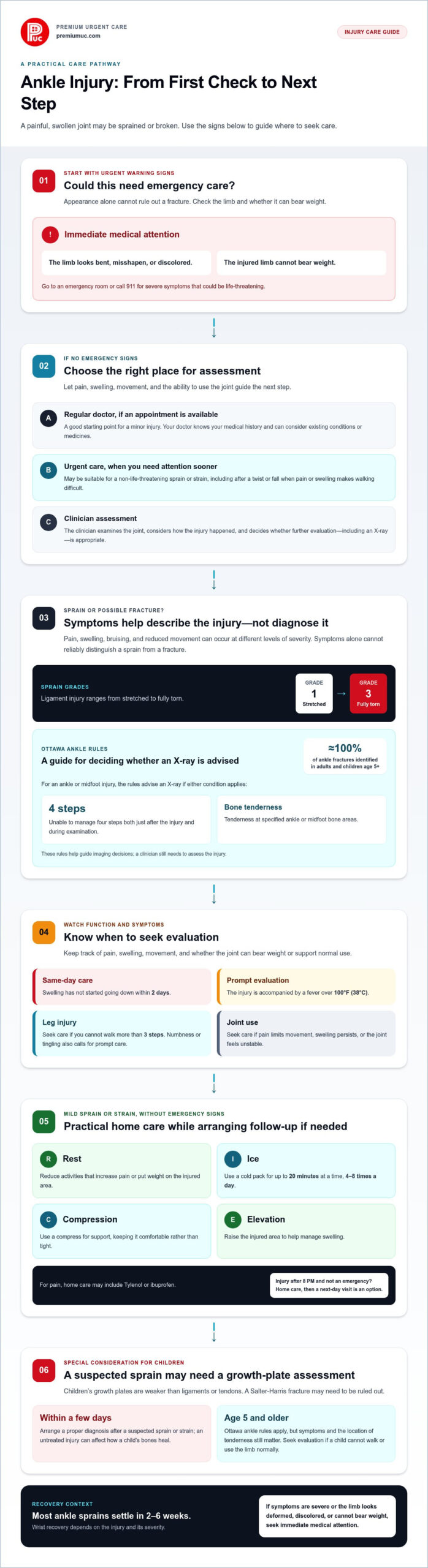
For a minor injury or health concern, start with your regular doctor if an appointment is available. Your doctor knows your medical history and can consider how existing conditions or medicines affect care. If you need attention sooner, urgent care may be suitable for a sprain or strain that doesn’t appear life-threatening. It can be a practical option after a twist or fall when pain or swelling makes walking difficult.
Go to an emergency room or call 911 for severe symptoms that could be life-threatening. Injuries range from minor to life-threatening, so the emergency department is the appropriate setting when the injury appears severe or requires immediate emergency care. A painful ankle by itself does not establish whether it is sprained or broken. A bent, misshapen, or discolored limb, or one that cannot bear weight, needs immediate medical attention to rule out a fracture.
For a mild sprain or strain without emergency signs, use practical home care while arranging follow-up if needed:
- Rest: Reduce activities that increase pain or place weight on the injured area.
- Ice: Apply a cold pack for up to 20 minutes at a time, four to eight times a day.
- Compression: Use a compress to support the area, keeping it comfortable rather than tight.
- Elevation: Raise the injured area to help manage swelling.
For pain, home care may include Tylenol or ibuprofen. If an injury happens after 8 PM and is not an emergency, home care followed by booking a next-day visit is an option. In Fresno, Clovis, or Selma, let the injury’s symptoms and severity guide whether you wait for an appointment or seek urgent evaluation.
Children need particular attention after a suspected sprain or strain. Arrange a proper diagnosis within a few days, because an untreated injury can affect how a child’s bones heal. Children’s growth plates are weaker than ligaments or tendons, so a Salter-Harris fracture may need to be ruled out. Don’t assume a child’s painful joint after sports or a fall is only a sprain.
Where Should I Go for Care Today?
Most ankle sprains settle in 2 to 6 weeks; wrist recovery depends on the injury and its severity. Seek care based on function, pain, swelling, and whether the joint can bear weight.
Sprains, Sports Injuries, and Suspected Fractures
A basketball twist, a fall while running, or a hard landing can injure a ligament or bone. Seek care if pain limits movement, swelling persists, or the joint feels unstable. Treatment begins with assessing the injury and how it happened. A clinician can determine whether further evaluation, including an X-ray, is appropriate.
Sprain Symptoms and Injury Severity
Sprains are graded from grade 1, where a ligament is stretched, to grade 3, where it is fully torn. Pain, swelling, bruising, and reduced movement can occur at different levels of severity. Symptoms alone can’t reliably distinguish a sprain from a fracture. Note where the pain began, whether swelling is changing, and what movements or weight-bearing make it worse.
For an ankle or midfoot injury, the Ottawa ankle rules advise an X-ray if the person couldn’t manage four steps both just after the injury and during examination, or if specified ankle or midfoot bone areas are tender. The rules identify close to 100 percent of ankle fractures in adults and children age 5 and older. They help guide imaging decisions, but a clinician still needs to assess the injury.
Foot, ankle, knee, and shoulder injuries may need evaluation after sports or a fall. Consider how the joint moves and whether it can bear weight or support normal use. For a leg injury, seek medical care if you can’t walk more than three steps. Numbness or tingling after a leg injury also calls for prompt care.
- Seek same-day care if swelling hasn’t started going down within 2 days.
- Get prompt evaluation for an injury accompanied by a fever over 100°F (38°C).
- Seek care right away for a bent, misshapen, or discolored limb, or one that can’t bear weight.
Children’s injuries call for pediatric attention because a suspected sprain may need assessment for a fracture involving a growth plate. Ottawa ankle rules apply to children age 5 and older, but symptoms and the location of tenderness still matter. If the injury keeps a child from walking or using the affected limb normally, arrange medical evaluation. For a non-emergency injury needing assessment, urgent care evaluation is one care option.
Insurance and self-pay options
Before a sprain or strain visit, review how your insurance plan handles urgent care. Coverage and out-of-pocket costs depend on your plan terms, network status, and services provided. An examination, for example, may be billed differently from imaging or a brace. Check your plan documents to understand which costs may apply.
Check the details that affect your expected payment:
- Network status: See whether the clinic is listed as in-network under your plan.
- Visit cost sharing: Review the plan’s copay, deductible, and coinsurance rules for urgent care.
- Additional services: Imaging, supplies, or other treatment may affect the final bill.
- Coverage records: Keep your insurance card and any visit paperwork for later review.
A deductible is the amount you may need to pay toward covered care before your plan contributes. A copay is a set patient payment described by the plan, while coinsurance is a share of covered costs. How these apply varies by plan. A visit early in the plan year, for instance, may be handled differently from one after you’ve met your deductible.
If you plan to pay yourself, ask about the self-pay process before receiving care. The price depends on the case and is provided after a quote request. Factors include the evaluation, any imaging, treatment, and supplies. An examination alone may involve different services from an injury that needs an X-ray or support equipment. Don’t assume every service is included in one charge.
For a self-pay visit, be ready to describe the injury clearly. Note when it happened, what movement caused it, and whether you can walk or use the joint. These details help focus the visit on the injury and the care it may require. Keep receipts and paperwork together in case you need them for your records or plan reimbursement.
Timing can affect your practical choices, but it doesn’t determine insurance coverage. If an injury happens on Monday and your primary care appointment isn’t available, weigh urgent care against your plan’s terms. A convenient visit still needs to suit your budget and care needs. For a serious emergency, seek emergency help instead of delaying care over routine billing questions.
Insurance or self-pay applies to the visit, not to a diagnosis chosen in advance. A clinician’s evaluation helps determine whether symptoms fit a sprain, another minor injury, or a condition needing further assessment. If you’re considering care for a sports injury, review your plan documents to see how urgent-care visits and related services are handled. This helps you plan for possible costs without assuming every strain receives the same treatment.
Splints, casts, and crutches
A support device may be part of care when a sprain affects joint stability or movement. A grade 3 sprain may require a brace, splint, or cast for several weeks. The appropriate support depends on the injury’s severity and the affected joint, such as an ankle, wrist, or knee. These devices serve different purposes, so an assessment helps guide the choice.
A brace or splint supports an injured area while allowing some adjustment or movement, depending on its design. A cast provides firmer coverage around the affected area. Crutches can help a patient move without putting the usual load on an injured leg. For example, an ankle injury that makes walking difficult may prompt a discussion about temporary support and safe mobility.
Before leaving an appointment, make sure you understand how to use the device. Ask which activities to limit, how to manage daily tasks, and what symptoms should prompt medical attention. If a support feels uncomfortable or affects circulation or sensation, contact a medical professional for guidance. Don’t alter a cast or splint yourself, since changing its fit can affect how it supports the injury.
Crutches need proper adjustment and instruction. Before relying on them at home, patients should understand how to hold them, move through doorways, and manage stairs. Adults who live alone may also need to plan for meals, bathing, and carrying items. Clear loose rugs and clutter from walking paths, and keep essentials within easy reach.
Support is only one part of treatment. A clinician also considers the injury, symptoms, and need for further assessment. Seek medical attention if severe pain, worsening symptoms, numbness, or a change in limb color occurs. A cast or splint doesn’t replace follow-up when an injury needs reassessment.
Primary care can help coordinate follow-up after an initial evaluation, especially when a patient needs ongoing guidance. Bring any discharge instructions and note changes in pain, swelling, or movement. For a grade 3 sprain, ask how long the recommended brace, splint, or cast should remain in place, since the fact that support may be needed for several weeks does not set an individual schedule. Follow the care plan rather than stopping support simply because the joint feels better.
Children and adults may need different practical arrangements, but both should protect the injured area and move safely. A child using crutches, for example, may need help carrying school materials. Someone wearing a lower-limb cast may need to plan transportation. Discuss daily needs during the appointment so the support plan considers home, work, or school.
Walk-in clinic hours and services for sprains
A walk-in visit can help assess a non-life-threatening injury when your doctor isn’t available. “Walk-in” means you seek care without a scheduled appointment, but clinic hours and services vary. Check the location’s posted hours before travelling, especially after a sports injury or fall. During the visit, the injury is assessed rather than assumed to be a sprain.
Hours matter when deciding whether to wait or seek care now. If a sprain or strain occurs after 8 PM and it isn’t an emergency, home care followed by booking a next-day visit is an option. Severe symptoms that could be life-threatening call for emergency care, not a routine walk-in visit. A bent or discolored limb, or one that can’t bear weight, needs prompt medical attention to rule out a fracture.
During the visit, describe the injury clearly: when it happened, which movement caused it, and what activities now hurt. Explain, for example, whether your ankle twisted while running or your wrist took the force of a fall. These details help guide the clinician’s examination. Pain location, tenderness, swelling, and your ability to walk or move the joint also inform the assessment.
Imaging decisions depend on examination findings. For an ankle or midfoot injury, the Ottawa ankle rules advise an X-ray if you couldn’t manage four steps both immediately after injury and during examination, or if specified ankle or midfoot bones are tender. The rules identify close to 100 percent of ankle fractures in adults and children age 5 and older. A walk-in clinic for minor sprains should be understood as an option for assessment, not a promise that every location performs in-house radiology.
Clinics may differ in the services and equipment available for injury visits. An assessment can guide treatment, joint support, or further evaluation if a fracture is suspected. Ask about the visit process and insurance or self-pay arrangements before arriving, as these details may affect your choice of location. “Walk-in” doesn’t mean every service is available at every hour.
If swelling hasn’t started going down within 2 days, seek same-day care. An ankle injury that isn’t better after 5 to 7 days or keeps giving way also needs evaluation. These signs can help you decide whether to arrange a visit rather than continue home care alone. For an injury that needs assessment, request a sprain evaluation.
Premium Urgent Care: Colds, cough, and upper respiratory infections
Premium Urgent Care provides urgent care consultations for acute concerns, including colds, coughs, and upper respiratory infections. Ear or sinus symptoms and urinary tract symptoms are also reasons to seek evaluation. A visit gives you an opportunity to discuss your symptoms and care options.
For a possible sprain, use the guidance above to decide whether you need urgent evaluation or emergency care. Severe, potentially life-threatening symptoms need emergency help, not a routine clinic visit. For non-life-threatening concerns, consider your symptoms and the assessment you need.
Contact Premium Urgent Care to discuss an urgent care consultation or visit premiumuc.com.
Make your next care decision with confidence
Choose your next step based on your symptoms and daily needs, then prepare a clear account of what happened and what has changed. Before visiting, note how the injury affects walking or other routine activities. Have your insurance information ready if you plan to use coverage. These details can help focus your conversation with the care team.
A walk-in clinic for minor sprains can be a practical option when you need an assessment for a non-life-threatening injury. Premium Urgent Care offers consultations and care for sprains, strains, and minor injuries. Its services also include care for colds, coughs, and upper respiratory infections, ear and sinus infections, and urinary tract infections.
For guidance on an urgent care consultation, contact Premium Urgent Care. Taking a clear next step can help you move forward with care suited to your needs.
Frequently Asked Questions
Is it sprained or broken?
You can’t reliably tell a sprain from a fracture by appearance alone. Both can cause pain, swelling, bruising, and difficulty using the injured area. A clinician considers how the injury happened, where it hurts, and how the joint moves. Pain directly over a bone or difficulty bearing weight, for example, may affect whether imaging is needed. An examination helps guide the next step better than a guess at home.
What services are available for injuries?
Urgent care can assess sprains, strains, and other minor injuries. Premium Urgent Care also offers suturing for lacerations and incision and drainage for abscesses. These services address different problems, so describe your concern clearly when seeking care. Explain, for example, whether a cut is deep or a joint became painful after a fall. Patients in Fresno, Clovis, and Selma can seek urgent care for non-emergency concerns.
When do injuries need medical attention?
Seek medical attention if an injury limits normal use, symptoms worsen, or the affected limb looks misshapen or discolored. Numbness or tingling after a leg injury also warrants prompt care. A fever over 100°F (38°C) accompanying an injury is another reason to seek same-day evaluation. For example, don’t continue sports practice on an ankle that repeatedly gives way. Severe, potentially life-threatening symptoms belong in emergency care.
When should you go to urgent care or the ER for a sprain?
Choose urgent care for a non-life-threatening sprain that needs assessment, especially when your regular doctor can’t see you. Use the emergency room for severe symptoms that could be life-threatening or an injury with a limb that cannot bear weight or looks deformed. If a non-emergency sprain happens after 8 PM, home care followed by booking a next-day visit is an option. The injury’s severity, not the label “sprain,” should guide your choice.
How do you tell whether a sprain is minor or needs an X-ray?
A clinician assesses an injury rather than relying only on pain or swelling to classify it. For ankle or midfoot injuries, the Ottawa ankle rules advise an X-ray if you couldn’t manage four steps both immediately after the injury and during examination, or if specified ankle or midfoot bones are tender. These criteria help guide imaging decisions. They don’t replace an evaluation, particularly when walking or movement is significantly limited.
What treatment does a walk-in clinic provide for a sprain?
A walk-in clinic can evaluate an injured joint, discuss symptoms, and recommend care based on the findings. Treatment may include guidance on protecting the area, managing activity, or using support such as a brace or splint. The clinician can also decide whether imaging or further evaluation is appropriate. Someone who has difficulty walking, for example, may need a different plan from someone with mild discomfort and preserved movement.
How much does a walk-in clinic visit for a sprain cost without insurance?
The price depends on the case and is provided after a quote request. Cost factors include the clinical evaluation, any imaging, treatment, and supplies needed. An examination alone may cost differently from a visit requiring additional services or support equipment. If paying yourself, describe the injury and ask which parts of care affect the quote. Don’t assume every sprain visit involves the same services or total charge.
Does insurance cover walk-in clinic visits for sprains?
Coverage depends on your plan’s benefits and how it handles urgent care. Network status, deductibles, copays, coinsurance, and services provided can affect what you owe. An evaluation and imaging, for example, may be treated as separate services under plan terms. Review your insurance documents for urgent-care benefits and cost sharing before your visit. Bring your insurance card and keep visit paperwork to help track claims and payments.