

Most upper respiratory infections improve within 7 to 10 days, but symptoms that worsen after starting to improve or a fever lasting longer than three days are reasons to seek medical care. Urgent care for upper respiratory infection symptoms can help assess persistent or worsening illness. Severe breathing difficulty, confusion, or trouble waking may require emergency treatment; in a life-threatening emergency, call 911, according to the National 911 Program.
It can be difficult to tell whether a cough, congestion, or sore throat is following a typical course or needs prompt attention. You’ll learn which symptoms may call for urgent care, which signs point to an emergency, and what testing may help identify flu, COVID-19, or strep throat.
This article explains how a clinician evaluates respiratory symptoms and what treatments may be considered. Knowing what to expect can help you choose an appropriate level of care when an illness persists, worsens, or causes concern.
Key Takeaways
- Learn which common symptoms can often be monitored at home and what changes in their course deserve medical attention.
- Recognize warning signs that call for urgent evaluation and symptoms that may require emergency care.
- See how flu, COVID-19, and strep tests can help distinguish causes with similar symptoms.
- Understand why treatment depends on the likely cause, including why antibiotics aren’t used for viral infections.
What symptoms can occur with cold and upper respiratory infections?
A common cold is an upper respiratory infection, usually caused by viruses affecting the nose and throat. Symptoms can include a runny or blocked nose, sneezing, sore throat, cough, headache, and mild fever. Similar symptoms can occur with flu, COVID-19, or strep throat, so symptoms alone may not identify the cause.
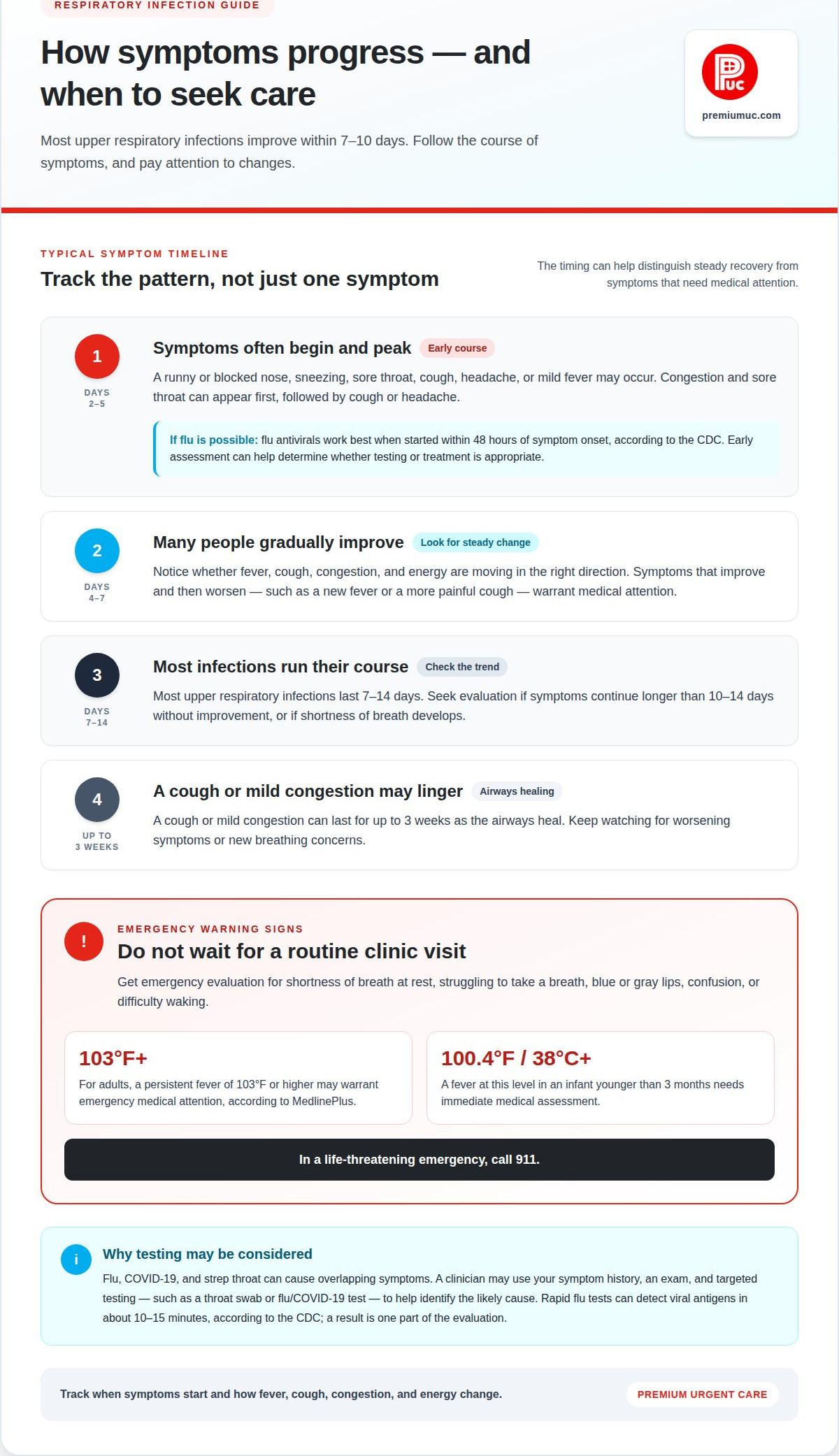
Symptoms often begin and peak during days 2-5. Many people then gradually improve during days 4-7. Most upper respiratory infections last 7 to 14 days, while a cough or mild congestion can linger for up to 3 weeks as airways heal. Track the start of symptoms and note changes in fever, cough, congestion, and energy. This timeline helps distinguish steady recovery from worsening.
- Typical course: congestion and sore throat may appear first, followed by cough or headache.
- Possible change: symptoms that improve and then worsen, such as a new fever or more painful cough, warrant medical attention.
- Follow-up: seek evaluation if symptoms last longer than 10-14 days without improvement, or if shortness of breath develops.
Flu antivirals work best when started within 48 hours of symptom onset, according to the Centers for Disease Control and Prevention. If flu is possible, early assessment can help determine whether testing or treatment is appropriate. A sore throat may also need evaluation for strep throat, particularly when symptoms are more severe or don’t follow the usual cold pattern.
To reduce the spread of infection while seeking care, wear a mask, cover coughs and sneezes, and clean your hands before entering a clinic. Respiratory infections can spread before symptoms begin and for about a week afterward, so these steps are useful even when symptoms seem mild. When possible, avoid close contact with others while you are ill.
When Should You Go to Urgent Care for a Respiratory Infection?
Choose care based on breathing, alertness, fever, and whether symptoms are worsening. Emergency signs need immediate attention; less severe concerns may be assessed at a clinic.
Emergency Warning Signs
Emergency warning signs are changes in breathing, awareness, or fever that suggest serious illness. Shortness of breath at rest, struggling to take a breath, blue or gray lips, confusion, or difficulty waking requires emergency evaluation. For adults with an upper respiratory infection, a persistent fever of 103°F or higher may warrant emergency medical attention, according to MedlinePlus, U.S. National Library of Medicine. A fever of 100.4°F (38°C) or higher in an infant younger than three months needs immediate medical assessment. In a life-threatening emergency, call 911 immediately, according to the National 911 Program.
Choosing a Care Setting
Telehealth can provide guidance when symptoms are mild and you can speak comfortably. An in-person exam may be needed to assess breathing or perform testing. A primary care doctor can help with ongoing concerns, while urgent care can evaluate acute respiratory symptoms that need prompt attention. Coverage and copays for urgent care depend on your insurance plan, so review your benefits or contact your insurer for details.
To find an open clinic, use a current map listing or your insurer’s directory, then review the clinic’s posted hours before traveling. Severe breathing difficulty, confusion, or difficulty waking should not wait for a clinic appointment. Respiratory distress can occur with illnesses such as pneumonia or bronchitis, and a clinic visit cannot replace emergency care when symptoms are life-threatening.
For non-emergency symptoms that need an in-person assessment, respiratory infection care can help evaluate what may be causing the illness.
Testing for influenza, COVID-19, and strep throat
Influenza, COVID-19, and strep throat can cause overlapping symptoms, but testing can help identify the likely illness. The evaluation may combine symptom history, an exam, and targeted tests.
Testing for Common Respiratory Infections
Testing checks for specific causes when symptoms alone cannot distinguish infections. A clinician may recommend flu or COVID-19 testing for respiratory symptoms, or a throat swab when sore throat raises concern for strep. These results help guide next steps because strep throat is a bacterial infection, while most colds are caused by viruses. Identifying the likely cause also helps explain whether infection-control precautions are appropriate.
Rapid Flu Tests and Additional Diagnostics
Rapid influenza diagnostic tests detect viral antigens, which are proteins from the flu virus. According to the Centers for Disease Control and Prevention, these tests at urgent care can detect viral antigens in about 10-15 minutes. A result is one part of the evaluation, not the only factor used to assess illness. Depending on symptoms, additional diagnostics may include blood work or a chest X-ray, especially when the exam raises concern about a more serious condition.
Urgent Care Examination and Testing
An urgent care examination connects reported symptoms with findings from a physical assessment. The clinician considers details such as cough, fever, sore throat, and breathing, then decides whether testing for flu, COVID-19, or strep may clarify the cause. A swab can collect a sample for infection testing. If symptoms suggest a problem beyond a typical upper respiratory infection, such as possible pneumonia, a chest X-ray or blood work may be considered.
Testing can help distinguish a viral illness from a bacterial infection, but not every respiratory visit requires every test. The clinician chooses tests based on your symptoms and examination. A sore throat, for example, may prompt strep testing, while flu-like symptoms may lead to influenza testing. Results help guide care and practical steps to limit spread, including reducing close contact while ill.
Can urgent care diagnose and treat upper respiratory infections?
Yes. An urgent care clinician can assess an upper respiratory infection by reviewing when symptoms began, examining your throat and lungs, and deciding whether testing may help. A runny nose and cough can fit a viral illness, while a significant sore throat may prompt evaluation for strep. The findings help distinguish a likely uncomplicated infection from symptoms that need further assessment.
Treatment depends on the likely cause. Antibiotics don’t work against viruses and are generally recommended only when a bacterial infection is diagnosed or strongly suspected. For a viral cold, care may focus on symptom relief, rest, fluids, and appropriate over-the-counter options. For moderate flu symptoms, people may seek urgent care within 24-48 hours to discuss antiviral medication that may help them recover faster.
If examination findings suggest a problem beyond a routine upper respiratory infection, additional evaluation may be appropriate. Depending on your symptoms, a clinician may order a chest X-ray or blood work. These tests can provide more information when breathing complaints, a persistent cough, or other findings raise concern about a more serious illness. The examination and test results together inform the care plan; for patients requiring ongoing intravenous antibiotics or therapy, home infusion services Syracuse NY can provide dedicated clinical support at home.
At your visit, describe when symptoms began, how they have changed, and any medicines you have taken. Mention specific changes, such as a cough becoming more painful or a fever appearing after you initially felt better. These details help the clinician interpret examination findings and choose relevant testing or treatment. Antibiotics do not treat a viral illness; if a bacterial infection is suspected, that possibility guides the next steps.
For an assessment of cough, cold, or other respiratory symptoms, schedule an upper respiratory infection evaluation.
Premium Urgent Care
Premium Urgent Care treats colds, coughs, and upper respiratory infections when symptoms need clinical attention. Visit for an urgent care consultation if symptoms persist, worsen, or leave you unsure whether further evaluation is appropriate. The clinic also treats ear and sinus concerns that can occur alongside respiratory symptoms.
A visit can help you discuss your symptoms, their progression, and possible next steps with a medical professional. If flu or COVID-related illness is a concern, explain what you’re experiencing so the consultation can address that concern. For severe breathing difficulty, confusion, or another life-threatening emergency, call 911 rather than seeking routine urgent care.
Contact Premium Urgent Care to discuss care for respiratory symptoms.
Take the Next Step Toward the Right Care
Urgent care for an upper respiratory infection can help clarify what may be causing your symptoms when they need attention. Bring a concise account of when they began, how they have changed, and what concerns you most. This context can make your consultation more focused and useful.
Premium Urgent Care treats colds, coughs, and upper respiratory infections, along with ear and sinus concerns and urinary tract infections. If you’re unsure whether your symptoms need an in-person evaluation, reach out to discuss your care needs. For a life-threatening emergency, call 911 instead of waiting for a routine visit.
Contact Premium Urgent Care today to take a considered next step. You deserve clear guidance as you decide what care is appropriate.
Frequently Asked Questions
Do You Need Antibiotics?
Antibiotics are not needed for a viral cold or flu because they do not treat viruses. A clinician considers your symptoms, examination, and relevant test results before deciding whether a bacterial infection is likely. For example, a severe sore throat may prompt strep testing. Taking antibiotics without a suspected or diagnosed bacterial cause can expose you to medication without treating the illness.
Does urgent care prescribe medicine to treat the flu?
Yes. Urgent care can assess flu symptoms and prescribe antiviral medication when appropriate. The evaluation may include a flu test and a review of when symptoms began, since timing can affect treatment decisions. Bring a list of your medicines and mention any allergies or relevant health conditions. This helps the clinician consider whether an antiviral is suitable and explain how to use it.
How do I know if my flu is serious?
Flu needs emergency evaluation if it causes difficulty breathing, confusion, or trouble waking. A very high or persistent fever also calls for prompt medical attention, particularly if the person’s condition is worsening. In children, watch for unusual drowsiness or labored breathing rather than judging the illness only by how high the fever feels. These signs need more than home symptom relief.
How long should the flu last before seeing a doctor?
Don’t wait for a set number of days if symptoms are severe or worsening. Arrange medical assessment if a flu fever persists for 3-4 days or symptoms aren’t improving. Flu symptoms that continue beyond 7-10 days without improvement also warrant care. Note whether symptoms are easing, staying the same, or returning after improvement, and share that course during evaluation.
What at-home treatments for flu symptoms do doctors recommend until you seek treatment?
Rest, drink plenty of clear fluids, and use over-the-counter medicines as directed for symptom relief. Honey may calm a cough in adults and children over 1 year old. Avoid giving honey to younger children. If you’re arranging an evaluation, keep track of fluids, urination, fever, and medicines taken so you can describe changes and possible dehydration to the clinician.
When should I go to urgent care for an upper respiratory infection?
Seek urgent evaluation when symptoms worsen after beginning to improve, a fever persists, or an illness is not improving over time. Shortness of breath requires prompt attention, while severe breathing difficulty, confusion, or difficulty waking calls for emergency care. Infants younger than three months with a temperature of 100.4°F (38°C) or higher need immediate medical assessment.