
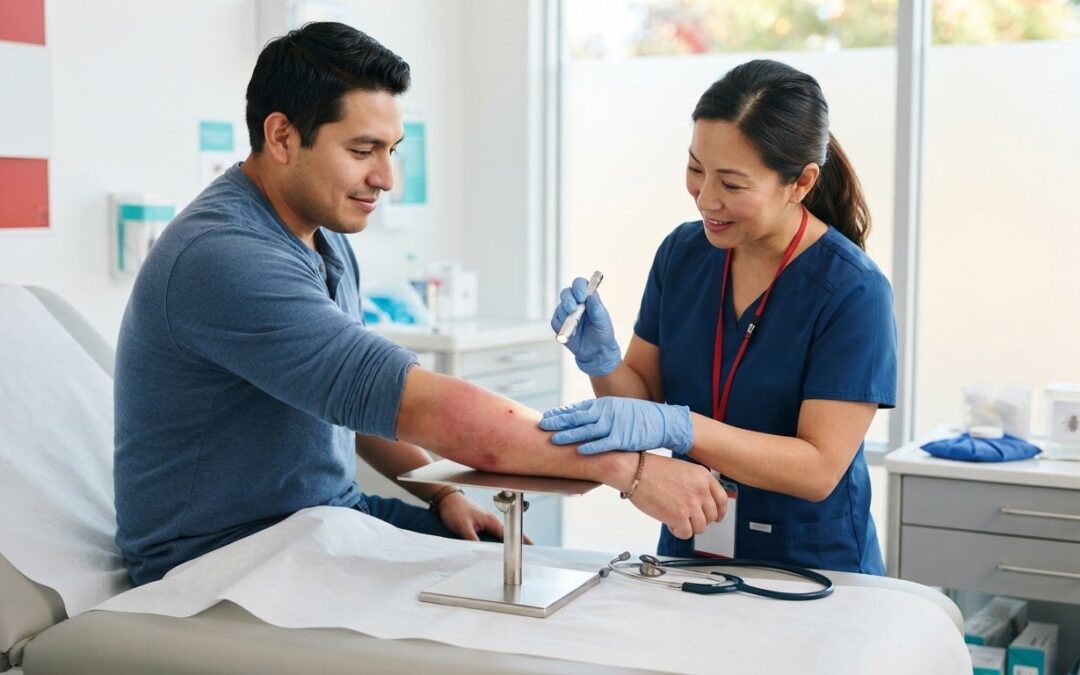
Does every swollen insect bite need medical care, or can some reactions be managed at home? The answer depends less on the insect and more on your symptoms and how they change. If you’re unsure whether a bite or sting is getting worse, urgent care for insect bites can provide an evaluation when symptoms are concerning but not life-threatening.
It’s understandable to worry when itching, pain, or swelling doesn’t settle, especially if redness spreads or the area becomes warm. Trouble breathing, swelling of the lips, tongue, or throat, or other signs of a severe allergic reaction require emergency services right away, not a clinic visit.
This guide covers what to do first, which symptoms may point to infection or a significant reaction, and when a walk-in evaluation may help. It also explains how to distinguish a non-emergency concern from warning signs that call for emergency care. Premium Urgent Care provides walk-in evaluations for acute concerns, including rashes, skin infections, and minor injuries, for patients in Clovis, Selma, and Fresno.
Key Takeaways
- A small area of redness, itching, tenderness, or swelling may be a localized reaction, but changes over time matter.
- Increasing warmth, redness, pain, or drainage can signal a need for professional evaluation.
- For urgent care for insect bites, choose a clinic or emergency services based on symptom severity.
- First steps include moving away from the exposure, gently cleaning the area, and applying a wrapped cool compress.
- At Premium Urgent Care, a walk-in evaluation can include a symptom review, an exam of the affected skin, and guidance on next steps.
Urgent care for insect bites: what symptoms should you take seriously?
Many localized bite or sting reactions can be monitored. Symptoms that spread, worsen, or affect breathing need prompt attention. For a concerning but non-emergency reaction, urgent care for insect bites provides a professional evaluation. Focus on how symptoms change rather than trying to identify the exact insect from the mark.
What can a typical local bite or sting reaction look like?
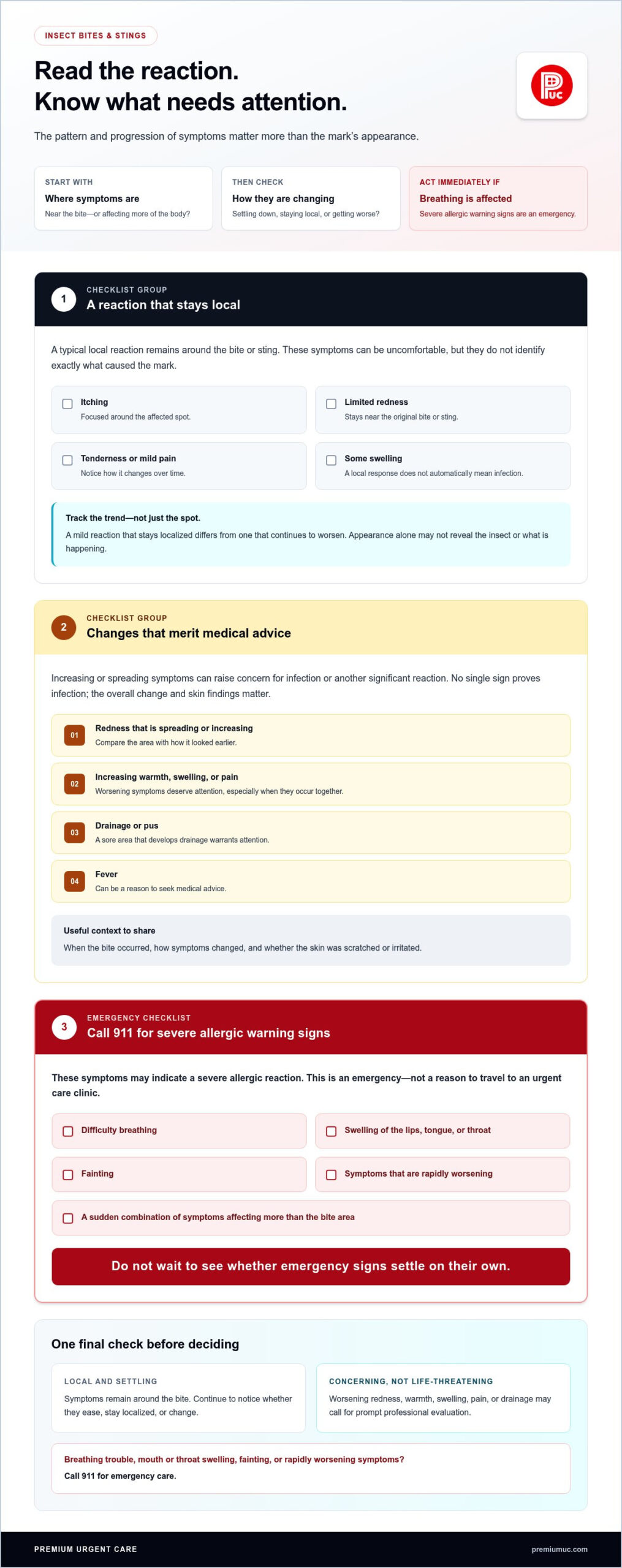
A typical local reaction stays around the bite or sting. You may notice itching, limited redness, tenderness, mild pain, or swelling. These symptoms can be uncomfortable, but they don’t identify exactly what caused the mark. The overview of Arthropod Bites and Stings describes how different bites and stings can produce overlapping skin reactions.
Appearance can be misleading. A small bump or patch of redness isn’t a reliable way to identify the insect, and a photo or visual comparison may not provide a clear answer. Instead, track the pattern and progression:
- Is redness or swelling staying near the original spot, or spreading?
- Is itching or tenderness easing, or is pain becoming more noticeable?
- Has warmth, drainage, or another new symptom appeared?
A mild reaction that remains localized differs from one that continues to worsen. There isn’t a single size or duration that determines whether every bite needs care. Your overall symptoms and how they evolve are more useful guides than appearance alone.
Which symptoms may signal a serious allergic reaction?
Some symptoms can indicate a severe allergic reaction, also called anaphylaxis. This is an emergency, not a reason to travel to an urgent care clinic. If warning signs appear, call 911. Emergency symptoms take priority over the rest of this article.
Call 911 for breathing difficulty, swelling of the tongue or throat, fainting, or symptoms that are rapidly worsening. Swelling of the lips or a sudden combination of symptoms affecting more than the bite area also requires immediate emergency attention. Don’t wait to see whether these signs settle on their own.
A local reaction stays near the bite; a severe allergic emergency can affect breathing, the mouth or throat, or the whole body.
If there are no emergency warning signs, continue to observe the area and note any changes. Increasing redness, warmth, swelling, pain, or drainage may call for prompt medical evaluation, even if the reaction began as a small, itchy spot. When symptoms are concerning but not life-threatening, an in-person assessment can help determine appropriate next steps.
How insect bites and stings cause symptoms, and when the skin may be infected
Itching, redness, and swelling can develop when the body reacts to a bite or sting, venom, or irritation at the skin. These responses can look similar, so the mark alone can’t reliably identify the cause or show whether an infection is present. Changes over time and how you feel overall offer more useful clues.
Why can itching, redness, and swelling happen?
A bite or sting can irritate the skin and prompt a local response, leading to itchiness, tenderness, redness, or puffiness near the spot. Reactions vary, and these signs don’t automatically mean the skin is infected. MedlinePlus explains common bite and sting symptoms and urgent warning signs in its guide to Insect Bites and Stings: Symptoms and Emergency Care.
A localized response remains focused around the affected area. Symptoms that affect breathing, alertness, or more than the skin require a different level of attention. Scratching can break the skin, making the area harder to assess and creating an opening for germs, but a scratched bite doesn’t automatically become infected. Try to avoid picking at it and watch for changes.
What changes can raise concern for a skin infection?
Some redness or tenderness may occur early after a bite. Concern rises if the area becomes increasingly red, warm, swollen, or painful, particularly if redness is spreading or pus appears. Fever can also be a reason to seek medical advice. No single symptom proves infection; a clinician considers your history, how the area has changed, and the skin findings together.
Track the progression rather than judging the spot from one glance. For example, expanding redness that becomes warmer, or a sore area that develops drainage, deserves attention. If symptoms are getting worse instead of settling, a professional evaluation can help determine what’s happening and what next steps are appropriate.
- Notice the trend: Compare the area with how it looked earlier.
- Watch for new signs: Increasing pain, warmth, spreading redness, drainage, or fever merits medical advice.
- Share the context: Be ready to describe when the bite occurred, how symptoms changed, and whether you scratched or irritated the skin.
Infection concerns depend on worsening symptoms and the full clinical context, not on one mark or sign alone. If a bite has broken the skin or the area is draining, the Fresno wound-care guide offers related information about skin and wound concerns.
For concerning symptoms that aren’t life-threatening, an urgent care evaluation can assess the affected skin and guide next steps. Premium Urgent Care provides walk-in evaluations for acute concerns, including rashes and skin infections. Learn more about walk-in urgent care evaluations.
Urgent care or the ER for an insect bite: how to choose
The right setting depends on the reaction’s severity and whether symptoms are changing. Use the guide below to help decide what to do, but remember that it can’t diagnose a condition or replace emergency services. If you’re uncertain and symptoms are severe or rapidly worsening, treat it as an emergency.
| Level of concern | Symptoms or situation | What to do |
|---|---|---|
| Emergency | Difficulty breathing, swelling in the mouth or throat, fainting or collapse, or rapidly worsening symptoms affecting the body | Call 911. Don’t wait for an urgent-care visit or try to travel there when emergency symptoms are present. |
| Prompt clinical evaluation | Worsening redness, warmth, swelling, or pain; drainage or pus; fever; or a bite or sting that needs assessment | Seek urgent care for a non-life-threatening concern that is getting worse or may involve a skin infection. |
| Monitor | Mild, localized itching, redness, tenderness, or swelling without concerning changes or symptoms elsewhere | Keep an eye on the area and seek medical advice if symptoms worsen or new concerns develop. |
When should you call 911 or go to an emergency department?
Possible anaphylaxis requires emergency care. Call 911 for breathing trouble, throat or tongue swelling, fainting, collapse, or severe symptoms that are progressing quickly. These signs can worsen rapidly, so don’t delay by driving to urgent care or waiting to see if they pass. Emergency warning signs take priority over every other consideration in this guide.
When may urgent care be appropriate for a bite or sting?
Urgent care is appropriate when symptoms are concerning but not life-threatening. Examples include localized redness or swelling that’s worsening, increasing pain, warmth, drainage, or fever. An evaluation can assess the affected area and help determine appropriate next steps. Premium Urgent Care provides walk-in evaluations for acute, non-emergency concerns, including rashes and skin infections.
Not every irritated patch is caused by a bite. Other skin conditions can look similar, so consider the circumstances and how the area changes rather than relying on appearance alone. For comparison, a heat rash treatment guide describes another possible cause of irritated skin.
This framework is a starting point, not a diagnosis. If symptoms are localized but worsening, a walk-in evaluation can provide a closer assessment. Explore Premium Urgent Care for non-emergency care information.
What to do before seeking care for an insect bite
For a mild, localized reaction, simple steps can help protect the skin while you monitor symptoms or arrange an evaluation. These measures don’t replace medical care if the reaction worsens. If you’re considering urgent care for insect bites, details about what happened and how symptoms changed can also help the clinician assess the area.
Simple first-aid steps for a localized reaction
First, move away from the insect or area where you were exposed. Gently wash the skin with soap and water, then apply a wrapped cool compress for discomfort. Keep the area clean and avoid actions that could further irritate or break the skin.
- Move to a safer place. Step away from the source of exposure to reduce the chance of another bite or sting.
- Clean the area gently. Use soap and water. Avoid scrubbing, which can irritate the skin.
- Apply a cool compress. Wrap a cool pack or cloth-wrapped ice in fabric before placing it on the skin. Don’t put ice directly against the bite.
Resist scratching, cutting, squeezing, or trying to drain the spot. These actions can damage the skin and make it harder to judge whether the area is changing. Avoid unverified home remedies, too. A treatment that helps one kind of irritation may not suit another, and the appearance of a bite doesn’t reliably identify its cause.
What information can help a clinician assess the bite?
Keep a brief record of when symptoms began, where the bite is, and what has changed. Note any new symptoms, known allergies, and medication already taken. If it’s safe and practical, a photo can show how the area looked earlier compared with how it looks now.
Before using an over-the-counter product, read and follow its label. Ask a clinician or pharmacist for guidance if you’re choosing a product for a child, are pregnant, have a known allergy, or have another health concern. Don’t assume a medicine or topical product is suitable for every person or every bite, and don’t exceed label directions.
If you seek an evaluation, share the details you recorded, including whether the skin was scratched or otherwise irritated. That context helps a clinician consider symptom progression alongside the skin’s current appearance. Premium Urgent Care provides walk-in evaluations for acute, non-emergency concerns, including rashes and skin infections. For an insect bite that needs professional assessment, visit Premium Urgent Care for an evaluation.
Get an insect-bite evaluation at Premium Urgent Care in Fresno County
A bite or sting that’s getting worse but isn’t causing emergency symptoms can benefit from an in-person assessment. For people in Clovis, Selma, and Fresno, urgent care for insect bites can assess a concerning skin reaction and guide appropriate next steps.
What to expect during a walk-in evaluation
The clinician will ask when the bite or sting occurred, when symptoms began, and how they’ve changed. They may also review relevant health history, known allergies, and any medication you’ve taken. These details provide context, especially if the skin has become more painful or swollen since the reaction first appeared.
The affected area will be examined for changes such as spreading redness, warmth, swelling, or drainage. The clinician considers these findings alongside your reported symptoms rather than relying on one feature alone. The evaluation helps determine appropriate next steps for your non-emergency concern. A specific test or treatment isn’t the same for every bite, so decisions depend on the individual assessment.
If you have notes about the timing or progression, or a photo showing how the area has changed, sharing them can help clarify what you’ve observed. Mention any new symptoms and whether you’ve tried a medication or topical product. Clear information supports a focused discussion and helps the care team understand what prompted your visit.
Next steps for Clovis, Selma, and Fresno residents
Residents of Clovis, Selma, and Fresno can use a walk-in urgent care evaluation for a worsening bite or sting reaction that needs prompt attention but isn’t life-threatening. Increasing localized pain, warmth, or drainage may merit assessment. Premium Urgent Care evaluates acute concerns and skin problems, helping patients understand what to do next.
Choose the care setting based on symptom severity. Breathing difficulty, mouth or throat swelling, fainting, or rapidly worsening symptoms are emergencies. Call 911 rather than traveling to urgent care. For a concerning reaction without emergency warning signs, an evaluation can provide a clearer assessment of the affected skin and possible next steps.
For a non-emergency symptom that needs professional attention, visit Premium Urgent Care for a walk-in evaluation. Seek emergency services immediately if severe warning signs develop.
Take the next step with confidence
You don’t need to identify the exact insect to decide whether to seek help. Focus on your symptoms and whether the reaction is getting worse. If symptoms are severe or rapidly progressing, call 911. Don’t delay emergency care while trying to determine the cause.
For a non-emergency concern, urgent care for insect bites gives you a chance to discuss the reaction with a clinician and understand appropriate next steps. If the affected area is changing or you’re unsure how to manage it, an assessment can help replace guesswork with a clearer plan.
Get care for a non-emergency insect bite at Premium Urgent Care in Clovis, Selma, or Fresno. Seek emergency services immediately if severe warning signs develop.
Frequently Asked Questions
Can urgent care tell whether an insect bite is infected?
A clinician can assess whether skin changes are concerning for infection, though no single sign always gives a definite answer. During urgent care for insect bites, the clinician considers your symptoms, health history, and how the area has changed. Early infection may resemble irritation, so explain whether symptoms are progressing and mention any fever or drainage. If the picture is unclear, the clinician can advise on appropriate follow-up.
How long does swelling from an insect bite usually last?
There isn’t one duration that applies to every bite. Mild swelling may improve over several days, while the course can vary with the cause and a person’s reaction. The direction of change matters more than a precise day count. If swelling keeps increasing, becomes more painful or warm, spreads, or appears with other symptoms, seek medical advice rather than relying on a usual timeline.
Should I go to urgent care for a tick bite?
An attached tick you can’t remove safely, a developing rash, fever, or feeling unwell after a tick bite are reasons to seek medical guidance. Remove an attached tick promptly if you can do so safely, rather than waiting for an appointment. Note when and where you may have been exposed. A clinician can assess symptoms and help determine next steps based on the exposure and your health.
Can an insect bite cause a fever?
Fever can occur alongside a bite or sting, but it shouldn’t be assumed to be a routine skin reaction. It may point to infection or another illness, especially if you also feel increasingly unwell or notice changes at the bite site. Contact a clinician for guidance if fever develops after a bite. If severe symptoms such as breathing difficulty or fainting occur, call 911.
What should I do if I do not know what insect bit me?
You can decide what care to seek without identifying the insect. Think about the setting, such as whether you were gardening, hiking, or indoors, and whether others nearby developed similar symptoms. Share those details and any possible tick exposure with the clinician. Don’t handle an insect or put yourself at risk to capture it. Your symptoms and exposure history are more useful than a guess based on the mark.
Can a bite look worse before it gets better?
Some local reactions may become more noticeable before they start to settle, so a change in appearance alone doesn’t confirm infection. Still, don’t dismiss a reaction that continues to expand or becomes increasingly painful, warm, or associated with fever or drainage. If you’re unsure whether the change is expected, ask a clinician to assess it, particularly if you feel unwell or symptoms are progressing.
Should I bring the insect to urgent care?
No, bringing the insect usually isn’t necessary, and trying to catch one can expose you to another bite or sting. If you already have a clear photo taken from a safe distance, you can show it, but don’t delay care to get one. Tell the clinician where you were and what you were doing when symptoms began. Focus on describing your symptoms and any changes since then.