

A cough that worsens, lasts more than 10 days without improvement, or comes with a fever may need medical evaluation. Urgent care for cough and cold symptoms can assess common respiratory illnesses and help determine appropriate treatment. Severe difficulty breathing, chest pain, or coughing up blood calls for emergency care instead.
A lingering cough can be frustrating, and it is not always clear whether it is part of a routine cold or a sign of something more serious. The type of cough, how symptoms are changing, and your overall health all matter.
This article explains when to seek urgent care for a cough, cold, or fever, which warning signs need emergency attention, and what to expect during an evaluation. You’ll also learn how clinicians assess respiratory symptoms and what treatment they may recommend, so you can make an informed decision about your next step.
Key Takeaways
- Consider an evaluation if a cough lasts more than 10 days without improvement, or if throat redness, swelling, or white spots raise concern for strep.
- Fever with respiratory symptoms can help signal when to seek care; age, symptom changes, and response to fever reducers also matter.
- Severe breathing difficulty, chest pain, or coughing up blood are emergency warning signs, not routine urgent care concerns.
- An urgent care evaluation may include questions about your health history, a physical exam, and testing to guide appropriate treatment.
When Should I Go to Urgent Care for a Cough?
Consider an evaluation if your cough worsens, lasts more than 10 days without improvement, or comes with other concerning symptoms. Cough duration, sound, fever, and throat changes help guide the next step.
Cough Sounds and Possible Causes
A wet cough brings up mucus and can occur with a cold, flu, or bronchitis. A dry cough produces no mucus and may be related to allergies, a cold, acid reflux, or asthma. In adults, a cough lasting eight weeks or longer is considered chronic; a cough lasting more than two weeks is a reason to consult a clinician.
For possible strep throat, contact a clinician about symptoms such as a red or swollen throat or white spots on the tonsils. A throat culture can help with diagnosis, and antibiotics may be needed. Blood in phlegm also warrants prompt medical attention.
Cough and Possible COVID-19
A dry cough alone doesn’t identify COVID-19, since other conditions can cause it. A cough accompanied by fever, fatigue, and body aches is a reason to consider COVID-19 testing. For urgent care for cough and cold symptoms, share when the cough began and how symptoms have changed; that information helps guide evaluation and next steps.
Mild cold symptoms, such as a runny nose, sore throat, and cough without breathing problems, may be suitable for telehealth or primary care. Choose in-person urgent care if symptoms worsen or you need a physical evaluation.
Insurance coverage and copays vary by plan. Review your insurance documents or call the number on your insurance card to understand your benefits.
Appointment requirements differ among clinics, and wait times change with patient volume and evaluation needs. Contact the clinic before arrival to learn its appointment process and current wait.
To find nearby care, search by ZIP code for clinics that treat cough and cold symptoms, then consider distance and appointment availability.
Fever and other reasons to seek care
Fever with respiratory symptoms can signal an infection that needs evaluation. Your temperature, how long the fever has lasted, other symptoms, and your age help determine how promptly to seek care.
Fever-Related Reasons to Seek Care
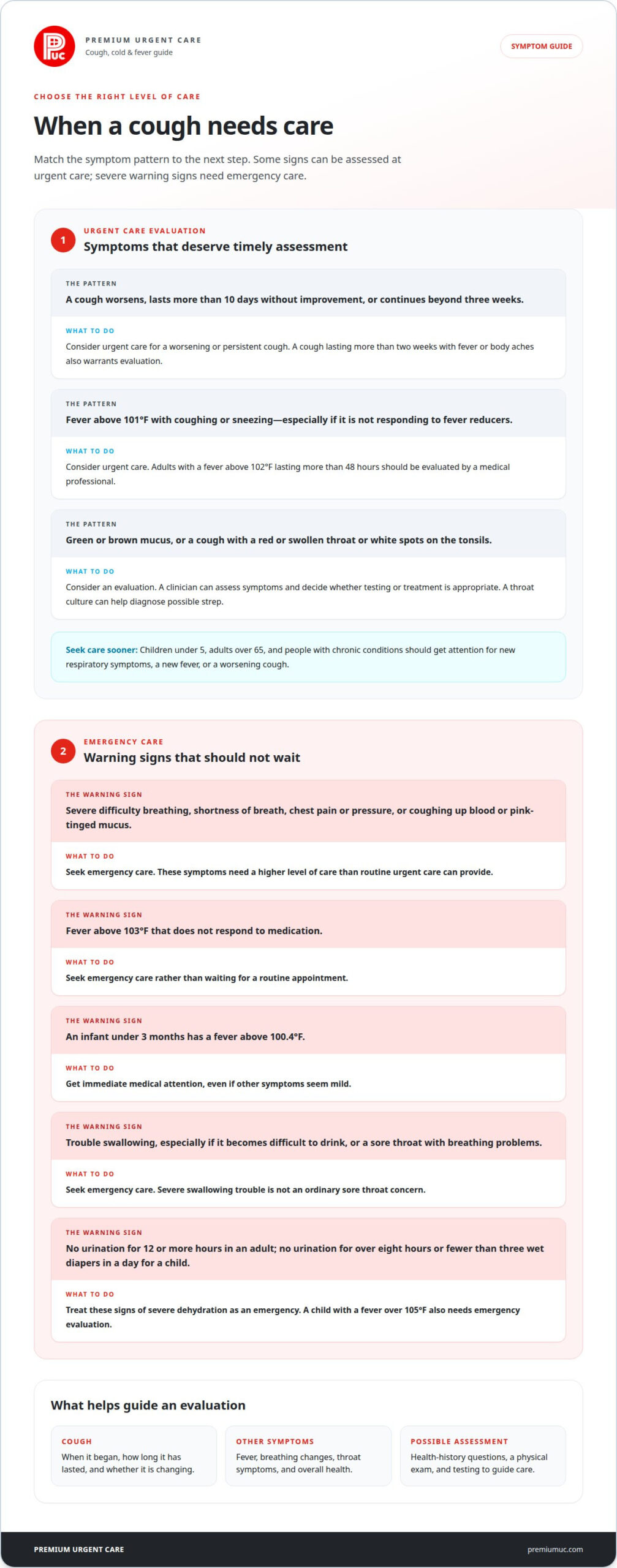
A fever alongside coughing or sneezing can make an illness more concerning than a cough alone. Consider urgent care when a fever exceeds 101°F with those symptoms, especially if it isn’t responding to fever reducers. Adults with a fever above 102°F lasting more than 48 hours should be evaluated by a medical professional.
Influenza can cause fever, cough, fatigue, and body aches. If fever occurs with worsening symptoms, an evaluation can help assess the illness and guide care.
Cough-Related Reasons for Urgent Care
A persistent or worsening cough may need medical assessment, especially if other symptoms develop. A cough lasting more than three weeks is a reason to seek urgent care. A cough lasting more than two weeks with fever or body aches also warrants an evaluation, since these symptoms together may point to an infection rather than seasonal allergies alone.
Green or brown mucus with a cough is another reason to consider urgent care. A clinician can assess your respiratory symptoms and determine whether further testing or treatment is appropriate.
Some people should seek care sooner when new respiratory symptoms appear. This includes children under 5, adults over 65, and people with chronic conditions, because cold or flu complications can become dangerous quickly. For these groups, a new fever or worsening cough deserves attention rather than prolonged home observation.
Consider the full symptom pattern, not temperature alone. For example, a fever above 101°F with coughing or sneezing supports seeking evaluation; a cough that worsens or persists beyond three weeks is another reason to act. Seasonal allergies can cause a dry cough, but fever or body aches may point toward an infection.
Urgent care can assess a persistent cough or fever when symptoms need timely evaluation. If you have severe difficulty breathing or chest pain, seek emergency care rather than waiting for a routine appointment.
Fever, breathing problems, and other warning signs
Seek emergency care for severe difficulty breathing, chest pain, or blood in your mucus. These signs need a higher level of care than urgent care can provide.
Fever and Breathing Warning Signs
Breathing changes with a cough can signal a serious problem. Seek emergency care for severe difficulty breathing, shortness of breath, or chest pain. A fever above 103°F that doesn’t respond to medication is another emergency warning sign. An infant under 3 months with a fever above 100.4°F needs immediate medical attention, even if other symptoms seem mild.
Severe Sore Throat Signs
Trouble swallowing with a cough warrants emergency care, particularly if it becomes difficult to drink. A sore throat with breathing problems also needs emergency attention. Redness, swelling, or white spots on the tonsils may point to strep, but difficulty swallowing makes the situation more urgent. Don’t treat severe swallowing trouble as an ordinary sore throat.
When Cough and Cold Need Emergency Care
Emergency care is appropriate for severe difficulty breathing, chest pain or pressure, and coughing up blood or pink-tinged mucus. Trouble breathing or swallowing can require emergency treatment rather than an urgent care evaluation. These symptoms matter whether a cough is new or chronic. If someone is struggling to breathe, don’t wait for home remedies or over-the-counter medicine to work.
Dehydration can also become an emergency during a respiratory illness. For adults, no urination for 12 or more hours is a severe warning sign. For a child, seek emergency care if there’s no urination for over eight hours or fewer than three wet diapers in a day. A child with a fever over 105°F also needs emergency evaluation.
Urgent care evaluation and treatment
During an evaluation, the clinician will ask about your medical history and examine you. Share when symptoms began, how they have changed, and whether you have fever, body aches, fatigue, or changes in breathing. These details help distinguish a respiratory infection from allergies or another cause and guide decisions about testing and symptom relief.
Depending on symptoms, an urgent care clinic may test for flu, strep, or COVID-19. A chest X-ray may be used to look for pneumonia or another lung infection. Not every cough needs imaging or testing. The exam and your symptom pattern help determine which evaluations are relevant.
Treatment depends on the suspected illness and examination findings. A clinician may recommend cough suppressants or other therapies to ease symptoms. If you have allergies or mild asthma symptoms, the assessment can consider whether they could explain your cough, while practical steps like sanitizing bedding through Prescott’s Laundry can help minimize common dust and dander triggers at home. Antibiotics treat some bacterial infections, but they do not treat viral illnesses such as the common cold.
Flu antivirals work best when started within the first 48 hours of symptoms. If you have a sudden fever, body aches, and marked fatigue, mention when those symptoms started during your visit. That timing helps the clinician consider whether antiviral treatment may be appropriate. Don’t delay evaluation when symptoms are severe or rapidly worsening.
For children, age and symptom pattern also affect the evaluation. A nonstop cough in a child younger than six months warrants prompt assessment. Bring a clear account of the child’s symptoms and relevant medical history so the clinician can consider the full picture.
Seek emergency care for severe breathing difficulty or chest pain, rather than using an urgent care evaluation for those warning signs. For cough, cold, or flu symptoms that need assessment, arrange an urgent care consultation.
Premium Urgent Care: Colds, cough, and upper respiratory infections
Premium Urgent Care evaluates and treats colds, coughs, and upper respiratory infections in Fresno, Clovis, and Selma. If symptoms persist, worsen, or need an in-person assessment, a walk-in urgent care consultation can help identify the next steps. The clinic also treats ear and sinus infections, which can occur alongside respiratory symptoms.
Urgent care is for symptoms that need prompt evaluation, not emergencies. Severe difficulty breathing, chest pain, or coughing up blood requires emergency care. For non-emergency cough and cold concerns, Premium Urgent Care can assess your symptoms and treat appropriate conditions.
For a cough or cold that needs in-person evaluation, visit Premium Urgent Care in Fresno, Clovis, or Selma.
Choose a Clear Next Step for Your Symptoms
Deciding whether to seek care is also a chance to take an active role in what happens next. Consider what you need from an evaluation: clarity about your symptoms, treatment guidance, or help understanding what to do if your condition changes. Keeping that goal in mind can make your visit more focused and help you leave with a clearer plan.
When symptoms call for in-person assessment, urgent care for cough and cold concerns can connect your questions with a clinical evaluation. Premium Urgent Care treats respiratory infections, along with other conditions such as urinary tract infections. If you’re ready to discuss your concerns and take the next step, contact Premium Urgent Care. Seeking guidance can help you move forward with greater confidence.
Frequently Asked Questions
Could My Cough Be a Sign of COVID-19?
Yes, a cough can occur with COVID-19, but it cannot identify the cause by itself. A cough with fever, fatigue, and body aches is a reason to consider testing. Tell the clinician which symptoms appeared together and how they have changed. A dry cough can also have other causes, including allergies or asthma, so assessment considers the full symptom picture.
When should you go to urgent care for a cough or cold?
Seek an evaluation if symptoms worsen, a cough persists, or fever accompanies respiratory symptoms. A cough lasting more than three weeks is a reason to seek urgent care, and a cough with fever or body aches lasting more than two weeks should be checked. Choose emergency care for severe difficulty breathing, chest pain, or blood in your mucus.
Can urgent care diagnose and treat flu, COVID-19, strep throat, or bronchitis?
Urgent care can evaluate symptoms that may involve flu, COVID-19, strep throat, or bronchitis. The clinician considers your symptoms and examination findings, then may use testing to help assess the cause. A throat culture can help diagnose strep, and antibiotics may be needed for that infection. Treatment depends on the condition identified and your clinical findings.
What tests might urgent care perform for cough and cold symptoms?
Depending on your symptoms, a clinic may test for flu, COVID-19, or strep. A throat culture can help assess possible strep, while a chest X-ray may be used to look for pneumonia or another lung infection. Testing is selected to answer a clinical question; it isn’t automatically needed for every cough or cold.
What treatments and medications can urgent care provide for a cough or cold?
Treatment depends on the likely cause and evaluation findings. A clinician may recommend cough suppressants or other therapies to relieve symptoms. Flu antiviral medicines work best when started within the first 48 hours of symptoms, so mention the timing of flu-like illness. Antibiotics may be needed for strep throat, but they don’t treat viral infections such as common colds.
What should you bring and expect at an urgent care visit for cough or cold?
Expect questions about your health history and a physical examination. Bringing a current medication list and noting any medication allergies can help the clinician understand your needs. Be ready to describe how symptoms have changed, including any new concerns such as wheezing or difficulty swallowing. Testing or imaging may be considered based on the findings.