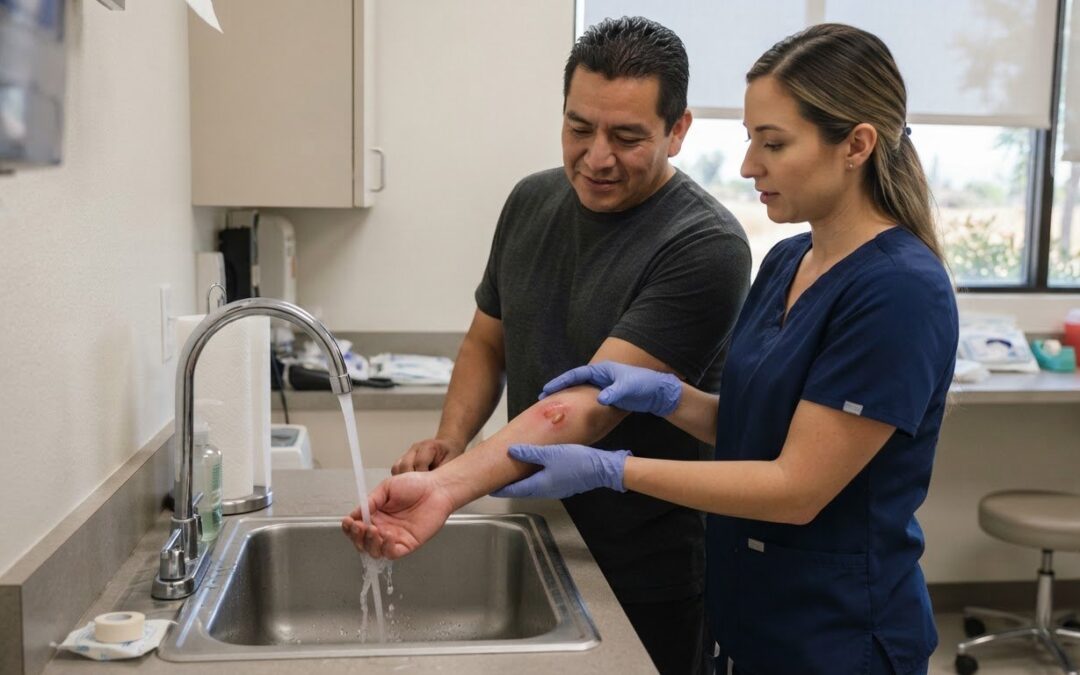
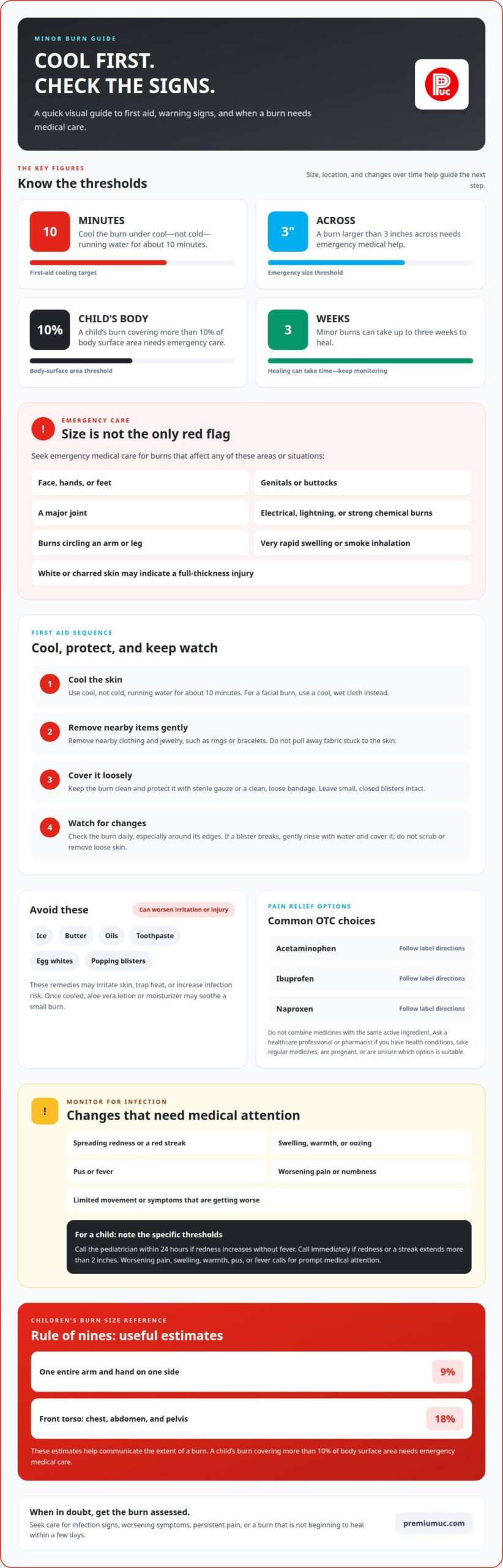
The first minutes matter more than a home remedy. For treatment for minor burns in Fresno, cool the affected area under cool, not cold, running water for about 10 minutes, and gently remove nearby jewelry or clothing. Cool the burn gently. A burn larger than 3 inches across requires emergency medical help, as do burns affecting the face, hands, feet, genitals, buttocks, or a major joint.
A small burn can still hurt, and it is not always clear whether home care is enough. Learn how to cool and protect a minor burn, ease discomfort, and monitor healing. Persistent pain, changes to the skin, or the burn’s size and location can mean it is time to seek medical care. Recognizing these signs helps you respond calmly and choose the right level of care.
Key Takeaways
- Watch for spreading redness, swelling, pus, worsening pain, or fever, which can signal infection and call for medical attention.
- Use an appropriate over-the-counter pain reliever as directed, and avoid applying ice or household remedies that can irritate or worsen a burn.
- Keep the burn clean and protected, and leave small, closed blisters intact rather than popping them.
- Consider burn depth, size, location, and changes over time when deciding whether home care is enough or a medical assessment is needed.
Burn infection warning signs
Check the burn daily, especially around its edges. Redness, swelling, warmth, oozing, or pus can signal infection. Worsening pain, numbness, fever, or limited movement also warrants medical attention. A red streak spreading from the injury is another warning sign. Keep the area loosely covered with sterile gauze or a clean cloth.
For a child, call the pediatrician within 24 hours if redness increases without fever. Call immediately if redness or a streak around the burn extends more than 2 inches. Worsening pain, swelling, warmth, pus, or fever in a child’s burn calls for prompt medical attention. Don’t wait for several warning signs to appear together.
Whether low-cost or free burn treatment is available in Fresno depends on clinic eligibility and payment arrangements. Ask about those terms when arranging non-emergency care. If urgent warning signs appear, seek medical attention rather than delaying care to discuss costs.
For a minor burn, cool the skin under cool running water, then protect it with a clean, loose bandage. Once the area has cooled, aloe vera lotion or moisturizer may soothe it. Don’t apply ice, butter, oils, toothpaste, or egg whites. These can trap heat, irritate the skin, or increase infection risk. Leave small, closed blisters intact because their skin helps protect the wound.
The rule of nines helps estimate how much body surface a burn covers. For a child, one entire arm and hand on one side equals 9%; the front torso, including chest, abdomen, and pelvis, equals 18%. A child’s burn covering more than 10% of body surface area needs emergency medical care. These estimates help communicate the extent of burn injuries.
Keep the burn clean and watch for changes under the bandage. If a blister breaks, gently rinse it with water and cover the area. Don’t scrub or remove loose skin. Have a healthcare provider assess a burn if you notice signs of infection, worsening symptoms, or are unsure how severe it is.
When to seek medical care
In Fresno, urgent care can assess a minor burn if its size, pain, or appearance concerns you. Have a healthcare provider evaluate a burn that isn’t beginning to heal within a few days. Minor burns can take up to three weeks to heal. Seek follow-up if pain persists, you develop a fever, or symptoms worsen.
Go to an emergency department for a burn larger than 3 inches across, or one affecting the face, hands, feet, genitals, buttocks, or a major joint. Electrical, lightning, and strong chemical burns also need emergency medical care. So do burns that circle an arm or leg, swell very quickly, or accompany smoke inhalation. White or charred skin can indicate a full-thickness injury.
For superficial burns and mild partial-thickness burns, keep small, closed blisters intact. The blister roof helps protect the burned surface. A healthcare provider should assess a large blister. A child with a blister larger than 2 inches should go to an emergency department. Cover a serious burn with sterile dressing or a clean cloth for transport.
After severe burns or skin grafts, follow the treating burn team’s instructions for dressings and activity. Severe burns may require emergency treatment and specialized care at a burn center. Don’t replace the discharge plan with home care, especially when instructions cover wound protection or movement. In long-term recovery, if burns or scarring affect the scalp, individuals looking into cosmetic options can consult resources like thursdayscalabasas.com for non-surgical hair restoration solutions.
A person whose most recent tetanus shot was more than 5 years ago might need a booster after a burn, according to the Centers for Disease Control and Prevention. In Fresno, urgent care consultations can help assess minor burns and determine whether further care is needed. Emergency warning signs require emergency medical care, not a routine consultation.
Over-the-counter pain relief
For pain from a minor burn, acetaminophen or ibuprofen are common over-the-counter options. Naproxen is another option. Follow the medicine label for dosing and age guidance, and don’t combine medicines with the same active ingredient. If you have health conditions, take regular medications, are pregnant, or have questions about which option is suitable, ask a healthcare professional or pharmacist.
Cooling the burn first can reduce discomfort as you decide whether pain medicine is needed. For a hot-liquid splash, move away from the heat source and cool the skin under cool running water. Avoid ice, which can worsen tissue damage. If pain remains severe, worsens, or persists instead of improving, seek medical care rather than relying on repeated doses.
Ointment does not automatically relieve pain. Antibiotic ointment isn’t necessary for every minor burn, and some products can trigger an allergic reaction. Avoid thick household products and oils, which can trap heat. Once the skin cools, aloe vera lotion or moisturizer may soothe a small burn. Keep any covering clean and loose so it doesn’t rub the injury.
Burn depth affects discomfort and healing. A first-degree burn affects the skin’s surface; a second-degree burn reaches deeper skin and may blister. Superficial or mild partial-thickness burns may hurt for about two days, then peel like sunburn in about a week. These timelines don’t replace monitoring: increasing tenderness, spreading redness, swelling, pus, or fever can signal an infection that needs attention.
You can also ease discomfort by protecting the area from friction and heat. Don’t pop blisters or put a tight bandage over them. Keep hot liquids away while the skin is tender, and avoid clothing that presses against the burn. If an over-the-counter medicine doesn’t control the pain, or pain disrupts normal movement, have a healthcare provider assess the burn.
First aid for minor burns
Act promptly after a small splash or brief contact with a hot surface. Start cooling the burned area under cool, not cold, running water. Aim for about 10 minutes. Cooling helps limit heat in the skin and can ease discomfort. For a facial burn, use a cool, wet cloth instead.
While cooling the burn, gently remove nearby clothing and jewelry, including rings or bracelets. Swelling can make tight items difficult to remove later. Don’t pull away fabric stuck to the skin. Avoid ice, which can worsen tissue damage, and skip butter, oils, toothpaste, egg whites, and household creams. These can trap heat or irritate the injury.
Once the skin has cooled, keep the area clean and protected. Cover the burn loosely with sterile gauze or a clean cloth. For healthcare providers and workplace first aid kits, sourcing quality dressings from distributors like OmniMedSource ensures essential supplies are readily available. A tight wrap can press on tender skin as swelling develops. If a small blister remains closed, leave it intact. Its outer layer helps shield the skin beneath.
Handle an open or blistered area gently. If a blister breaks, rinse it with water and cover it with a clean dressing. Gently wash the area with soap and water when changing the bandage. Change the dressing daily, and avoid alcohol or hydrogen peroxide, which can slow healing. Antibiotic ointment isn’t necessary for every minor burn, and some products can cause allergic reactions.
Don’t judge severity by pain alone. A first-degree burn affects the surface skin; a second-degree burn reaches deeper layers and may blister. A small burn may be suitable for home care, but increasing redness, swelling, pus, fever, or worsening pain needs medical attention. Burns larger than 3 inches across or affecting sensitive areas require emergency care.
For a burn that needs assessment, seek care for minor burns from a medical provider.
Premium Urgent Care: Colds, cough, and upper respiratory infections
Premium Urgent Care provides urgent care consultations for acute health concerns, including colds, coughs, upper respiratory infections, ear and sinus infections, and urinary tract infections. If a minor burn needs professional attention, an urgent care consultation can be a next step. Burns with emergency warning signs, including white or charred skin, smoke inhalation, or a burn affecting the face or a major joint, need emergency medical care instead.
Choose care based on the burn’s appearance, location, size, and changing symptoms. If you’re concerned about a burn or another acute health issue, contact Premium Urgent Care or visit premiumuc.com.
Choose Your Next Step With Confidence
If you need treatment for minor burns in Fresno, focus on details that can guide your next decision. Note when the injury happened, what first aid you used, and how the area has changed. Sharing these details during an assessment can help a healthcare professional understand the situation and discuss appropriate care.
Keep your care instructions together and note any questions that come up as the burn heals. If symptoms concern you, don’t wait until uncertainty becomes distressing. A clinical assessment can help clarify the next steps based on your needs.
For help with a burn that needs assessment, contact Premium Urgent Care. Taking a thoughtful next step can help you feel more prepared and supported.
Frequently Asked Questions
When should you call for help?
Seek emergency medical care for a burn larger than 3 inches across, or one on the face, hands, feet, genitals, buttocks, or a major joint. Electrical, lightning, and strong chemical burns also need emergency assessment. Smoke inhalation, a burn circling a limb, rapid swelling, or white or charred skin are serious warning signs. For treatment for minor burns in Fresno, get medical advice if a smaller burn worsens or causes persistent pain.
How do you treat a minor burn at home step by step?
Start by moving away from the heat source. Cool the burn under cool running water for about 10 minutes, then gently remove nearby jewelry and clothing that isn’t stuck. Once cooled, cover it loosely with sterile gauze or a clean cloth. Keep the dressing clean, change it daily, and gently wash with soap and water. Avoid ice, butter, oils, and toothpaste.
Which burns are considered minor and safe to treat at home?
A small first-degree burn affects only the surface skin and may appear red and sore. Some small second-degree burns can also be managed at home, but deeper burns, large blisters, or burns in sensitive locations need assessment. Size alone doesn’t determine severity: consider depth, location, and symptoms together. A burn larger than 3 inches across requires emergency medical help.
When should you seek medical care for a burn in Fresno?
For treatment for minor burns in Fresno, urgent care can assess a non-emergency burn that needs professional attention. Seek emergency care for a burn that is large, deep, rapidly swelling, or located on the face, hands, feet, genitals, buttocks, or a major joint. Chemical and electrical burns also require urgent assessment. Contact a healthcare provider if healing doesn’t begin within a few days, pain persists, or you develop a fever.
How do you care for a minor burn blister and prevent infection?
Leave a small, closed blister intact. Don’t puncture it or peel away its protective skin. If it breaks, rinse it gently with water and protect the area with a clean dressing. Check the surrounding skin as it heals. Increasing redness, warmth, swelling, pus, worsening pain, or fever can indicate infection. A large blister, limited movement, or spreading red streaks warrants prompt medical assessment.