

An ankle injury is not automatically a sprain. The ankle joint brings together three bones, the tibia, fibula, and talus, and injuries are commonly grouped as breaks, sprains, or strains. A sprain is a ligament injury that can happen when the ankle twists or rolls, so sprained ankle treatment in Clovis starts with understanding which type of injury may be involved.
Swelling, tenderness, or stiffness can accompany foot and ankle pain, but those symptoms don’t explain the injury on their own. It’s understandable to want a clearer picture before deciding what to do next. This guide explains how breaks, sprains, and strains differ, what immediate care may help a sprain, and which symptoms call for medical attention. It also outlines how an evaluation can help determine an appropriate next step when ankle symptoms need attention.
Key Takeaways
- Ankle injuries can happen during sports or other movements that twist or overload the joint; the cause and affected tissue help explain the symptoms.
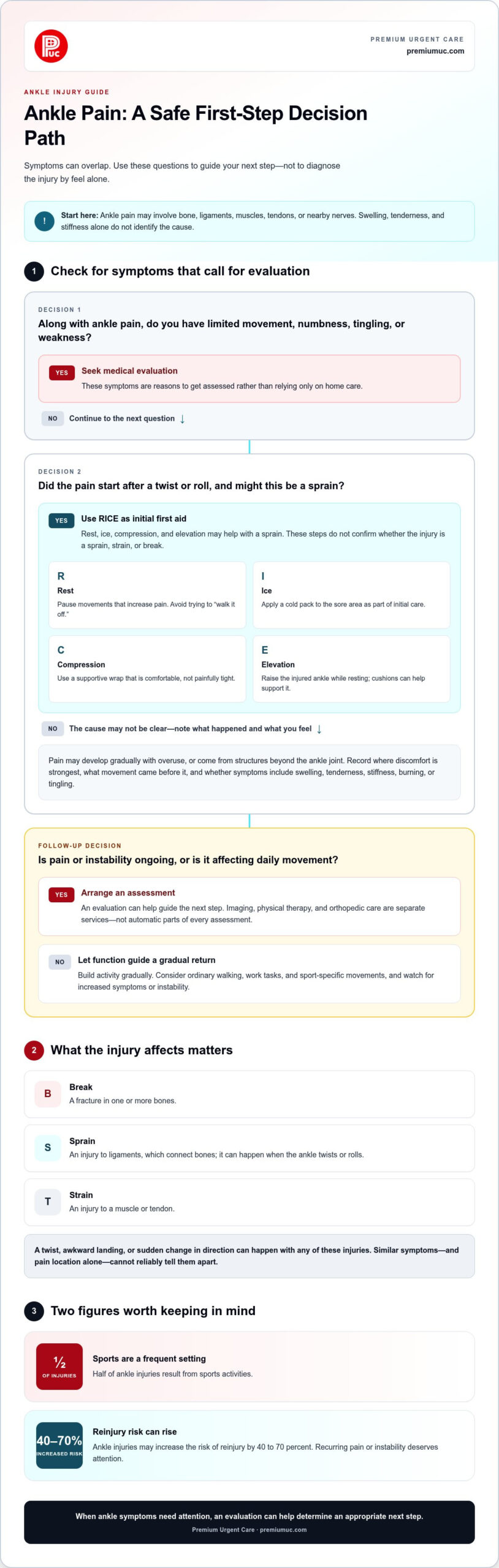
- A break affects bone, a sprain affects ligaments, and a strain affects muscles or tendons. Similar symptoms can make the injury type difficult to distinguish by feel alone.
- For a sprain, rest, ice, compression, and elevation are common first-aid steps; the National Institute of Arthritis and Musculoskeletal and Skin Diseases describes this approach for many sports injuries.
- Limited movement, numbness, tingling, or weakness alongside ankle pain are reasons to seek medical evaluation rather than relying only on home care.
What are ankle injuries?
The ankle joint forms where three bones meet: the tibia, fibula, and talus. Injuries may affect bones, ligaments, muscles, tendons, or nearby nerves. A sprain is an injury to ligaments, often caused by the ankle twisting or rolling. Swelling, tenderness, and stiffness are common, but symptoms alone can’t identify which tissue is injured.
Sports are a frequent setting for ankle injuries. Half of ankle injuries result from sports activities. A sudden turn, awkward landing, or quick change in direction can twist the ankle. Similar movements can strain muscles or tendons. The activity and the way symptoms began help describe what happened, but they don’t prove whether the injury is a sprain, strain, or break.
Overuse can also cause pain around the ankle and foot. Repeated impact may lead to a stress fracture, a small crack in a bone. Overuse or strain can cause Achilles tendinitis, with pain along the back of the ankle. These conditions may develop gradually, rather than after a single twist or fall.
Foot pain doesn’t always come from an ankle injury. Plantar fasciitis causes heel pain that is often most noticeable in the morning. Tarsal tunnel syndrome involves nerve compression and may cause burning pain or tingling in the foot. Pain near the ankle can therefore come from different structures, not only the joint or its ligaments.
Note what movement came before the symptoms and where the discomfort is strongest. Pain that worsens with weight-bearing can make walking or exercise difficult. Record whether you have swelling, tenderness, stiffness, burning, or tingling, and whether symptoms began suddenly or gradually. These details help a clinician assess the injury and consider appropriate sprained ankle treatment in Clovis.
Physical therapy for foot and ankle pain may include balance and proprioception training to help prevent falls and injuries. These exercises focus on balance and awareness of body position, and can be part of a plan to reduce risk while addressing symptoms.
Increase exercise gradually to help prevent overuse injuries. Build activity step by step instead of making a sudden jump in exercise demands. This approach is especially relevant when you’re returning to activity or increasing your training.
Differences between ankle breaks, sprains, and strains
An ankle break is a fracture in one or more bones. A sprain injures ligaments, which connect bones, while a strain affects a muscle or tendon. Any of these injuries can follow a twist, awkward landing, or sudden change in direction, so the cause alone doesn’t identify the injury.
Symptoms can overlap, and pain location alone can’t reliably distinguish a break from a sprain or strain. A clinician considers how the injury happened, where the ankle is tender, and how it moves and bears weight. An assessment can help determine whether further evaluation is needed, rather than relying on appearance alone.
Sprain grades describe severity, and care is matched to the injury. It generally progresses from protecting the ankle and limiting painful activity toward restoring movement and function. Recovery doesn’t follow one timeline: the injury’s severity and progress with everyday movement affect the pace.
Return to walking, work, or sports should depend on functional progress. Consider whether you can manage ordinary walking, relevant job tasks, and sport-specific movements without increased symptoms or instability. Returning gradually helps you assess how the ankle tolerates rising activity demands.
Recurring ankle injuries deserve attention. Ankle injuries may increase the risk of reinjury by 40 to 70 percent. Repeated episodes can make it harder to resume usual activities, so ongoing pain or instability is a reason to seek an assessment.
An ankle evaluation at Premium Urgent Care in Clovis can assess your symptoms and help determine appropriate next steps. Imaging, physical therapy, and orthopedic care are separate services, not automatic parts of every assessment.
If ankle pain or instability is affecting daily movement, an ankle injury evaluation can help guide the next step.
What are the first-aid steps for a sprained ankle?
Stop the activity that caused the pain and protect the ankle from further strain. The National Institute of Arthritis and Musculoskeletal and Skin Diseases (NIAMS) notes that many sports injuries can be treated at home with rest, ice, compression, and elevation, known as RICE. These steps provide initial care; they don’t identify whether the injury is a sprain, strain, or break.
- Rest: Pause running, jumping, or other movements that increase ankle pain. Avoid trying to “walk it off” while the movement is painful. Rest means reducing activities that load the injured ankle, not testing it repeatedly.
- Ice: Apply a cold pack to the sore area as part of initial care. For example, use it after stopping a game or workout, rather than continuing to exercise through pain.
- Compression: Use a wrap to support the ankle. Keep the wrap comfortable, not painfully tight, and pay attention to changes in comfort while it’s in place.
- Elevation: Raise the injured ankle while resting. Supporting it on cushions can make elevation easier when sitting or lying down.
Keep first-aid steps practical. If standing increases your discomfort, sit down before arranging a cold pack or wrap. At a sports field, stop playing and ask someone to bring supplies rather than walking around to find them.
Keep track of what happened and how your ankle responds. Note whether symptoms began after a twist, landing, or sudden stop, and which movements make them worse. This record can help you explain the injury during a medical assessment.
RICE, rest, ice, compression, and elevation, is a first-aid approach, not a diagnosis or a substitute for medical attention when needed. Different injuries can cause ankle pain, and home care can’t distinguish them. Use these steps as initial care while monitoring changes in pain and movement.
When should you see a doctor or go to urgent care for an ankle sprain?
Consider medical evaluation if ankle pain comes with limited range of motion, numbness, tingling, or weakness. These symptoms can affect how you move and use your foot. Note whether you can move the ankle as usual or notice unusual sensations while standing, and share those details during an assessment.
Pay attention to changes in everyday function, not only pain intensity. If walking, climbing steps, or completing a work task becomes difficult, describe the movement that causes trouble. Note when symptoms began, whether they followed a twist or fall, and whether they are changing. This information helps a clinician assess the injury and appropriate care.
Arrange an evaluation if symptoms interfere with normal activities or aren’t improving with initial care. An ankle injury can affect different tissues, and symptoms alone may not distinguish a sprain from another injury. A clinician can assess movement, tenderness, and how the injury happened before recommending next steps.
Before your visit, record how the injury happened, where symptoms are strongest, and which movements feel limited. Include numbness, tingling, or weakness, even if these sensations come and go. If you tried rest, ice, compression, and elevation, note which steps you used and how your ankle responded.
Urgent care consultations can assess sprains, strains, and minor injuries. If ankle pain or restricted movement makes walking or daily tasks harder, an evaluation at Premium Urgent Care in Clovis can help you discuss what changed and which movements are affected. Bring your symptom notes to the visit.
If ankle symptoms are limiting your movement, schedule an urgent care consultation for an evaluation.
Premium Urgent Care: Colds, cough, and upper respiratory infections
Premium Urgent Care treats colds, coughs, and upper respiratory infections, as well as ear and sinus infections and urinary tract infections. For an acute health concern that needs medical attention, an urgent care consultation provides an opportunity to discuss your symptoms and next steps.
For an ankle concern, seek medical assessment if pain, limited movement, numbness, tingling, or weakness affects daily activity. Explain how the injury happened and which movements are difficult so the clinician can focus on your symptoms. Premium Urgent Care also treats other acute concerns, including sinus complaints and urinary tract symptoms.
Contact Premium Urgent Care to arrange a consultation about your health concern.
Plan your next step with confidence
When discussing your recovery, focus on the activities you need to do safely. Consider what your routine involves, such as walking across a worksite, standing through a shift, or changing direction during a sport. Sharing these demands can make the discussion about returning to activity more practical.
A thoughtful approach to sprained ankle treatment in Clovis starts with getting care that fits the concern. Premium Urgent Care offers care for sprains, strains, and minor injuries, alongside its other urgent care services. If ankle symptoms are affecting your routine, contact Premium Urgent Care to discuss an evaluation. Taking a clear next step can help you move forward with greater confidence.
Frequently Asked Questions
How do you tell whether an ankle is sprained or broken?
You can’t reliably tell a sprain from a break by appearance or pain alone. Because symptoms can overlap, an in-person medical assessment is a practical way to evaluate the injury. Be ready to explain how it happened, where it hurts, and which movements feel limited. Note whether the discomfort began after a fall, twist, or awkward landing.
Where can you get ankle sprain treatment in Clovis, California?
For sprained ankle treatment in Clovis, Premium Urgent Care provides urgent care consultations and care for sprains, strains, and minor injuries. When arranging care, describe how the injury occurred and how it affects walking or other daily activities. This context helps focus the visit on your ankle concern.
What is the recommended treatment and recovery timeline for each ankle sprain grade?
Treatment depends on the sprain’s severity and generally progresses from protecting the ankle and limiting painful activity toward restoring movement and function. There is no single recovery timeline: the pace depends on severity and progress with everyday movement.