
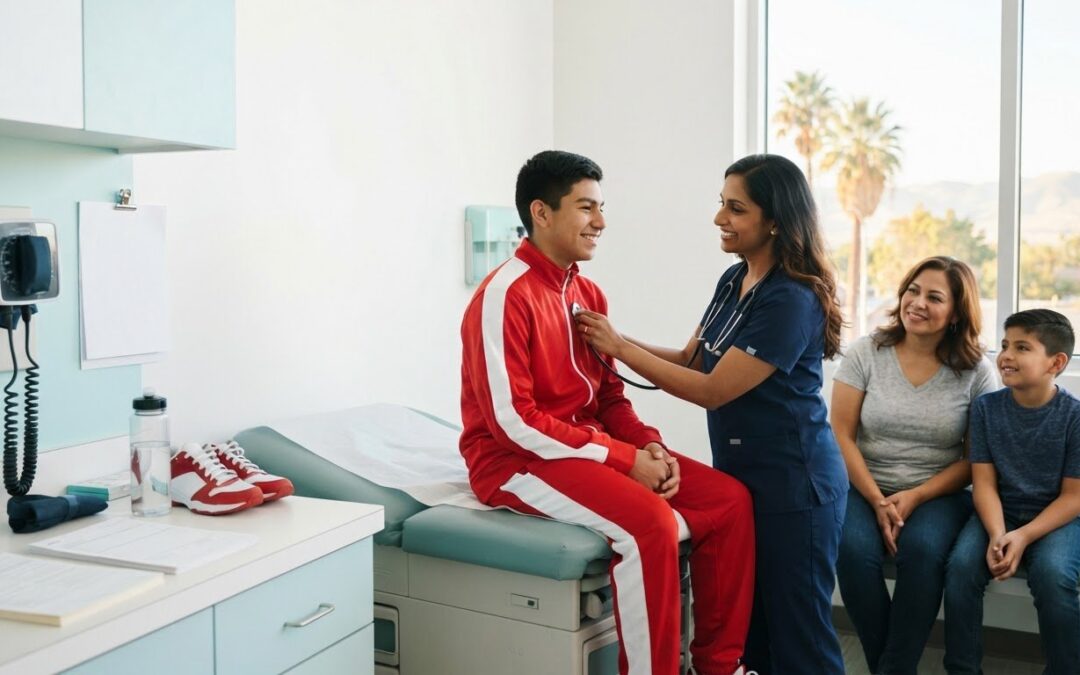
Could a missing form or overlooked health detail delay an athlete’s plans for the season? Families searching for sports physicals Clovis CA often want to know what the exam covers, what paperwork to bring, and whether the athlete will be cleared at the visit. A sports physical assesses readiness for participation, but clearance depends on the athlete’s health and the clinician’s findings.
School forms and deadlines can make the process feel uncertain. Preparing the paperwork and health history in advance can make the visit more focused. This guide explains what a sports physical generally assesses, including medical history, vital signs, heart and lung health, vision, and musculoskeletal function. It also offers practical tips for gathering forms, medication and allergy details, and records of past injuries or conditions. Premium Urgent Care provides sports physicals in Clovis, offering a local care option for athletes and their families.
Key Takeaways
- A sports physical assesses readiness for athletic participation, but it can’t guarantee an injury-free season or automatic clearance.
- A typical evaluation may cover health history, vital signs, and physical assessments relevant to the athlete.
- A sports physical focuses on participation, while an annual preventive visit addresses broader health needs. An athlete may need both.
- Prepare for sports physicals Clovis CA by gathering the current program form and relevant health details before the visit.
- Premium Urgent Care provides sports physicals in Clovis for local families preparing for athletic participation.
Sports physicals in Clovis, CA: what the exam is for
A sports physical assesses whether an athlete’s health supports participation in a sport. It gives the clinician a chance to consider health information relevant to activity, rather than review every aspect of a person’s health. A sports physical is a participation-focused screening, not a substitute for ongoing primary care.
The evaluation may identify a health concern that needs attention before an athlete participates. It can’t predict every injury, prevent injuries, or guarantee athletic clearance. The clinician considers the athlete’s health and exam findings, and may recommend additional assessment if a concern arises. For families searching for sports physicals Clovis CA, it helps to think of the visit as one part of sports preparation, not a promise that the athlete will be cleared or remain injury-free.
Sports physicals are often called preparticipation evaluations. The Preparticipation Physical Evaluation (PPE) is a broad term for screening performed before sports participation. Paperwork and processes can vary by school, district, league, or sport, so follow the instructions for the athlete’s specific program.
Who commonly needs a sports physical?
Students preparing for school teams, club teams, or other organized sports may be asked to complete a physical before participating. Age groups and eligibility rules differ among programs. Review the current instructions from the athlete’s school or athletic organization, including which form to use and when to submit it. Confirming those details before the visit can help avoid paperwork delays.
Requirements may also differ by sport or organization. A school team and a community league might use different forms or submission processes. Check whether the program requires its own form, a clinician’s signature, or other health information, and bring the relevant instructions to the appointment.
What a sports physical can, and cannot, tell you
The clinician reviews health factors that may matter during physical activity, using the athlete’s health information and exam findings to inform the assessment. This can bring potential concerns to light, but a screening reflects a point in time. It doesn’t show that an athlete will never be injured, and completing the visit alone doesn’t mean participation is approved.
If the athlete reports a relevant health concern or the evaluation raises a question, the clinician may recommend further assessment before a decision about participation. The next step depends on the individual findings. A sports physical also doesn’t replace a comprehensive preventive or annual wellness visit, which addresses broader health needs and ongoing care. Keeping these purposes clear helps families choose the right visit and follow the athletic program’s process.
What happens during a sports physical at a Clovis clinic?
A sports physical usually begins with a conversation about the athlete’s health, followed by an examination based on the information shared and the clinician’s judgment. The visit isn’t identical for every athlete. Age, health history, current concerns, and the athletic program’s requirements can all shape what the clinician focuses on.
The evaluation considers whether any health factors may affect participation. MedlinePlus on Sports Physicals also explains the role of these exams in reviewing an athlete’s health before sports. The goal is to identify relevant concerns and decide whether further evaluation may be appropriate, not to guarantee a particular outcome.
Health history and current concerns
The health history helps the clinician understand how the athlete is doing beyond what can be seen during the examination. Be ready to discuss previous injuries, ongoing symptoms, and discomfort or unusual symptoms during exercise. For example, a past sprain that still affects movement or a symptom that occurs while running may be relevant.
Share current medications, allergies, and other relevant health details accurately. A parent or guardian may be able to help with the history, while the athlete can describe how they feel during practices and games. The clinician may also ask about family medical history. Complete information gives the clinician a clearer basis for the assessment.
Physical assessment and possible follow-up
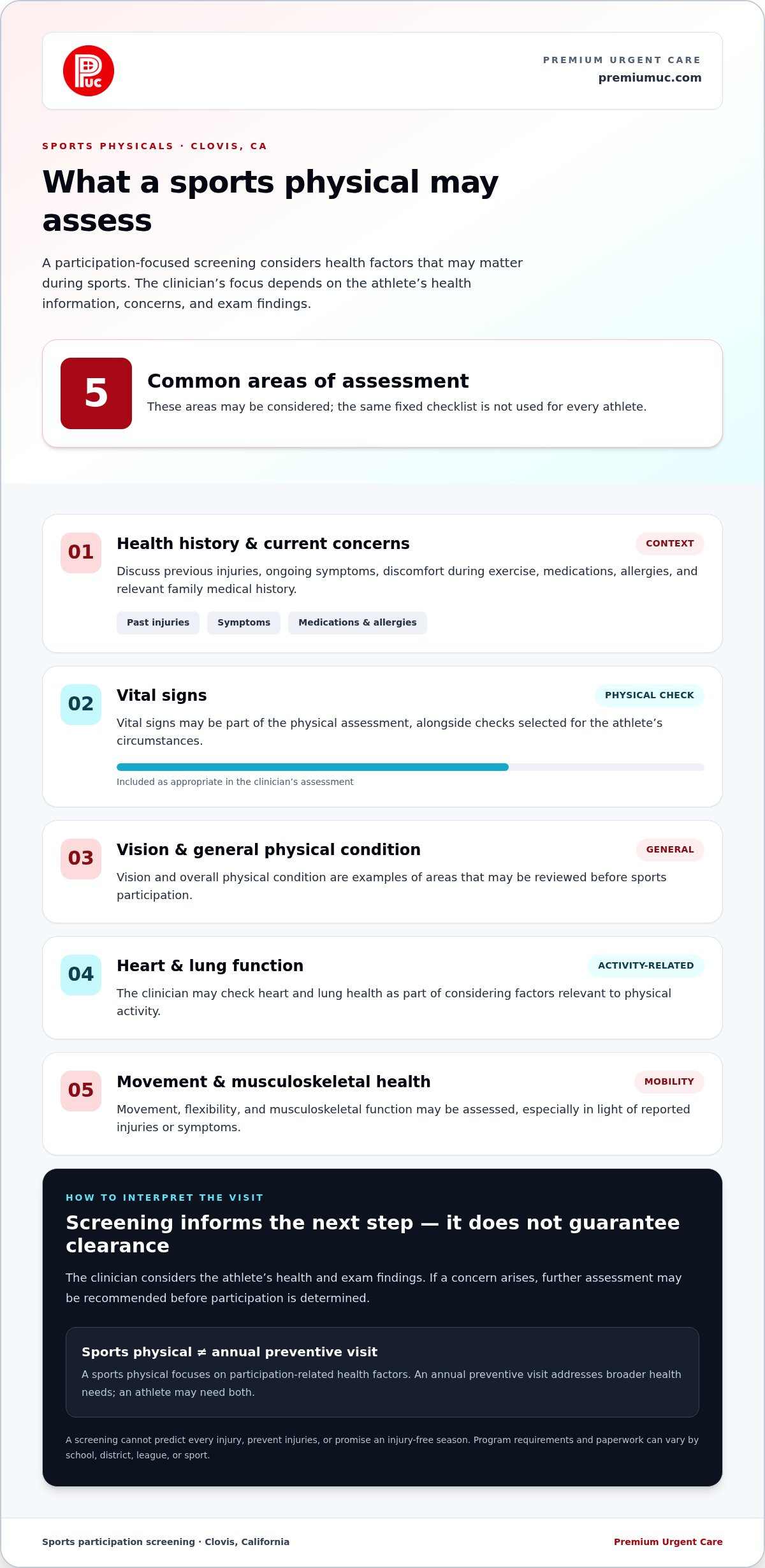
The physical portion may include vital signs and checks of areas relevant to activity. Depending on the athlete’s circumstances and the clinician’s assessment, common areas may include:
- Vision and general physical condition
- Heart and lung function
- Movement, flexibility, and musculoskeletal health
These are examples, not a fixed checklist applied in the same way to every athlete. The clinician determines what is appropriate based on the information available. A concern in the health history or examination may lead to a recommendation for further assessment before the athlete’s participation status is determined.
A preparticipation screening reviews health factors relevant to sports, but it can’t predict every risk, prevent injuries, or guarantee clearance. If you’re preparing for sports physicals Clovis CA, share questions and health details honestly, even if they seem minor. Accurate information helps the clinician consider the athlete’s situation as a whole.
Premium Urgent Care provides sports physicals in Clovis. Families looking for sports physical care in Clovis can use the visit to discuss the athlete’s health and any concerns relevant to participation.
Sports physical vs. annual physical: which visit does your athlete need?
A sports physical and an annual preventive visit serve different purposes. One focuses on health factors related to sports participation; the other offers a broader opportunity to review overall health. An athlete may need both. Completing a sports physical doesn’t automatically replace routine preventive care or ensure unrestricted clearance to play.
| Visit | Purpose | Typical focus | Paperwork |
|---|---|---|---|
| Sports physical | Assess health in relation to athletic participation | Relevant health history and physical findings | School, league, or program forms, as required |
| Annual preventive visit | Review broader health and wellness needs | Overall health, development, and preventive care | Information or forms related to the visit and ongoing care |
Paperwork varies by program. For sports, the athletic organization’s instructions determine which forms to bring and how to submit them. Preventive visits may cover different health topics and records. Families searching for sports physicals Clovis CA can use this distinction to plan for the participation evaluation without assuming it covers every need addressed during routine care.
How sports physicals differ from preventive visits
A sports physical concentrates on factors that may affect an athlete’s ability to participate, including relevant medical history and examination findings. A preventive visit is broader, with time to discuss general health, development, ongoing concerns, and preventive care. Its scope isn’t limited to a particular team or sport.
Think of these visits as complementary, not interchangeable. If an athlete is due for routine preventive care, a sports physical shouldn’t be treated as a substitute. Regular preventive visits, when appropriate, help address health needs beyond sports participation.
When follow-up may be needed before sports participation
Sometimes an initial evaluation raises a question that needs more attention. A symptom, relevant medical history, or an examination finding may lead the clinician to recommend further evaluation. That recommendation depends on the athlete’s circumstances. A symptom by itself doesn’t determine a diagnosis or establish whether an athlete is eligible to play.
Follow the clinician’s guidance and the athletic program’s process. If further assessment is recommended, ask what the next step involves and keep the school or league’s paperwork requirements in view. Clearance depends on the clinical assessment and the program’s rules, so attending the visit or completing a form alone doesn’t guarantee unrestricted participation. Understanding what each appointment can address helps families plan care and paperwork.
How Clovis families can prepare for a sports physical
Preparation can make the visit more focused and keep paperwork from becoming a last-minute hurdle. Requirements vary among schools, districts, leagues, and teams, so use the athlete’s current program instructions rather than relying on a form or deadline from a previous season. For 2026-27, Clovis-area families should check the latest guidance from the athlete’s school or athletic organization before the visit.
Use this checklist to get organized:
- Confirm the program’s instructions. Review the school, district, league, or team’s current requirements, including which form to use, how to submit it, and the relevant deadline. If instructions differ between the school and team, follow the current guidance for the athlete’s participation.
- Gather the required paperwork. Bring the current form requested by the athletic program and any available medical records that help explain the athlete’s health history. Don’t assume a form from last year or another organization is still accepted.
- Prepare health details. Write down current medications, allergies, previous injuries, relevant medical conditions, and any symptoms or concerns. Note helpful context, such as when a concern occurs or whether an old injury still affects activity.
- Plan around the program deadline. Allow time for the visit and the school or team’s submission process. If the clinician recommends further evaluation, the athlete may need additional steps before the program’s deadline.
Forms, deadlines, and school requirements
Start with the athlete’s current school, district, league, or team instructions. Requirements may change between seasons or differ across programs, so don’t assume a form or deadline applies universally. Check the official source for the 2026-27 season before relying on a date, eligibility rule, or named form. The program’s directions should guide which paperwork the family brings and how it is submitted.
What to bring and discuss
Keep paperwork and health information together so they’re easy to refer to during the visit. A concise written list can help the athlete and parent or guardian remember details, including medications, past injuries, and current concerns. Bring relevant medical records if available, especially if they clarify a previous injury or ongoing health issue.
For a minor, follow the clinic’s instructions about parent or guardian involvement. The athlete should also be ready to describe their own experience, such as discomfort during practice or a past injury that still affects movement. Clear, accurate information helps the clinician consider the athlete’s circumstances. It doesn’t guarantee clearance, but it supports a more informed discussion.
Premium Urgent Care provides sports physicals for families in Clovis. Once you’ve gathered the current forms and health details, schedule a sports physical with Premium Urgent Care.
Get a sports physical in Clovis with Premium Urgent Care
Premium Urgent Care provides sports physicals and serves patients in Clovis. For families preparing for a school, club, or organized sports season, the visit offers an opportunity to review health factors relevant to participation and discuss questions with a clinician. Bringing the current program form and useful health details can make the conversation more focused.
Preparation connects the clinical visit with the school or team’s clearance process. Have the athlete’s current paperwork ready, along with a concise account of medications, past injuries, and current concerns. If the form has sections for the athlete, parent or guardian, and clinician, review the instructions so everyone knows what information is needed. The program’s submission steps and deadlines still apply after the appointment.
What families can expect from a local urgent care visit
A sports physical is an individual evaluation, not guaranteed approval for every sport or program. The clinician considers the athlete’s health information and examination findings, then determines whether follow-up is appropriate. If a concern needs further assessment, the next step may affect the timing of the athletic program’s paperwork process. Share relevant details openly, even if a symptom or past injury seems minor.
For families seeking sports physicals Clovis CA, Premium Urgent Care is a local option for this evaluation. The preparation checklist can help the athlete and family arrive with useful context, but it can’t predetermine the clinician’s assessment or guarantee unrestricted clearance. Keep the school’s instructions available so you know what the program requires after the visit.
Take the next step before the season
Before heading to the clinic, gather the current school or athletic-program form and relevant health information. Make sure the athlete can describe their health history and current concerns, and follow the clinic’s instructions about parent or guardian involvement when the athlete is a minor. After the evaluation, use the clinician’s guidance and the program’s directions to determine any next steps.
For local sports physical information and care, Visit Premium Urgent Care.
Take the next step toward a ready season
Use the time before the season to organize the athlete’s paperwork and health information, then plan the visit around the program’s submission deadline. If the clinician recommends follow-up, leave time for that next step rather than assuming the physical alone completes the school or team’s process. A clear plan can help families manage the details with less last-minute pressure.
Premium Urgent Care provides sports physicals for patients in Clovis, Selma, and Fresno. For families searching for sports physicals Clovis CA, the clinic offers a local option to discuss an athlete’s readiness for sports participation. The clinician’s assessment is individual, so the appropriate next step depends on the athlete’s health and any guidance provided during the visit.
Visit the clinic website for sports physical information and take the next step in your preparation: Visit Premium Urgent Care for sports physical information. With a plan in place, your family can approach the season’s health requirements with greater confidence.
Frequently Asked Questions
What does a sports physical check?
A sports physical reviews health history and factors that may matter during athletic participation. Depending on the athlete’s circumstances, the clinician may check vital signs and perform a physical assessment. For instance, a history of breathing difficulty during exercise or a past injury may shape the discussion. Bring relevant health information and the current program form. The evaluation doesn’t prevent injuries or replace broader preventive care.
Does a sports physical mean my child is cleared to play?
No. The visit itself doesn’t automatically clear an athlete. The clinician considers the individual’s history and examination findings and may recommend further assessment before participation. The school, league, or team may also require completed forms or other steps. For example, an athlete may need additional documentation after an evaluation. Follow the clinician’s guidance and program instructions, and don’t assume participation is approved until the required process is complete.
Can my child get a sports physical at urgent care in Clovis?
Yes. Premium Urgent Care provides sports physicals for Clovis-area patients. The visit gives the clinician an opportunity to assess the athlete’s health in relation to sports participation and discuss concerns. Bring the program’s current paperwork and relevant health details, such as medication information or injury history. Requirements can differ between school and club programs, so use the athlete’s current instructions to guide what you bring.
What should I bring to a sports physical?
Bring the current form required by the athlete’s school, league, or team, plus available records that help explain relevant health history. A short written medication list can be useful, especially if names or doses are hard to recall. Include notes about when a symptom occurs, such as during practice or after activity. For a minor, follow the clinic’s instructions about parent or guardian involvement.
How long does a sports physical take?
There isn’t a guaranteed visit length. The time can depend on the athlete’s history, questions, paperwork, and whether the clinician recommends further assessment. To keep the discussion focused, complete any sections of the program form intended for the family before arriving, if the instructions allow. If a school deadline is near, leave room for possible follow-up rather than planning around a fixed appointment duration.
Is a sports physical the same as an annual physical?
No. A sports physical is tied to athletic participation, while an annual preventive visit looks more broadly at health over time. For example, a family may use a preventive appointment to discuss general development or routine health concerns that aren’t part of a team form. One visit doesn’t automatically include or replace the other. Keep up with appropriate preventive care even when an athletic program requests a separate physical.
How often does a student need a sports physical in California?
There isn’t one timing rule families should assume applies to every athlete and program. Schools, districts, leagues, and athletic organizations can set their own paperwork and timing requirements, which may change by season. Check the current instructions for the specific team before reusing a prior form or physical. Use the program’s official materials to confirm the applicable deadline and submission process.
Can an athlete get a sports physical if they have a previous injury?
A previous injury doesn’t automatically determine whether an athlete can participate. Share what happened, any treatment or recovery information, and whether symptoms remain during activity. For example, tell the clinician if an old ankle injury still feels unstable when running or changing direction. The clinician will assess the athlete’s individual circumstances and may recommend further evaluation. Follow that guidance and any additional participation requirements from the athletic program.