

Sinus pressure doesn’t always stay in the sinuses: it can radiate to the upper molars and feel like tooth pain. For sinus pain treatment in Fresno, start with simple measures such as rest, fluids, saline spray, or a warm compress; pressure lasting more than 10 days is a reason to call a healthcare provider. Sinus symptoms can also overlap with other causes of facial discomfort, so the pattern matters.
It’s understandable to seek quick relief when pressure affects your face, teeth, or daily comfort. This guide explains common causes of sinus pressure, home measures that may help, and pain-relief options to discuss with a healthcare professional. It also covers when persistent symptoms need medical attention.
Find practical guidance on keeping nasal passages moist, using over-the-counter options carefully, and recognizing symptoms that may need assessment. Tooth pain or dizziness alongside facial pressure can make the cause less clear, so note what you’re experiencing and how long it has lasted.
Key Takeaways
- Notice where facial pressure occurs and whether nasal symptoms accompany it; pressure can also reach the upper molars.
- Sinus symptoms can follow a cold, allergies, or other causes. Facial pain without congestion may have a different explanation, such as migraine.
- Saline spray, humidified air, and steam may ease dryness and irritation. Use distilled or sterile water for nasal irrigation.
- Use over-the-counter pain relievers and decongestants as directed, and be mindful that prolonged decongestant use can worsen congestion.
- Seek medical advice for sinus pressure lasting more than 10 days or when symptoms such as persistent fever need assessment.
What Is a Sinus Infection in Fresno?
Sinusitis is inflammation of the lining around the nose. Fluid can collect in the air-filled spaces in the face, and symptoms often include facial pressure, nasal blockage, or nasal discharge.
Common Sinus Infection Symptoms
Notice where the discomfort occurs and whether nasal symptoms accompany it. Sinus pressure may affect the cheeks, forehead, or area around the eyes, and can radiate to the upper molars. A stuffy or runny nose and postnasal drip can also occur with sinusitis. These symptoms help describe the problem, but facial pain alone doesn’t establish its cause.
Sinus Symptom Evaluation
To describe your symptoms clearly, note where they occur, whether your nose feels blocked, and whether you have discharge or postnasal drip. Record when symptoms began and whether they are improving, persisting, or worsening. Pressure with nasal discharge, for example, is a different pattern from facial pain without congestion. These details help frame an evaluation.
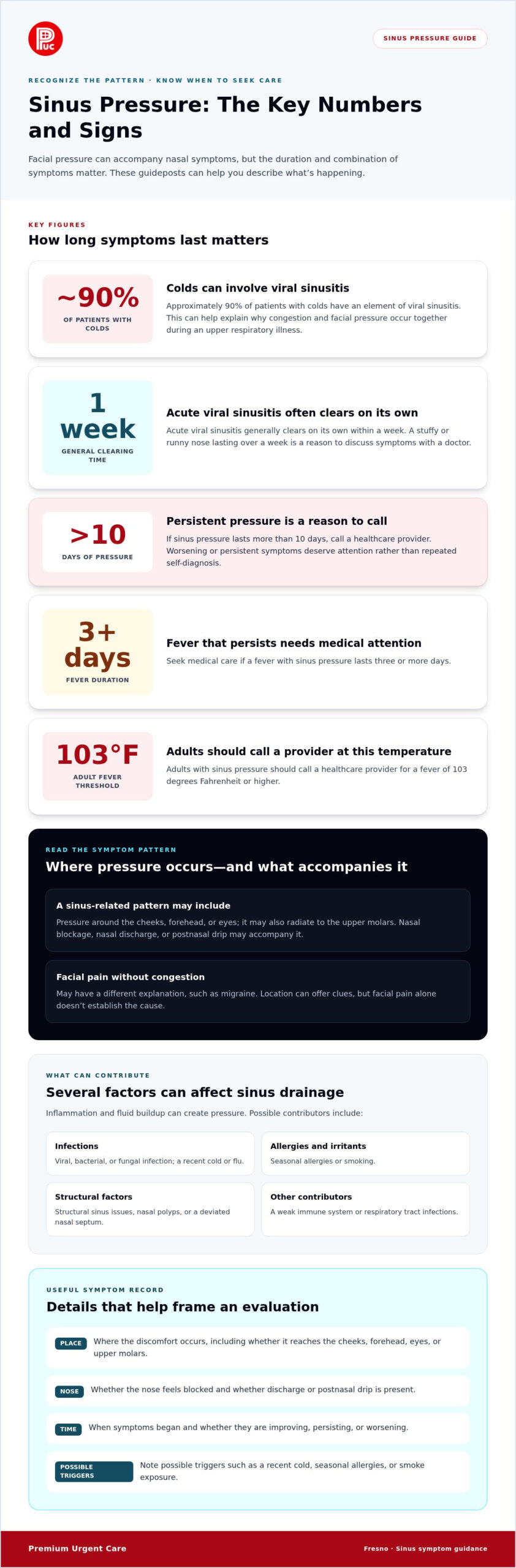
Sinus infections most often result from viruses, so antibiotics aren’t typically used. Acute viral sinusitis generally clears on its own within a week. Sinus pressure lasting more than 10 days is a reason to call a healthcare provider. A stuffy or runny nose lasting over a week is another reason to discuss symptoms with a doctor.
Sinus symptoms can involve more than pressure. Chronic sinusitis may cause tenderness or swelling around the eyes, cheeks, or forehead, along with difficulty breathing through the nose. Nasal stuffiness, postnasal drip, and a runny nose may also occur. Headaches, ear pain, bad breath, or fatigue can accompany chronic symptoms.
Coverage for urgent care or telehealth visits in Fresno varies by health plan and the type of visit. Review your plan’s benefits, including any patient costs or coverage conditions, for the care you’re considering.
Antibiotics usually aren’t needed for acute sinusitis because most sinus infections are caused by viruses. A healthcare provider may prescribe them when symptoms are progressive and persistent, or when pressure is associated with an infection.
Premium Urgent Care provides Ear and Sinus Infection Care for Fresno patients who need an evaluation of sinus symptoms. Choose a location and plan your visit around its posted hours.
Seek medical care in Fresno if a fever lasts three or more days. Adults with sinus pressure should call a healthcare provider for a fever of 103 degrees Fahrenheit or higher. A clear record of symptom duration, pain location, and nasal changes can make that conversation more useful.
What is sinus pressure?
Sinus pressure develops when inflammation affects the lining of the hollow cavities around the nose. Swelling can interfere with drainage, while fluid buildup may create pressure, facial discomfort, or headaches.
Sinus pain can follow a viral, bacterial, or fungal infection, but infection isn’t the only possible cause. A recent cold or flu, seasonal allergies, smoking, structural sinus issues, and a weak immune system can contribute to sinusitis. These factors may inflame or obstruct the nasal passages and make normal sinus drainage more difficult.
Viruses are a frequent part of the picture during colds. Approximately 90% of patients with colds have an element of viral sinusitis. This connection helps explain why congestion and facial pressure can occur together during an upper respiratory illness. It doesn’t mean every headache or facial ache during a cold comes from the sinuses.
Chronic sinusitis can have several contributing causes, including nasal polyps, a deviated nasal septum, allergies, and respiratory tract infections. Ongoing inflammation can interfere with mucus drainage. Symptoms may include headaches, ear pain, bad breath, or fatigue. A doctor considers the overall pattern rather than relying on one symptom alone.
The location of a headache can offer clues, but it doesn’t prove sinusitis. Pressure around the cheeks or forehead together with nasal blockage or discharge fits a sinus-related pattern. Pain without congestion may be a migraine. Since migraine and sinus discomfort can feel similar, note whether nasal symptoms accompany the headache and whether the pain changes with your other symptoms.
What causes sinus pain and when should you see a doctor? Inflammation, infection, fluid buildup, allergies, and structural issues can contribute to sinus pressure. Contact a healthcare provider if pressure lasts more than 10 days, or if a stuffy or runny nose lasts over a week.
Before discussing recurring pressure, keep a brief symptom record: note when it began, where it hurts, and whether congestion or discharge occurs. Include possible triggers, such as a recent cold, seasonal allergies, or smoke exposure. These details help a doctor assess possible causes and distinguish sinus symptoms from other headache patterns.
Symptoms that worsen or persist deserve attention rather than repeated self-diagnosis. A healthcare provider may assess whether infection, allergies, or another cause better explains the pattern. If fever accompanies sinus pressure, seek medical care when it lasts three or more days; adults should also call a provider for a fever of 103 degrees Fahrenheit or higher.
Nasal lavage, humidifiers, and steam
Moisture can soothe dry, irritated nasal passages and provide temporary sinus pressure relief. Saline products, irrigation, humidifiers, and steam work in different ways.
Saline Sprays and Nasal Irrigation
Saline nasal spray adds moisture to irritated passages and can be used several times a day. Nasal lavage, also called nasal irrigation, rinses the passages with saline. Use distilled or sterile water for irrigation to lower infection risk. A spray is a simple option for temporary relief, while irrigation flushes the passages more directly.
Humidifiers and Steam
A humidifier adds moisture to indoor air, while steam from a hot shower moistens the nose directly. Either may help dry sinuses and reduce inflammation. Keep the method comfortable and choose the one that fits your routine. For bowl-style steam inhalation, keep your head a few inches above the water’s surface.
Keeping nasal passages moist can help relieve sinus pressure. Try saline spray for temporary relief, especially when dryness adds to irritation. Nasal irrigation can also help clear mucus. Use distilled or sterile water every time you prepare an irrigation rinse, not untreated water.
Allergies can contribute to nasal inflammation, so pay attention to symptom patterns. If symptoms occur with known allergy triggers, discuss suitable treatment with a healthcare professional. Nasal corticosteroids used for sinus symptoms include fluticasone, budesonide, mometasone, and beclomethasone. These medications address inflammation differently from saline products, which add moisture.
Nasal structure can also affect drainage. Nasal polyps or a deviated nasal septum may contribute to chronic sinusitis by obstructing normal passageways. Saline spray, irrigation, and humidified air can ease dryness, but they don’t correct an anatomical blockage. Persistent congestion or recurring pressure alongside these concerns warrants an assessment of the underlying cause.
Choose a measure based on the symptom you want to address. For dry, irritated passages, saline spray or a humidifier adds moisture. For a rinse, use nasal irrigation with distilled or sterile water. Steam from a hot shower may provide temporary relief from dry sinus discomfort. If allergies or structural changes seem relevant, discuss those factors and nasal corticosteroid options with a healthcare professional.
Track which approach you use and whether dryness, blockage, or pressure changes afterward. This record can help distinguish temporary irritation from a pattern linked to allergies or nasal structure. If symptoms persist or worsen, don’t rely on home moisture measures alone; seek professional guidance about next steps.
What is the best pain relief for sinusitis?
Relief depends on whether pain, congestion, or inflammation is most disruptive. Over-the-counter pain relievers and decongestants may ease symptoms, but use them according to the directions.
Over-the-Counter Pain Relief
Acetaminophen, ibuprofen, and aspirin can relieve sinus pain and pressure. Follow product directions and consider your health conditions and other medicines before choosing an option. A warm compress over the forehead, eyes, and cheeks may also ease pressure. These measures target discomfort; they don’t establish whether symptoms are caused by sinusitis or something else.
Decongestants and Other Medications
Decongestants may reduce nasal blockage, but prolonged use can trigger rebound congestion and worsen symptoms. Don’t use oral decongestants for more than one week without consulting a healthcare provider. Use decongestant nasal sprays for no more than three days to avoid rebound congestion. Follow product directions and don’t extend use beyond these limits.
Acute sinusitis treatment may include nasal or sinus irrigation, nasal corticosteroids, decongestants, and over-the-counter pain relievers. Each addresses different symptoms: irrigation clears the nasal passages, corticosteroids reduce inflammation, and pain relievers target discomfort. A warm compress may also help when facial pressure is the main concern.
What prescription treatments are available for severe or chronic sinus pain? A healthcare provider may prescribe antibiotics or other medications when sinus pressure is associated with an infection. Antibiotics usually aren’t needed for acute sinusitis, but may be prescribed when symptoms are progressive and persistent.
Medication choice should match the symptoms and how they develop. A blocked nose, for example, may prompt discussion of a decongestant, while persistent inflammation may lead to discussion of a nasal corticosteroid. Share the medicines you already take, including over-the-counter products, to help avoid overlapping ingredients or unsuitable combinations.
Keep the limits in mind: don’t use oral decongestants for more than one week without consulting a healthcare provider, and limit decongestant nasal sprays to three days. Using a spray longer can cause rebound congestion, creating a cycle of blockage that may lead to more use. Read the label before each dose.
If pain remains severe, symptoms progress, or pressure persists beyond 10 days, discuss the pattern with a healthcare professional. Describe where the pain occurs, how long it has lasted, and which remedies you’ve tried. That information helps guide a conversation about whether home care, medication, or further assessment fits the symptoms.
Dizziness and tooth pain associated with sinus pressure
Sinus pressure can radiate to the upper molars, causing tooth discomfort alongside facial pressure. Dizziness may occur at the same time, but that overlap alone doesn’t show that sinus symptoms caused it.
Pay attention to the location and pattern of tooth pain. Sinus-related pressure may affect several upper molars rather than being confined to one precise spot. Notice whether the discomfort occurs with nasal blockage, discharge, or pressure around the cheeks. These details describe the pattern, but can’t establish the cause on their own.
Describe dizziness separately. Record whether it feels like unsteadiness, lightheadedness, or a spinning sensation, and when it occurs. Does it begin with facial pressure, or continue after nasal symptoms ease? A timeline helps a healthcare professional consider the full picture rather than assuming every symptom has the same cause.
Use a simple symptom log before seeking an assessment. Write down when the tooth discomfort or dizziness began, where the pain is, and whether congestion or nasal discharge is present. Note changes over time, such as pressure becoming more noticeable or symptoms improving. These observations give a doctor specific information to evaluate.
Don’t label a problem as sinusitis based on tooth pain alone. Upper-molar discomfort can accompany sinus pressure, but location is only one clue. Likewise, dizziness alongside pressure is an association, not proof of cause. A careful evaluation considers each symptom, its timing, and whether nasal symptoms occur at the same time.
Persistent symptoms are a reason to seek medical guidance. Sinus pressure lasting more than 10 days warrants a call to a healthcare provider. In Fresno, seek medical care if a fever lasts three or more days; adults with sinus pressure should call a provider for a fever of 103 degrees Fahrenheit or higher.
For a clearer discussion, bring your symptom notes and list any over-the-counter medicines you’ve used. Explain whether upper-molar discomfort affects one area or several, and describe the dizziness in your own words. If sinus symptoms persist or the combination is disrupting daily activities, arrange an assessment for sinus symptoms.
Premium Urgent Care: Colds, cough, and upper respiratory infections
Premium Urgent Care provides Ear and Sinus Infection Care, as well as care for colds, cough, and upper respiratory infections. If facial pressure, congestion, or related symptoms persist or worsen, an urgent care consultation can assess the symptom pattern and guide next steps. Share when symptoms began, where discomfort occurs, and whether you have nasal discharge or fever. These details help describe your experience and support an informed evaluation.
For care related to sinus symptoms, contact Premium Urgent Care or visit premiumuc.com.
Choose a Clear Next Step for Ongoing Symptoms
Before arranging care, identify the change you most want addressed, such as pain affecting sleep or pressure disrupting your routine. This gives the conversation a practical focus beyond naming a symptom. For sinus pain treatment in Fresno, consider an in-person evaluation if discomfort persists or worsens despite self-care.
Premium Urgent Care provides Ear and Sinus Infection Care, as well as care for colds, cough, and upper respiratory infections. Note when symptoms began, how they have changed, and which measures you’ve tried. A current medication list and details about nasal symptoms, tooth discomfort, or dizziness can help keep the discussion focused on your experience.
If you’re ready to discuss ongoing sinus symptoms, contact Premium Urgent Care. A clear next step can help you move forward with care suited to your concerns.
Frequently Asked Questions
Is it a sinus headache or migraine?
Nasal blockage or discharge alongside facial pressure can point to sinus involvement, while pain without congestion may be a migraine. Pain location alone doesn’t settle the difference. Note whether nasal symptoms occur with the headache, when the pain starts, and what else changes at the same time. Sharing this pattern with a healthcare professional can help distinguish possible causes.
When should I call my healthcare provider?
Call a healthcare provider if sinus pressure lasts more than 10 days or a stuffy or runny nose lasts over a week. In Fresno, seek medical care if fever lasts three or more days. Adults with sinus pressure should call a provider for a fever of 103 degrees Fahrenheit or higher. Describe how symptoms have changed and which medicines you’ve used.
What are the best home remedies for sinus pain and pressure?
Choose home care based on your discomfort: rest and hydration support recovery, while elevating your head with a few pillows may make breathing more comfortable during sleep. A warm compress can ease facial pressure. Use distilled or sterile water for nasal irrigation. Track which measures you try and whether they help, so you can share that information if symptoms persist.
Which over-the-counter medicines relieve sinus pain, and what are their risks?
Acetaminophen, ibuprofen, and aspirin can relieve sinus pain; decongestants may ease nasal blockage. Follow package directions, and don’t use oral decongestants for more than one week without consulting a healthcare provider. Limit decongestant nasal sprays to three days, since longer use can trigger rebound congestion. Antihistamines can cause drowsiness, so consider that effect when planning their use.
When should sinus pain be treated as an emergency?
Seek emergency care if symptoms feel life-threatening or become severe and rapidly change. Urgent care is for acute, non-emergency concerns, not emergencies requiring a hospital-level response. For persistent sinus pressure or related symptoms that aren’t an immediate emergency, a healthcare professional can assess the pattern and guide next steps. If you’re unsure about the severity, prioritize emergency evaluation.
Where can you get same-day sinus pain treatment in Fresno, California?
Premium Urgent Care provides Ear and Sinus Infection Care at its Fresno locations. Fresno-West is at 6643 N. Milburn Ave., Fresno, CA 93722, and Fresno-East is at 1069 E. Champlain Drive, Fresno, CA 93720. Same-day timing depends on visit availability. Call Fresno-West at 559-412-2535 or Fresno-East at 559-540-2020 for current visit information.
How can you tell sinus pain from migraine, dental pain, or allergies?
Consider the combination of symptoms, not pain location alone. Nasal congestion or discharge accompanying facial pressure suggests sinus symptoms; pain without congestion may be a migraine. Sinus pressure can also radiate to the upper molars, and allergies are a recognized risk factor for sinusitis. Record nasal symptoms, pain location, and possible allergy triggers to give a healthcare professional a clearer picture.
Which Fresno urgent care clinics treat sinus infections, and what are their hours?
Premium Urgent Care provides ear and sinus infection care in Fresno. Choose a clinic location and plan your visit around its posted hours.