
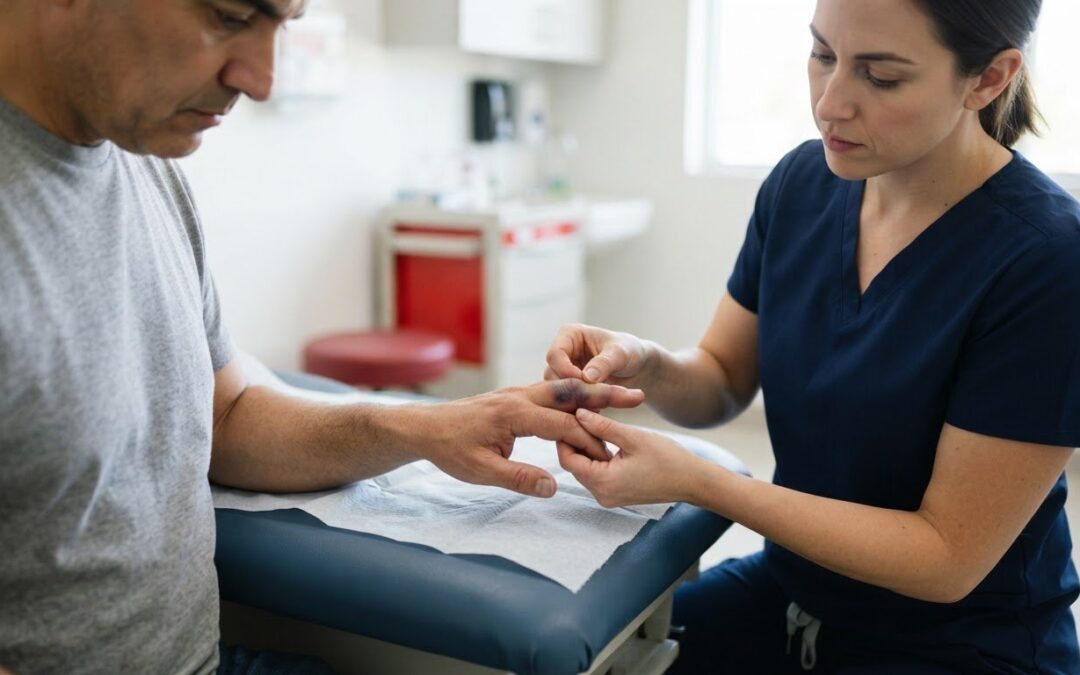
A finger can still move and still be broken. Common signs of a broken finger or thumb include pain that worsens with movement or pressure, swelling, bruising, and difficulty moving it. An X-ray is commonly used to confirm a fracture, since a break can look like a jammed or sprained finger.
It’s understandable to hope that pain or swelling will settle on its own, but symptoms alone can’t reliably distinguish a fracture from a sprain. This guide explains what to look for, when to seek care, and whether a jammed finger should be splinted. You’ll also learn which complications need prompt attention and what to do while arranging an assessment.
Key Takeaways
- Pain, swelling, bruising, or limited movement can point to a fracture, but an X-ray is commonly needed to distinguish it from a sprain.
- Remove rings, rest the injured finger, and avoid activities that worsen pain while arranging an assessment.
- Seek emergency care for exposed bone, a finger at an odd angle, numbness, or a blue appearance.
- A jammed finger may also need evaluation; splinting depends on the injury and whether a fracture or serious sprain is present.
Should a Jammed Finger be Splinted?
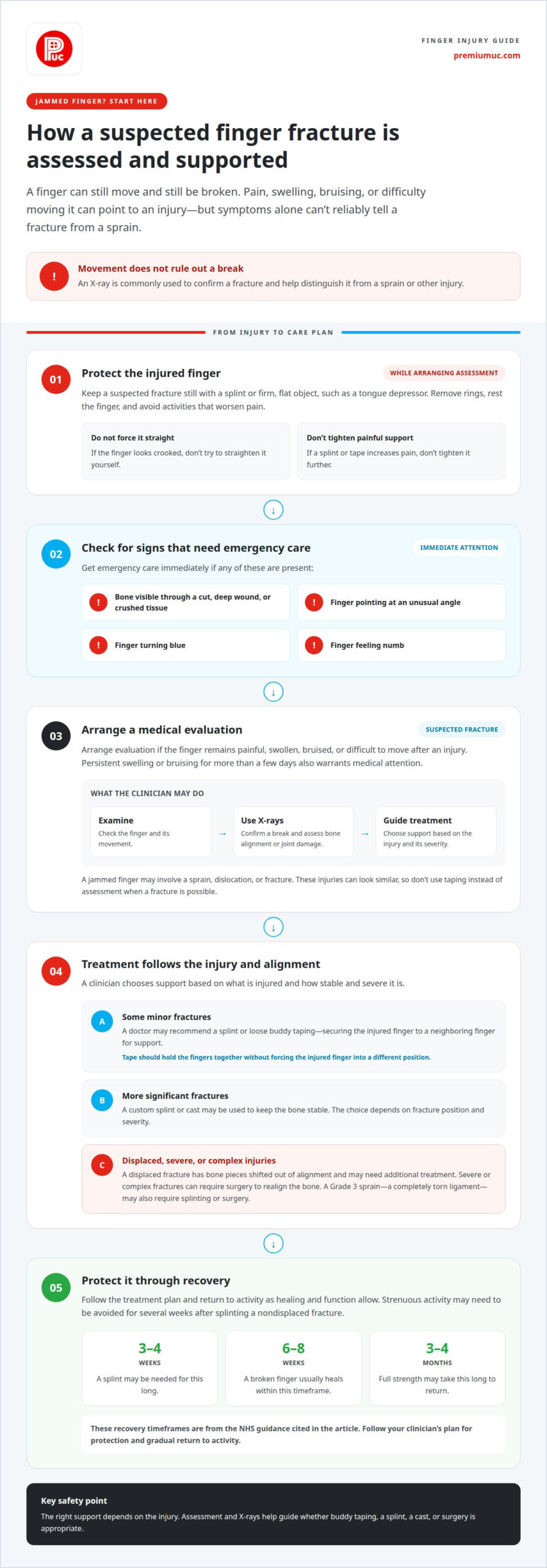
A jammed finger may involve a sprain, dislocation, or fracture, and these injuries can look similar. Whether to use a splint depends on the injured structure and whether the finger is stable. An X-ray is commonly used to distinguish a fracture from a sprain. Until you’re assessed, keep a suspected fracture still with a splint or a firm, flat object, such as a tongue depressor.
For some minor fractures, a doctor may recommend a splint or loose buddy taping. Buddy taping means securing the injured finger to a neighboring finger for support. The tape should hold the fingers together without forcing the injured finger into a different position. Don’t use taping instead of an assessment when a fracture is possible, as the injury may need a different type of immobilization.
More significant fractures may need a custom splint or a cast to keep the bone stable. The choice depends on the fracture’s position and severity. A displaced fracture, where bone pieces have shifted out of alignment, may need additional treatment. Severe or complex fractures can require surgery to realign the bone. A Grade 3 sprain, involving a completely torn ligament, may also require splinting or surgery.
Support the injured finger while arranging an assessment, and don’t try to straighten it if it looks crooked. A break through the skin needs immediate medical care, not home splinting alone. If a splint or tape increases pain, don’t tighten it further. Treatment depends on the injury, so a doctor can use an examination and X-rays to guide the choice of buddy taping, a splint, a cast, or surgery.
According to the NHS, a broken finger usually heals within 6 to 8 weeks, but full strength may take 3 to 4 months to return. A splint may be needed for three to four weeks, and strenuous activity may need to be avoided for several weeks after splinting a nondisplaced fracture. Follow the treatment plan through recovery, since protection and gradual return to activity help support healing.
What is a broken finger or thumb?
A fracture is a break in one of the bones in a finger or thumb. The break’s location and alignment affect movement and treatment.
Fracture Definition and Bone Alignment
Each finger has three phalanges, while the thumb has two. A fracture can affect any of these bones; a displaced fracture means the broken parts have shifted out of alignment. The position matters because a deformity or joint involvement can limit dexterity. A severe or complex break may need surgery, while an X-ray helps show its location and alignment.
Causes and Risk Factors
Finger fractures can result from bending, twisting, or crushing injuries. Examples include a ball striking a fingertip, a fall onto the hand, or a finger caught in a door. Athletes and people doing activities that put their fingers at risk have more chances of impact or crushing injuries. Protective gloves with reinforced finger guards may reduce exposure during some activities. The force and direction of an impact affect which bone breaks.
Movement Despite a Fracture
Some people can still move a fractured finger and may feel only a dull ache. Movement alone can’t rule out a break, because symptoms vary with the injury’s location and severity. Swelling or pain may limit movement, but neither shows whether the bone is out of alignment. An X-ray is commonly used to distinguish a fracture from other injuries. Being able to move the finger doesn’t mean it’s safe to use normally.
Fractures, Sprains, and Dislocations
A fracture is a break in a bone; a sprain damages the ligaments around a joint. A dislocation occurs when the bones in a joint move out of their usual position. Pain, swelling, and limited movement can occur with all three, so appearance alone may not identify the injury. An X-ray can help distinguish a fracture from a sprain or assess joint damage.
According to the NHS, a broken finger usually heals within 6 to 8 weeks, but full strength may take 3 to 4 months to return. Return to normal activity depends on healing and restored function; strenuous use too soon can aggravate the injury. For a minor finger injury, medical evaluation can help determine the next step.
When to seek medical care
A suspected fracture needs medical evaluation, even if the injured finger still moves. A clinician examines the hand and uses an X-ray to diagnose a fracture and assess its severity.
When a Finger Needs Evaluation
Arrange medical evaluation if a finger remains painful, swollen, bruised, or difficult to move after an injury. If you suspect a break, seek medical evaluation promptly. Swelling or bruising that persists for more than a few days also warrants medical attention. These symptoms can result from a fracture or another injury, and an assessment helps identify the cause. Avoid sports or other activities that aggravate the pain while you wait.
Urgent Medical Attention
Get emergency care immediately if bone is visible through a cut or the finger has a deep wound or crushed tissue. A finger pointing at an unusual angle, turning blue, or feeling numb also needs urgent attention. Numbness with swelling may indicate nerve damage or pressure on a nerve. Don’t try to straighten a crooked finger yourself. Prompt assessment can address the injury and reduce the risk of complications.
Diagnosis and X-Rays
A healthcare professional examines the injured finger, checks its movement, and may order X-rays. X-rays are commonly needed when a fracture is suspected because a sprain can cause similar symptoms. Imaging can confirm a break, show whether bone pieces have shifted, and reveal joint damage. These details help guide treatment, such as immobilization or referral for more specialized care.
Treatment depends on the fracture’s location, alignment, and severity. A clinician may recommend a splint or cast; a severe or complex break may need surgery to realign the bone. If pain and swelling haven’t started to ease after a few days, seek medical advice. Follow-up assessment helps determine when you can safely resume normal activities, including sports.
Broken-finger complications
A finger fracture can cause more than short-term pain. The break’s position, alignment, and complexity affect treatment and recovery. Complications matter because a finger that heals poorly may remain painful or stiff, making everyday tasks such as gripping or buttoning clothing difficult.
An untreated fracture may lead to ongoing pain and stiffness. If broken bone pieces shift out of alignment, the finger may heal in an abnormal position, affecting movement and dexterity. Persistent symptoms can make everyday hand use difficult. That’s why a suspected fracture deserves assessment, rather than relying only on whether the finger can still move.
Nerve involvement is another concern with a complicated injury. Numbness that continues alongside swelling may indicate nerve damage or pressure caused by swelling. A break involving damaged nerves or multiple bone fragments can require more involved treatment. Severe or complex fractures may need surgery to realign the bone, while some fractures are managed with immobilization. The injury’s location and severity guide these decisions.
Pay attention to how symptoms change after the injury. Increasing difficulty moving the finger, ongoing numbness, or pain and swelling that don’t begin to ease after a few days are reasons to seek medical attention. A finger that looks misshapen or sits at an unusual angle also needs assessment. These changes show why examination and imaging matter: treatment depends on identifying the break and its alignment.
To reduce the chance of lingering problems, don’t force a painful finger through sports, work, or other activity. Keep it supported while arranging medical assessment, and follow the recommended treatment plan. Return to normal use should follow healing and clinical advice, not just a temporary drop in pain. If an injury is affecting finger movement or causing persistent symptoms, arrange an assessment for a finger injury.
Premium Urgent Care
Premium Urgent Care provides urgent care consultations for acute health concerns. If a finger injury is painful, swollen, or difficult to move, a consultation can help you discuss your symptoms and appropriate next steps.
A finger with visible bone, numbness, a blue appearance, or an unusual angle needs emergency medical attention. For other concerns about an injured finger, contact Premium Urgent Care for an urgent care consultation.
Take the Next Step Toward Safer Hand Use
Before seeking care, briefly note how the injury happened and what has changed since. Include when it occurred, which hand and finger are affected, and which everyday tasks have become difficult. This gives a healthcare professional a clearer account to consider alongside an examination. If symptoms change, note that too, rather than repeatedly testing the finger with painful movements.
The signs of a broken finger can help you recognize when an injury needs attention, but they can’t establish the exact diagnosis. Use your observations to guide a timely conversation about the next step and how to approach work, home tasks, or hobbies while the finger is assessed. If you have an acute health concern, contact Premium Urgent Care. A clear plan can help you move forward with confidence.
Frequently Asked Questions
What Should You Do if You Break Your Finger?
Remove rings from the injured hand, rest it, and avoid activities that worsen pain. While arranging medical evaluation, keep the hand elevated and apply a wrapped ice pack for 15 to 20 minutes every 2 to 3 hours. Don’t try to pull or push the finger into alignment. If bone is visible through a wound, seek emergency care immediately rather than relying on home care.
Will I Need Surgery?
Not every finger fracture needs surgery. Some breaks can be treated with a splint or cast, while a severe or complex fracture may need surgery to realign the bone. A break in several places or one involving damaged nerves may also require surgery. Imaging shows the break’s position and complexity, helping guide the treatment plan and determine whether a procedure is needed.
What are the common signs and symptoms of a broken finger?
Common symptoms include pain, swelling, bruising, and difficulty moving the finger. Signs of a broken finger can also include pain that worsens with movement or pressure. These symptoms may overlap with a sprain or dislocation, so they can’t confirm a fracture on their own. Notice whether discomfort interferes with tasks such as holding a cup, turning a key, or fastening clothing.
Can you move a finger if it is broken?
Yes. A fractured finger may still move, and some breaks cause only a dull ache. Being able to bend it doesn’t rule out a fracture or show whether the bone is properly aligned. Avoid repeatedly testing its movement or using the finger through pain. A clinician can assess the injury and use an X-ray when needed to identify a break.
How does a broken finger look, including swelling, bruising, or deformity?
A broken finger may look swollen or bruised, and redness can appear within about 5 to 10 minutes after a fracture. A visible deformity is another possible sign of a broken finger, especially if the bone has shifted out of position. Some fractures cause no obvious change in shape. Compare the finger with the same finger on your other hand without forcing movement.
When should you seek urgent medical care for a possible broken finger?
Seek emergency care immediately if bone is visible through the skin, the finger is blue or numb, or it points at an unusual angle. A deep cut or crushed tissue also needs urgent attention. These injuries may involve more than a simple fracture and need prompt assessment. If you suspect a break without these urgent features, arrange medical evaluation promptly rather than waiting for symptoms to worsen.