

A seasonal pattern can help identify the cause of allergy symptoms, and testing is often unnecessary. For seasonal allergy treatment in Selma, diagnosis typically begins with your symptoms and when they occur. Primary care providers can diagnose and treat most seasonal allergies without allergy testing. Testing may be considered if the trigger is unclear or symptoms are severe or uncontrolled.
It can be frustrating when sneezing, nasal congestion, or itchy eyes return as the seasons change. The right medication depends on the symptoms you want to ease, how well nonprescription options work, and your health needs. This guide explains how clinicians assess seasonal allergies and reviews over-the-counter and prescription medication choices, including when an in-person evaluation may help. You’ll also learn why timing matters for some treatments and when worsening symptoms need medical attention.
Key Takeaways
- Track when symptoms appear and what they feel like; the seasonal pattern can help distinguish allergies from other causes and guide diagnosis.
- Learn how saline nasal irrigation may ease congestion and what to keep in mind when preparing and using a rinse.
- Compare antihistamines, nasal corticosteroids, and decongestants to understand which symptoms each option may address and why timing matters.
- Recognize when worsening symptoms or signs such as wheezing call for medical assessment, including care for upper respiratory concerns.
1. What Are Seasonal Allergies?
Seasonal allergies occur when the immune system reacts to allergens such as pollen. Symptoms can include sneezing, a runny or blocked nose, and itchy eyes. When symptoms occur and whether they return can point to a seasonal pattern. Pollen counts provide context about exposure, but your symptoms matter too.
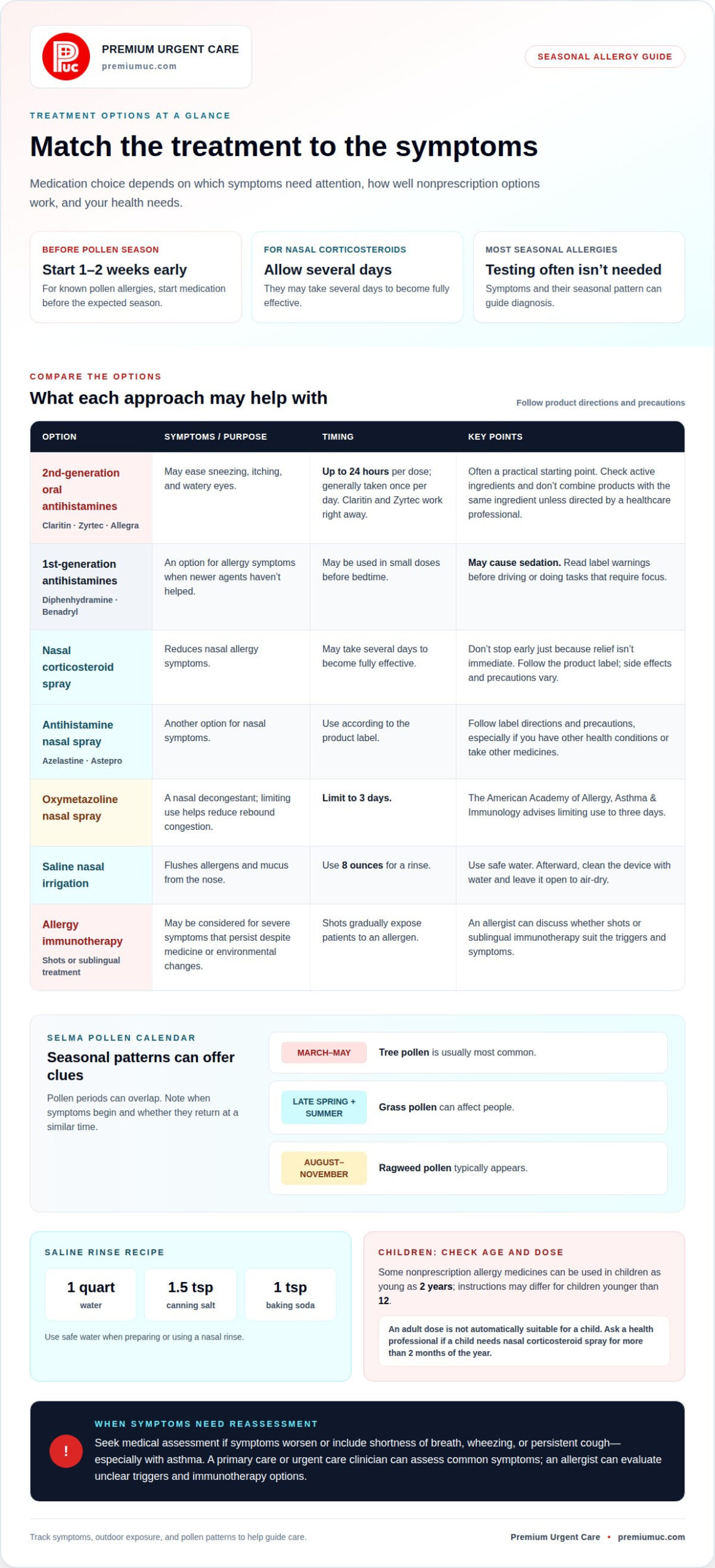
In Selma, tree pollen is usually most common from March through May. Grass pollen can affect people in late spring and summer, while ragweed pollen typically appears from August to November. These periods can overlap, so noting when symptoms begin may help identify likely triggers.
Saline nasal irrigation can flush allergens and mucus from the nose. A homemade solution uses 1 quart of water, 1.5 teaspoons of canning salt, and 1 teaspoon of baking soda. Using safe water when preparing or using a nasal rinse is a sensible precaution. Use 8 ounces for a rinse, and clean the irrigation device with water afterward, leaving it open to air-dry.
Nasal corticosteroid sprays reduce nasal allergy symptoms and may take several days to become fully effective. Follow the product label, as possible side effects and precautions vary. Don’t stop a spray early just because relief isn’t immediate. Nasal corticosteroids and antihistamines work differently, so the right choice depends on which symptoms need attention.
An over-the-counter antihistamine nasal spray, such as azelastine (sold as Astepro), is another option for nasal symptoms. Antihistamines may help with sneezing, itching, and a runny nose, while corticosteroid sprays address nasal allergy symptoms differently. Follow the label for use and precautions, especially if you have other health conditions or take other medicines.
Reduce pollen exposure alongside medication: change clothes after spending time outdoors and shower to remove pollen from your skin and hair. Tracking symptoms and paying attention to pollen counts can help you see whether they follow a consistent seasonal pattern.
2. Over-the-counter and prescription medications
Medication choice depends on which allergy symptoms affect you and whether nonprescription options help. For seasonal allergy treatment in Selma, a clinician can consider your symptoms and medical history. Options include oral antihistamines, nasal sprays, and prescription treatments. Most seasonal allergies can be diagnosed without testing.
For severe symptoms that persist despite medicine or changes to your environment, allergy shots may be considered. They gradually expose patients to an allergen to help the body tolerate it. Sublingual immunotherapy is another option for some allergies. An allergist can discuss whether either approach suits your triggers and symptoms. Before allergy testing, follow the testing team’s instructions, as you may need to stop antihistamines and certain other medicines a few days beforehand.
Timing can affect symptom control. For known pollen allergies, start medication about 1–2 weeks before the expected season. Nasal corticosteroids may take several days to become fully effective, so starting after symptoms peak may delay relief. Keeping windows closed during high-pollen periods can reduce indoor exposure, including during summer grass-pollen season.
Children need age-appropriate products and label-based dosing. Some nonprescription allergy medicines can be used in children as young as 2 years, while instructions may differ for children younger than 12. Consult a health professional if a child needs nasal corticosteroid spray for more than 2 months of the year. An adult dose isn’t automatically suitable for a child.
A seasonal allergy treatment plan in Selma may need reassessment if symptoms worsen or include shortness of breath, wheezing, or persistent cough, especially with asthma. Primary care or urgent care clinicians can assess common symptoms; allergists can evaluate unclear triggers and immunotherapy options. Premium Urgent Care’s allergy and mild asthma care is an option for assessment. The American Academy of Allergy, Asthma & Immunology advises limiting oxymetazoline nasal sprays to three days to reduce rebound congestion.
3. Over-the-counter antihistamines
Over-the-counter antihistamines can ease sneezing, itching, and watery eyes caused by seasonal allergic rhinitis. Claritin, Zyrtec, and Allegra are second-generation options that can each last up to 24 hours. Claritin and Zyrtec work right away, while the exact choice depends on symptoms, health needs, and product directions.
Second-generation antihistamines are generally taken once per day. They’re often a practical starting point because they balance effectiveness and tolerability. Check the package’s active ingredient: brand-name and store-brand products may contain the same medicine. Follow the label, and don’t combine products with the same active ingredient unless a healthcare professional directs you to.
Older, first-generation antihistamines include diphenhydramine, sold as Benadryl. Because it can cause sedation and other side effects, it’s no longer preferred for routine allergy symptoms. First-generation medicines are generally a later option if newer agents haven’t helped, or may be used in small doses before bedtime. Drowsiness can affect alertness, so read the label’s warnings before driving or doing tasks that require focus.
Third-generation antihistamines are another category, but the available facts here don’t support naming specific products or comparing them directly. A clinician or pharmacist can help assess options based on other medicines, existing health conditions, and the symptoms that remain. Prescription treatment may be considered when nonprescription choices don’t adequately control symptoms; the appropriate medicine depends on the patient’s clinical needs. For individuals exploring customized prescription solutions, platforms like livewhealthlabs.com connect patients with independent licensed providers and compounding pharmacies.
Springtime outdoor exposure can bring symptoms back even after medication provides relief. Keep a brief record of when sneezing, itching, or watery eyes occur, and note whether symptoms follow time outdoors. This pattern can help distinguish pollen-related allergic rhinitis from other causes and inform a treatment discussion. If an antihistamine causes troublesome drowsiness or doesn’t address your main symptoms, don’t simply increase the dose. Review the label and discuss another option with a healthcare professional.
4. Oral decongestants
Oral decongestants can ease nasal congestion that accompanies hay fever, including pressure and a blocked nose. Pseudoephedrine is one example. In the United States, pseudoephedrine products are kept behind the pharmacy counter; buyers ask the pharmacist and show identification. Follow the package directions and ask a pharmacist whether the product is suitable alongside your other medicines.
Decongestants target congestion, not every allergy symptom. They may not address itchy eyes, sneezing, or a runny nose as directly as antihistamines. Consider which symptom is most disruptive before choosing an over-the-counter product. Combination medicines can contain several active ingredients, so read the label to avoid doubling up on a medicine you already take.
Duration of use matters. If you use an oral or nasal decongestant for more than two to three days, consult a health professional. Nasal decongestant sprays differ from oral tablets, but they also need careful limits. The American Academy of Allergy, Asthma & Immunology advises against using oxymetazoline sprays for longer than three days because extended use can worsen congestion through rebound symptoms.
Rebound congestion can create a cycle: a spray briefly opens the nose, then blockage returns or worsens with continued use. Don’t respond by increasing the dose or using it beyond label directions. Ask a pharmacist or clinician about another approach if congestion persists or severe symptoms make sleep or daily activities difficult. A persistent runny nose may need a different treatment from nasal blockage alone.
Decongestants don’t remove the pollen trigger or replace immunotherapy, which may be considered for selected allergies. If hay fever symptoms remain difficult to manage, a clinical assessment can help distinguish ongoing allergy symptoms from another cause. For persistent congestion, request an urgent care consultation to discuss your symptoms and medication options.
Premium Urgent Care: Upper Respiratory Infection Treatment
Premium Urgent Care provides upper respiratory infection treatment for people whose symptoms may involve an infection rather than seasonal allergies. Fever can signal that symptoms aren’t due to an allergy. A clinical assessment can help clarify concerns when symptoms change, persist, or include cough and congestion.
Care also includes treatment for colds, cough, and upper respiratory infections, as well as ear and sinus infection care for concerns such as ear pain or sinus symptoms. These services address acute symptoms, while allergy medicines and immunotherapy use different treatment approaches.
If you’re concerned about symptoms or unsure whether they fit an infection, contact Premium Urgent Care for an urgent care consultation.
Take the Next Step Toward Symptom Clarity
Use your symptom pattern to guide what you discuss at a medical visit. Changes in how you feel, new symptoms, or concerns that don’t follow your usual seasonal pattern can provide useful context for an assessment. Describing when symptoms occur and how they affect daily life can help shape the next step in seasonal allergy treatment in Selma.
Premium Urgent Care treats colds, cough, and upper respiratory infections, as well as ear and sinus concerns. The clinic also treats urinary tract infections, which require a different evaluation from seasonal allergy symptoms. If you’re unsure what may be causing your symptoms, an urgent care consultation can address your concern and identify an appropriate course of care.
For a calm, practical next step, contact Premium Urgent Care today. Take the time to seek the care that fits your symptoms and move forward with greater clarity.
Frequently Asked Questions
How is it diagnosed?
A clinician can assess seasonal allergies by reviewing symptoms, their timing, and possible exposures. Allergy testing may help if the trigger remains unclear, symptoms are severe or uncontrolled, or asthma is present. A skin-prick test checks for a raised, itchy, red bump after exposure to an allergen; the allergist checks the reaction after 15 minutes. Blood testing is another diagnostic option.
How can I reduce hay fever symptoms?
Reduce pollen indoors by washing bed linens weekly and using a forced-air filter with a MERV rating of 13 or greater. During yard work, avoiding early mornings can lower exposure when outdoor allergen concentrations are often high. These steps complement symptom treatment rather than replace it. If symptoms persist despite changes at home and outdoors, discuss additional options with a healthcare professional.
How common is this condition?
Seasonal allergies affect an estimated 10–30% of people in the United States and other high-resource countries. Seasonal pollen allergies affect about 20 million people in the United States. These figures describe a common condition, but they don’t predict how strongly any one person will react. Symptoms and triggers vary, so an individual’s experience may range from occasional discomfort to symptoms that disrupt daily activities.
Is it a cold or an allergy?
Itchy eyes and symptoms that return during a familiar pollen season point more toward allergies, while a fever indicates symptoms aren’t due to an allergy. Notice whether symptoms follow a recurring seasonal pattern or begin alongside signs of illness. If you have a fever, worsening symptoms, or uncertainty about the cause, a clinical assessment can help distinguish an allergy from an infection.
What Are Seasonal Allergies?
Seasonal allergies are reactions to allergens that become more common at particular times of year. The immune system responds to an otherwise harmless substance, often causing nose or eye symptoms. Unlike a one-time irritation, symptoms may recur with the same seasonal exposure. Tracking when symptoms begin and what you were exposed to can provide useful context to discuss with a clinician.
What is a pollen allergy?
A pollen allergy is an immune response to pollen released by plants, including trees, grasses, and weeds. Pollen can travel through the air and reach people even when the source plant isn’t nearby. In someone who is sensitive to it, exposure may cause allergic rhinitis, with nasal or eye symptoms. Identifying which pollen triggers symptoms can help guide prevention and treatment choices.