
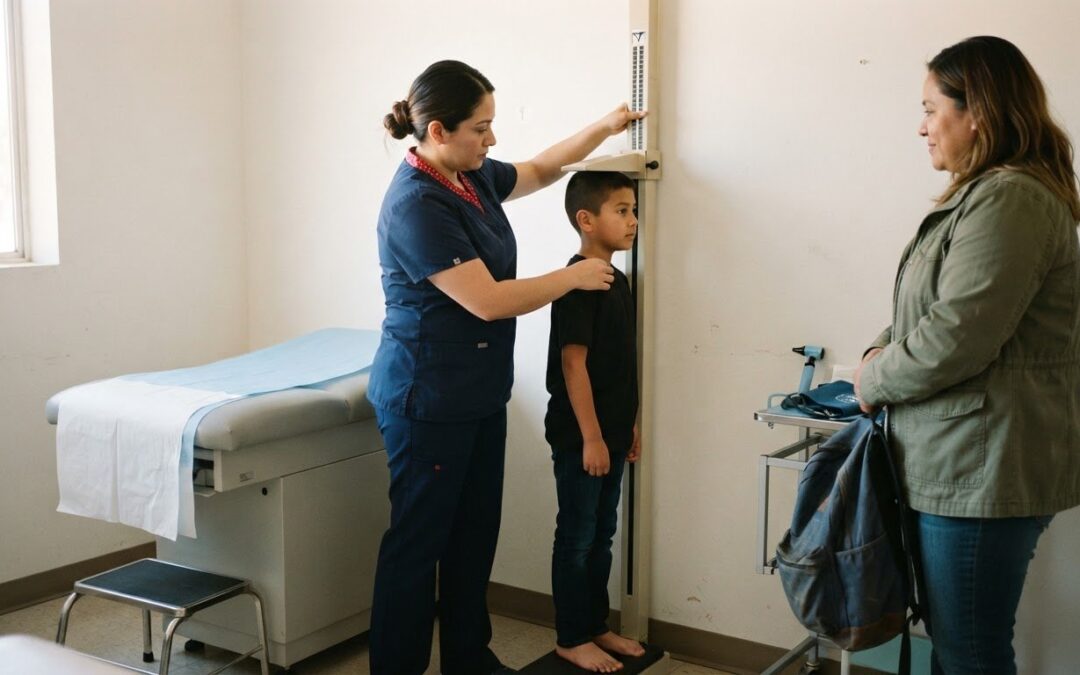
Bring the school’s physical form to school physicals in Selma. Have the student’s available health and immunization records, along with a list of medications, allergies, past injuries, and ongoing conditions, ready for the appointment. These details help the clinician understand the student’s health needs and complete the form.
A clear checklist makes it easier to prepare for school paperwork and any requested screenings. This guide covers what to bring, how to handle forms and attendance requirements, and what a physical or screening may involve. You’ll also learn how to help the student prepare, so the visit is straightforward and the paperwork is ready for the next step.
Key Takeaways
- Bring the school’s physical form and the student’s available health and immunization records to help complete the paperwork accurately.
- Find out which additional screenings apply, since requirements can depend on the student’s age, school, and state.
- Expect a health-history review and basic checks such as height, weight, posture, vision, and hearing assessments.
- Prepare a concise list of medications, allergies, conditions, and past injuries so the visit can address the student’s health needs and school-day support.
School physical forms and attendance requirements
Bring the school’s own medical form to the appointment. In many U.S. states, school physical examinations are mandated by law, and most schools require a medical form before a child may attend classes. Requirements differ, so the form is the practical guide to what the school needs documented.
Start by checking the form and its submission instructions. Look for required sections, signatures, and directions on where to return the completed document. The form may ask for health details, examination findings, or information about support the student needs during the school day. Complete the family sections beforehand, then bring the form for the clinician to finish.
- Bring the school’s physical form, including any separate pages provided with it.
- Bring available immunization and health records to help answer form questions accurately.
- List current medications, allergies, ongoing conditions, and relevant past injuries.
A dental examination is separate from a medical physical and may be required by the school. Check the school’s instructions rather than assuming the physical covers dental requirements. If the school provides multiple forms, keep them together and note which professional needs to complete each one.
Coverage for school physicals in Selma depends on the insurance plan’s benefits and how the visit is billed. Medicaid coverage also depends on the child’s plan and the service provided. Review the plan’s coverage terms for the physical before the appointment.
For a school or sports physical in Selma, look for a clinic that performs physicals and can complete the student’s required form. Premium Urgent Care offers sports physicals at its Selma clinic. Bring the school or athletic form to the visit.
Before submitting paperwork, compare each completed section with the school’s form. Confirm that the student’s identifying details are legible and that required fields are addressed. Keep a copy of the finished form and any separate dental documentation for your records. A complete packet makes it easier to provide the school with the information it requested.
Additional screenings
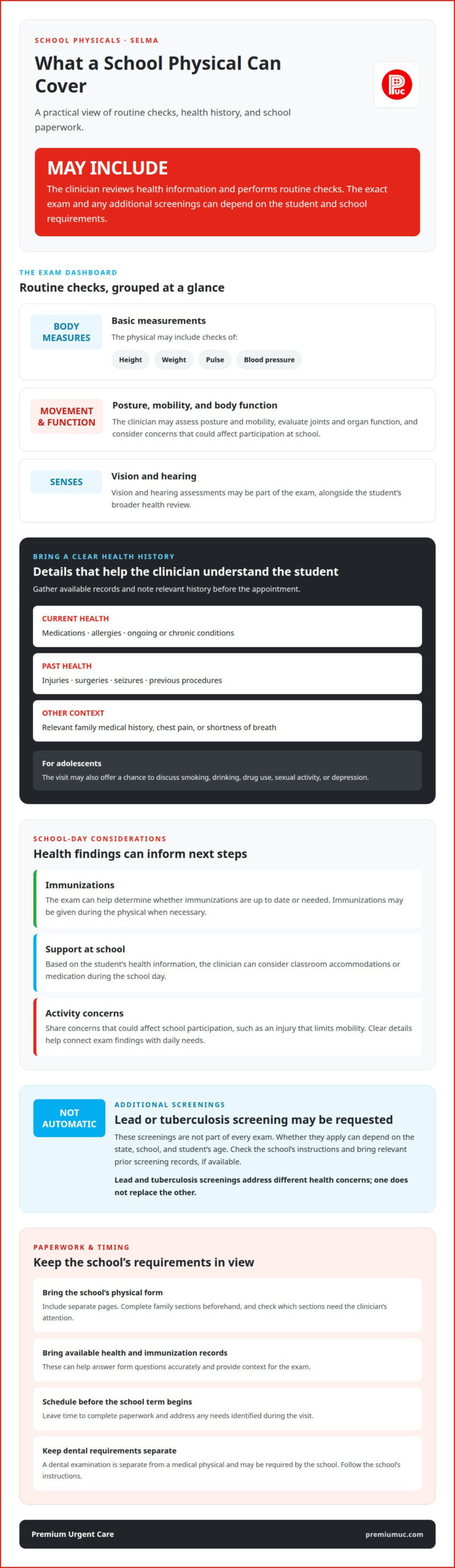
A school physical may include lead or tuberculosis screening, depending on the state, school, and student’s age. Neither screening is automatically part of every exam. The school’s paperwork and the student’s circumstances help determine whether a screening is relevant. Review any instructions alongside the physical form so you can prepare the right records and questions.
Gather previous screening paperwork or related health records, if available, and bring them to the appointment. For example, you may have a previous test result or a note about follow-up. Sharing those details gives the clinician useful context and can clarify what the school needs documented.
- Read the school’s instructions for any named screening or required documentation.
- Bring relevant prior records, including dates and results shown on existing paperwork.
- Write down questions about why a screening is requested and how results will be recorded.
Lead and tuberculosis screenings address different health concerns, so one does not replace the other. If the school requests a specific test, use the wording on its form when discussing the paperwork. A clear record of the request helps distinguish a school requirement from other health information in the student’s file.
Screening needs can vary with age and school requirements. A younger student and an older adolescent may have different forms or screening instructions. Before the visit, compare the student’s paperwork with the school’s current directions. Note any screening request and discuss it during the appointment rather than assuming it is part of a standard examination.
If a screening raises an acute health concern, an urgent care consultation can address that concern. Keep the school form and any screening paperwork together, then follow the instructions provided for documenting the outcome. This helps families keep the school’s administrative requirements distinct from the student’s broader health records.
Annual school physical examinations
Schedule the physical before the school term begins, leaving time to complete paperwork and address any needs identified during the visit. The exam gives the clinician an opportunity to review the student’s health and perform routine checks.
A physical may include measurements and assessments such as height, weight, pulse, blood pressure, posture, and mobility. The clinician may also evaluate joints and organ function, and test vision and hearing. These checks build a broader picture of the student’s health, not just the information needed for a school form.
- Bring a list of current medications and known allergies.
- Note past injuries, surgeries, seizures, and chronic conditions.
- Share any history of chest pain or shortness of breath.
- Include relevant family medical history for the clinician’s review.
Health-history questions may cover congenital defects, ongoing conditions, and previous procedures. For adolescents, the visit may also provide an opportunity to discuss smoking, drinking, drug use, sexual activity, or depression. These topics help tailor the health review to the student’s age and history.
The exam can help determine whether immunizations are up to date or needed. Immunizations may be administered during the physical when necessary. Based on the student’s health information, the clinician can also consider whether classroom accommodations or medication during the school day may be needed.
Explain any concern that could affect school participation, such as an injury that limits mobility. Clear details help connect examination findings with the student’s daily needs. Write down questions about medication, activity, or classroom support and raise them during the appointment.
Students may receive physicals from private physicians, and some elementary schools have a school physician available. For students participating in athletics, a sports physical addresses physical requirements associated with sports participation.
First-visit expectations and preparation
Walk-in acceptance depends on each clinic’s intake policy, so there is no single citywide rule for Selma. Planning the visit in advance helps families account for the clinic’s process and the school’s paperwork deadline.
When arranging a school physical, say that the visit is for school paperwork. Have the student’s name, age, and school form ready, and mention any requested screening so the appointment can address the paperwork’s needs.
Before the visit, organize the documents and information the clinician may need. A practical preparation list includes:
- The school form, with family-completed sections filled in.
- Available health and immunization records.
- A current medication and allergy list.
- Notes about previous injuries, surgeries, or ongoing conditions.
- Questions about school-day medication or classroom support.
At the appointment, expect questions about the student’s health history and a physical assessment. The clinician may record measurements, assess posture and mobility, and conduct vision or hearing tests. The examination depends on the form and the student’s health information. Keep the form accessible so required sections can be completed during the visit.
If this is the student’s first visit, ask about unfamiliar terms on the school paperwork instead of guessing what they mean. For example, distinguish a request for a physical examination from a separate screening instruction. Prepare relevant details from the parent or guardian so the student’s health history is clear.
After the examination, review the form for legibility and completed fields before leaving. Check that the student’s identifying information is correct and note any sections that need separate documentation. Keep a copy, then follow the school’s submission instructions. This final review can catch simple omissions before the form is handed in.
For students who also need an exam for athletic participation, schedule a sports physical through the clinic’s appointment process.
Premium Urgent Care: Colds, cough, and upper respiratory infections
Premium Urgent Care treats colds, coughs, and upper respiratory infections, as well as ear and sinus infections and urinary tract infections. These acute-care services are separate from a student’s school physical. If illness arises around the appointment, an urgent care consultation can address the symptoms while you handle the school paperwork separately.
For example, a student with a new cough or ear pain may need care for that concern rather than a routine school examination. Describe the symptoms during the consultation so the visit can focus on the health issue at hand.
For care with an acute concern, contact Premium Urgent Care.
Make the next school step easier
Use the completed physical to help prepare for the school year. Submit the paperwork according to the school’s instructions and keep the student’s health records organized for future visits. For school physicals in Selma, coordinating with the school ahead of time can help prevent last-minute paperwork from distracting from the student’s readiness to learn.
Involve the student in age-appropriate ways. They can help remember questions, describe how they feel during activities, and understand health guidance relevant to the school day. This conversation supports clear communication with caregivers and school staff when a health need affects participation.
If a separate illness or health concern needs attention, choose care suited to that issue rather than treating it as part of the school form. Contact Premium Urgent Care to discuss an acute health concern. With a clear plan for paperwork and health needs, your family can move into the school term feeling prepared.
Frequently Asked Questions
What Should I Bring to My Appointment?
Bring the school’s form and any separate paperwork related to the visit. Before leaving home, check that the student’s name and school details are correct. If the student uses glasses or hearing aids, bring them for relevant assessments. A written list of questions can keep the appointment focused, especially if the student has concerns about taking part in class or activities.
What documents and forms should I bring to a school physical?
Bring the school’s physical form and any additional pages it supplied. Keep athletic paperwork separate from general school-health documents, as the forms may serve different purposes. Place any records requested by the school with the form so they are easy to identify. Keep a copy of completed paperwork for your family’s records.
What exams and vaccinations are required for Alabama school entry?
Alabama school-entry requirements can’t be determined from guidance for Selma, California. Don’t use a California school form as a substitute for Alabama enrollment instructions. The student’s Alabama school or district can provide the applicable exam and immunization requirements. Use its current enrollment checklist to identify required documentation, then bring those forms to the appointment for completion.
Are sports physicals required for Selma students, and what form is needed?
Whether a sports physical is required depends on the student’s school and athletic participation requirements. Selma families should use the form supplied for the student’s specific sport or school program rather than assume the general school physical form meets athletic requirements. Premium Urgent Care offers sports physicals. Bring the athletic form so the relevant sections can be completed.
Which clinics in Selma offer school and sports physicals?
Students may receive school physicals from private physicians, and some elementary schools have a school physician available. Choose a provider that can complete the student’s required school form.
Where can I get a school physical in Selma, Alabama?
Students may receive school physicals from private physicians, and some elementary schools have a school physician available. Bring the school’s form so the provider can complete it.