

A fast mono result can still need context. If you’re looking for a rapid mono test in Fresno, a Monospot test screens for antibodies linked to mononucleosis, which is usually caused by Epstein-Barr virus. Results are usually available within an hour, but timing matters because an early test can miss an infection.
It’s understandable to want clear answers when a sore throat, fever, swollen glands, or fatigue disrupts your day. This guide explains what mono is, how Monospot testing works, what positive and negative results may mean, and what to consider when seeking a same-day appointment in Fresno. You’ll also learn why a clinician may interpret a result alongside your symptoms or consider other testing when mono is still suspected.
Key Takeaways
- Learn what a Monospot test checks for and how its result can help assess possible mono.
- Understand why a negative result, especially early in an illness, may not rule out mono.
- See what to consider when looking for a same-day testing appointment in Fresno.
- Find out when an urgent care consultation for respiratory or sore-throat symptoms may be a useful next step.
What happens if the mono test is positive?
A positive Monospot result detects heterophile antibodies, which can support a diagnosis of mononucleosis. The test does not directly identify Epstein-Barr virus (EBV), the virus that usually causes mono. Symptoms and the timing of testing help put the result in context.
What symptoms or age criteria qualify for a mono test? Testing may be considered when symptoms suggest mono; the rapid blood test described here is for people aged 18 or older. Rapid tests may be less dependable in younger children, so age can affect how results are interpreted.
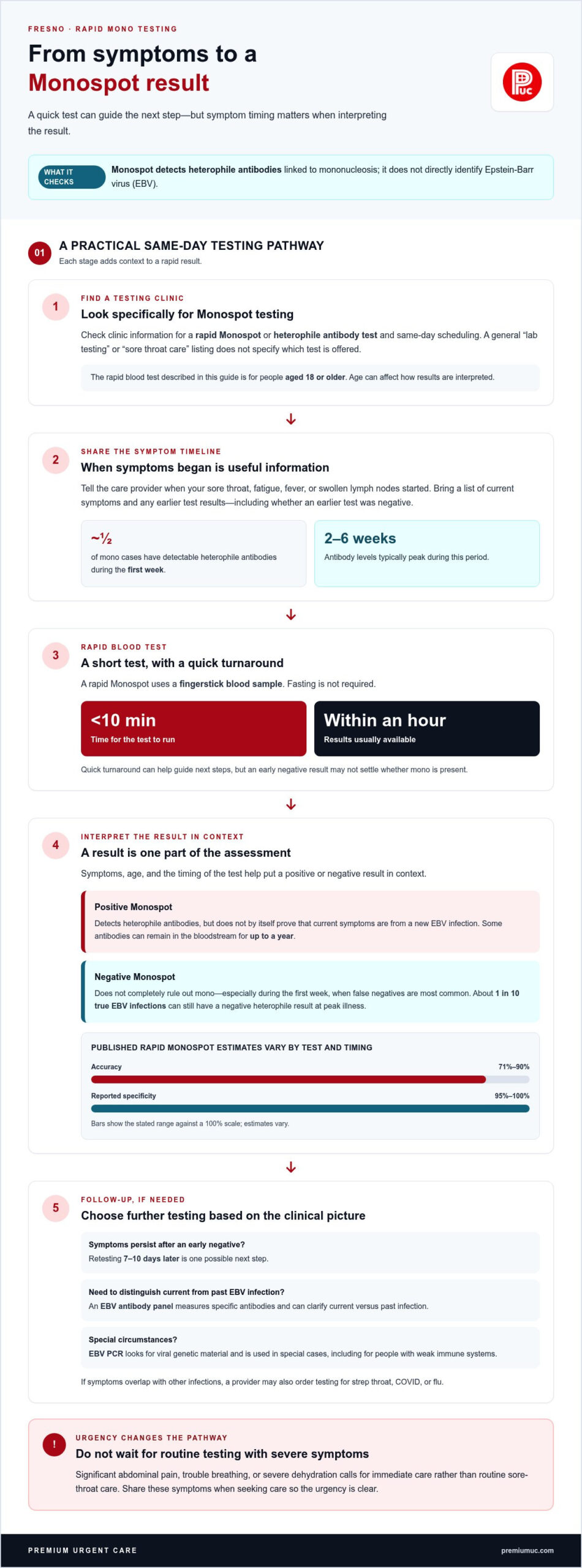
Timing matters. Heterophile antibodies appear in only about half of mono cases during the first week of illness and typically peak between two and six weeks. A rapid Monospot test may be less likely to detect infection during the first several days. Published accuracy estimates vary by test and timing: rapid Monospot accuracy can range from 71% to 90%, while reported specificity is 95% to 100%.
A positive result is not a complete assessment. An EBV antibody panel measures specific antibodies and can distinguish current from past infection more clearly than a Monospot. A clinician may order it when symptoms and the rapid result need further interpretation.
A CBC, or complete blood count, answers a different question. It measures blood cells, including monocytes; a typical monocyte level is roughly 2% to 8% of white blood cells, though laboratory ranges vary. That count alone does not confirm mononucleosis. Monospot testing looks for heterophile antibodies instead.
Insurance coverage depends on your plan and how diagnostic testing is billed. Review your benefits for outpatient testing, including any referral or authorization requirements. These details can affect what your plan covers, even when a test is clinically appropriate.
Interpreting negative and positive results
A Monospot result is one part of assessing possible mononucleosis, not a standalone explanation for every symptom. Interpret it alongside the illness timeline and symptoms such as a sore throat or swollen glands.
Understanding Test Outcomes
A positive result detects heterophile antibodies, but an EBV antibody test can help distinguish current infection from past exposure. A negative Monospot doesn’t completely rule out mono, especially during the first week of symptoms, when false negatives are most common. About one in ten true EBV infections can still produce a negative heterophile result at peak illness.
If symptoms persist after an early negative test, retesting seven to ten days later is one possible next step. For example, someone tested shortly after a sore throat begins should consider the timing when reviewing the result. Young adults with swollen glands and continuing symptoms need their test interpreted in that context.
False-Positive Results
False-positive results can occur because some antibodies remain in the bloodstream for up to a year. A positive Monospot therefore doesn’t always establish that current symptoms come from a new EBV infection. Symptoms, illness timeline, and any additional EBV antibody results help distinguish current illness from past exposure.
At an appointment, share when your symptoms began and whether an earlier test was negative. That timeline gives the clinician useful context for interpreting the result and deciding whether additional testing could clarify the diagnosis.
After a positive result, care focuses on managing symptoms. Antibiotics don’t treat mono because it’s viral. People with mono should avoid penicillin antibiotics such as ampicillin or amoxicillin unless they also have a bacterial infection, since they may develop a rash. Children and teens shouldn’t take aspirin for mono symptoms because of the risk of Reye syndrome.
Mono can enlarge the spleen, making strenuous activity a concern. Significant abdominal pain, trouble breathing, or severe dehydration calls for immediate care rather than routine sore-throat care. For a sore throat that needs assessment, sore throat care can address possible strep and other respiratory symptoms.
Same-day mono test appointments in Fresno
A same-day visit can help assess symptoms such as fatigue, a sore throat, or swollen lymph nodes. To find a rapid mono test in Fresno, look for clinics that describe Monospot testing and same-day scheduling. The test checks for heterophile antibodies linked to mononucleosis, usually caused by Epstein-Barr virus.
Use a short, practical process:
- Search clinic appointment information for mono or Monospot testing and same-day visits.
- When arranging the appointment, describe your symptoms and when they began. Test timing affects how a result is interpreted.
- Bring a list of current symptoms and any prior test results. Include when fatigue or swollen lymph nodes first appeared.
A rapid Monospot test uses a fingerstick blood sample and takes less than 10 minutes to run. Results usually return within an hour. That quick turnaround can help guide the next step, but an early negative result may not settle the question of infection.
Preparation is simple: fasting isn’t required before a mono blood test. Tell the care provider if your symptoms began recently, since heterophile antibodies may be harder to detect early in the illness. If your symptoms overlap with other infections, a provider may also order testing for strep throat, COVID, or flu.
Before leaving the clinic, make sure you understand what the result means and what follow-up is appropriate. An EBV antibody panel measures specific antibodies and can clarify current versus past infection. EBV PCR looks for viral genetic material and is used in special cases, including for people with weak immune systems.
Same-day testing is a scheduling goal, not a reason to ignore severe symptoms. Significant abdominal pain, trouble breathing, or severe dehydration warrants immediate care rather than routine sore-throat care. Share those symptoms when seeking care so the urgency is clear.
Which Fresno urgent care clinics offer rapid mononucleosis tests?
In Fresno, look for urgent care listings that specifically name a rapid Monospot or heterophile antibody test. A general “lab testing” or “sore throat care” description doesn’t identify which mono test is performed. The test name matters: Monospot testing screens for heterophile antibodies, while an EBV antibody panel measures virus-specific antibodies.
Use these steps to narrow your search:
- Look for “Monospot” or “rapid mono test” in the clinic’s listed services.
- Check whether the appointment information describes walk-in visits or scheduled appointments.
- Review the result process. A rapid Monospot usually returns results within an hour, while other blood test results can take longer.
Then consider the clinical fit. A clinic visit can assess symptoms such as sore throat, fatigue, and swollen lymph nodes, while test timing affects how results are interpreted. A negative Monospot early in an illness doesn’t completely rule out mono. When further testing is appropriate, an EBV antibody panel can help distinguish current infection from past exposure.
Fresno clinics may describe testing differently, so search by the test name rather than relying only on “mono testing.” For example, a listing that says “blood work” alone doesn’t tell you whether it includes a rapid Monospot. Knowing the distinction helps you understand what the visit is intended to assess.
For symptoms that overlap with other illnesses, an urgent care consultation can help assess the concern and appropriate next steps. Severe abdominal pain, trouble breathing, or severe dehydration needs immediate care rather than routine sore-throat care.
For an evaluation of acute symptoms, explore urgent care consultations as a next step.
Premium Urgent Care: Colds, cough, and upper respiratory infections
Premium Urgent Care evaluates colds, coughs, and upper respiratory infections when symptoms such as a sore throat need attention. An urgent care consultation can help assess your symptoms and identify appropriate next steps, including when another condition may resemble a respiratory infection. Care is also available for ear and sinus concerns.
If you have severe abdominal pain, trouble breathing, or severe dehydration, seek immediate care rather than routine sore-throat care. For respiratory symptoms that need assessment, contact Premium Urgent Care to learn more.
Choose a clear next step for your symptoms
If you’re considering a rapid mono test in Fresno, keep track of when your symptoms began and how they’re changing. Sharing that timeline and any prior test results can help make your clinical evaluation more useful. Testing is one part of understanding what may be causing your symptoms; the next step should address the concern you’re experiencing, whether that’s a persistent sore throat or another acute illness.
Premium Urgent Care provides care for colds, cough, and upper respiratory infections, along with Ear and Sinus Infection Care and urinary tract infections. For an evaluation of an acute health concern, you can contact Premium Urgent Care. A clear account of your symptoms gives the care team a practical starting point, so you can move forward with informed guidance.
Frequently Asked Questions
What is mono?
Mono, or infectious mononucleosis, is usually caused by the Epstein-Barr virus (EBV). It can bring fatigue, fever, sore throat, and swollen lymph nodes, though symptoms vary. EBV spreads mainly through saliva, so shared drinks or close contact can expose others. If you’re in Fresno and symptoms are affecting daily activities, a clinical evaluation can help identify what may be causing them.
Can I use insurance to pay for this test?
Your health plan may cover diagnostic testing, but coverage depends on your benefits and how the test is billed. Before an appointment, review your plan’s outpatient diagnostic-testing benefits, deductible, copayment, and network rules. You can also check your member portal or insurance card for the plan’s coverage contact. These details help you understand possible patient responsibility without assuming every plan handles testing the same way.
What do the results mean?
A positive Monospot result means heterophile antibodies were detected, which can support a mono diagnosis alongside your symptoms and history. It doesn’t identify EBV directly. A negative result means the test didn’t detect those antibodies; it doesn’t always exclude infection. If symptoms continue, share the result and symptom timeline at follow-up. An EBV antibody panel can provide more information about past or current infection.
Can Urgent Care Test for Mono?
Urgent care clinicians can evaluate symptoms that may resemble mono, such as a sore throat, fever, or swollen glands, and discuss appropriate testing. In Fresno, look for “Monospot” or “heterophile antibody test” in clinic information rather than relying only on a general reference to lab testing. Bring details about when your symptoms began and any prior results to your visit.
Do I need to fast before this test?
No. Fasting isn’t required before a mono blood test, so you can eat and drink as usual beforehand. No special preparation is needed for a fingertip or vein blood test. If you’re also scheduled for other laboratory tests, their preparation instructions may differ. Follow those instructions separately, and tell the care team which tests you expect during the visit.
Does insurance cover mono testing?
Coverage varies by insurance plan, so a test may be covered differently depending on your benefits and billing. Check your plan’s diagnostic-testing terms, including network status and any deductible or copayment that applies. If more than one test is ordered, such as a Monospot and an EBV antibody panel, each may be handled under different plan rules. Review the explanation of benefits after the claim is processed.