
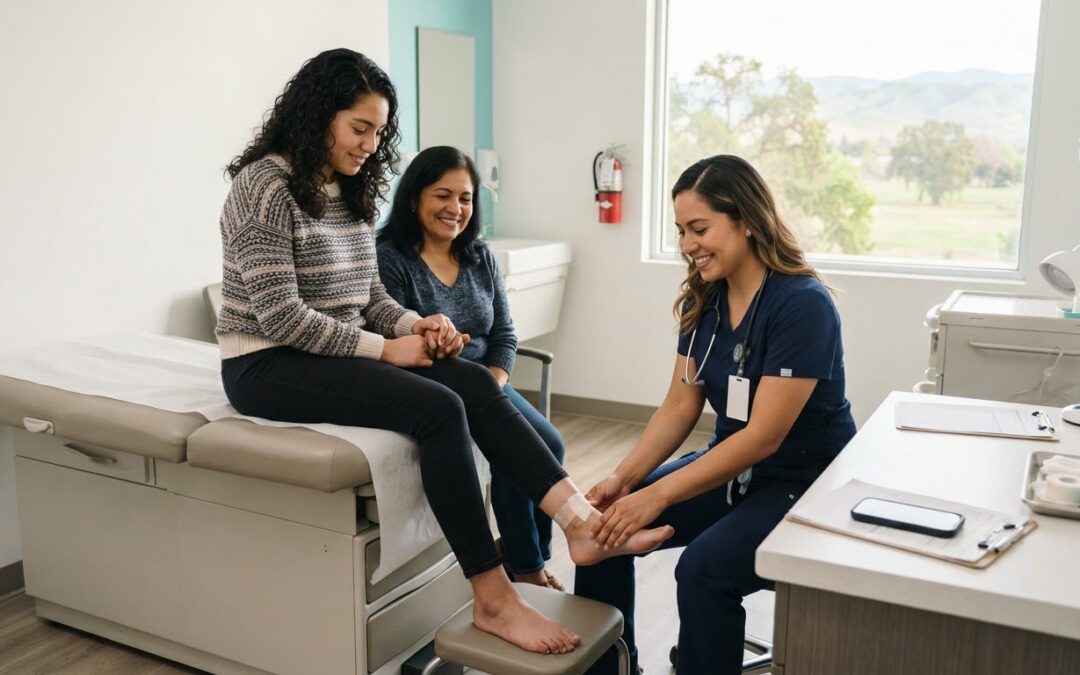
A minor injury clinic in Clovis can assess sprains and strains, while serious symptoms may call for urgent medical attention. Hours and scheduling depend on the clinic, so plan around its posted opening times and whether it uses appointments, walk-ins, or both. For a child, pain, visible swelling or bruising, inability to bear weight, or signs of head trauma are reasons to seek medical attention.
An injury can be unsettling, especially when it’s unclear whether it needs prompt care. This guide explains what to expect from clinic hours and scheduling, how sprains and strains are generally assessed and treated, and which warning signs shouldn’t be ignored. You’ll also learn how to prepare for a visit and when an injury may need a higher level of care, so you can make a clear next-step decision.
Key Takeaways
- Before heading to a clinic, understand how posted hours, appointment options, and walk-in policies can shape your visit.
- Learn what clinicians assess with sprains and strains and which details about the injury can help guide care.
- Recognize signs that an injury needs urgent medical attention, including concerning symptoms in a child.
- See why wait times can vary and what practical steps may help you plan your visit.
Clinic hours and scheduling
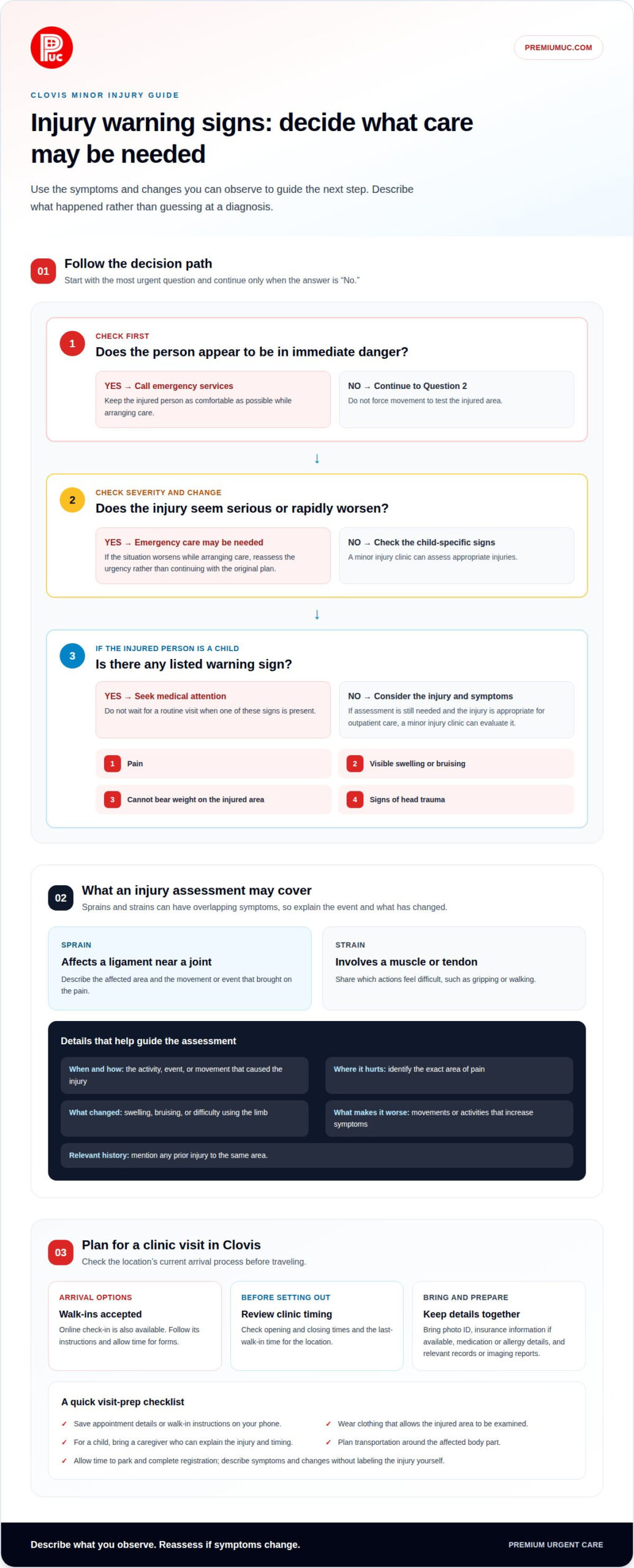
Before traveling, check Premium Urgent Care’s hours for the location you plan to visit. The Clovis clinic accepts walk-ins, and online check-in is also available. Review the location’s opening and closing times and last-walk-in time before setting out. If you plan to use online check-in, follow the instructions provided and allow time to complete any forms.
Use the clinic’s official scheduling channel to arrange a visit or review its current arrival process. Keep the appointment details accessible, including the selected time and any instructions for completing forms. If the injury changes before your visit, such as a new cut or increased difficulty moving the area, reassess whether an outpatient clinic remains appropriate. A worsening injury or concerning symptoms may require more urgent attention.
What should you bring to a minor injury clinic visit in Clovis? Bring photo identification, insurance information if available, and a list of medications or allergies. Be ready to describe when and how the injury happened, which area hurts, and what movements make it worse.
A little preparation can make check-in and the clinical discussion more focused:
- Save the appointment time or walk-in instructions on your phone.
- Bring relevant records or imaging reports you already have.
- Wear clothing that allows the injured area to be examined, such as loose pants for a knee injury.
- For a child, bring a caregiver who can explain the injury and its timing.
Plan transportation around the affected body part. An ankle injury, for example, may make walking from the parking area difficult, while a hand injury can complicate driving. Allow time to park and complete registration. A concise timeline, such as “I twisted my ankle while stepping off a curb,” helps explain what happened without guessing at a diagnosis. Keep your visit details together so you can focus on describing symptoms and following the clinician’s instructions.
Sprains and strains
A twist, awkward landing, or sudden pull can leave a joint or muscle painful. A sprain affects a ligament near a joint, while a strain involves a muscle or tendon. Symptoms can overlap, so the injury mechanism and affected area help guide an assessment. For example, describe whether ankle pain began after a misstep or followed repeated activity. That context helps distinguish what needs examination from what you can observe at home.
At the clinic, expect questions about when and how the injury happened and which movements worsen symptoms. The clinician may examine the area and assess its movement and function. Share whether swelling, bruising, or difficulty using the limb has developed, and mention any prior injury to the same area. This history helps determine whether the problem is consistent with a sprain or strain or needs further assessment.
Before your visit, write down a short timeline. Include the activity, the movement that caused pain, and changes since the injury. Avoid labeling the injury yourself. Instead, describe what you feel, such as pain when turning a wrist or difficulty putting weight on an ankle. Clear examples make the clinical conversation more useful.
Care depends on the injury’s location and symptoms. A clinician can explain appropriate next steps after examining the area. Follow the instructions provided, and note any changes that affect movement or daily activities. These details help focus the assessment:
- Identify the exact area of pain, such as the outside of an ankle.
- Describe the movement or activity that triggered symptoms.
- Note visible changes, including swelling or bruising.
- Explain which actions feel difficult, such as gripping or walking.
For sprains, strains, and other minor injuries, an injury evaluation can help clarify the next step. Seek medical attention for a child with pain, visible swelling or bruising, inability to bear weight, or signs of head trauma.
When to seek urgent medical attention
Some injuries need prompt evaluation. For a child, seek medical attention if the child is in pain, has visible swelling or bruising, cannot bear weight on the injured area, or shows signs of head trauma. These warning signs matter whether the injury followed a fall, sports activity, or another accident. Don’t wait for a routine visit when one is present.
For any injured person, consider how severe the injury appears and whether symptoms are changing. A minor injury clinic can assess appropriate injuries, but a serious or rapidly worsening problem may need emergency care. If the person appears to be in immediate danger, call emergency services. Keep the injured person as comfortable as possible while arranging care, and avoid forcing movement to test the affected area.
Use a clear sequence to describe what happened and help guide the next care decision:
- Explain the activity or event that caused the injury.
- Identify the injured area and describe what has changed since the incident.
- For a child, note pain, visible swelling or bruising, trouble bearing weight, or possible head trauma.
- Share whether the person can use the area for ordinary movement, such as walking or gripping.
These details help the care team understand the injury without relying on a guessed diagnosis. For example, say that a child fell, now has bruising, and avoids standing on one leg. Describe observed symptoms directly. Don’t minimize a child’s pain or ask them to keep testing an injured area.
If the injury does not appear immediately life-threatening but still needs assessment, seek prompt medical attention and explain the symptoms clearly. If the situation worsens while you arrange care, reassess the urgency instead of continuing with the original plan. Keep relevant details together, including when and how the injury happened, so you can share them during evaluation. For children, any listed warning sign is a clear reason to seek medical attention.
Which Clovis minor injury clinics have the shortest wait times?
No single clinic in Clovis has the shortest wait throughout every day. The time you spend waiting depends on appointment availability, walk-in arrivals, registration, and the care needed for each injury. A scheduled visit can make arrival more predictable, while a walk-in visit may involve waiting behind patients who arrived earlier. The order of care can also change when someone needs more urgent attention.
To plan your visit, check the current hours and last-walk-in time for the Premium Urgent Care location you intend to visit. Online check-in is available at the Clovis location. Allow time for registration and assessment, since the time needed depends on the injury and the care required.
Use these practical steps to reduce avoidable delays:
- Choose an appointment time if the clinic offers one.
- Review check-in instructions before leaving home.
- Complete available forms in advance and bring identification.
- Describe the injury clearly at arrival, including when it happened and what movement is difficult.
Also consider the type of assessment your injury may need. A straightforward evaluation and an injury requiring additional examination can take different amounts of clinical time. Accurate details at check-in help the care team understand your reason for visiting. If a child has pain, visible swelling or bruising, cannot bear weight, or shows signs of head trauma, seek medical attention rather than making the decision based on wait time.
For a fair comparison, weigh appointment access, travel time, and the clinic’s arrival process together. The nearest location may not have the earliest available appointment, and a shorter estimate may change before you arrive. Choose the option that fits your injury and timing, then follow its check-in instructions. Review visit options to plan your next step for an injury assessment.
Premium Urgent Care: Colds, cough, and upper respiratory infections
Premium Urgent Care treats colds, coughs, and upper respiratory infections, as well as ear and sinus infections and urinary tract symptoms. The clinic also assesses sprains, strains, and minor injuries. For respiratory symptoms such as a persistent cough or sore throat, an urgent care consultation can help determine appropriate care. Describe when symptoms began, how they’ve changed, and any other concerns you’re experiencing.
For an injury or another acute concern, choose care based on the symptoms and their urgency. Seek urgent medical attention for serious warning signs rather than relying on a routine clinic visit. For other concerns within its care, visit Premium Urgent Care online to learn more.
Choose a clear next step for your care
For an injury, focus on your symptoms and how they affect movement. If you’re planning a visit to a minor injury clinic in Clovis, have a concise description of what happened ready. That helps you explain your concern clearly and make the most of the assessment.
Premium Urgent Care also treats concerns beyond minor injuries, including colds, coughs, and upper respiratory infections, ear and sinus infections, and urinary tract symptoms. If one of these concerns is affecting your health, visit for an urgent care consultation. For severe or rapidly worsening symptoms, seek emergency care rather than relying on a routine visit.
Your next step can be straightforward: identify the concern, choose the appropriate level of care, and share the details that matter. Contact Premium Urgent Care to discuss your care needs. A clear plan can help you move forward with confidence.
Frequently Asked Questions
What minor injury clinics are in Clovis, California?
A minor injury clinic in Clovis may assess some minor injuries. A minor injury clinic in Clovis can assess concerns such as sprains, strains, cuts, and minor burns. For example, a cut that may need stitches calls for an in-person assessment. When planning your visit, make sure you’re going to the Clovis location.
What are the hours and walk-in policies for Clovis minor injury clinics?
For a visit to a minor injury clinic in Clovis, Premium Urgent Care’s hours are: Clovis (Herndon & Fowler) – Mon-Fri 10:00 am – 6:30 pm (last walk-in 6:00 pm); Sat 9:00 am – 2:30 pm (last walk-in 2:00 pm); Sun 9:00 am – 2:30 pm (last walk-in 2:30 pm). Plan to arrive by the listed last walk-in time.
Do Clovis clinics accept appointments or offer online check-in?
Premium Urgent Care offers online check-in at its Clovis location. Use “Online Check-In – Click Here” to begin, or “Complete Forms at Home – CLICK” to prepare paperwork before arriving. These options can help you get ready for your visit and gather the requested information in advance.
When should a minor injury be treated at an emergency room instead of urgent care?
Choose an emergency room for severe or potentially life-threatening symptoms, rather than treating the situation as a routine urgent-care visit. Examples include suspected heart attack, uncontrolled bleeding, a severe burn, or inability to move or speak. Call 911 immediately. These symptoms require emergency attention. For a less severe injury, urgent care can assess the concern and discuss appropriate care.