

A workers’ compensation evaluation can assess your current condition, how the injury happened, treatment you’ve received, and how symptoms affect your ability to work. A medical evaluation for workers comp is generally an assessment, not an appointment intended to provide treatment. For workers in Fresno, Clovis, and Selma, the rules that apply depend on the state governing the claim.
It’s understandable to feel uncertain about what to say or how the appointment could affect your claim. Clear, accurate information about your symptoms and limitations helps the examiner understand your condition without exaggeration or guesswork.
This article explains what may happen during an evaluation, how to describe pain and work-related limitations, and what conduct to avoid. It also discusses how state rules can affect evaluations and provider choice, so you can distinguish an independent examination from treatment for your injury.
Key Takeaways
- Describe symptoms and work limitations accurately, and keep your account consistent with your treatment history.
- An independent evaluation may include questions about your injury and care, plus a physical examination or tests; it isn’t intended to provide treatment.
- Provider choice and evaluation requirements depend on state rules, so understand whether an appointment is for ongoing care or an independent assessment.
- Prepare identification, medication details, relevant medical records, and the names of providers involved in your injury care.
Describing symptoms, pain, and limitations honestly
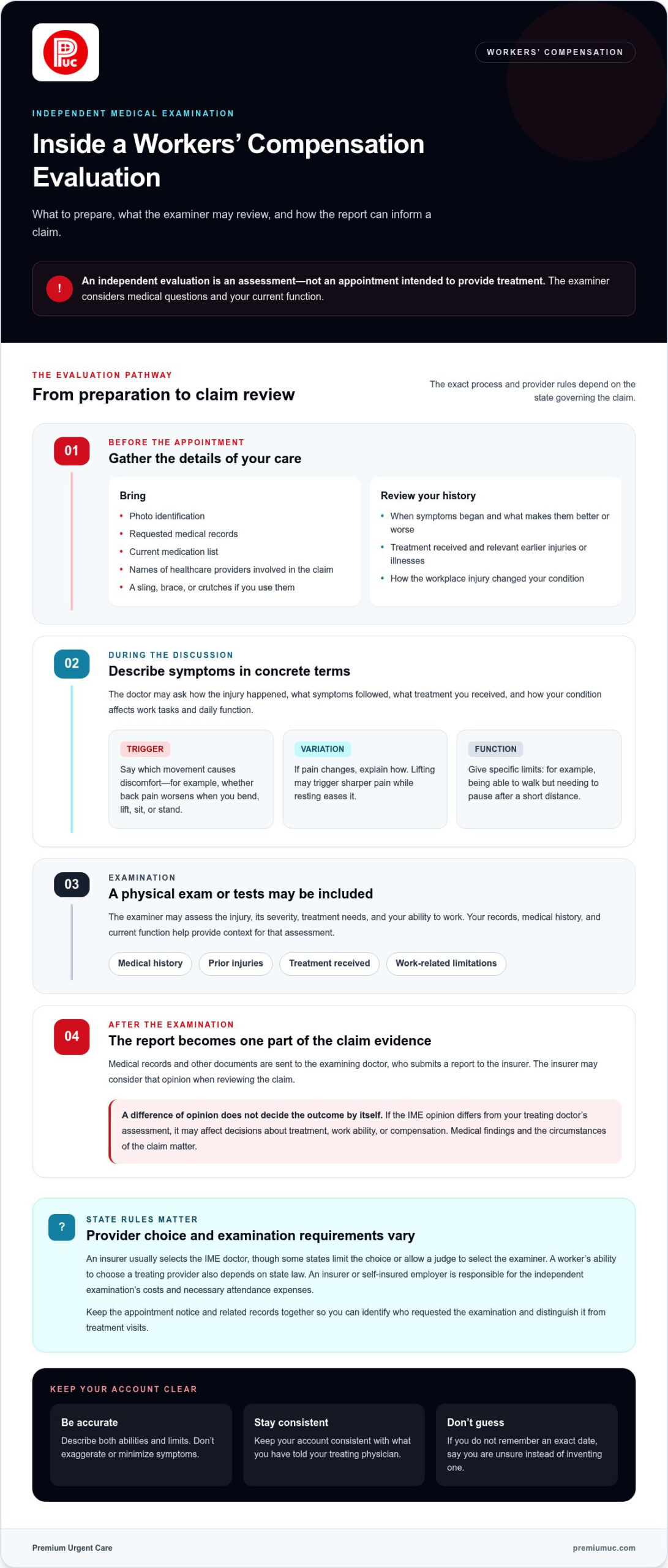
During an independent medical exam, describe what you experience plainly and consistently. The examining doctor may assess the injury, its severity, treatment needs, and your ability to work. For example, explain whether back pain worsens when you bend, lift, sit, or stand, rather than simply saying, “It hurts.” Keep your account consistent with what you’ve told your treating physician.
If the IME doctor disagrees with your treating doctor, the differing opinions may create a dispute about diagnosis, treatment, work capacity, or disability. The insurance company may consider the IME report when reviewing the claim. A disagreement alone does not determine which opinion will prevail; the medical findings and claim circumstances matter.
Before the appointment, review your injury history and treatment so you can recall key details without guessing. Note when symptoms began, what makes them better or worse, and how they affect specific tasks. If pain varies, say so. For instance, explain that lifting triggers sharper pain while resting eases it, rather than presenting every moment as identical.
Be accurate about both your abilities and your limits. Don’t exaggerate pain, but don’t minimize symptoms to appear composed or cooperative. If you can walk but need to pause after a short distance, describe the pause and what prompts it. Avoid absolute statements unless they’re accurate. “I can’t do anything” may obscure which activities actually cause difficulty.
Small mistakes in dates, treatment, or prior injuries can make your account seem inconsistent. If you don’t remember an exact date, say you’re unsure instead of inventing one. Mention relevant earlier injuries or illnesses affecting the same area, and explain how the workplace injury changed your condition. An attorney can address legal questions; keep medical answers focused on your symptoms, history, and function.
Work-related injury evaluations in Central Pennsylvania
For workers in Fresno, Clovis, and Selma, an independent examination reviews an injured worker’s condition and relevant medical information. Knowing what the doctor may ask and how the report can inform a claim helps you prepare for a medical evaluation for workers comp.
Discussing Prior Injuries
Medical history includes earlier injuries, illnesses, and treatment that may relate to your current workplace condition. Describe what happened, which body area was affected, and whether symptoms remained before the new injury. For example, explain whether a prior shoulder strain resolved or stiffness continued. This context helps the examiner understand how the work incident changed your condition and distinguish earlier symptoms from new ones.
Preparing for the Evaluation
Prepare information and equipment that help the doctor understand your care and current function. Take photo identification, requested medical records, a current medication list, and the names of healthcare providers involved in the claim. Bring a sling, brace, or crutches if you use them. These details connect the examination with your treatment history and explain practical limits, such as needing crutches to walk.
Questions from the Evaluating Doctor
The doctor may ask how the injury happened, what symptoms followed, and what treatment you’ve received. Expect questions about your medical history, prior injuries, and how the condition affects work tasks. A physical examination or tests may also be part of the appointment. Answer with concrete examples, such as which movement causes discomfort or which duties you’ve had to change. This helps the examiner assess your condition during a medical evaluation for workers comp.
Effects on Benefits and Claim Decisions
An evaluation can inform a workers’ compensation claim by giving the insurance company a medical opinion about the injury. Before an independent examination, medical records and other documents are sent to the examining doctor, who submits a report to the insurer. If that opinion differs from your treating doctor’s assessment, it may affect decisions about treatment, work ability, or compensation. The report is one part of the claim’s medical evidence.
State rules for medical evaluations and provider choice
Workers’ compensation rules vary by state, including who selects an examiner and how an independent medical examination may affect a claim. For workers in Fresno, Clovis, and Selma, follow the rules that apply to the state governing the claim and distinguish an independent evaluation from treatment.
An insurer usually selects the IME doctor, though some states limit the choice or allow a judge to select the examiner. A worker’s ability to choose a treating provider also depends on state law. An independent medical examination may be requested when the insurer disputes a treating doctor’s decisions, or a judge may order one to address a contested issue. The examiner assesses medical questions rather than providing ongoing treatment.
The insurer or self-insured employer is responsible for the independent examination’s costs and necessary attendance expenses. Keep the appointment notice and related records together. They help identify who requested the examination and distinguish it from treatment visits.
To challenge an evaluation, identify specific errors or omissions in the report and provide supporting medical documentation to the doctor and insurer. For example, flag an incorrect injury date and include records that establish the correct timeline. An attorney may question an IME doctor at a deposition or use other legal methods to address an unfavorable opinion. A medical rating or work-ability assessment may inform a disputed claim decision.
Rules can also cover examination procedures, including who may attend. Before relying on a particular procedure, identify the state governing the claim in its paperwork. That jurisdiction’s workers’ compensation rules determine how provider selection and independent examinations are handled.
State law determines treatment-provider choice. In Iowa, employers or insurers generally choose providers; after a permanent impairment rating, employees may request an independent medical evaluation from a doctor they choose.
What should I bring to a workers’ comp medical evaluation?
Arrive with the items requested for your appointment and information that helps identify your injury care. A complete set of documents can help the examining doctor connect your medical history, current treatment, and reported limitations.
- Photo identification: Bring a current ID so staff can confirm your identity and match documents to your appointment.
- Requested medical records: Gather records related to the workplace injury, including relevant test results or treatment notes you’ve been asked to provide.
- Medication list: Write down each current medication and its purpose. Include a medication used for the injury, such as one prescribed for pain.
- Provider names: List the healthcare providers you’ve seen for the claim, including the clinician who treated your injury.
- Necessary equipment: Bring a treatment device you use, such as a sling or crutches, so the doctor can see what supports your movement.
Before leaving, compare the documents with the appointment instructions. Put your ID, records, medication list, and provider names together in one folder. If the insurer or appointment notice specifically requests a document, include it. Keep your own copy of any records you bring, especially notes that describe treatment or changes in symptoms.
Review your medical history before the appointment, including earlier injuries or illnesses that affected the same body area. You don’t need to memorize every date. Instead, organize the main events in order: prior condition, workplace injury, and treatment since then. For example, note whether an earlier knee problem had resolved before a new work injury or whether symptoms continued.
Bring equipment you actually use, rather than borrowing a brace or cane for the appointment. If you use crutches to get around, bring them and explain when you rely on them. This gives the examiner a practical view of your mobility. A prepared folder and an accurate history help clarify which records, medications, or devices relate to the claim.
Premium Urgent Care: Colds, cough, and upper respiratory infections
Premium Urgent Care treats colds, coughs, and upper respiratory infections, as well as ear and sinus infections and urinary tract infections, and provides urgent care consultations. These concerns are separate from an independent workers’ compensation examination, which assesses a work injury rather than unrelated symptoms.
If you have a cold, sinus or ear symptoms, or urinary tract concerns, an urgent care consultation can address that health issue. Describe your symptoms and relevant medical history so the clinician understands what you’re experiencing.
For care with these concerns, contact Premium Urgent Care or visit premiumuc.com.
Take the Next Step With Clear Priorities
A medical evaluation for workers comp addresses the work injury and related medical questions. Keep your claim-related care organized and treat a separate illness as a distinct health concern. This helps direct each issue to the appropriate type of care without confusing an injury assessment with treatment for another condition.
Premium Urgent Care treats colds, coughs, and upper respiratory infections, ear and sinus infections, and urinary tract infections. If you need care for one of these concerns, contact the clinic to discuss your next step.
Contact Premium Urgent Care for care with these acute concerns. Staying attentive to both your work injury and other health needs can help you move forward with a clearer plan.
Frequently Asked Questions
What does a workers’ compensation medical evaluation involve?
A workers’ compensation medical evaluation examines the injury and the medical issue under review, such as diagnosis, treatment needs, or ability to work. The doctor can ask how the incident happened and what care you’ve received, then perform a physical examination or tests. If the referral concerns return-to-work ability, explain your actual duties, such as lifting, standing, or repeated hand use.
Who chooses the doctor for a workers’ comp medical evaluation?
The selection process depends on the state’s workers’ compensation rules. An insurer usually chooses the independent medical examination doctor, while some states limit the choice to randomly selected specialists or allow a judge to select the examiner. The doctor treating your injury and the doctor performing an independent examination may therefore be different people, with distinct roles in your care and claim.
Can I refuse or reschedule a workers’ comp medical evaluation?
Skipping a required examination can affect benefits, and the consequences differ by state. In Maryland, missing an IME required under the employer’s policy may lead to claim denial. In Illinois, refusing or delaying an examination risks suspended compensation until it’s completed. If a conflict arises, promptly communicate with the party that scheduled the appointment and keep the notice and any rescheduling messages.
What are state-specific rules for workers’ comp medical evaluations?
State rules can govern who selects the examiner, how notice is provided, and whether an observer may attend. Wisconsin requires advance written notice identifying the proposed date, time, place, examiner, and specialty; Wisconsin law also allows one worker-provided observer. For a Pennsylvania claim, use the state identified in its paperwork rather than assuming an Iowa or Wisconsin procedure applies.