
A cut that keeps bleeding after 10-15 minutes of direct pressure should be assessed for repair. For laceration repair in Selma, deep or gaping wounds, significant bleeding, or visible fat, muscle, tendon, or bone are also reasons to seek prompt medical attention. A wound’s appearance and location can matter as much as its length.
It’s understandable to wonder whether a cut needs stitches or can be closed with glue or adhesive strips. The right method depends on the wound’s depth, how clean and straight its edges are, and whether movement puts tension on the area.
This guide explains when a cut may need professional care, how closure methods differ, and why timely cleaning and repair can help reduce infection risk and support healing.
Key Takeaways
- Closure options include stitches, staples, adhesive strips, and medical skin glue; wound depth, edge shape, cleanliness, and location help determine which method fits.
- Medical skin glue and adhesive strips are generally suited to selected minor cuts, while wounds under tension or with deeper edges may need stitches.
- Prompt cleaning and assessment can help lower infection risk, especially when a wound remains dirty or shows increasing redness, warmth, swelling, or discharge.
- Consider professional assessment for cuts that are deep, gaping, over a joint, or involve exposed tissue, and for bleeding that continues despite direct pressure.
Wound closure methods
Closure methods bring wound edges together to support healing and protect the injury. The best option depends on the wound’s depth, cleanliness, location, and tension.
Choosing a Wound Closure Method
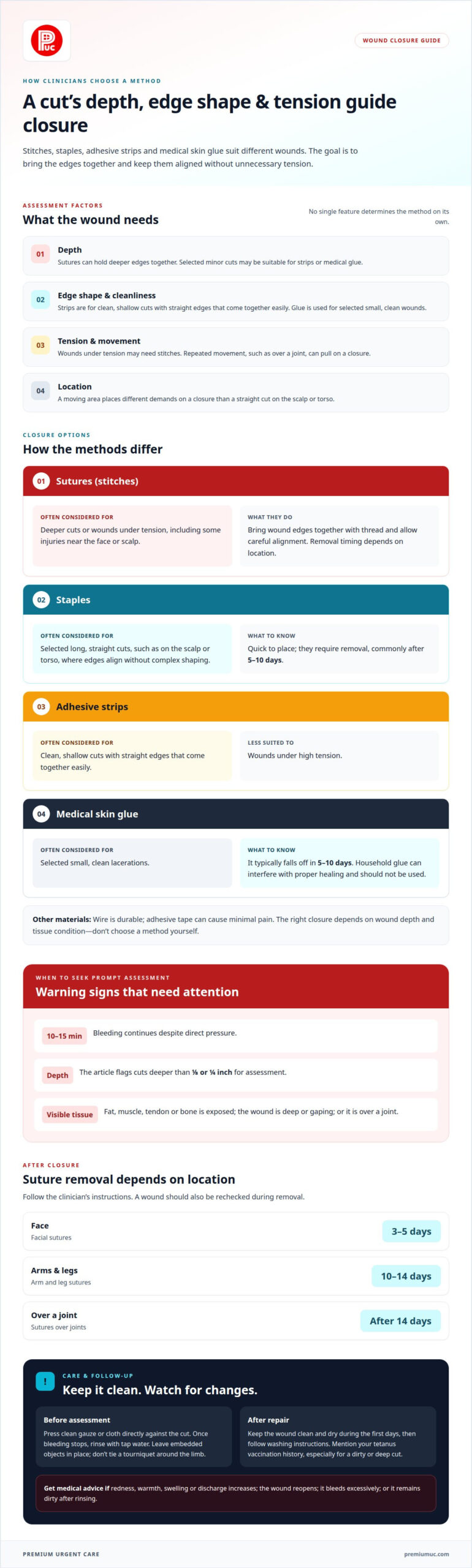
Clinicians may use sutures, staples, adhesive strips, or medical skin glue to close a cut. Sutures can hold deeper edges together, while staples may suit some long, straight wounds. Adhesive strips work for clean, shallow cuts with straight edges that come together easily. Medical glue is used for selected small, clean wounds. The method needs to keep the edges aligned without adding unnecessary tension.
Bleeding and Wound-Depth Thresholds
Bleeding duration and wound depth help show when a cut needs prompt assessment. Seek urgent care if bleeding continues after 10-15 minutes of direct pressure. A cut deeper than ⅛ or ¼ inch also warrants assessment. Exposed fat, muscle, tendon, or bone calls for medical attention. These signs help distinguish a minor surface cut from a wound that may need professional cleaning and closure.
Before treatment, press clean gauze or cloth directly against the wound. Once bleeding stops, rinse it with tap water, but leave any embedded object in place. Don’t tie a tourniquet around the limb. If the wound remains dirty after rinsing, seek medical attention. Insurance coverage for laceration repair in Selma depends on your policy and how the visit is processed.
After repair, keep the wound clean and dry during the first days, then follow the clinician’s washing instructions. Increasing redness, warmth, swelling, or discharge can signal infection. Contact a clinician if the wound reopens or bleeds excessively. Mention your tetanus vaccination history during care, especially if the cut is dirty or deep.
Removal timing depends on the wound’s location: facial sutures are generally removed after 3 to 5 days, arm and leg sutures after 10 to 14 days, and sutures over joints after 14 days. In Selma, arrange removal with the clinician or clinic managing the repair; a wound should also be rechecked during removal.
Sutures, staples, adhesive strips, and skin glue
Wound closure methods differ in how they hold tissue together and where they work best. A clinician considers the cut’s depth, shape, cleanliness, and tension before choosing a method. A moving area, such as a joint, places different demands on a closure than a straight scalp cut.
Sutures, often called stitches, bring wound edges together with thread. They can close deeper cuts and wounds under tension, including some injuries near the face or scalp. Sutures allow careful alignment of tissue edges and generally need removal after healing, with timing based on the wound’s location and the clinician’s instructions.
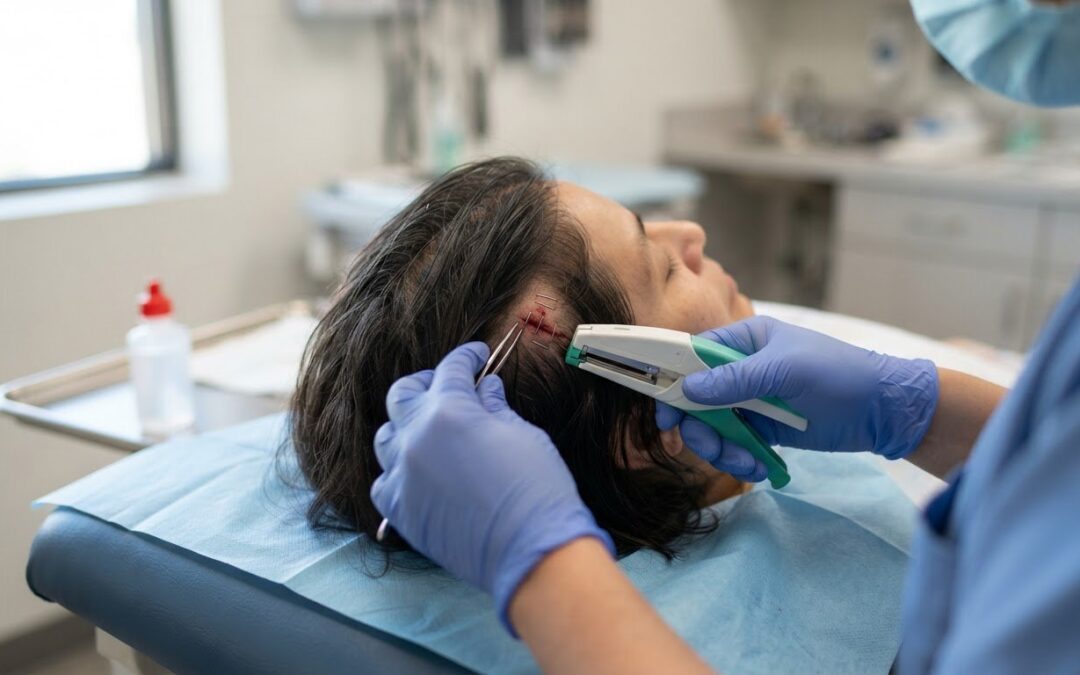
Staples can close long, straight cuts in areas such as the scalp or torso. They’re quick to place and suit selected wounds where the edges align without complex shaping. Staples require removal, commonly after 5-10 days. A wound over a joint may need a different approach because repeated movement can pull on the closure.
Adhesive strips, including Steri-Strips, are used for clean, shallow cuts with straight edges that come together easily. They’re less suited to wounds under high tension. Medical skin glue, such as Dermabond, can hold the edges of selected small, clean lacerations together. It typically falls off in 5-10 days. Don’t use household glue: adhesive inside a wound can interfere with proper healing.
Wire is another closure material; it’s durable, while adhesive tape can cause minimal pain. Each method has trade-offs. For example, a shallow cut with edges that stay together may suit strips, while a deeper wound may need stitches. After direct pressure controls bleeding, avoid choosing a closure method yourself; wound depth and tissue condition affect the decision.
For a cut that may need professional closure, laceration assessment and repair can help determine an appropriate method. Follow the care and removal instructions given for the specific closure, and seek attention if the wound reopens.
Timely treatment and infection prevention
Prompt wound care allows cleaning, assessment, and closure before healing is disrupted. It can also help identify infection risks and possible tetanus concerns.
Infection and Tetanus Prevention
Infection prevention involves removing dirt and damaged tissue, then keeping the repaired cut clean. A clinician may rinse a wound with saline and remove tissue too damaged to heal. Hydrogen peroxide and iodine can damage tissue and slow healing, so don’t apply them to a repaired wound. Mention your tetanus history; vaccination may be considered if more than five years have passed or you received fewer than three doses.
Keep sutures and the surrounding skin clean and dry during the first days, following the care instructions provided. Watch for redness spreading beyond the cut, warmth, swelling, or discharge. These changes can signal infection, particularly if they increase or persist. A wound that reopens or bleeds excessively needs medical assessment. Scarring can occur after laceration repair, and careful aftercare helps minimize avoidable healing problems. Once a wound is fully closed, those interested in long-term skin rejuvenation and addressing marks often look to aesthetic clinics such as theglowupsociety.co.za for targeted skin treatments.
Where Cuts Are Treated in Selma
Urgent care clinics can assess cuts and provide wound care; emergency rooms treat severe injuries requiring emergency evaluation. The right setting depends on the injury. Cuts with severe bleeding, exposed structures, or other serious damage need emergency attention, while a wound needing cleaning or closure can be assessed at urgent care. No specific Selma clinic or emergency-room names are provided here.
Before care, apply direct pressure with clean gauze or cloth. If an object is embedded, leave it in place; removing it can trigger bleeding. A wound that remains dirty after rinsing needs medical attention. Tell the treating clinician when the injury happened and whether the object involved was dirty. These details help guide cleaning, closure, and tetanus assessment.
After repair, follow the clinician’s instructions for bathing, activity, and medication. Check the wound as directed, and seek medical advice for increasing redness, warmth, swelling, drainage, reopening, or excessive bleeding. If symptoms suggest a serious emergency, seek emergency care rather than delaying assessment.
Laceration severity and treatment needs
Depth, location, bleeding, and exposed tissue help determine how urgently a cut needs assessment. These features also guide closure choices and follow-up for healing.
Laceration Severity and Closure Choices
Severity describes how deeply a cut reaches and how much tissue it affects. It matters because a surface cut may need simple care, while deeper or gaping wounds may need professional cleaning and closure. Cuts longer than 6 mm or wider than 3 mm may need stitches. Exposed fat, muscle, tendon, or bone requires medical attention.
Stitches can hold deeper wounds together, particularly when edges gape or the site is under tension. Staples may suit long, straight cuts in low-tension areas, such as the scalp or torso. Medical skin glue is used for selected small, clean cuts. Wounds over joints need careful assessment because movement can stress the closure and affect healing.
Urgent Care or Emergency Room
Urgent care can assess cuts needing cleaning or closure; emergency departments handle severe injuries requiring emergency evaluation. Choose emergency care for uncontrolled significant bleeding or a serious injury involving exposed structures. A deep or gaping wound, or bleeding that continues after 10-15 minutes of direct pressure, needs prompt medical assessment.
In Selma, seek urgent care for a cut that needs professional assessment or closure. Use an emergency department for a severe injury or bleeding that remains uncontrolled. Arrange an assessment for a cut when urgent care is appropriate.
Location and wound condition shape the treatment plan. A clean, shallow cut with straight edges may be suitable for adhesive closure, while deeper wounds often need sutures. For simple interrupted sutures, the usual window is under 6 to 8 hours for relatively recent, uncontaminated wounds; face and scalp wounds have a longer window of under 12 to 24 hours. Delayed care can increase infection or improper-healing risks.
Follow-up matters, too. Removal timing depends on the wound site and closure used; sutures over joints are generally removed after 14 days. Keep the wound clean, follow care instructions, and seek assessment if it reopens or develops increasing redness, warmth, swelling, or discharge. These steps help identify complications that could disrupt healing.
Premium Urgent Care: Suturing Lacerations
Premium Urgent Care provides laceration suturing for cuts that need professional wound closure. If a cut is deep, gaping, or may need stitches, an assessment can help determine whether suturing is appropriate. The wound’s depth, location, cleanliness, and condition guide that decision.
For severe injuries or bleeding that remains uncontrolled, seek emergency care. For cuts suitable for urgent care assessment, timely attention can support appropriate cleaning, closure, and follow-up. Keep the wound protected while arranging care, and share when the injury occurred and how it happened.
Contact Premium Urgent Care to discuss laceration care.
Choose a Clear Next Step for Your Cut
Make the next care decision based on the cut as it is now, not only how small it seemed at first. For laceration repair in Selma, an assessment can clarify whether the wound needs suturing or another approach. Explain what has changed since the injury and what concerns you most, so the care conversation can focus on your situation.
Premium Urgent Care provides suturing for lacerations. Other acute-care services include treatment for colds, coughs, and upper respiratory infections, ear and sinus infections, and urinary tract infections. For a cut that may need closure, the relevant next step is an evaluation.
Contact Premium Urgent Care to discuss laceration care. A clear plan for assessment and follow-up can make it easier to focus on healing. Take the next step when you’re ready.
Frequently Asked Questions
When Do You Need Laceration Repair?
A cut may need professional repair if its edges stay apart, deeper tissue is visible, or movement pulls the wound open. For example, a cut across a finger crease may need assessment because bending can strain the skin. Laceration repair in Selma can involve cleaning and closing a wound; the clinician considers its depth, position, and condition before selecting a method.
Will I Need Anesthesia?
A clinician may use local anesthesia to numb the area before cleaning and repairing a cut. This can reduce discomfort during suturing, while the wound’s location and repair method guide the approach. Tell the treating clinician about any previous reaction to numbing medicine. They can explain the plan and what sensations to expect during the repair.
How soon after a cut should I seek laceration repair?
Seek assessment promptly if the cut may need closure, rather than waiting for it to worsen. Simple interrupted sutures are generally used for relatively recent, clean wounds less than 6 to 8 hours old; face and scalp wounds have a longer general window of less than 12 to 24 hours. Dirt, wound location, and tissue condition also affect repair decisions.
What are the risks and aftercare steps for stitches?
Possible complications include infection, scarring, tetanus, or a wound reopening. Keep the repair clean and dry during the first days, follow the clinician’s washing and bathing directions, and avoid scratching or strenuous activity. Take medications as recommended. Contact a clinician if the wound develops increasing redness, warmth, swelling, drainage, excessive bleeding, or separates along the stitch line.