
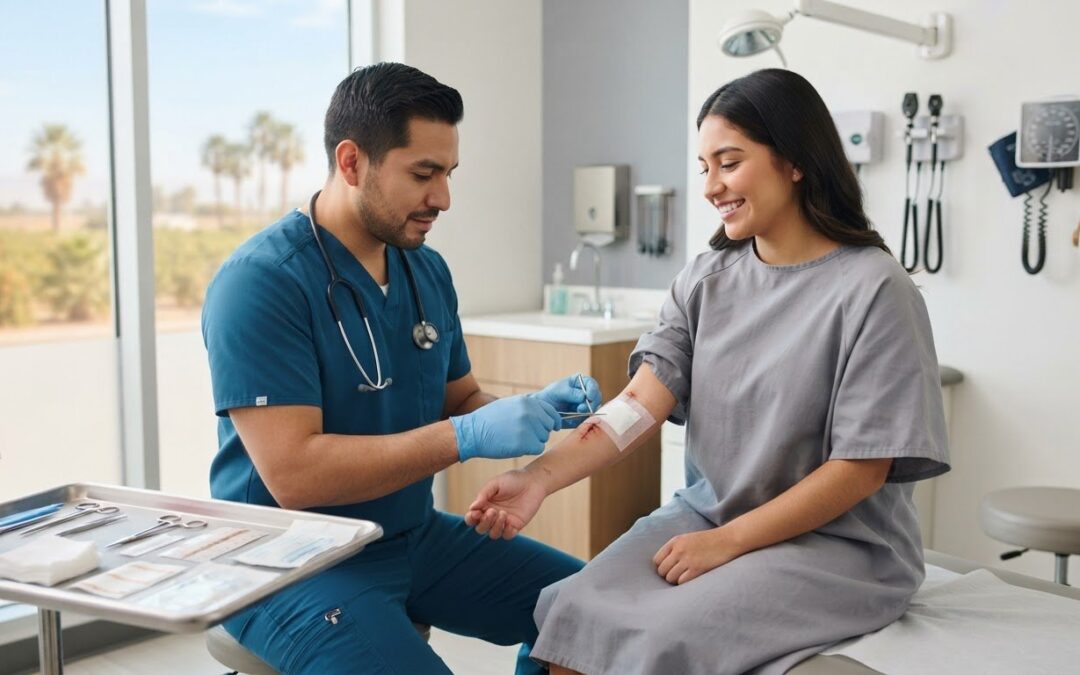
A cut that may need stitches should be assessed promptly. Deep cuts generally close best within a few hours. For laceration repair in Fresno, treatment depends on the wound’s depth, location, cause, and whether its edges need support while healing.
It’s understandable to be unsure whether a cut needs more than cleaning and a bandage. The wound itself guides the next step, since different repair methods suit different cuts. An assessment can help determine whether urgent care is appropriate or whether the injury needs emergency-level care.
This guide explains how cuts and other traumatic wounds are assessed, what to expect during repair, and how stitches, skin glue, and staples differ. It also covers basic wound care, possible signs of infection, and factors that shape treatment. Understanding the process can help you make a more informed decision about care in Fresno.
Key Takeaways
- Understand how a wound’s cause and severity guide assessment and treatment choices.
- Learn why deep cuts should be assessed promptly and what factors affect whether they need closure.
- Recognize changes such as increasing pain, redness, swelling, or drainage that may signal infection.
- Compare stitches, skin glue, and staples, including how follow-up needs can differ.
- Find practical guidance on wound care and managing discomfort while the injury heals.
Traumatic wounds, including lacerations and abrasions
Traumatic wounds occur when an injury breaks or scrapes the skin. A laceration is a cut, while an abrasion is a surface scrape caused by friction. A fall onto pavement, a kitchen-knife cut, and a burn create different wound conditions. The cause helps guide assessment and care. Keeping a wound clean and covered helps protect it from infection and further injury.
Assessment begins with the wound’s cause and severity. A clinician considers how the injury happened, the affected area, and the visible damage. A narrow cut and a broad scrape, for example, may need different care even if both are painful. The wound’s depth, edges, and surrounding skin also help shape the treatment plan. This evaluation helps match care to the injury instead of treating every wound alike.
Care for burns, cuts, and wounds with possible infection depends on the examination. A treatment plan may include a dressing, instructions for changing it, and prescribed medications. Follow those directions, since care can vary by injury. A burn and a scrape, for instance, may need different coverings or follow-up. The wound’s cause and severity guide decisions about care and healing.
Debridement is the removal of damaged or nonviable tissue from a wound. It may be considered when tissue interferes with assessment or healing. The appropriate approach depends on the wound’s condition and the tissue involved. More complex wounds may need advanced treatment suited to their cause and progress. These decisions require an assessment; debridement is not a routine step for every cut, scrape, burn, or infection.
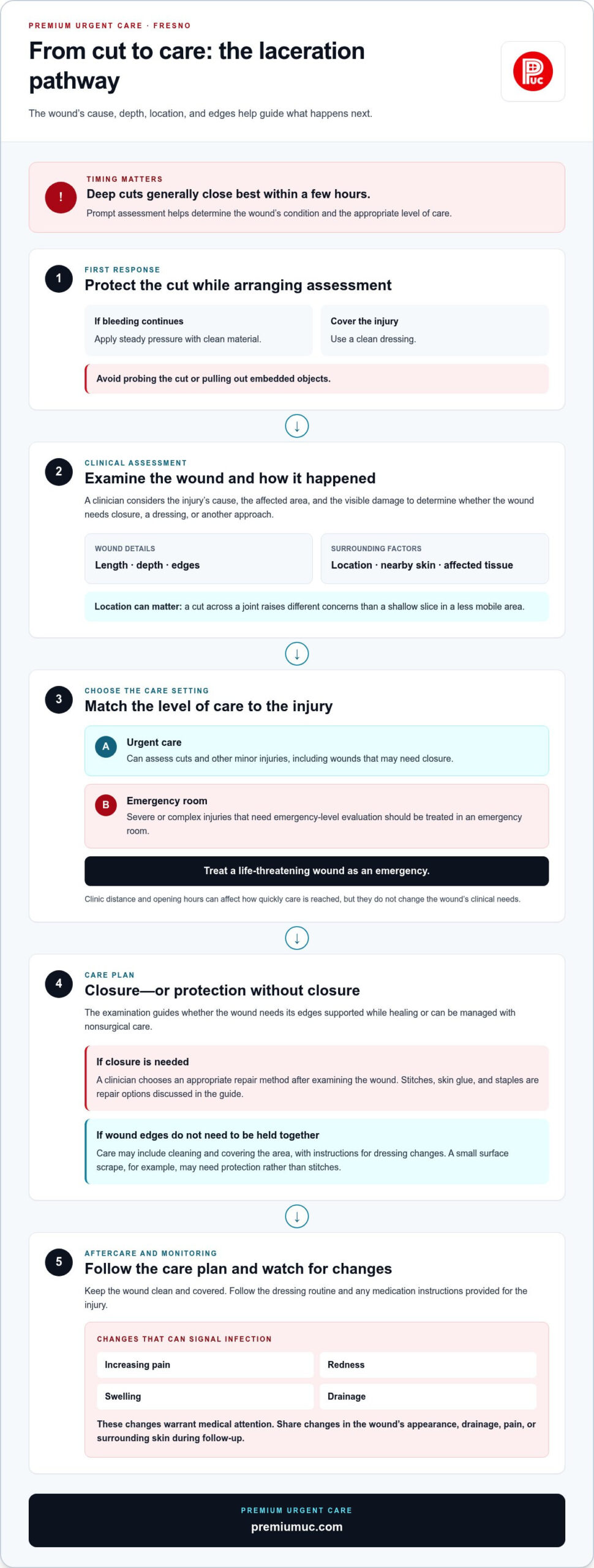
Infection prevention continues after the initial assessment. Keep the wound clean and covered, and follow the care plan, including dressing changes and medications as directed. Watch for increasing pain, redness, swelling, or drainage. These changes can signal infection and warrant medical attention. Changes from the wound’s earlier appearance are useful details to share during follow-up.
Ongoing monitoring can show whether the care plan needs adjustment. Note changes in the wound’s appearance, drainage, pain, and surrounding skin, and follow the dressing routine provided. Use specific instructions for a burn or traumatic wound rather than switching to a different routine. For laceration repair in Fresno, details about the injury and any changes can help focus the assessment.
Laceration and cut treatment
Yes. Children’s cuts can be assessed for repair in Fresno. The treatment plan considers the wound’s depth, location, cause, and the child’s condition.
For a cut, assessment begins with how the injury happened and what tissue is affected. A clinician examines its length, depth, edges, and nearby skin. A cut across a joint, for example, raises different concerns than a shallow slice in a less mobile area. These details help determine whether the wound needs closure, a dressing, or another approach.
Deep cuts generally close best within a few hours. Prompt assessment helps establish the wound’s condition and identify debris or damage that may affect care. Before an appointment, apply steady pressure with clean material if bleeding continues, and cover the injury with a clean dressing. Avoid probing the cut or pulling embedded objects out.
Nonsurgical care may be appropriate when a wound’s edges do not need to be held together. Depending on the examination, care may include cleaning and covering the area, along with instructions for dressing changes. A small surface scrape, for example, may need protection rather than stitches. Follow the care plan and use medications only as directed.
Hyperbaric oxygen treatment is a separate wound-care approach, not a routine step for closing a fresh cut. The technology was developed in the 1940s. Its role differs from basic laceration care, which focuses on assessing the injury and choosing suitable wound management. A deep cut still needs timely medical evaluation rather than an assumption that advanced treatment is necessary.
Pressure ulcers follow a different care pathway from sudden cuts. Their cause and severity guide assessment and treatment planning. A traumatic laceration requires attention to how the skin was opened and whether its edges need support. Pressure-related wounds, by contrast, need care directed at the source of skin damage and the wound’s condition.
During the appointment, describe the injury clearly: what caused it, when it happened, and whether anything may remain inside. Mention changes such as increased pain, redness, swelling, or drainage, which can signal infection. These details help the clinician assess the wound and determine care. Afterward, keep it clean and covered, and follow the dressing instructions.
People searching “laceration repair Fresno” are often looking for a local place to have a cut assessed. The wound’s depth, location, edges, and cause determine the appropriate next step. If closure is needed, suturing is one repair method a clinician may choose after examining the wound.
When to seek urgent care for a laceration
Prompt assessment helps determine whether a cut needs closure or another level of care. The wound’s depth, location, cause, and condition guide that decision.
Urgent Care or Emergency Room
Urgent care can assess cuts and other minor injuries, including wounds that may need closure. Severe or complex injuries that need emergency-level evaluation should be treated in an emergency room. Consider the wound’s appearance and the person’s overall condition when choosing where to go. Treat a life-threatening wound as an emergency.
Clinic location and opening hours affect how quickly someone can reach care. In Fresno, consider the distance to an appropriate clinic and whether it is open when the injury occurs. An appointment or walk-in process may also affect access, depending on the clinic. These practical details matter, but they don’t change the wound’s clinical needs.
Pay attention to the injury itself. A deep cut, separated edges, or exposed underlying tissue calls for prompt medical assessment. Increasing pain, redness, swelling, or drainage may also indicate infection. If a cut keeps bleeding despite steady pressure, seek urgent evaluation rather than waiting and monitoring it at home.
Timing for Cut Treatment
Deep cuts generally close best within a few hours. Prompt evaluation allows a clinician to assess and clean the wound and determine whether closure is suitable. The wound’s depth, location, edges, and cause all guide the repair decision. Don’t wait for a cut to look worse before arranging care.
Until the wound is assessed, apply steady pressure with clean material if bleeding continues, then cover it with a clean dressing. Don’t probe the wound or remove an embedded object. Note when the injury happened and what caused it. This information helps the medical team assess the wound.
A diabetic foot ulcer differs from a sudden cut and needs care directed at its underlying cause. Treatment may include debridement, reducing pressure on the affected area, and infection control. These measures address damaged tissue and pressure rather than simply closing wound edges. A foot wound with redness, swelling, drainage, or increasing pain needs prompt medical attention.
For any wound, report changes clearly: when they began, where they appear, and whether they are worsening. Manage a wet or soiled dressing according to the care instructions provided. If the injury involves a foot ulcer, mention diabetes and any pressure-relief measures already in use. Specific details help focus the assessment and guide the next step.
Stitches, skin glue, and staples
During repair, the wound is assessed, cleaned, and closed using a method suited to its edges and location. Afterward, follow the dressing and wound-care instructions, and watch for increasing pain, redness, swelling, or drainage.
Choosing a Wound Closure Method
Stitches, also called sutures, hold wound edges together with thread passed through the skin. Skin glue joins suitable edges without stitches, while staples use small metal fasteners to close a cut. The wound’s depth, location, and shape help guide the choice. A cut over a moving area, for example, may need a method that supports its edges during healing.
Deep Cuts and Stitching
A deep cut may need stitches if its edges separate and require support. The provider assesses the wound’s depth, location, and condition before recommending closure. A cut with exposed deeper tissue differs from a shallow split, so visible length alone does not determine treatment. Prompt evaluation also allows the provider to assess and clean the wound before closure.
Suturing and Stitch Removal
During suturing, the provider brings the wound edges together and secures them with stitches. The number and placement depend on the cut, and the repair may be covered with a dressing. Some sutures dissolve, while others need removal during a return visit. Other closure methods may also require an office visit for removal.
Repair and Aftercare Steps
Expect the provider to examine the injury, clean the wound, and explain the recommended closure method. After repair, keep the wound clean and covered, and follow instructions for dressing changes and prescribed medications. Don’t change the care routine on your own. If follow-up or stitch removal is recommended, attend the visit so the repair can be assessed.
Monitor the wound as it heals. Increasing pain, redness, swelling, or drainage can signal infection and warrants medical attention. Note when a change appears and whether it is worsening, then share those details during follow-up. Manage a wet or soiled dressing according to the instructions provided for the wound.
Pain and swelling management
After a cut is repaired, track pain and swelling alongside the wound’s appearance. The pattern of change helps distinguish expected discomfort from symptoms that need attention.
Use the care instructions provided for your specific wound. Follow the care plan, including dressing changes and medications as directed. Don’t use leftover medication or change a prescribed dose on your own. If instructions are unclear, seek medical guidance before changing your wound care.
Keep a simple record. Note where discomfort occurs, when it changes, and whether the wound looks different. For example, record whether pain increases after a dressing change or swelling appears alongside redness. These details make changes easier to describe during follow-up and help a provider assess the wound’s progress.
Increasing pain, redness, swelling, or drainage can signal infection and warrants medical attention. Look for changes from the wound’s earlier condition rather than viewing each symptom in isolation. A cut that becomes more painful as redness and drainage increase deserves prompt attention, not just a change in pain management.
Protect the repair while it heals. Keep the wound clean and covered, and change the dressing as instructed. Avoid pulling at stitches, glue, or staples, since disturbing the closure can complicate care. Follow any activity guidance for the wound’s location. A cut over a joint, for example, may be affected by repeated movement, so follow the specific instructions for that repair.
Medication decisions should follow the prescribed plan and account for the person’s health circumstances. Use only medications directed for the wound, and report new or worsening symptoms rather than masking them with an unapproved medicine. If a medication causes a concerning reaction, contact a medical provider for guidance. This helps avoid medication-related complications while keeping wound symptoms visible.
After a wound is closed, follow-up instructions matter as much as the initial repair. Some closure methods need a return visit for removal; others do not. Keep any scheduled appointment, and report worsening pain, redness, swelling, or drainage. A provider can assess these changes and advise whether the care plan needs adjustment.
For pain or swelling that is worsening, or symptoms that suggest infection, arrange a medical assessment rather than relying on home care alone. Request an urgent care consultation for wound concerns and share when the symptoms began, how they have changed, and what care you’ve already used.
Premium Urgent Care: Colds, cough, and upper respiratory infections
Premium Urgent Care provides urgent care consultations and treatment for colds, coughs, and upper respiratory infections. It also treats ear and sinus infections and urinary tract infections. If you’re unsure what level of care an injury needs, an urgent care consultation can help address your concern and next steps. Severe or life-threatening injuries need emergency-level care.
For respiratory, ear, sinus, or urinary symptoms, describe what you’re experiencing and how it has changed. Clear details help guide the consultation and care. Contact Premium Urgent Care to discuss your needs.
Take the Next Step Toward Wound Care
A clear plan can make wound care easier to manage after an injury. Keep the care instructions together, note any changes you observe, and include follow-up in your healing routine. These steps help you communicate clearly if questions arise or the wound’s condition changes.
If you’re considering laceration repair in Fresno, seek an assessment suited to the wound and your needs. Premium Urgent Care provides urgent care consultations and suturing for lacerations. Contact the clinic to discuss your concern and plan a practical next step.
Contact Premium Urgent Care today to discuss wound care. You can also turn to the clinic for care related to colds, cough, upper respiratory infections, ear and sinus infections, and urinary tract infections. Take the next step with clear information and a focused plan.
Frequently Asked Questions
Where can I get a laceration repaired in Fresno, CA?
Premium Urgent Care offers laceration suturing at its Fresno-West clinic, 6643 N. Milburn Ave., Fresno, CA 93722, and Fresno-East clinic, 1069 E. Champlain Drive, Fresno, CA 93720. For laceration repair in Fresno, choose the location that works for your trip and review its hours before leaving. Be prepared to describe what caused the cut, when it happened, and any care you’ve already provided.
Which Fresno urgent care clinics treat cuts and offer stitches?
Premium Urgent Care provides laceration suturing at its Fresno-West and Fresno-East clinics and also serves Clovis and Selma. A clinician assesses the wound before determining whether stitches are suitable. For laceration repair in Fresno, bring relevant health information and a medication list, if available. These details can help the clinician understand your circumstances while evaluating the injury.
When should I go to the emergency room for a laceration in Fresno?
Seek emergency-room care for a severe or complex injury that needs more than routine urgent-care assessment. Extensive tissue damage or a cut accompanied by another serious injury calls for emergency-level evaluation. Urgent care is intended for non-emergency concerns, including cuts suitable for outpatient assessment. Consider the person’s overall condition as well as the wound. If the injury appears life-threatening, prioritize emergency care.
Does Fresno laceration repair require an appointment or accept walk-ins?
Premium Urgent Care provides walk-in consultations and laceration suturing, along with online check-in. Hours vary by location, so review the schedule for the Fresno clinic you plan to visit. Walk-in care does not mean every wound is suitable for urgent care; a clinician assesses the injury and determines the appropriate level of care.
How soon after a cut should I get stitches?
Have a deep cut assessed promptly, since deep cuts generally close best within a few hours. The wound’s depth, location, and edges help determine whether stitches are suitable. While arranging care, cover the cut with a clean dressing and note when and how the injury occurred. Sharing this timeline helps the clinician assess the wound and choose an appropriate repair approach.
What are the options for closing a laceration: stitches, staples, or skin glue?
Stitches, staples, and skin glue are closure options, and the wound’s location, depth, and shape guide the choice. Sutures hold wound edges together with thread; staples use small fasteners, while glue joins suitable edges without stitches. Follow-up varies by method: some closures require an office visit for removal, while others do not. Follow the aftercare instructions for the specific repair.
What are the risks of delaying laceration repair or leaving a cut untreated?
Delaying assessment can mean missing the period when a deep cut generally closes best, within a few hours. Without appropriate care, it can also be harder to notice infection. Watch for increasing pain, redness, swelling, or drainage. Keep the injury clean and covered while arranging care, and tell the clinician about any changes you’ve noticed.
Does laceration repair in Fresno include tetanus shots or infection prevention?
Wound care includes keeping the injury clean and covered and following the dressing and medication instructions provided. A tetanus shot is a separate vaccination decision, so don’t assume it is automatically part of every repair. Tell the clinician how the injury happened and share your known vaccination history. This information can inform the wound assessment and discussion of next steps.