
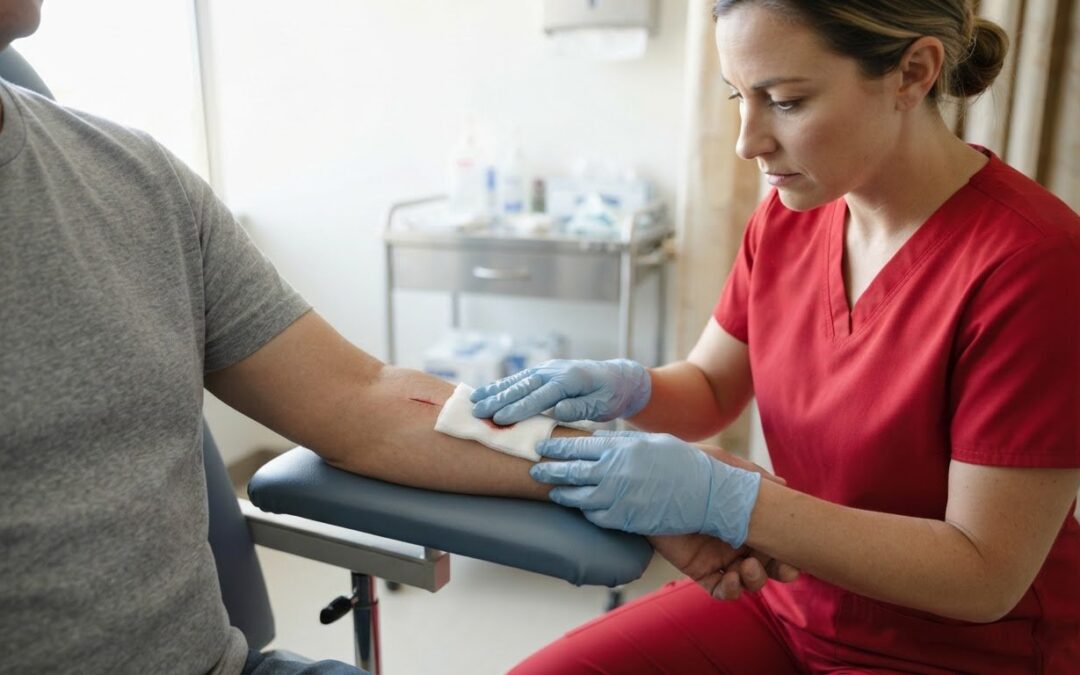
A cut’s appearance matters, but whether its edges stay together matters just as much. A wound that gapes, crosses a joint, or continues bleeding may need professional evaluation. According to the U.S. National Library of Medicine, seek medical attention if bleeding continues after 10 minutes of pressure. These signs offer a practical starting point for how to know if a cut needs stitches.
It’s natural to wonder whether stitches are the best way to help a wound heal. They’re one option, but a clinician may also use staples, adhesive strips, or tissue glue, depending on the cut and how its edges come together.
This article explains how persistent bleeding, a cut over a joint, and wound-closure options can help guide the decision. You’ll also learn which wound features call for prompt evaluation and what a clinician considers when assessing a cut.
Key Takeaways
- Notice whether a cut keeps bleeding despite steady pressure, as this can signal a need for prompt medical assessment.
- Location matters: wounds over joints may be affected by movement that pulls their edges apart.
- Stitches aren’t the only closure option; a wound’s depth, edges, and location help determine what may work.
- Learn which wound features make professional evaluation more important, so you can decide when to seek care.
Do stitches, sutures, staples, and skin adhesive help wounds heal?
Stitches, also called sutures, hold wound edges together while tissue heals. Staples and skin adhesive can close some cuts, too. The method depends on the wound’s depth, length, location, and whether its edges stay together. A laceration that gapes open or exposes fatty tissue, muscle, tendon, or bone needs prompt medical assessment. Visible deeper tissue is a clearer warning than a small surface scratch.
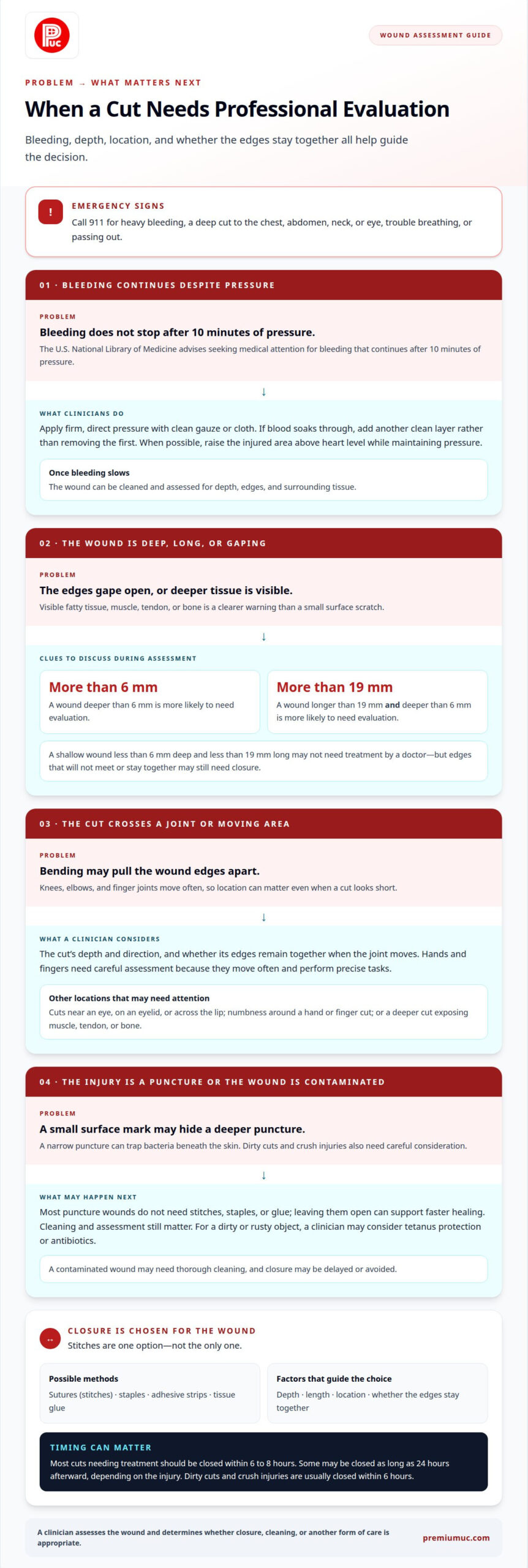
Depth and length offer useful clues, but they don’t replace an examination. A wound deeper than 6 mm is more likely to need evaluation. A wound longer than 19 mm and deeper than 6 mm is also more likely to need evaluation. By contrast, a shallow wound less than 6 mm deep and less than 19 mm long may not need treatment by a doctor. If its edges won’t meet or stay together, closure may still be needed.
Closure supports healing by keeping separated skin edges in contact. Stitches can also reduce scar size and the amount of scar tissue. After assessing the wound, a clinician may choose sutures, staples, adhesive strips, or tissue glue. The method needs to hold the edges securely in that location. A cut across a moving area, for example, faces different tension than one on less mobile skin.
Timing matters because bacteria in a wound can raise infection risk. Most cuts needing treatment should be closed within 6 to 8 hours after injury. Some wounds can be closed as long as 24 hours afterward, depending on the injury. Dirty cuts and crush injuries are usually closed within 6 hours. A contaminated wound may need thorough cleaning, and closure may be delayed or avoided.
Puncture wounds differ from open cuts. Most don’t need stitches, staples, or glue, and leaving them open can support faster healing. A narrow puncture can trap bacteria beneath the skin, so cleaning and assessment matter. A dirty or rusty object may also lead a clinician to consider tetanus protection or antibiotics. Don’t judge a puncture only by the small mark it leaves.
Leaving a wound that needs closure untreated can allow its edges to separate as it heals. That can increase scarring and make closure more difficult over time. Signs of infection include increasing redness, warmth, swelling, pain, pus, fever, or red streaks. A wound with these changes needs medical attention. If a cut may need stitches, prompt evaluation can determine whether closure, cleaning, or another form of care is appropriate.
Bleeding that continues despite pressure
According to the U.S. National Library of Medicine, severe bleeding or bleeding that cannot be stopped, including after 10 minutes of pressure, needs medical attention. Call 911 for heavy bleeding, a deep cut to the chest, abdomen, neck, or eye, trouble breathing, or passing out.
How Clinicians Apply Pressure to a Cut
Clinicians apply firm, direct pressure with clean gauze or cloth to slow bleeding. Once bleeding is controlled, they can assess the cut and see whether its edges stay together. If blood soaks through the first layer, they add another clean layer rather than removing it. Removing soaked material can disturb clotting and restart bleeding, making the wound harder to assess.
Once bleeding slows, clinicians clean the wound with water and examine its depth, edges, and surrounding tissue. Cleaning helps remove debris and bacteria before they decide whether closure is appropriate. A laceration that keeps bleeding despite consistent pressure needs prompt assessment. Stitches, staples, or another closure method may be considered if needed.
How Clinicians Elevate the Injured Area
When possible, clinicians raise the injured area above heart level while maintaining direct pressure. Elevation can help slow bleeding and support clot formation. For example, they may position an injured hand higher than the chest while keeping gauze over the cut. The wound still needs assessment, especially if bleeding continues or its edges separate with movement.
Bleeding that spurts in time with the pulse may indicate an injured artery. Uncontrolled bleeding, a deep wound in a critical area, or signs such as fainting require emergency care, not routine wound assessment. Blood soaking through a dressing also needs attention. Place another clean layer over it while continuing pressure.
Once bleeding is controlled, urgent care can assess whether a cut needs cleaning or closure. A clinician considers the location, depth, and whether the edges stay together, since movement can pull them apart and affect healing or scarring. For a non-emergency wound needing assessment, urgent care consultation can help determine the appropriate next step.
Cuts over joints
A cut over a joint may need stitches because bending can pull its edges apart. This applies to knees, elbows, and finger joints, where regular movement can disturb closure. A clinician considers the wound’s depth and direction, and whether its edges remain together when the joint moves. A deeper cut exposing muscle, tendon, or bone needs prompt medical attention. Location can matter even when a cut looks short.
Hands and fingers need careful assessment because they move often and perform precise tasks. Cuts near an eye, on an eyelid, or across the lip may also need medical attention. Closing a facial wound can help reduce scarring, and cuts near the eyes or mouth deserve particular care—especially if teeth or gums are involved, where an oral health provider like Stoddard Dental Square can evaluate any underlying dental trauma. Numbness around a hand or finger cut is another reason to seek prompt assessment. The cause matters, too, especially if the object was dirty or contaminated.
Not every cut needs stitches. A shallow wound with smooth edges that stay together during ordinary movement may heal without professional closure. Small cuts are less likely to need stitches when bleeding has stopped and the edges remain closed. A puncture wound differs from a gaping cut, and whether it should be closed depends on the wound. The small surface mark doesn’t show how far the object entered.
Urgent care can assess a cut’s location, depth, movement, and contamination, then determine whether closure is appropriate. This can help with a cut over a knee, a finger wound that separates when bent, or a facial injury where scarring matters. A clinician can also identify whether cleaning or other care is needed. Seek prompt medical attention for a bite that breaks the skin, a wound with a foreign object, or numbness around the injury.
Alternatives to stitches
Stitches aren’t the only way to close a cut. Healthcare professionals may use adhesive strips or tissue glue when the wound’s edges are suitable for those methods. The choice depends on whether the edges can meet and stay together, as well as the wound’s depth, location, and condition. A shallow cut with smooth edges that stay together during normal movement may not need stitches. A deeper or gaping wound needs assessment before an alternative is chosen.
Adhesive strips hold the skin edges together without passing thread through the skin. Tissue glue also joins the edges at the surface. These options suit some cuts, but they aren’t interchangeable for every injury. If movement repeatedly pulls the wound apart, surface adhesive may not hold it closed. A clinician examines the cut and determines which closure method best suits its shape and location.
Some wounds are better left open initially. A dirty cut or one with a high infection risk may need careful cleaning before closure, or may remain unclosed. Closing contaminated tissue can trap bacteria and lead to infection. Puncture wounds also differ from open lacerations. Puncture wounds may be better left open, but they still need careful assessment. The small opening doesn’t reveal the full path of the object beneath the skin.
Closure is only one part of wound care. A clinician assesses whether debris needs attention and whether the edges can stay together during healing. If the wound is clean, shallow, and stable during ordinary movement, home care may be appropriate. A wound that gapes, exposes deeper tissue, or shows signs of infection needs medical attention. The right approach supports healing while reducing avoidable infection risk and scarring.
If you’re unsure which closure method fits a cut, request a professional wound assessment to help determine the next step.
Premium Urgent Care
Premium Urgent Care provides urgent care consultations for people who need a professional assessment of a cut. A clinician can consider the wound’s location, depth, bleeding, and whether its edges stay together, then discuss the appropriate next step. This can help if you’re unsure whether a cut needs medical attention or what factors affect closure.
If a cut may need evaluation, a consultation provides an opportunity to discuss its features and care options. Severe or uncontrolled bleeding, trouble breathing, or passing out requires emergency medical attention instead.
Contact Premium Urgent Care to discuss an urgent care consultation for your wound concern.
Take the Next Step Toward Wound Care
If you’re still wondering how to know if a cut needs stitches, seek a clear assessment rather than choosing a closure method yourself. Details about the injury can help a clinician determine appropriate care. Be ready to explain when it happened, what caused it, and whether you’ve noticed changes in movement or sensation since then. This context can make the consultation focused and useful.
Premium Urgent Care provides urgent care consultations for concerns that need professional attention. An assessment can help you understand the next step for your wound and make an informed care decision. If the injury seems severe or you feel seriously unwell, seek emergency medical attention instead. For help discussing your wound concern, contact Premium Urgent Care. Taking that step can bring clarity and help you move forward with confidence.
Frequently Asked Questions
What Is a Laceration Wound?
A laceration is a break in the skin caused by an injury, such as contact with a sharp edge or rough object. It may look like a straight slice or an irregular tear. For example, a kitchen knife can cause a clean-edged cut, while a fall onto a rough surface may leave uneven edges. The wound’s appearance and depth help guide assessment.
Where Can I Get a Cut or Laceration Treated?
You can get a cut assessed and treated at Premium Urgent Care. The clinic treats cuts and wounds, including suturing lacerations when appropriate, for patients in Fresno, Clovis, and Selma. A clinician can assess the injury and discuss the care it needs. For severe bleeding or other signs of a serious injury, seek emergency medical attention.
What types of cuts need stitches?
People often ask how to know if a cut needs stitches. Cuts with separated edges, visible deeper tissue, or persistent bleeding may need evaluation. A jagged tear from broken glass, for example, needs assessment if its edges won’t stay together. Contaminated cuts and bites also need prompt attention because cleaning and infection concerns affect closure decisions. Stitches aren’t automatically needed for every wound that looks deep.
How deep or long does a cut need to be to require stitches?
A wound deeper than 6 mm is more likely to need medical evaluation. A wound longer than 19 mm and deeper than 6 mm is also more likely to need evaluation. These measurements are guides, not automatic rules. A shorter cut may still need care if it gapes, exposes deeper tissue, or lies where movement repeatedly pulls its edges apart.
How can a clinician tell if a cut is gaping or won’t stay closed?
A clinician examines whether the wound edges meet and stay together after bleeding is controlled and the area is cleaned. The assessment may include observing how the surrounding skin shifts with ordinary movement. A cut that repeatedly opens, such as one near a frequently bending area, may not stay closed without support. Depth, exposed tissue, and contamination also inform the treatment decision.
Do cuts on the face, hands, joints, or over a bone need stitches sooner?
These locations deserve careful assessment, but the body part alone doesn’t determine whether stitches are needed. Movement can pull apart a cut over a joint, while facial wounds may need attention to support healing and limit scarring. A cut on a hand or finger can affect movement or sensation. Visible bone, or a wound deep enough to expose it, requires prompt medical evaluation.