

A small cut or sprain may be manageable at home, but warning signs can change the next step. Immediate care for minor injuries starts with basic first aid: apply firm pressure to bleeding cuts, gently clean the wound with soap and water, and rest, ice, compress, and elevate a sprain. Injuries that are severe or rapidly worsening need prompt medical attention; call 911 for a medical emergency.
It’s understandable to wonder whether an injury is truly minor or needs professional care. Immediate care for minor injuries can help when an injury is not life-threatening but still needs assessment. Pain, swelling, bleeding, and how well the injured area works all matter when deciding what to do.
This guide explains how to care for cuts, sprains, burns, and bruises, when to seek medical evaluation, and which wound changes may signal infection. You’ll also learn how to tell basic first-aid situations from injuries that need urgent or emergency attention, so you can choose a safe next step.
Key Takeaways
- For a minor cut, use firm pressure to control bleeding, then gently clean and cover the wound.
- Manage a sprain with rest, ice, compression, and elevation; keep the injured area still if a fracture is possible.
- Seek prompt medical evaluation for deep wounds, suspected fractures, head injuries, severe pain, or bleeding that won’t stop.
- Watch for increasing redness, swelling, warmth, pus, or an unpleasant odor, which can signal wound infection.
- Call 911 or go to an emergency room for a medical emergency rather than relying on home first aid.
Injuries treated by family medicine and urgent care providers
Use the steps below to decide whether an injury suits urgent care or needs emergency attention. For a medical emergency, call 911 or go to the nearest emergency room.
-
Identify Injuries Treated in Urgent Care
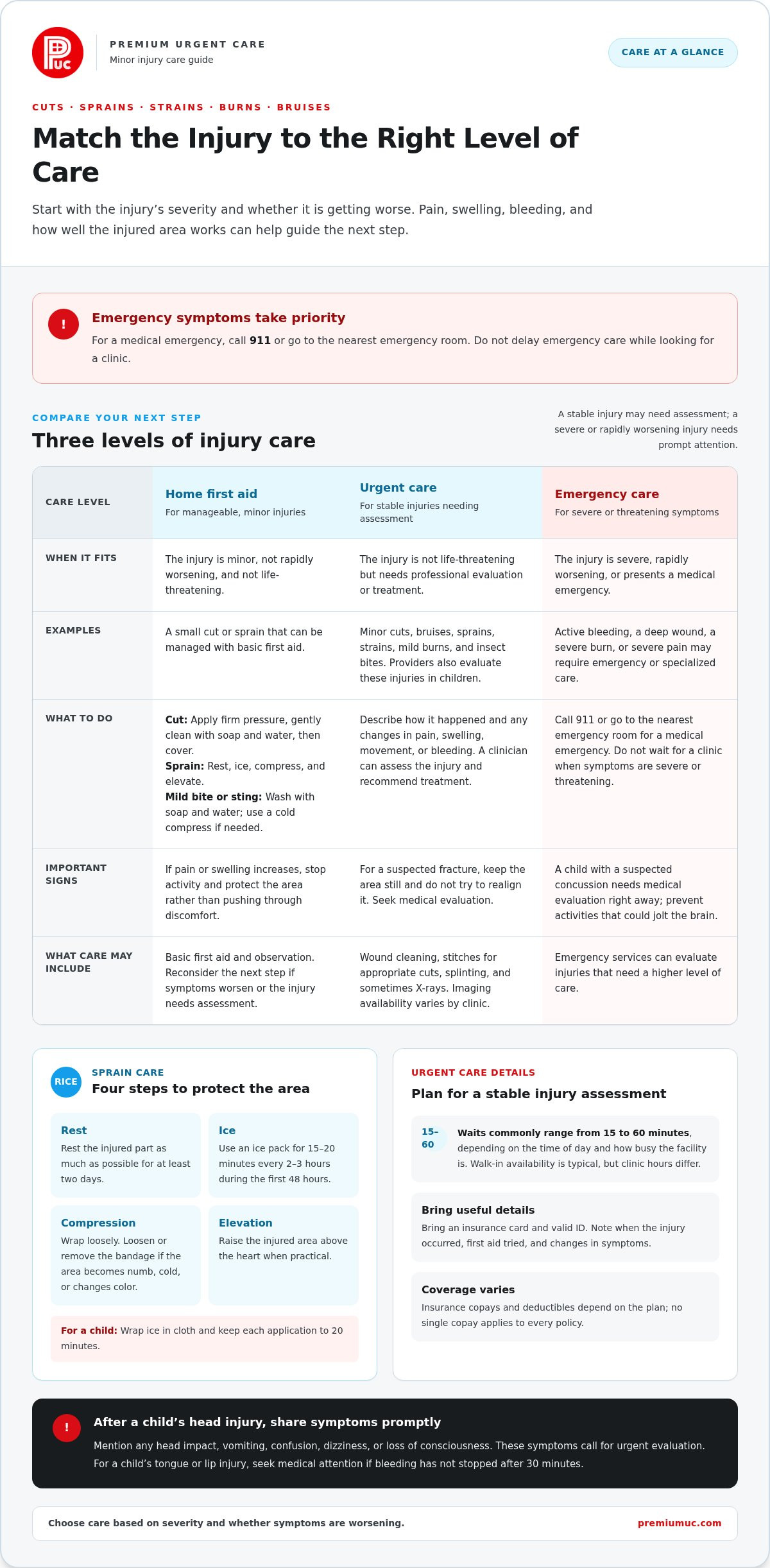
List the injury and its symptoms, then assess whether they are worsening. Urgent care and family medicine providers commonly evaluate minor cuts, bruises, sprains, strains, mild burns, and insect bites. Pediatric urgent care also addresses these injuries in children, who may need prompt assessment for suspected concussion or fracture. A minor injury is not rapidly worsening and is not life-threatening.
Use these signs to choose the next step:
- For a suspected concussion in a child, seek medical evaluation right away and prevent activities that could jolt the brain.
- For a suspected fracture, keep the injured area still. Don’t try to realign it.
- For active bleeding, a deep wound, severe burn, or severe pain, seek emergency or specialized care.
- For a mild insect bite or sting, wash it with soap and water, then apply a cold compress if needed.
Urgent care facilities typically accept walk-ins for minor injuries. Waits commonly range from 15 to 60 minutes, depending on the time of day and how busy the facility is. To find an open clinic, search for nearby urgent care and review its current operating hours before traveling. Opening hours differ, so don’t assume a clinic is available after hours.
Insurance coverage depends on the plan. Review your urgent-care benefits for copays and deductibles; no single copay applies to every policy.
-
Review Available Injury Treatments
Describe how the injury happened and ask what evaluation or treatment it needs. Urgent care may provide wound cleaning, stitches for appropriate lacerations, and splinting to support an injured area. X-rays can help assess a possible fracture, but imaging availability varies between clinics. A clinician can assess the symptoms and direct patients with injuries requiring a higher level of care to emergency services.
Bring an insurance card and valid ID to your visit. Note when the injury occurred, what first aid you’ve tried, and any changes in pain, swelling, movement, or bleeding. These details help explain how the injury has progressed.
For children, mention any head impact, vomiting, confusion, dizziness, or loss of consciousness. These symptoms after a head injury call for urgent evaluation. If a child has a tongue or lip injury, seek medical attention if bleeding has not stopped after 30 minutes.
Choose care based on the injury’s severity and whether it is worsening. Don’t delay emergency care for severe or threatening symptoms while looking for a clinic. For a stable injury that needs assessment, urgent care can provide evaluation, treatment, and aftercare guidance.
How can I manage soft tissue injuries like sprains?
Use the steps below to protect the injured area, reduce swelling, and decide whether further evaluation is needed. A strain affects a muscle or tendon; a sprain affects a ligament.
-
Distinguish Sprains from Strains
Note where the pain began and which movements trigger it. A strain can follow stretching or overusing a muscle, while a sprain often follows a twist that stresses a joint, such as rolling an ankle. Both can cause soreness, swelling, and reduced movement. With a child, symptoms may develop several hours after activity, so continue to observe the area.
Don’t assume the injury is mild just because movement is still possible. Pain over a bone, marked swelling, inability to use the limb, or a visible change in shape can indicate a more serious injury. Keep the area still and seek medical evaluation if these signs appear or you’re unsure what was injured.
-
Apply RICE Care
Protect the area, then use RICE: rest, ice, compression, and elevation. Rest the injured part as much as possible for at least two days. Apply an ice pack for 15 to 20 minutes every 2 to 3 hours during the first 48 hours. Wrap ice in cloth for a child, and keep each application to 20 minutes.
If compression feels helpful, wrap an elastic bandage loosely to reduce swelling without restricting circulation. Raise the injured area above the heart when practical. Remove or loosen the bandage if the area below it becomes numb, cold, or changes color.
- Protect the injured area as symptoms change. Keep it still at first and avoid activities that increase pain or swelling. When gentle movement feels manageable, move carefully; applying ice afterward can help limit inflammation. Stop if pain increases, and rest rather than pushing through discomfort.
For children, apply a cold compress several times a day to help reduce swelling. Keep an elastic bandage loose and support the injured area. A child’s sprain can take weeks to heal, so don’t treat early improvement as a reason to resume sports immediately.
- Use pain relief cautiously. Anti-inflammatory medicine can reduce pain and inflammation from a sprain or strain, but the right choice depends on a person’s health and other medicines. For a child, follow the product directions and age guidance. Don’t give aspirin to a child or teen unless their doctor says it’s safe.
Arrange an evaluation if symptoms worsen, the joint remains difficult to move, or pain is severe. A clinician can assess sprains, strains, and other minor injuries, then recommend appropriate treatment. For an injury that needs assessment, urgent care evaluation for sprains and strains is a reasonable next step.
Signs of wound infection
Inspect wounds and burns regularly, and compare symptoms over time. Increasing redness, swelling, warmth, pus, or an unpleasant odor can indicate infection.
-
Recognize Wound and Burn Infection Signs
Check the skin around a wound for spreading redness, increasing swelling, warmth, pus, or an unpleasant odor. These symptoms can signal infection, particularly if they worsen instead of settling. A burn also needs medical attention if blisters develop or pain increases.
Keep the area clean and change its dressing daily, or sooner if it becomes wet or dirty. Don’t break burn blisters; they help protect the skin from infection.
- Clean and protect minor wounds while watching for changes. Gently wash a cut or scrape with soap and water to remove dirt, then cover it with a clean dressing. An antibiotic ointment may be used correctly on children over 2 years old. Follow product directions, and stop using it if irritation develops.
After wound treatment, keep the area dry and use a sterile, non-adherent dressing if needed. Replace it when it becomes wet or dirty. Seek medical evaluation if a minor infection worsens or doesn’t improve within a few days. A clinician can assess the wound and advise whether further treatment is needed.
-
Identify Injury Warning Signs
Seek immediate medical care for active bleeding, a deep or puncture wound, a suspected fracture, or a severe burn. A wound that continues bleeding despite direct pressure needs prompt assessment. Don’t assume an injury is minor just because the person is alert or can move the affected area.
For a medical emergency, call 911 or go to the nearest emergency room. Severe pain that over-the-counter medicine can’t manage also warrants urgent evaluation.
- Watch closely after a child hits their head. Loss of consciousness, persistent headache, vomiting, confusion, or dizziness calls for urgent medical assessment. A suspected concussion needs medical evaluation right away. Keep the child away from activities that could jolt the brain, and limit activities requiring concentration as part of cognitive rest.
If symptoms appear or worsen after an injury, don’t wait for a wound infection to become a concern. Head injuries need attention based on symptoms, even when there’s no visible cut. A healthcare professional can assess the injury and determine whether the child needs a higher level of care.
- Reassess the injury as it heals. Check for changes in pain, swelling, warmth, drainage, or odor each time you change the dressing. For minor burns, increasing pain or new blisters are reasons to seek medical attention. Prompt evaluation can identify infection or another complication and clarify the next treatment step.
What Is a Minor Injury?
A minor injury is generally non-life-threatening and not getting rapidly worse. But a child’s painful injury, especially pain over a bone, may be a fracture rather than a sprain. Immediate care for minor injuries starts with checking for signs that need prompt professional assessment.
-
Recognize Possible Fractures in Children
Ask where it hurts and what happened, such as a fall, collision, or sports activity. Children are more likely to break a bone than have a sprain, so pain over a bone deserves medical assessment. A growth plate injury can be difficult to distinguish from other injuries by appearance alone. Don’t assume a child can resume activities just because the pain seems manageable.
Look for visible deformity, swelling, severe pain, or inability to move or bear weight on the limb. These signs after an injury warrant urgent medical assessment. Redness or debris around a scrape may also need attention, but doesn’t rule out a fracture beneath the skin.
-
Stabilize Suspected Fractures
Keep the injured area still and support it in the position you found it. Don’t pull, twist, or try to realign a bent limb. Movement can cause further damage, so help the child remain still while arranging prompt assessment by a healthcare professional.
If a child may have a fracture, seek professional assessment promptly. Visible deformity, swelling, severe pain, or inability to move or bear weight calls for urgent care. Don’t wait to see whether the child can walk after a few minutes or return to play.
- Describe the injury clearly during evaluation. Note what happened, when the pain began, where it is strongest, and whether the child can move the limb. Mention any changes in pain or swelling since the injury. These details help a healthcare professional assess a possible fracture and decide what care is needed.
Keep the child away from sports, running, and other activities that strain the injured limb until it has been assessed. Don’t use pain relief as a reason to test movement or put pressure on the injury. If the skin is broken, protect the area without pressing debris into the wound.
- Choose care based on the injury’s severity and progression. A child with pain over a bone should be checked because a fracture may be mistaken for a sprain. Immediate care for minor injuries includes prompt evaluation when a fracture is suspected, even without visible deformity.
Support the area as it is and arrange prompt evaluation. If the limb looks deformed, is swollen, causes severe pain, or cannot move or bear weight, seek urgent care. Share the injury details and any first aid already given during the assessment.
What first aid steps should you take immediately for cuts, sprains, burns, or bruises?
Act in sequence: control bleeding, protect the injured area, then monitor symptoms. These steps can help limit further injury while you decide whether medical evaluation is needed.
- For a minor cut or scrape, apply firm, direct pressure with a clean cloth for 10 to 15 minutes. Once bleeding stops, gently wash the wound with soap and water to remove dirt. Cover it with a clean dressing. A deep or gaping cut, or bleeding that continues after 10 minutes of pressure, needs professional assessment.
- For a sprain or strain, stop the activity and protect the injured area. Rest it, apply ice wrapped in cloth, use loose compression, and elevate the area. An ice pack can be applied for 15 to 20 minutes every 2 to 3 hours during the first 48 hours. Remove or loosen a bandage if the area becomes numb or changes color.
- For a minor burn, cool the affected area under cool running water for 10 to 20 minutes. Don’t apply ice, which can further injure the skin. After cooling, cover the burn with a sterile bandage and keep it clean. Don’t break blisters, because they protect the skin from infection. Seek medical attention if blisters or increased pain develop.
- For a bruise, rest the area and apply a wrapped ice pack for 15 to 20 minutes at a time during the initial 24 to 48 hours. Keep the pack wrapped rather than placing ice directly against the skin. If pain is severe or the area becomes difficult to use, seek medical evaluation instead of continuing home care.
- Check the injury again after first aid. Seek professional care for a deep wound, a burn larger than 3 inches, a burn affecting a sensitive area, or bleeding that won’t stop after 15 minutes of direct pressure. A suspected fracture should be stabilized as it is, without trying to realign it. Call 911 or go to the nearest emergency room for a medical emergency.
For assessment and treatment of cuts, wounds, or minor burns, request medical care for a minor injury.
Premium Urgent Care: Colds, cough, and upper respiratory infections
Premium Urgent Care provides walk-in consultations for non-emergency health concerns, including minor injuries that need medical assessment. The clinic also treats colds, coughs, upper respiratory infections, ear and sinus infections, and urinary tract infections. A consultation can help clarify the next step when symptoms need attention but aren’t a medical emergency.
For a minor injury, seek evaluation if pain, swelling, or wound symptoms concern you. For severe or life-threatening symptoms, call 911 or go to the nearest emergency room. Premium Urgent Care can also assess respiratory symptoms, ear or sinus concerns, and urinary symptoms through its urgent care services.
For non-emergency injury care in Fresno, Clovis, or Selma, visit Premium Urgent Care for an evaluation.
Take the Next Step With Confidence
Good decisions begin with noticing how an injury changes, not just how it looked at first. Track new symptoms and how they affect movement or daily activities. If the situation is unclear, a medical evaluation can help you choose a sensible next step and understand how to care for the area afterward.
Immediate care for minor injuries is one part of outpatient care. Premium Urgent Care also provides urgent care consultations, care for colds, coughs, and upper respiratory infections, ear and sinus infection care, and urinary tract infection care. For emergency symptoms, call 911 or go to the nearest emergency room.
For a non-emergency health concern, contact Premium Urgent Care to discuss your care. Take the next step calmly, with attention to what your symptoms are telling you.
Frequently Asked Questions
What injuries should go to the ER instead?
Go to the nearest emergency room for life-threatening symptoms or injuries needing emergency or specialized care. Examples include uncontrolled bleeding, a deep or puncture wound, a suspected fracture, a head injury with serious symptoms, or a severe burn. A clinic can direct you to a higher level of care if an injury appears more serious than expected. Don’t delay emergency evaluation to try home treatment first.
When should I see a doctor about a bite or sting?
Seek medical advice if a bite or sting causes worsening symptoms, significant pain, or a concerning skin problem. For a mild insect bite or sting, wash the area with soap and water and apply a cold compress if needed. If the reaction seems severe or the person has trouble breathing, treat it as an emergency and go to the nearest emergency room.
When should I see a doctor about my wound?
Arrange medical evaluation for a deep or gaping wound, a puncture, or bleeding that continues after direct pressure. Also seek care if the wound becomes increasingly red, warm, or swollen, or begins draining pus or smelling unpleasant. These changes can signal infection. A wound with embedded debris, or one caused by an object that may have left material inside, also needs professional assessment.
When should I see a doctor for my burn?
Seek medical care for a burn that blisters over a large area, affects the face, hands, feet, or genitals, or causes increasing pain. A burn larger than 3 inches also warrants professional care. Cool a minor burn under running water, then protect it with a sterile covering. Don’t apply ice or break blisters. Get assessed if the burn’s appearance or symptoms worsen.
When to Seek Medical Help?
Seek help when an injury worsens, limits normal movement, or causes severe pain that over-the-counter medicine can’t manage. A child with pain over a bone should be evaluated because a fracture can resemble a sprain. Vomiting, confusion, dizziness, persistent headache, or loss of consciousness after a head injury needs urgent assessment. For a medical emergency, go to the nearest emergency room.
What minor injuries can be treated at urgent care or walk-in clinics?
Urgent care commonly assesses minor cuts, wounds, burns, bruises, sprains, and strains. A clinician can examine the injury, provide suitable treatment, and explain wound care or follow-up. Premium Urgent Care treats minor injuries, cuts, wounds, and minor burns. In Fresno, Clovis, and Selma, urgent care is an option for non-emergency injuries that need professional attention rather than emergency-room care.
When should a minor injury be treated at urgent care versus the emergency room?
Choose urgent care for a stable injury that needs evaluation or treatment but isn’t life-threatening, such as a sprain or a cut requiring assessment. Go to an emergency room for active, uncontrolled bleeding, a suspected serious fracture, a severe burn, or concerning head injury symptoms. If the injury is rapidly worsening or causes severe pain, don’t treat it as minor. Emergency services are appropriate for life-threatening situations.
When does a cut need stitches, and how soon should you seek care?
A deep or gaping cut may need a clinician’s assessment for sutures, especially if its edges don’t come together or it continues bleeding. Apply direct pressure with a clean cloth while arranging care. A cut that keeps bleeding after 10 minutes of pressure needs expert assessment. Seek care promptly rather than waiting for the wound to close, and avoid probing or removing embedded objects yourself.