

Could a headache need prompt attention without requiring an emergency department? If you’re unsure whether a walk-in clinic for headaches is appropriate, consider your symptoms, how they began, and whether warning signs are present. A sudden, severe headache, a headache after a head injury, or a new severe headache in someone over 50 calls for emergency evaluation.
It’s reasonable to want clarity about what a clinic can assess and what information will help the clinician understand your concern. A walk-in urgent-care consultation can be a practical starting point for a non-emergency headache. The clinician’s assessment guides the next steps.
This article explains how to choose between walk-in care and emergency care, what to expect during a headache evaluation, and what details to share, including when the pain started, how it feels, and any relevant medical history or medicines. Premium Urgent Care evaluates headaches and serves Fresno, Clovis, and Selma, giving local residents an option for non-emergency assessment. Knowing which symptoms need emergency attention can help you choose the right setting.
Key Takeaways
- A walk-in clinic for headaches can be a practical starting point when symptoms need timely evaluation but don’t appear to require emergency care.
- Know which warning signs make emergency evaluation safer before deciding where to seek care.
- During a clinic visit, be ready to describe when the headache began, how it has changed, and any symptoms that come with it.
- Sharing relevant medical history and current medications can help the clinician assess your concern and discuss appropriate next steps.
- Learn how urgent care, primary care, specialty care, and emergency care differ, and how Premium Urgent Care serves Fresno, Clovis, and Selma.
When is a walk-in clinic for headaches the right place to start?
A new, persistent, or disruptive headache can make it difficult to decide where to seek care. A walk-in urgent-care clinic evaluates concerns that need prompt attention but don’t appear to be emergencies. At Premium Urgent Care, a walk-in consultation is a practical starting point for a non-emergency headache. The clinician’s assessment and your health history guide the next steps.
Headaches can differ in their pattern and possible causes. A general overview of Understanding Headaches can provide background, but online information can’t determine what is causing your symptoms or which level of care you need. Pay attention to changes and seek clinical guidance rather than trying to diagnose the cause yourself.
Which headache symptoms may warrant a same-day evaluation?
Consider a clinical assessment if a headache persists, gets worse, feels unusual for you, or interferes with normal activities. A headache that returns or changes over time may also be worth discussing with a clinician, particularly if you can’t get timely guidance from your regular healthcare provider. These patterns don’t identify a specific cause, but they can help explain why you’re seeking care.
The decision depends on more than pain alone. Tell the clinician about other symptoms and relevant health history, including whether this headache differs from previous ones. Your age, existing medical conditions, recent changes in health, and medicines you take may also affect the assessment. A walk-in clinic for headaches can evaluate a non-emergency concern and discuss next steps based on the clinical assessment. The visit doesn’t guarantee a particular diagnosis, test, or treatment.
When should a headache mean emergency care instead?
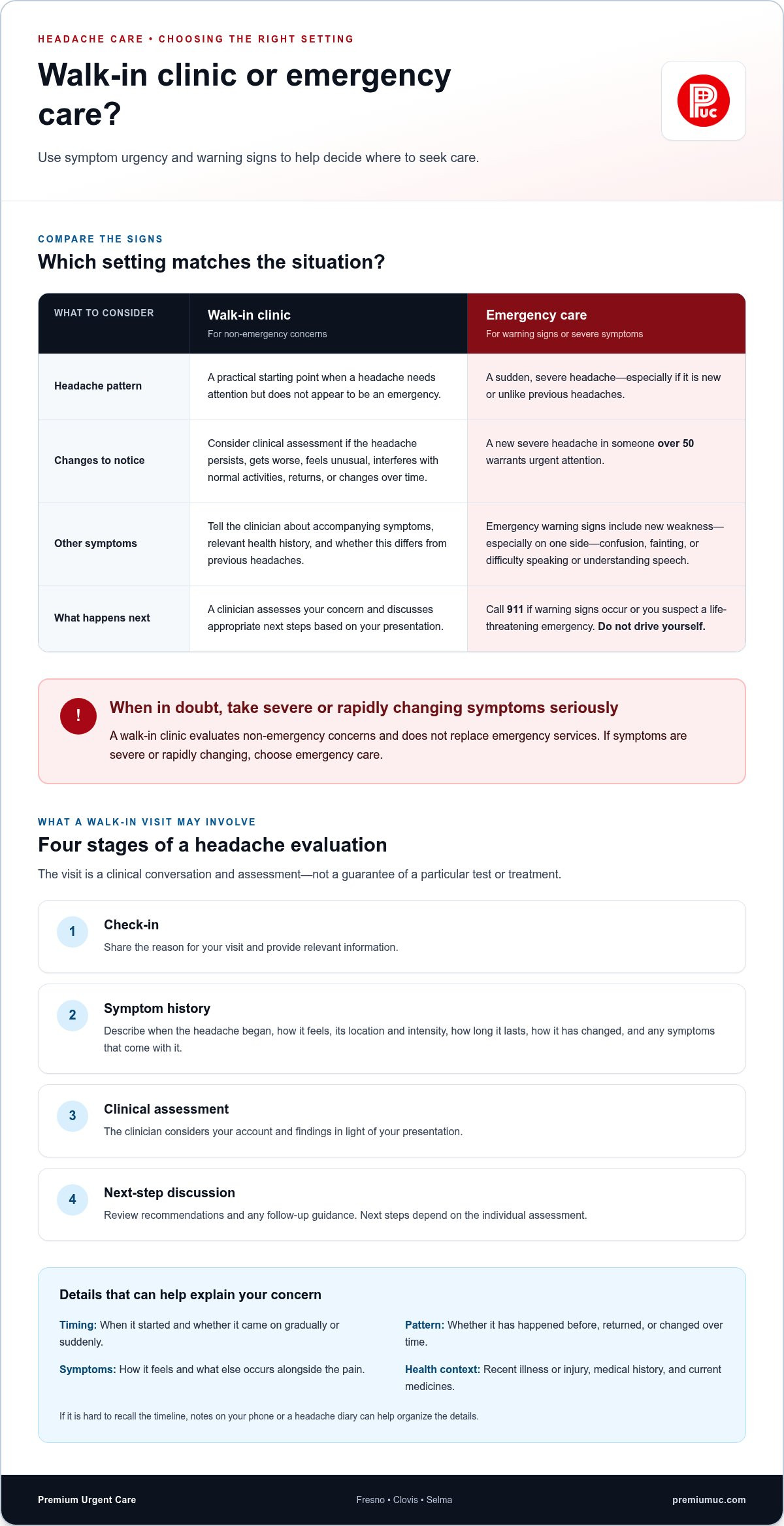
Some symptoms require emergency care rather than a routine walk-in visit. Treat a sudden, severe headache as an emergency, especially if it is new or unlike previous headaches. A new severe headache in someone over 50 also warrants urgent attention. Don’t wait for a clinic assessment if the headache comes with signs that may indicate a life-threatening emergency.
- New weakness, especially on one side of the body
- Confusion or fainting
- Difficulty speaking or understanding speech
Call 911 if these warning signs occur or you suspect a life-threatening emergency. Don’t drive yourself. Emergency responders can provide help and determine the appropriate destination. A walk-in clinic evaluates non-emergency concerns and does not replace emergency services. If you’re uncertain but symptoms are severe or rapidly changing, choose emergency care.
What happens during a walk-in clinic headache evaluation?
A walk-in headache visit is a step-by-step clinical conversation, not a guarantee of a particular test or treatment. After check-in, you’ll describe what’s happening and answer questions about your health. The clinician assesses your reported symptoms and findings, then discusses appropriate next steps. The evaluation depends on your presentation and the clinician’s judgment.
Clear details help the clinician understand your concern and decide what may be appropriate. If it’s hard to recall when symptoms began or how they changed, notes on your phone or a headache diary can help organize the timeline. The National Institute of Neurological Disorders and Stroke provides broader Headache Research and Information, but general resources can’t replace an individual clinical assessment.
What questions may a clinician ask about your headache?
Expect questions about the headache’s onset, location, intensity, and duration. The clinician may ask whether it has happened before, how often it recurs, whether it has changed, and how it compares with your usual pattern. Describe any symptoms that occur alongside the pain, as well as recent illness or injury, current medications, and relevant medical history.
You don’t need medical terminology. Explain whether the pain came on gradually or suddenly, for example, and what you were doing when it started. Honest, specific answers help the clinician assess urgency and consider appropriate next steps. Don’t leave out a detail just because it seems unrelated. The clinician can determine what matters.
How does a clinician decide what care comes next?
The clinician considers your account alongside findings from the assessment. One person’s next steps may differ from another’s, even when they describe similar pain. Depending on your presentation, the clinician may discuss care guidance, follow-up with another healthcare professional, or referral when appropriate. No single checklist determines the right plan for every patient.
The visit may generally move through these stages:
- Check-in: Share the reason for your visit and provide relevant information.
- Symptom history: Describe the timing, pattern, intensity, and accompanying symptoms.
- Clinical assessment: The clinician evaluates your concern based on your presentation.
- Next-step discussion: Review recommendations and any follow-up guidance.
A walk-in clinic for headaches can assess non-emergency concerns, but an article cannot determine your diagnosis or treatment plan. For a non-emergency headache evaluation, Premium Urgent Care’s walk-in consultations offer a local starting point for care.
Walk-in clinic, primary care, or headache specialist: which fits?
The right setting depends on how urgent the symptoms are and whether you need an initial assessment or continued care. A walk-in clinic can be a useful starting point for a non-emergency headache that needs timely evaluation. Primary care can support ongoing follow-up, while specialty care may be considered if a clinician’s assessment indicates it. Severe or potentially life-threatening symptoms belong in emergency care, not a routine clinic visit.
| Care setting | May fit when | What to keep in mind |
|---|---|---|
| Urgent care | A headache is concerning or disruptive and needs assessment, but there are no emergency warning signs. | A clinician evaluates your presentation and discusses appropriate next steps. |
| Primary care | You need follow-up for recurring headaches or want to discuss patterns over time. | Access and timing matter. Don’t delay urgent assessment if symptoms become severe or concerning. |
| Headache specialist | A clinical assessment indicates that focused expertise may help with ongoing or complex concerns. | Specialty care may be a next step, rather than the first stop for every headache. |
| Emergency care | Symptoms are severe, sudden, or potentially life-threatening. | Call 911 for emergency warning signs. Don’t drive yourself. |
When might a walk-in clinic be a practical option?
A walk-in clinic can provide an initial evaluation when a headache needs attention but doesn’t appear to be an emergency. For example, you may want a clinician’s assessment if the pain interferes with your usual activities or feels different from your typical pattern. The clinician considers your symptoms and overall presentation, rather than relying on the label “headache” alone. Evaluation and recommendations vary by person.
When may primary or specialty care be more appropriate?
Recurring or ongoing headaches may benefit from follow-up with a regular clinician who can consider the pattern over time. If the assessment suggests that a more focused evaluation is appropriate, a specialist may be a next step. These options can complement an initial evaluation, but they shouldn’t delay urgent care when symptoms need prompt attention. If symptoms are sudden, severe, or accompanied by emergency warning signs, seek emergency care instead.
Think of the settings as serving different needs, not as a fixed sequence everyone must follow. A walk-in clinic for headaches can help address a non-emergency concern; primary care can help with continuity, and specialty care may be considered based on clinical judgment. If you’re unsure which setting fits and symptoms aren’t severe or rapidly worsening, describe what’s happening to a healthcare professional so the urgency can be assessed.
How to prepare for a walk-in headache visit
A little preparation can make it easier to explain what’s changed and help the clinician understand your concern. You don’t need to identify the cause or use medical terms. Focus on a clear timeline, what the headache feels like, and any related health details you can recall.
Before leaving, jot down when the symptoms began and any meaningful changes since then. Notes can be brief, and a phone entry is enough. If you can’t gather everything, don’t let that stop you from seeking care for a non-emergency concern.
What headache details are useful to write down?
Record details that describe the headache’s pattern. Include whether it began suddenly or gradually, where you feel it, how long it lasts, whether it recurs, and how it has changed. Note other symptoms, recent illness or injury, and anything you’ve already tried, including whether it helped, made no difference, or seemed to change the symptoms.
- When the headache started and how long it has lasted
- Where the pain is and how intense or disruptive it feels
- Whether this has happened before and how it compares with your usual pattern
- Other symptoms or recent changes in your health
- What you tried and what happened afterward
These notes are a memory aid, not a self-diagnosis tool. If symptoms changed quickly, make that clear during the visit.
What should you bring to the clinic?
Bring a current medication list, including prescription and over-the-counter medicines, and note any allergies or relevant medical history. Identification and insurance information can also be helpful if available. Accurate information matters more than having every document. Share what you know and mention anything you’re unsure about.
- Medication names and, if known, how you take them
- Relevant allergies and medical-history details
- Identification and insurance information, if available
If someone is accompanying you, they may be able to help recall the timeline or changes they’ve observed. Still, describe the symptoms in your own words whenever you can.
Do not delay emergency care to collect notes or paperwork. If a sudden, severe headache or symptoms such as new weakness, confusion, fainting, or difficulty speaking occur, call 911. Don’t drive yourself to a clinic.
For a non-emergency headache that needs clinical assessment, visit Premium Urgent Care for a walk-in consultation.
Headache Care at Premium Urgent Care: Clovis, Selma, Fresno
Choosing where to seek care starts with matching the setting to the urgency of your symptoms. For a headache that needs clinical attention but doesn’t appear to be an emergency, Premium Urgent Care provides walk-in urgent-care consultations and evaluates headaches. The clinic serves people in Clovis, Selma, and Fresno, giving local residents an option for non-emergency assessment.
A walk-in consultation is an evaluation, not a promise of a specific diagnosis or treatment. Your symptoms, health history, and clinical assessment guide the recommendations. The purpose is to discuss your concern with a clinician and determine appropriate next steps for your situation.
What local patients can expect from a walk-in consultation
The visit begins with a clinician evaluating the symptoms you report. Be prepared to explain how the headache started, whether it has changed, and any other symptoms or relevant health details. The clinician considers your presentation and assessment findings when discussing what may be appropriate next. Recommendations can differ from person to person, so there isn’t one guaranteed outcome for every headache visit.
Premium Urgent Care serves Clovis, Selma, and Fresno. If you live or work in one of these communities, a walk-in clinic for headaches can be a practical starting point for a non-emergency concern that needs assessment. Keep the clinic’s role clear: Premium Urgent Care is not a 24/7 emergency department. If symptoms suggest a life-threatening emergency, call 911 instead of going to a walk-in clinic.
How to take the next step in Fresno County
Before planning a clinic visit, use Premium Urgent Care’s location information to review current addresses and hours. These details can help you identify a location and plan your visit. Bring the symptom notes and relevant health information you’ve gathered, but don’t delay emergency care to collect paperwork if severe warning signs are present.
For a non-emergency headache, a clinician-led evaluation can help clarify what care may be appropriate based on your symptoms. The consultation is a starting point for assessment, and any recommendations depend on clinical judgment. You can find Premium Urgent Care and learn about walk-in consultations for headache concerns in Clovis, Selma, and Fresno.
Choose your next step with confidence
A headache doesn’t need to fit a familiar pattern to deserve attention. If it’s disrupting your day or leaving you uncertain about what to do, focus on the change you’ve noticed and the kind of help you need. A walk-in clinic for headaches can be a reasonable option for a non-emergency evaluation, while severe or potentially life-threatening symptoms call for emergency services.
Premium Urgent Care provides walk-in consultations for headache concerns in Clovis, Selma, and Fresno. Your clinician can assess your symptoms and discuss appropriate next steps based on your presentation. You don’t need to arrive with a diagnosis. A clear account of what you’re experiencing is a useful place to begin.
Take the next step that fits your situation. Find Premium Urgent Care and learn about walk-in consultations.
Frequently Asked Questions
Can I go to a walk-in clinic for a migraine?
Yes, a walk-in clinic for headaches can be a reasonable place to seek evaluation for a migraine-like headache if there are no emergency warning signs. Explain whether the symptoms match headaches you’ve experienced before and what feels different this time. A first, unusually severe, sudden, or markedly different headache needs prompt medical assessment. If symptoms suggest a life-threatening emergency, call 911 rather than going to a clinic.
Will an urgent care clinic prescribe migraine medication?
A prescription isn’t guaranteed. The clinician considers your symptoms, medical history, current medicines, and the care setting before discussing options. Bring the names of medicines you take and mention allergies or health conditions, including those that may affect medication choices. If you’ve tried something for this headache, share what you took and whether it helped or caused a problem. The clinician will determine appropriate next steps.
Can I visit a walk-in clinic for a headache without an appointment?
Premium Urgent Care provides walk-in urgent-care consultations, so you can seek a consultation without scheduling a specialty appointment. Before setting out, use the clinic’s location information to review current addresses and hours. Walk-in access doesn’t mean every concern belongs in urgent care. If the headache comes with severe or life-threatening symptoms, call 911 instead of traveling to a clinic.
Should I go to urgent care for a headache after hitting my head?
A headache after a head injury needs careful attention, and the safest setting depends on the injury and symptoms. Seek emergency care for severe or worsening symptoms, confusion, repeated vomiting, fainting, weakness, seizure, or another alarming change. Call 911 for a life-threatening emergency, and don’t rely on an online article to assess an injury. If you’re unsure how serious the symptoms are, prioritize prompt medical guidance.
Can urgent care determine what is causing my headache?
A clinician can assess your symptoms and health history, then decide what evaluation or follow-up may be appropriate. The result of a visit can vary: some concerns may need further assessment or a different care setting. No online guide or clinic visit can guarantee a specific diagnosis. Be especially attentive to symptoms that are new, severe, or unusual for you, and seek care suited to their urgency.
Can sinus pressure cause a headache, and can a clinic assess it?
Sinus pressure can occur alongside headache symptoms, but symptoms alone can’t confirm the cause. A clinician can consider the broader picture, such as congestion, pain, fever, and how long symptoms have lasted, before discussing next steps. Note when the congestion and headache began and whether either is getting worse. Sudden severe headache or neurological warning signs require emergency care rather than a routine clinic assessment.