
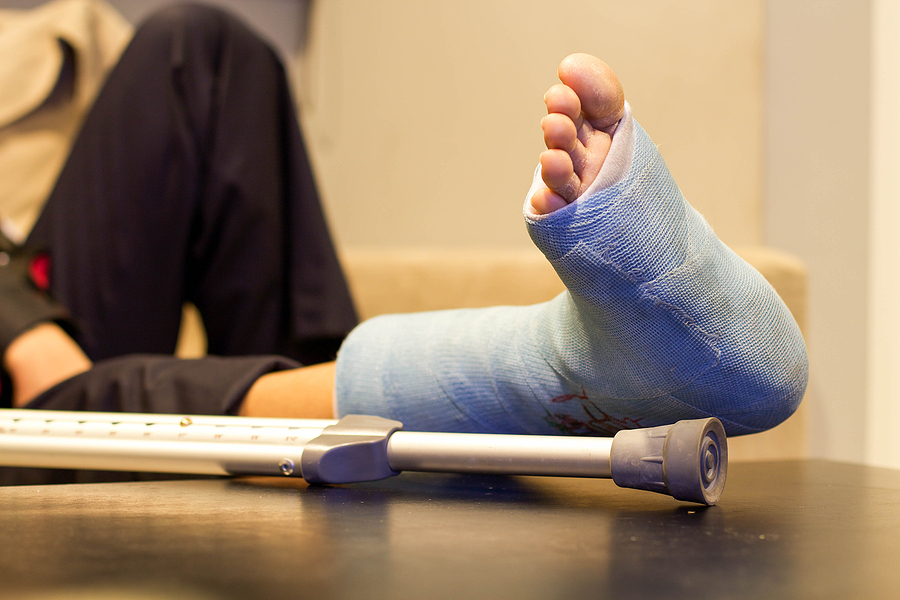
Slip and fall accidents, car crashes, dropping heavy items on your foot, tripping over a pet in a dark hallway–these are all situations that can cause a bone break. The pain from a bone fracture is unbearable, and it’s not something you should power through.
Going to urgent care after breaking a bone is important. You need immediate care to ensure the bone heals correctly and doesn’t lead to additional problems. Our guide explains what a bone fracture is and how it’s treated at Premium Urgent Care.
Understanding Bone Fractures
Bone fractures, also referred to as a bone break, occur when the bone cannot withstand the force that’s applied to it. Bone fractures can be open or closed.
Open: These are best treated in an ER because the bone breaks and pokes through the skin, or because a deep laceration exposes the break.
Closed: They involve a bone fracture where the skin doesn’t tear open or have a cut.
Bone fractures are also classified by type.
- Avulsion: The bone fracture occurs near a ligament or tendon, which causes a small piece of bone to be pulled loose.
- Comminuted: The bone breaks into at least three pieces.
- Compression: The bone is crushed, so it flattens and appears wider on scans.
- Greenstick: The break is incomplete.
- Linear: The break runs down the bone.
- Oblique: The break runs diagonally across the bone and may be displaced, with the bone separating, or nondisplaced, with the bone fracturing but not coming apart.
- Segmental: The bone is broken in two places, causing the section of bone between the breaks to move freely.
- Spiral: The break travels in a spiral around the bone, often due to a twisting injury.
- Transverse: The break forms a straight line across the bone.
Overuse, incorrect landings, repetitive motions, and weakened bones from cancer or osteoporosis are all possible reasons for a bone fracture. You can identify a possible bone fracture from these common symptoms:
- Bruising
- Difficulty moving or using the injured area
- Grinding sensations
- Immediate swelling
- Numbness and tingling
- Protruding bone
- Redness
- Snapping sound
- Sudden, intense pain
- Unable to stand or put weight on the injured area
- Visible deformity
If you have any of those symptoms after falling, landing awkwardly after a jump, or moving around, go to urgent care for X-rays. You don’t want to wait it out and hope it improves in a day. If you ignore medical care, the bone could heal incorrectly, affecting the range of motion, balance, and movement. Best case, it could just be a ligament or muscle injury.
The Ten Most Common Fractures
Any bone in your body could fracture from a sudden twist or other forceful injury. We analyzed statistics across all age groups to determine the 10 most common fractures.
- Ankle: Many factors can lead to an ankle fracture. Girls learning to walk in high heels for the first time may twist their ankles, leading to a spiral fracture. Falling with your foot trapped under someone during a game is another cause.
- Arm: Broken arms are common injuries in children, but there’s also a high incidence in adults between the ages of 25 and 34. The Ulna and distal radius are the most common fracture sites. Car accidents, falls, and sports injuries are all reasons your arm bones can break.
- Collarbone: Clavicle fractures account for up to 10% of all fractures. It happens when you land on your shoulder while falling down the stairs, tripping over something, slipping and losing your balance, or falling from something like a swing set or a tree. The latter is why it’s one of the most common injuries in children.
- Fingers: How many times have you gone to grab or catch something quickly and bent your thumb back, leading to a jolting pain? Fractures in the fingers are often caused by falling on your hand or a sudden blow.
- Foot: The foot has 26 bones, and they’re all at risk of stress fractures with each step you take. Running, jumping, and even stomping your foot against a hard surface can lead to a stress fracture if the shoes don’t absorb enough of the force. Dropping something heavy on your foot can fracture several bones at once.
- Hip: Hip injuries often occur when someone slips and falls, landing on the hip. It’s a problem commonly seen in older adults, but there are 300,000 hip fractures reported each year.
- Leg: Broken legs, especially the femur, may occur during certain sports activities or during falls down stairs or on icy roads or sidewalks.
- Skull: Skull fractures increased by 65.5% between 1999 and 2019. Hitting your head in an accidental fall, sporting activity, or car crash can all lead to a skull fracture.
- Spine: Older adults are at increased risk of spine fractures, often due to osteoporosis. Vertebral column fractures have increased by 78.7% from 1999 to 2019.
- Wrist (Distal Forearm): One in four broken bones in children involves the wrist. It’s often a case of throwing your hands out while falling. That force of your body weight against the ground puts too much pressure on the smaller wrist bones.
Steps to Take If You Believe You’ve Broken a Bone
If you believe you’ve broken a bone, time is of the essence. Don’t wait it out. Don’t try to walk it off. If you do, you risk causing additional injury. Urgent care is the best choice for some bone fractures, but the ER is best in these three situations.
- If the bone is visible, call 911 or get to an ER immediately.
- If the area where the bone is broken appears crooked or sits at an angle, surgery may be necessary to secure the bone back together.
- If the limb is turning blue, the blood supply is impacted, and emergency care is necessary.
Never move a person who may have a broken back or neck. You’ll cause additional injury. If you must move the person due to a fire or other immediate danger, hold the head and neck stable while moving them. Call 911 to get help.
If the fracture isn’t a dangerous break, immobilize that area. A sling or splint helps hold the bone stable while you go to urgent care. Apply ice over the area for 15 minutes to reduce swelling. If you can, elevate the area, which also helps with swelling. Get a ride to urgent care for X-rays.
At Premium Urgent Care, we’re open later into the evening than most family doctors, and we offer weekend hours. Our doctors determine whether it is a sprain or a bone fracture and ensure you get the care you need, even if that means a referral to a specialist or a series of X-rays at our urgent care.
Long waits in the ER are unnecessary when Premium Urgent Care has multiple locations in the Fresno area. Head to your nearest urgent care, check in before you arrive, and be seen quickly.