

A suspected case of conjunctivitis usually doesn’t require emergency eye care, but an eye infection doctor in Fresno can assess your symptoms and guide you on next steps. Arrange an eye evaluation as soon as possible if you think you have an infection. Sudden vision loss, sudden eye pain, or an object embedded in the eye needs emergency care.
Redness, irritation, and discharge can be uncomfortable, and it isn’t always clear what kind of care you need. A prompt assessment can clarify what to do next and whether your symptoms call for routine or emergency attention.
This guide explains how conjunctivitis and other minor eye complaints can be assessed in Fresno, what to expect during an evaluation, and which warning signs need immediate attention. It also covers how ratings and patient reviews can help you compare care options, while remembering that reviews offer perspective, not a diagnosis.
Key Takeaways
- Arrange an eye evaluation promptly for suspected conjunctivitis or another eye infection, even when emergency care doesn’t appear necessary.
- Seek emergency eye care for warning signs such as sudden vision loss, sudden eye pain, or an object embedded in the eye.
- Learn how optometrists, ophthalmologists, and urgent care providers differ so you can match the type of care to your symptoms.
- Use patient reviews and ratings to compare reported experiences, while treating them as one part of your decision.
Eye infections and conjunctivitis
Conjunctivitis can cause eye redness, irritation, or discharge. Similar symptoms can have different causes, so symptoms alone can’t confirm the condition. If you suspect an infection, arrange an eye care evaluation promptly. A clinician can assess your eye and recommend an appropriate next step.
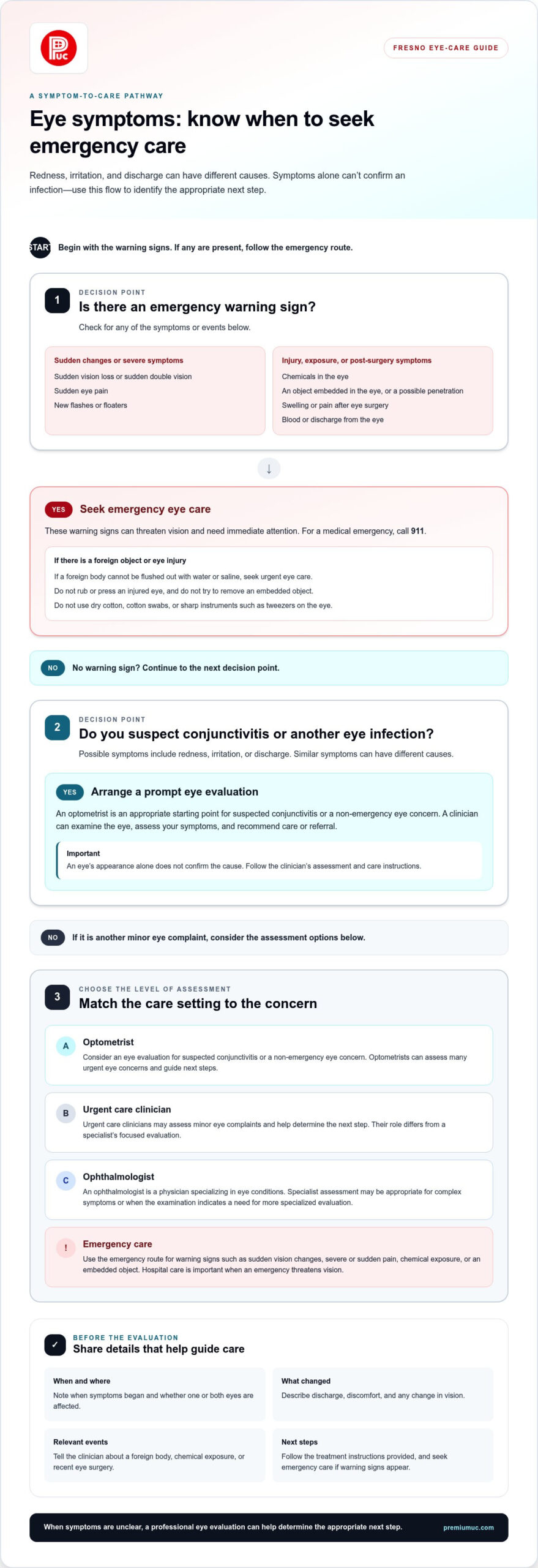
Emergency warning signs include sudden vision loss, sudden double vision, sudden eye pain, new flashes or floaters, chemicals in the eye, or swelling or pain after eye surgery. A foreign body in the eye also needs emergency attention. If you can’t flush it out with water or saline, seek urgent eye care. Don’t rub or press an injured eye, and don’t try to remove an embedded object. For a medical emergency, call 911.
During an eye infection exam, expect the clinician to ask about your symptoms and examine the affected eye. The assessment combines what you report with the eye’s appearance to help identify the concern and guide care. The plan may include care for conjunctivitis or referral for a more specialized evaluation. Optometry and ophthalmology are different care settings; your symptoms and examination findings help determine the appropriate level of care. Hospital care is important when an emergency threatens vision.
- Note when symptoms began and whether one or both eyes are affected.
- Describe any discharge, discomfort, or change in vision during the exam.
- Tell the clinician about a foreign body, chemical exposure, or recent eye surgery.
- Follow the treatment instructions provided, and seek emergency care for warning signs.
Reviews can help you compare reported patient experiences at eye centers, but they can’t diagnose eye disease or establish the level of care you need. Look for comments about clear explanations and the examination process. A certification label or rating doesn’t replace an assessment of your symptoms. If you suspect conjunctivitis, timely professional evaluation is more useful than trying to identify the cause from reviews alone.
If an object may have penetrated the eye, or there is blood or discharge from the eye, seek immediate medical attention. Do not use dry cotton, cotton swabs, or sharp instruments such as tweezers on the eye.
Which doctors in Fresno treat eye infections?
Optometrists and ophthalmologists are the main eye-care professionals to consider for suspected conjunctivitis. An optometrist can assess many urgent eye concerns. Studies have found that the overwhelming majority of people seeking urgent eye care in emergency rooms could have been treated by an optometrist. An ophthalmologist is a physician specializing in eye conditions and may be appropriate when symptoms are severe, complicated, or require specialist evaluation. If you need an eye infection doctor in Fresno, consider your symptoms and how urgent they are when choosing where to seek care.
Fresno has 33 hospitals with affiliated ophthalmology specialists. That provides a local pathway to specialist assessment when an eye problem needs more than an initial evaluation. Suspected uncomplicated conjunctivitis calls for prompt eye-doctor assessment. Sudden vision changes, severe pain, or an eye injury require emergency care.
Urgent care clinicians may assess minor eye complaints and help determine the next step. Their role differs from a specialist’s focused evaluation, so your symptoms matter. Redness and discharge without sudden vision loss differ from a chemical splash or an object embedded in the eye. Eye emergencies can put vision at risk of permanent damage.
- Optometrist: Consider an eye evaluation for suspected conjunctivitis or a non-emergency concern.
- Ophthalmologist: Seek specialist assessment for complex symptoms or when more specialized evaluation is needed.
- Emergency care: Choose this route for sudden vision loss, sudden double vision, sudden eye pain, chemical exposure, or an embedded object.
Before an appointment, note when symptoms began, which eye is affected, and whether vision has changed. Describe discharge, irritation, and any recent injury. If an object may have penetrated the eye, contact an eye doctor immediately rather than attempting removal. For a medical emergency, call 911. These details help the care team understand the concern and direct you to appropriate eye care. An eye infection doctor in Fresno can assess suspected infection, while emergency warning signs call for emergency eye care.
Can an optometrist treat an eye infection, or should I see an ophthalmologist?
For suspected conjunctivitis, an optometrist is an appropriate starting point for an eye evaluation. Optometrists assess eye symptoms and can guide care for many urgent eye concerns. An ophthalmologist is a physician who specializes in eye conditions. Both can evaluate eye problems, but an ophthalmologist may be needed when the condition is complex or requires specialist assessment.
Your choice depends on what’s happening, not simply whether your eye looks red. For example, irritation and discharge without a sudden vision change call for prompt evaluation by an eye doctor. Sudden vision loss, double vision, or severe eye pain needs emergency eye care. Chemical exposure or an object embedded in the eye also calls for emergency attention.
An optometrist can examine your eye, consider your symptoms, and recommend a treatment plan or specialist referral. An ophthalmologist can provide a more specialized assessment when your symptoms or exam indicate that level of care. If the first clinician identifies a concern beyond routine eye care, follow the referral promptly rather than delaying evaluation.
- Start with an optometrist for suspected conjunctivitis or a non-emergency eye complaint requiring assessment.
- See an ophthalmologist when symptoms are complex or specialist evaluation is needed.
- Seek emergency eye care for sudden vision changes, severe pain, chemical exposure, or an embedded object.
Before your appointment, note when symptoms began and whether they’re changing. Describe any discharge or discomfort and any effect on your vision. Mention contact with chemicals, an eye injury, or recent eye surgery, since these details can affect the urgency and direction of care. Don’t try to remove an object embedded in the eye. If an eye emergency puts vision at risk, emergency evaluation takes priority over a routine appointment.
An eye infection such as conjunctivitis usually does not require emergency eye care. If you think you have an infection, see an eye doctor as soon as possible for diagnosis and treatment.
If you can’t flush a foreign body from your eye with water or saline solution, seek urgent eye care. Don’t try to remove a foreign body on your own, and never attempt to remove an object embedded in the eye. If a foreign object is in your eye, seek medical advice promptly rather than trying to remove it yourself. If you have an eye injury, don’t press on or rub the injured eye.
What urgent care clinics in Fresno treat eye infections, and what are their hours?
Urgent care may assess minor eye complaints, but clinics differ in the conditions they handle and the services they provide. Fresno patients should distinguish a general urgent care assessment from an eye-specialist examination. A clinician can evaluate your symptoms and help determine whether urgent care is appropriate or whether you need specialized eye care. For suspected conjunctivitis, prompt assessment matters more than choosing a clinic solely by its hours.
Fresno urgent care clinics don’t all share the same schedule. Hours can vary by location, weekday, weekend, and holiday. Check the clinic’s posted hours when planning a visit, and consider whether you can arrive before closing. If the clinic is closed, an eye specialist or emergency department may be more appropriate, depending on your symptoms.
Before choosing a location, identify the purpose of the visit. A clinic that evaluates minor complaints may help with an initial assessment, while a problem requiring specialist equipment or expertise needs eye-focused care. Call the clinic if you need to clarify its current schedule or whether it evaluates eye complaints. This helps avoid arriving at a time when the service you need isn’t available.
- Check the location’s schedule: Confirm the hours for the specific clinic, not just the broader organization.
- Describe the concern: Explain whether symptoms include redness, irritation, or discharge.
- Consider the care level: Use urgent care for an appropriate minor complaint; seek emergency eye care for an emergency.
- Plan around closing: Allow time for check-in and assessment before the clinic closes.
Ratings and patient reviews can add context about reported experiences, such as communication and the visit process. They don’t establish a clinic’s current hours or determine whether it can address a particular eye concern. Use posted schedule information for logistics and a clinician’s assessment to guide care decisions.
For a non-emergency concern that needs an initial medical assessment, request an urgent care consultation.
Premium Urgent Care: Colds, cough, and upper respiratory infections
Premium Urgent Care provides walk-in urgent care consultations for acute health concerns, including colds, coughs, and upper respiratory infections. Care also includes ear and sinus infection concerns and urinary tract infections. If you have eye symptoms, the right next step depends on what you’re experiencing and whether it could be an eye emergency.
For a non-emergency concern outside eye care, Premium Urgent Care can assess acute symptoms. For example, a patient with a cough or sinus discomfort can seek care for those complaints. Sudden vision loss, severe eye pain, chemical exposure, or an object embedded in the eye calls for emergency eye care.
Contact Premium Urgent Care or visit premiumuc.com to learn about urgent care consultations.
Choose your next step with confidence
Base your next decision on how your symptoms are changing now, not only on how they began. A short note about changes in discomfort, discharge, or vision can help you explain the concern clearly during an appointment. If you’re deciding whether to see an eye infection doctor in Fresno, focus on finding care suited to your current symptoms and how urgent they are.
Patient ratings can help you understand other people’s experiences, but they can’t determine what’s causing your symptoms or which treatment you need. Use them as context, then prioritize an appropriate clinical assessment. If your concern isn’t an eye emergency and you need care for another acute health issue, Premium Urgent Care offers walk-in urgent care consultations.
Contact Premium Urgent Care to take the next step for an acute health concern. Clear information and timely care can help you move forward with greater confidence.