

Ear pain doesn’t always mean an ear infection, and antibiotics aren’t automatically the answer. If you’re searching for ear infection treatment near me, it can be hard to tell whether discomfort comes from an infection, sinus pressure, or another cause. An examination can help identify what may be behind the pain and guide appropriate care.
It’s understandable to wonder how soon you need to be seen, especially when ear pain disrupts sleep or daily activities. This guide covers common causes of ear pain, signs that call for prompt or emergency evaluation, and why treatment depends on the cause and severity.
Premium Urgent Care provides walk-in urgent-care consultations and ear and sinus infection care in Clovis, Selma, and Fresno. Learn what an evaluation may involve, when antibiotics might be considered, and how to find local care for a non-emergency ear or sinus concern.
Key Takeaways
- Ear pain can have different causes, so symptoms alone may not confirm an infection.
- Note changes such as pressure, reduced hearing, or fluid drainage and share them during an evaluation.
- Antibiotics help with some bacterial infections, but treatment depends on the cause and individual circumstances.
- Searching for ear infection treatment near me? Premium Urgent Care provides ear and sinus infection care in Clovis, Selma, and Fresno.
- Learn which symptoms need prompt attention and what to expect during an urgent-care consultation.
Ear Infection Treatment Near Me: What Ear Pain Can Mean
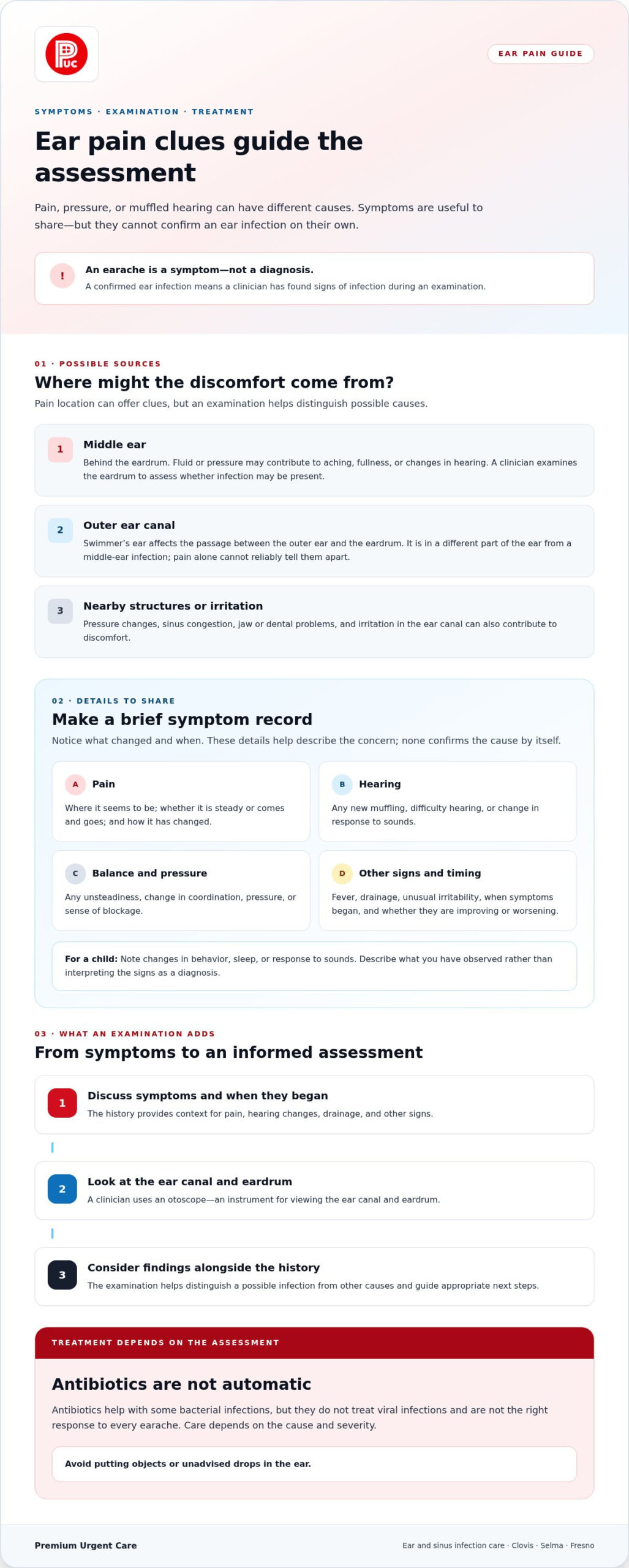
Ear pain is a symptom, not a diagnosis. An ear infection occurs when germs cause inflammation in part of the ear, but discomfort can also come from pressure changes, sinus congestion, jaw problems, or irritation in the ear canal. The location and character of the pain may offer clues, but symptoms alone can’t confirm the cause.
An earache is pain felt in or around the ear; a confirmed ear infection means a clinician has found signs of infection during an examination. That distinction matters because different causes may need different care. Searching for ear infection treatment near me can help you find local care, but an evaluation is needed to determine whether the problem is an infection or another source of pain.
Infections may affect the middle ear, the space behind the eardrum, or the outer ear canal. The broader term Otitis describes inflammation of the ear and includes different types. A clinician considers the examination findings and where the discomfort may be coming from rather than relying on one symptom alone.
What is a middle-ear infection?
A middle-ear infection affects the air-filled space behind the eardrum. Fluid or pressure in this area can contribute to aching or a feeling of fullness, sometimes with changes in hearing. Similar sensations can have other causes. During an examination, a clinician looks at the eardrum and assesses its appearance to help determine whether a middle-ear infection may be present.
How can swimmer’s ear differ from a middle-ear infection?
Swimmer’s ear affects the outer ear canal, the passage between the outer ear and the eardrum. A middle-ear infection is located behind the eardrum, so the conditions affect different parts of the ear. Pain alone can’t reliably distinguish them; the location of the problem and examination findings help guide the assessment. Avoid putting objects or unadvised drops in the ear.
Nearby structures can also contribute to ear discomfort. Sinus congestion may create pressure, while jaw or dental issues can cause pain that seems to come from the ear. A symptom checklist or a guess based on where it hurts may not provide a clear answer. Changes in hearing, drainage, or a sense of blockage are useful details to share, but they don’t confirm a diagnosis on their own.
For non-emergency ear pain or a suspected infection, Premium Urgent Care provides urgent-care consultations and ear and sinus infection care in Clovis, Selma, and Fresno. An evaluation can help clarify what may be causing the discomfort and inform appropriate next steps, without assuming every earache needs the same treatment.
Ear Infection Symptoms and What an Examination Can Reveal
Ear infections can cause pain, pressure, or muffled hearing, but symptoms vary. Some people notice fluid draining from the ear; others have no drainage. Fever may occur, and a young child may seem unusually irritable or have trouble settling. These signs help describe what’s happening, but none establishes the cause on its own.
Symptoms alone cannot confirm an ear infection because different ear conditions and nearby problems can produce similar signs. An examination adds important information: the clinician can look at the ear canal and eardrum, then consider the findings alongside the person’s symptoms. The CDC’s Ear Infection Treatment and Antibiotic Use resource also explains symptoms and care considerations.
Which symptoms should adults and caregivers notice?
Notice changes in pain, hearing, balance, or drainage, and when they began. A child may not be able to explain pressure or muffled hearing, so caregivers can watch for changes in behavior, sleep, or response to sounds. Not every sign appears with every infection. Fever or irritability can accompany illness without proving that the ear is infected.
A brief symptom record can make a consultation more useful. Note whether discomfort is steady or comes and goes, whether hearing seems different, and whether symptoms are improving or worsening. For a child, describe when the change started and what you’ve observed rather than trying to interpret the signs as a diagnosis. If there’s drainage, note when it began and what you noticed.
- Pain: Where it seems to be and how it has changed.
- Hearing: Any new muffling or difficulty responding to sounds.
- Balance: Any unsteadiness or change in coordination.
- Other signs: Fever, drainage, pressure, or unusual irritability.
How does a clinician assess suspected ear infection?
The clinician asks about symptoms and when they began, then examines the ear with an otoscope, an instrument used to view the ear canal and eardrum. The appearance of these structures can help distinguish a possible infection from other causes of discomfort. The clinician considers examination findings alongside the person’s history, not symptoms alone.
This step matters because similar complaints can point to different causes, and treatment decisions depend on the assessment. Fever may be part of an illness, for example, but it doesn’t show by itself whether the ear is infected. Drainage or reduced hearing also needs context. An evaluation helps guide next steps rather than assuming that every earache calls for the same treatment.
If you’re searching for ear infection treatment near me for a non-emergency concern, Premium Urgent Care provides ear and sinus infection care through urgent-care consultations. Learn about local urgent-care consultations and get an evaluation for your symptoms.
Ear Infection Treatment: Why Antibiotics Are Not Automatic
Ear pain can have more than one cause, and appropriate care depends on what an examination suggests. Antibiotics treat some bacterial infections, but they don’t treat viral infections and aren’t the right response to every earache. Choosing treatment without identifying the likely cause can mean using medication that isn’t helpful or missing another issue that needs attention.
A clinician considers examination findings, symptoms, and individual factors before discussing a care plan. The Mayo Clinic’s guidance on ear infection diagnosis and treatment also describes how evaluation informs treatment choices, including situations where a clinician may recommend monitoring rather than immediate antibiotics.
When might a clinician consider antibiotics?
Antibiotics may be appropriate when the examination and clinical judgment point to a bacterial infection. The decision can also depend on factors such as age and symptom severity. A prescription isn’t automatic, and ear pain alone isn’t enough to select a specific medicine. Don’t use leftover antibiotics or share someone else’s prescription; a clinician should guide medication decisions.
That’s why a search for ear infection treatment near me should lead to an evaluation, not an assumption that antibiotics will be needed. The clinician can explain what the findings indicate and why a particular approach is appropriate. If antibiotics are prescribed, follow the instructions provided and raise questions about how to take them or possible concerns with the clinician or pharmacist. Healthcare providers like Sage Creek Medical Center emphasize the importance of consulting with pharmacy professionals to ensure medications are taken safely and effectively.
What if antibiotics are not recommended?
If antibiotics aren’t considered appropriate, a clinician may recommend another approach based on the assessment. This may include general measures to manage discomfort or monitoring symptoms, with guidance tailored to the person’s situation. Ask the clinician before using medication or ear products, especially for a child or when the cause of pain hasn’t been established.
Follow the care plan and keep track of whether symptoms are changing. If pain or other concerns worsen, or don’t improve as expected under the plan, seek reassessment. Don’t start an antibiotic later from an old prescription or stop or change a prescribed course without medical guidance. The next step should reflect current symptoms and clinical advice, not a guess about what worked previously.
Premium Urgent Care provides urgent-care consultations and ear and sinus infection care for non-emergency concerns. An evaluation can help clarify whether an infection is suspected and guide appropriate next steps, without promising a prescription or a particular outcome. Explore Premium Urgent Care consultations.
When to Seek Ear Infection Treatment in Clovis, Selma, or Fresno
Deciding where to seek care starts with whether symptoms are non-emergency or may signal a more serious problem. If ear pain persists or worsens, an evaluation can help clarify its cause and appropriate next steps. Premium Urgent Care provides urgent-care consultations and ear and sinus infection care in Clovis, Selma, and Fresno.
Before seeking care, note when the pain began, whether it’s getting better or worse, and any changes in hearing, balance, temperature, or drainage. For a child, include behavior changes and when you first noticed them. These details help describe the concern and support a focused assessment.
When is urgent care appropriate for ear pain?
Urgent care can assess non-emergency ear pain or a suspected infection. Consider seeking an evaluation if discomfort persists or worsens, or comes with concerning changes such as drainage or reduced hearing. If you’re searching for ear infection treatment near me in Clovis, Selma, or Fresno, Premium Urgent Care provides urgent-care consultations and ear infection care.
During the visit, share your symptom notes and relevant health details, then follow the clinician’s advice about care and monitoring. If symptoms change afterward, use the guidance you received to decide whether reassessment is needed. Don’t assume a previous assessment or care plan will still apply if symptoms become different or more severe.
- Record: When symptoms began and how they’ve changed.
- Describe: Pain, drainage, hearing changes, fever, or balance concerns.
- Follow: The clinician’s care instructions and guidance on reassessment.
Which warning signs call for emergency help?
Some symptoms need emergency evaluation rather than an urgent-care visit. Facial weakness, severe confusion, sudden major hearing loss, or serious symptoms that worsen rapidly should be treated as emergencies. Call 911 or go to an emergency department. Don’t delay emergency care to seek a routine evaluation.
Premium Urgent Care is not a 24/7 emergency service. If symptoms appear severe or rapidly worsen, emergency services or an emergency department are the appropriate next step. For non-emergency ear pain in Clovis, Selma, or Fresno, an urgent-care consultation can help assess the concern and guide next steps.
For a non-emergency ear or sinus concern, visit Premium Urgent Care for an urgent-care consultation.
How Premium Urgent Care Helps With Ear Infection Concerns
Ear pain can be uncomfortable and distracting, especially when you’re unsure what’s behind it. Premium Urgent Care provides ear and sinus infection care through urgent-care consultations for non-emergency concerns. An evaluation helps the clinician understand your symptoms, examine the ear, and discuss appropriate next steps based on the findings. A particular diagnosis, medication, or recovery timeline can’t be assumed before the assessment.
What can I expect during an ear-pain visit?
Be ready to describe when symptoms began and how they’ve changed. Mention any pressure, hearing changes, drainage, fever, or related sinus or respiratory symptoms. The clinician will discuss your concerns and examine the ear. Recommendations depend on the evaluation and individual findings, so the plan may differ from one person to another.
A few notes can make it easier to give a clear account, especially if you’re helping a child who can’t describe the discomfort in detail. Consider noting:
- When the pain or other symptoms first appeared.
- Whether they have eased, stayed the same, or become worse.
- Any changes in hearing, balance, or drainage.
- Other symptoms that seem connected, such as congestion or sinus pressure.
Share what you’ve observed and ask questions if you’re unsure about the next steps. The examination helps the clinician assess the concern; findings guide recommendations rather than a one-size-fits-all approach. Follow the advice provided, and seek reassessment if symptoms change or worsen.
How can I take the next step locally?
If you live in Clovis, Selma, or Fresno and have a non-emergency ear concern, Premium Urgent Care offers walk-in urgent-care consultations and ear and sinus infection care. Ear symptoms can overlap with sinus or upper respiratory concerns, so mention those during the visit. An evaluation can help clarify what care may be appropriate without assuming antibiotics or another specific treatment will be needed.
Before coming in, keep your symptom notes handy and be ready to explain what has changed. If the problem becomes severe or includes emergency warning signs, seek emergency care instead of an urgent-care consultation. For non-emergency ear pain or a suspected infection in Clovis, Selma, or Fresno, visit Premium Urgent Care for an urgent-care consultation.
Take the Next Step With Confidence
Uncertainty can make ear discomfort harder to manage. Instead of trying to diagnose the cause through searches for ear infection treatment near me, use what you’ve observed to decide whether an in-person assessment is the right next step. A clinician’s guidance can help you move from guesswork to a care plan based on your needs.
You don’t need to arrive with a diagnosis. Explain what’s concerning you, share any changes you’ve noticed, and ask questions about the recommendations. Understanding why a particular approach is suggested can make it easier to follow the plan and know what to do if symptoms change.
For non-emergency ear concerns in Clovis, Selma, or Fresno, visit Premium Urgent Care for ear infection care. An urgent-care consultation can help clarify the next step.
Frequently Asked Questions
Is an ear infection contagious?
An ear infection itself isn’t always passed directly from one person to another, but viruses that can contribute to some ear infections may spread. For example, someone with a respiratory virus may pass it to others, who could then develop their own symptoms. While sick, wash hands regularly and limit close contact where practical. If ear symptoms develop, an examination can help assess whether they’re related to an infection or another cause.
Can allergies cause ear pain without an ear infection?
Yes. Allergies can contribute to congestion or pressure around the middle ear, which may feel uncomfortable without confirming an infection. Note whether ear discomfort occurs alongside allergy symptoms, such as congestion, and share that pattern during an evaluation. Other conditions can also cause ear pain. Seek clinical advice if pain is severe, persistent, or worsening so the cause and appropriate next steps can be assessed.
How long can fluid remain in the middle ear after an infection?
Fluid or pressure may remain after other symptoms start to improve, and the duration varies. Its presence alone doesn’t establish that an active infection remains or that antibiotics are needed. If you notice continuing hearing changes, keep track of how they affect everyday activities, such as following conversation. Seek individualized clinical guidance, particularly if symptoms worsen or you’re concerned about a child’s recovery.
Can adults get ear infections?
Yes, adults can develop ear infections, though the cause and symptoms vary. Ear discomfort may also come from problems outside the ear, so pain alone can’t identify the cause. If you’re searching for ear infection treatment near me, note any hearing changes and when they began, and share those details during an evaluation. Persistent or worsening pain is a reason to seek clinical advice.
What happens if an ear infection is left untreated?
The outcome depends on the cause, severity, and a person’s health. Some ear problems improve, while others may worsen or need treatment, so ongoing or increasing pain, hearing changes, fever, or drainage warrant medical advice. If symptoms are severe or rapidly worsening, seek emergency care. Facial weakness or severe confusion calls for emergency evaluation, not a routine urgent-care visit.
Can ear infection symptoms return after treatment?
Yes. Symptoms may persist or return for different reasons, including a new infection or a cause unrelated to infection. Note when they reappeared and what has changed, then arrange an evaluation so recommendations can reflect current findings. Don’t restart leftover medication or use someone else’s prescription. Seek emergency help for severe or rapidly worsening symptoms rather than waiting for a routine assessment.