
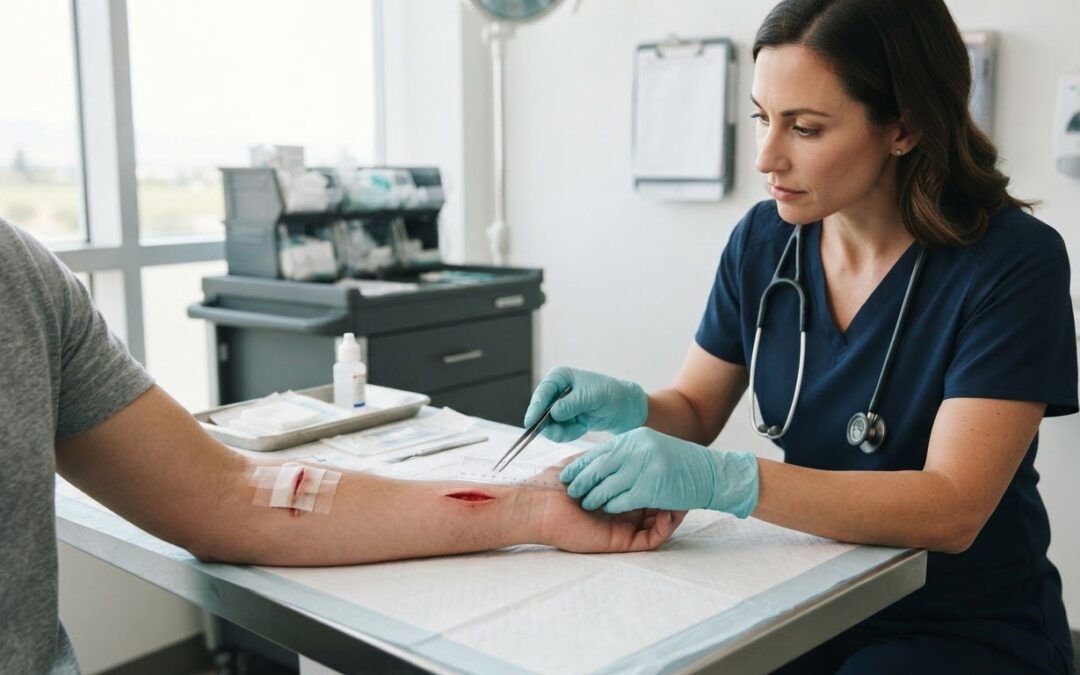
A sudden slip with a kitchen knife or an unexpected fall can trigger immediate panic, but the amount of pain you feel tells you surprisingly little about how severe an injury truly is. Clinical factors like tissue depth, anatomical tension, and exposed subcutaneous layers are what genuinely separate cuts that need stitches vs ones that don’t. It’s completely natural to feel uncertain in that moment. Nobody wants to risk permanent scarring or a preventable infection, yet spending hours waiting in an expensive hospital emergency room for a minor scrape is equally frustrating.
You can eliminate that uncertainty right now. By learning how to accurately evaluate laceration depth, structural location, and persistent bleeding, you can determine within minutes whether your wound demands professional closure or basic home first aid. Below, you will find practical clinical guidelines, step-by-step instructions for cleaning and protecting the injury, and clear direction on seeking prompt walk-in care before the standard six-to-eight-hour treatment window closes.
Key Takeaways
- Clinical evaluation criteria—including depth exceeding a quarter-inch, gaping edges, and visible subcutaneous tissue—clearly separate cuts that need stitches vs ones that don’t.
- Seeking professional closure within the primary six-to-eight-hour treatment window dramatically reduces bacterial infection rates and minimizes long-term scar formation.
- Effective first-aid stabilization requires sustained, direct pressure and gentle tap water irrigation while strictly avoiding tissue-damaging chemical irritants like hydrogen peroxide.
- Uncomplicated, non-life-threatening lacerations are evaluated and repaired rapidly at walk-in urgent care centers without the excessive wait times and high facility fees of hospital emergency rooms.
Triage Matrix: Cuts That Need Stitches vs. Cuts You Can Treat at Home
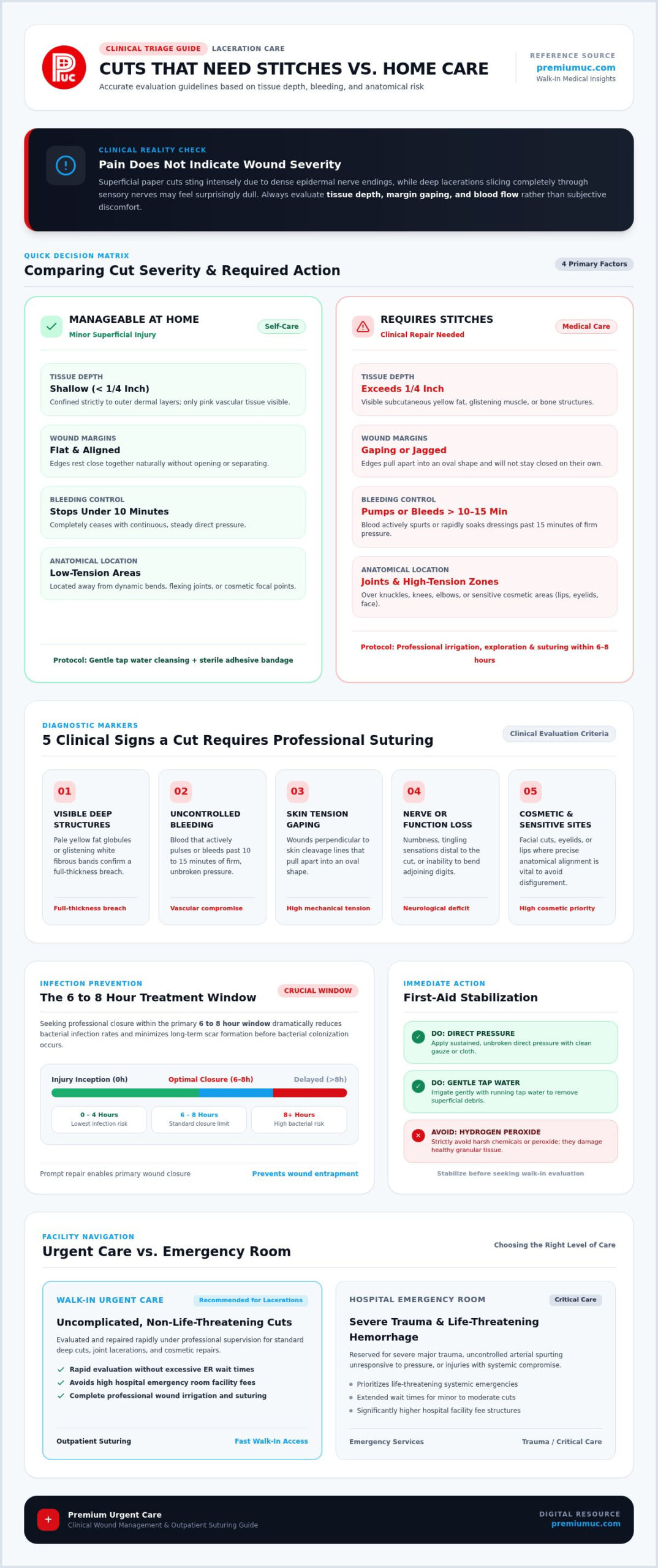
When an injury occurs, evaluating wound depth, edge separation, and blood flow provides immediate clarity. Many people assume pain signals severity, but discomfort is actually an unreliable gauge. Superficial paper cuts often sting intensely because nerve endings cluster tightly in the epidermis. In contrast, deep lacerations that slice entirely through sensory nerves can feel surprisingly dull. To accurately distinguish cuts that need stitches vs ones that don’t, clinicians rely on anatomical landmarks rather than subjective pain.
The anatomical location matters just as much as depth. A quarter-inch cut on a thigh might heal cleanly with conservative care, but that same wound on a lip or eyelid carries functional and cosmetic risks. Similarly, cuts crossing high-tension joints pull apart whenever you move, requiring mechanical reinforcement with a clinical surgical suture to heal without gaping.
| Clinical Feature | Manageable at Home | Requires Professional Stitches |
|---|---|---|
| Tissue Depth | Shallow, confined to outer skin layer | Exceeds 1/4 inch; exposed fat, muscle, or bone |
| Wound Margins | Edges rest flat and stay together naturally | Gaping edges that pull apart; jagged margins |
| Bleeding Control | Stops within 10 minutes of direct pressure | Pumps, spurts, or bleeds past 10-15 minutes |
| Joint Involvement | Away from dynamic bends or friction zones | Directly over knuckles, elbows, or knees |
Understanding these core differentiators simplifies your next steps and prevents costly, unnecessary trips to the emergency department.
Characteristics of Minor Cuts Manageable at Home
Minor lacerations remain strictly within the superficial dermis. You will notice that the edges stay neatly aligned without assistance, and bleeding halts entirely within ten minutes of steady pressure. These minor abrasions only require gentle cleansing and a sterile adhesive strip to heal cleanly.
Hallmarks of Lacerations Requiring Medical Stitches
Deeper wounds demand clinical attention. If a laceration penetrates past a quarter-inch, reveals yellowish fatty globules, or continues soaking through gauze dressings after fifteen minutes, it cannot heal safely on its own. Wounds that open when flexing a joint also require mechanical closure to prevent wide, fragile scar tissue.
5 Clinical Signs a Cut Requires Professional Suturing
Determining whether an acute injury needs professional closure comes down to five distinct clinical markers. Rather than guessing, providers look at visible anatomical layers, vascular integrity, skin tension, functional movement, and cosmetic risk. As highlighted in the American Academy of Family Physicians review on Laceration Repair: A Practical Approach, proper wound evaluation ensures structural layers align correctly to restore function and prevent deep-seated bacterial entrapment.
Before deciding on home care, check for these five objective clinical signs:
- Visible Subcutaneous Structures: Any sight of pale yellow fat globules or glistening white fibrous bands confirms a full-thickness breach.
- Uncontrolled Hemorrhage: Blood that actively pulses or bleeds past ten to fifteen minutes of firm, unbroken pressure.
- Gapping from Skin Tension: Wounds oriented perpendicular to natural skin cleavage lines that pull open into an oval shape.
- Neurological or Functional Deficits: Numbness, tingling sensations distal to the cut, or an inability to bend an adjoining finger or toe.
- High-Visibility or Delicate Locations: Cuts on facial features, eyelids, or lips where precise alignment is vital to prevent disfigurement.
If your injury exhibits any of these indicators, assessing cuts that need stitches vs ones that don’t becomes straightforward. You can walk into a local clinic for outpatient suturing lacerations to ensure the wound is thoroughly irrigated, inspected, and repaired under professional supervision.
Depth and Visible Internal Structures
Superficial cuts reveal only the pinkish hue of vascular dermis. If you look into the wound and see granular, yellowish fat globules or dull white fibrous sheets, the laceration has penetrated the subcutaneous tissue. Deep structural layers cannot reconnect through secondary healing without leaving dense internal scar tissue. Complex puncture-lacerations from glass or jagged metal also carry hidden tissue damage beneath the surface, requiring clinical exploration to rule out retained foreign bodies.
Active Bleeding Duration and Flow Rate
Apply direct, firm pressure with a clean cloth for ten continuous minutes without lifting the pad to peek. Venous bleeding typically slows to a mild ooze within this period. If blood continues soaking through dressings, or if it pulses rhythmically with each heartbeat, deeper arterioles are compromised. Patients taking prescription anticoagulants face compounded clotting delays and should seek immediate medical assessment if bleeding persists past fifteen minutes.
Anatomical Location and High-Tension Movement Zones
Lacerations over dynamic joints experience relentless mechanical stress. Every time you bend a knuckle, wrist, or knee, surrounding skin tension pulls the wound margins apart. Without durable sutures anchoring the deeper dermal borders, these injuries repeatedly reopen, increasing infection risks and creating widened scars. Facial wounds require similar technical precision. Fine, micro-sutures approximate delicate borders such as the vermilion border of the lip to preserve symmetrical appearance.
The Critical Timing Window and Bacterial Infection Risks
Timing is a critical variable when deciding whether a wound requires clinical closure. Human skin serves as a sterile shield, but an open laceration begins collecting environmental microbes immediately. Within hours, normal skin flora such as Staphylococcus and Streptococcus migrate into the wound bed and multiply. When evaluating cuts that need stitches vs ones that don’t, recognizing this biological window prevents severe downstream complications.
Delaying care turns a clean laceration into a colonized wound. If you wait too long, clinicians cannot safely perform primary surgical closure. Sealing an infected or heavily contaminated wound under tension traps active bacteria beneath the epidermal barrier, creating a breeding ground for localized abscesses or systemic cellulitis. In such instances, medical providers must leave the laceration open to heal by secondary intention. This process relies on gradual granulation tissue formation from the bottom up, resulting in a prolonged recovery period and a substantially wider, more noticeable scar.
Once medical closure is completed within the appropriate timeframe, strict home hygiene preserves the repair. Reviewing medical guidelines for caring for stitches at home ensures the incision stays clean, dry, and protected against secondary pathogens throughout the recovery phase.
The 6-to-8-Hour Closure Rule
The standard golden window for suturing most body wounds is six to eight hours post-injury. Beyond this timeframe, bacterial colony counts typically exceed safe levels for primary closure. Facial lacerations represent the primary exception. Because the face possesses a robust, vascular blood supply that rapidly delivers immune cells to fight off microbial proliferation, facial lacerations can often be closed up to 12 to 24 hours after injury under proper clinical supervision.
Tetanus Immunization and Microbial Contamination
Deep puncture wounds and jagged cuts sustained outdoors carry an elevated risk of contamination from Clostridium tetani. This anaerobic spore thrives in soil, dust, and animal waste. Clinical protocols dictate that any dirty or deep wound requires an updated tetanus toxoid booster if you haven’t received one within the past five years. For clean, minor wounds, the ten-year threshold applies.
Differentiating cuts that need stitches vs ones that don’t also means knowing when infection has taken hold. Seek immediate professional evaluation if your wound develops these symptoms:
- Expanding redness extending more than a quarter-inch beyond the wound margins
- Increasing local heat and persistent, throbbing tenderness
- Purulent, foul-smelling yellow or green drainage
- Red lymphatic streaks traveling up the injured extremity toward the torso
- A systemic fever developing after the injury
Immediate First Aid: What to Do Before Medical Help
Stabilizing an acute injury before seeking clinical evaluation prevents excess blood loss and protects vulnerable internal tissue. When assessing cuts that need stitches vs ones that don’t, your immediate initial response should focus on hemostasis and contamination control. Taking the correct actions at home preserves tissue viability, while improper handling can worsen cellular damage.
Hemostasis and Cleaning Protocols
Execute these four clear steps sequentially as soon as the injury occurs:
- Step 1: Continuous Direct Pressure: Place sterile gauze or a clean cloth over the wound and apply firm, uninterrupted pressure with your fingers or palm for ten full minutes. Do not remove the pad to check on clotting, as lifting disrupts fragile platelet plugs.
- Step 2: Gentle Tap Water Irrigation: Once active bleeding slows, rinse the skin surface under cool, running tap water. Allow the fluid stream to carry away superficial dirt and debris without rubbing the raw tissue.
- Step 3: Eliminate Harsh Chemicals: Never pour hydrogen peroxide, rubbing alcohol, or iodine into an open laceration. These chemicals are cytotoxic; they destroy healthy white blood cells and delicate fibroblast tissue, impairing healing and worsening scarring.
- Step 4: Controlled Elevation: If you sustained an injury to an arm or leg, you may elevate the extremity above heart level while maintaining firm manual pressure. This reduces local intravascular pressure and slows venous pooling.
Protecting the Wound in Transit
Once bleeding is managed, shield the site before traveling to a clinical facility. Cover the open margins with a sterile, non-adherent dressing and secure it snugly with breathable medical tape. If the injury contains deeply embedded objects like glass shards, nail fragments, or wood splinters, leave them in place. Attempting to pull foreign bodies out at home risks tearing underlying arteries, tendons, or nerves. Medical providers use localized anesthesia and sterile instrumentation to safely inspect the wound base and extract foreign material.
For Central Valley residents requiring prompt evaluation, exploring resources for wound care in Fresno offers a practical route for immediate professional intervention. If you are uncertain about tissue depth or cannot bring wound margins together, visit our walk-in clinic for urgent care consultations so our clinical team can inspect, clean, and close the injury safely.
Urgent Care vs. Emergency Room: Choosing the Right Care
Selecting the appropriate clinical setting saves critical time and prevents excessive medical expenses. When navigating cuts that need stitches vs ones that don’t, patients often default to hospital emergency rooms out of sheer reflex. Hospital emergency departments operate on strict acuity triage scales, meaning non-life-threatening lacerations routinely wait behind polytraumas, cardiac events, and strokes. For uncomplicated full-thickness skin lacerations, an outpatient urgent care center provides focused, prompt wound care without the prolonged waits or expensive hospital facility fees.
Understanding which symptoms indicate high-level trauma ensures you direct yourself or your family member to the right level of care immediately.
When Urgent Care Is the Ideal Choice
Walk-in urgent care centers excel at managing non-life-threatening wounds that exceed basic home first aid. If bleeding stops with pressure, but the edges gap, fatty tissue shows, or the cut crosses a mobile joint, urgent care offers rapid outpatient closure. Clinicians routinely perform thorough saline irrigation, local anesthetic infiltration, exploration for small foreign objects, and precise closure using sutures, surgical staples, or dermal adhesives.
For patients across the Central Valley, comprehensive wound management is readily accessible. Walk-in medical evaluation is available across clinic locations in Fresno, Clovis, and Selma under the clinical leadership of Medical Director Dr. Erick Green. This gives local families immediate access to professional closure within the golden six-to-eight-hour treatment window.
When to Go Directly to an Emergency Room or Call 911
Certain traumatic injuries bypass outpatient capabilities and require comprehensive hospital emergency resources, surgical operating suites, or acute resuscitation teams. Dial 911 or proceed straight to the nearest emergency department if the wound presents any of these red-flag criteria:
- Pulsatile, arterial bleeding that sprays or continues gushing through thick dressings despite continuous, heavy manual compression.
- Severe structural trauma accompanied by complete loss of sensation, pale or blue cold skin distal to the wound, or absent pulses in the wrist or foot.
- Lacerations involving deep severed extensor or flexor tendons, visible bone fractures, or complete joint dislocation.
- Complex facial trauma, complete or partial tissue avulsions, or traumatic amputations requiring immediate plastic or reconstructive surgery.
If your injury is stable, manageable, and does not exhibit severe limb-threatening red flags, walk into Premium Urgent Care for prompt, professional wound closure and clinical evaluation.
Take Decisive Action for Safe, Clean Wound Healing
Knowing how to distinguish cuts that need stitches vs ones that don’t protects against preventable cosmetic scarring and dangerous bacterial complications. Objective clinical factors like deep tissue exposure, gaping margins, and persistent bleeding clearly dictate when home care isn’t enough. Acting promptly within the standard six-to-eight-hour window ensures an injury can be safely closed before bacterial colonization sets in.
You don’t need to spend hours waiting in an expensive hospital emergency room to receive meticulous clinical attention. Supervised by Medical Director Dr. Erick Green, our outpatient clinics across Fresno, Clovis, and Selma deliver accessible walk-in laceration repair for Central Valley families. Our medical providers offer comprehensive wound care, utilizing advanced suturing techniques, sterile surgical glue, and seamless follow-up care for subsequent suture removal.
If you or a loved one sustained an injury and feel uncertain about its depth, walk into Premium Urgent Care today for prompt, professional wound evaluation. Getting an expert assessment right away guarantees the cleanest possible healing and provides complete peace of mind.
Frequently Asked Questions
How do I know if a cut is deep enough to need stitches?
A cut requires stitches if it penetrates deeper than a quarter-inch or exposes yellowish fat, fibrous tendon, or bone. When examining cuts that need stitches vs ones that don’t, check if the margins gap open spontaneously. If the edges pull apart when you release pressure, natural healing cannot close the space cleanly, and medical approximation is necessary.
Can a deep cut heal naturally on its own without stitches?
Deep lacerations can eventually close without stitches, but they do so through secondary intention. This biological process fills the gap with dense granulation tissue, resulting in a significantly wider, raised scar. Healing takes weeks longer and drastically raises the risk of bacterial infection or localized contractures compared to early clinical closure.
How many hours do you have to get stitches after receiving a cut?
The standard golden window for suturing most body lacerations is six to eight hours post-injury. Seeking medical closure within this window prevents trapping proliferating environmental bacteria beneath closed tissue. Facial lacerations are an exception; their rich vascular supply allows skilled providers to safely approximate margins up to 12 to 24 hours later.
What happens if you don’t get stitches when you actually need them?
Skipping necessary stitches leaves deeper structural layers separated. This gap leads to prolonged bleeding, delayed healing times, and prominent, fragile scarring that can reopen under mechanical strain. Untreated open wounds also serve as persistent entry points for invasive bacteria, substantially increasing your risk of cellulitis, deep tissue abscesses, and systemic infection.
Can urgent care clinics put stitches in or do I have to go to an ER?
Urgent care clinics routinely perform outpatient wound closure for uncomplicated lacerations. You do not need an emergency room unless you experience uncontrolled arterial spraying, complex facial fractures, severed tendons, or limb-threatening trauma. Outpatient clinics handle standard sutures, staples, and tissue glue efficiently without excessive emergency room triage delays.
Does getting stitches hurt, and how do medical providers numb the area?
The suturing process itself is virtually painless because providers thoroughly numb the area first. Clinicians inject a local anesthetic, such as lidocaine, directly around the wound margins. You might feel a brief initial pinch and slight stinging sensation during infiltration. Once the anesthetic takes effect, you will feel only mild dull pressure rather than sharp discomfort.
How long do stitches usually have to stay in before being removed?
Suture removal timing depends entirely on the anatomical location. Facial stitches are typically removed after 4 to 5 days to prevent prominent marks. Scalp sutures stay for 7 to 10 days, while stitches on the arms and legs require 7 to 14 days. Sutures placed over dynamic joints, like knees or knuckles, remain for 10 to 14 days.
Is skin glue or Butterfly tape just as effective as traditional stitches?
Medical-grade skin glue and butterfly closures are effective only for shallow lacerations under minimal dynamic tension. They work well for small, straight facial or forearm wounds with easily approximated edges. However, they lack the tensile strength needed for deep cuts or high-movement areas like joints, where deep dermal stitches are required to prevent separation.