
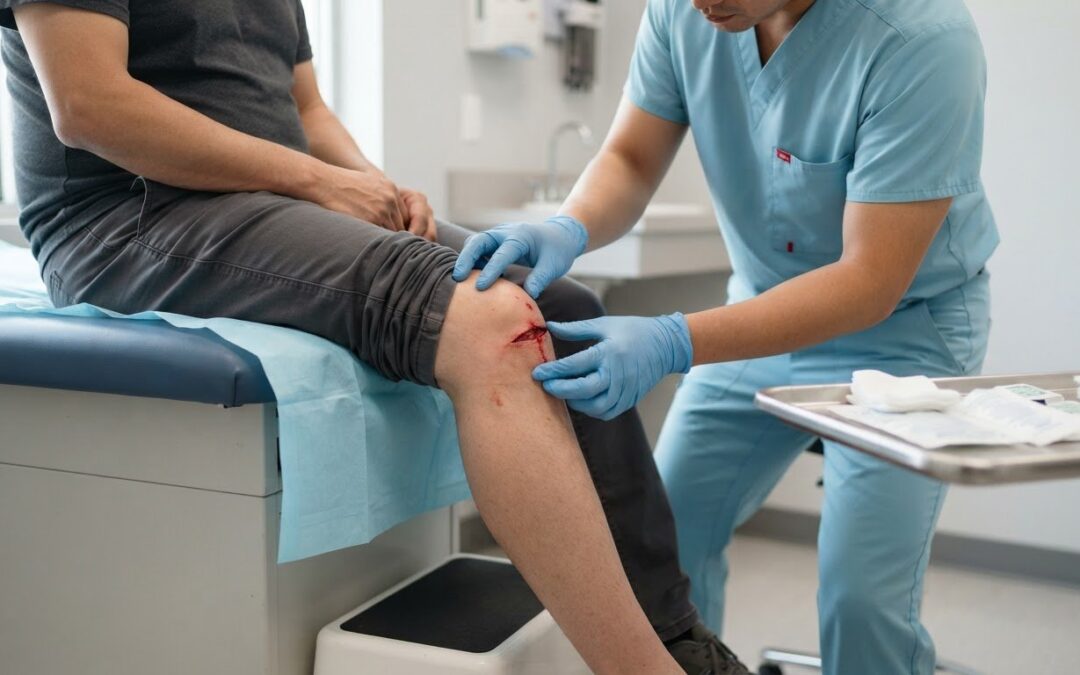
A cut that needs stitches in Fresno should be assessed as soon as possible. Most cuts that need closure should be treated within 6 to 8 hours, though the wound’s location and condition can affect whether it can be closed later. If bleeding won’t stop with firm, direct pressure, or the wound is deep, gaping, or over a joint, seek care promptly.
It’s understandable to wonder whether a cut needs stitches or can wait. Its depth, length, edges, and location can all help show how urgently it needs medical attention.
This guide explains which cuts may need stitches, how to respond to bleeding, and when tetanus or rabies concerns matter. You’ll also learn how a clinician may assess a wound and why bites or cuts with debris may need a different approach to closure.
Key Takeaways
- Seek care promptly for a deep, gaping, or hard-to-close cut; many wounds that need closure are treated within 6 to 8 hours.
- Dirty objects, glass, and bites can leave debris or bacteria in a wound, so a clinician may need to clean and assess it before deciding how to close it.
- Apply firm, direct pressure to control bleeding. If it continues after 10 or 15 minutes, seek urgent or emergency care.
- The Centers for Disease Control and Prevention recommends tetanus boosters every 10 years for adults. Animal bites also warrant prompt attention, including consideration of rabies risk.
Cuts caused by dirty objects, bites, or glass
A dirty object, bite, or shard of glass can leave debris inside a cut. The injury’s depth, location, and contamination all affect what should happen next.
For a bleeding wound, apply direct pressure and arrange prompt assessment if it is deep, gaping, or caused by a bite. The wound may need cleaning before closure. Glass can leave fragments behind, and bites can introduce bacteria beneath the skin, so closing a cut without proper assessment may trap debris or contamination.
Timing for Wound Closure
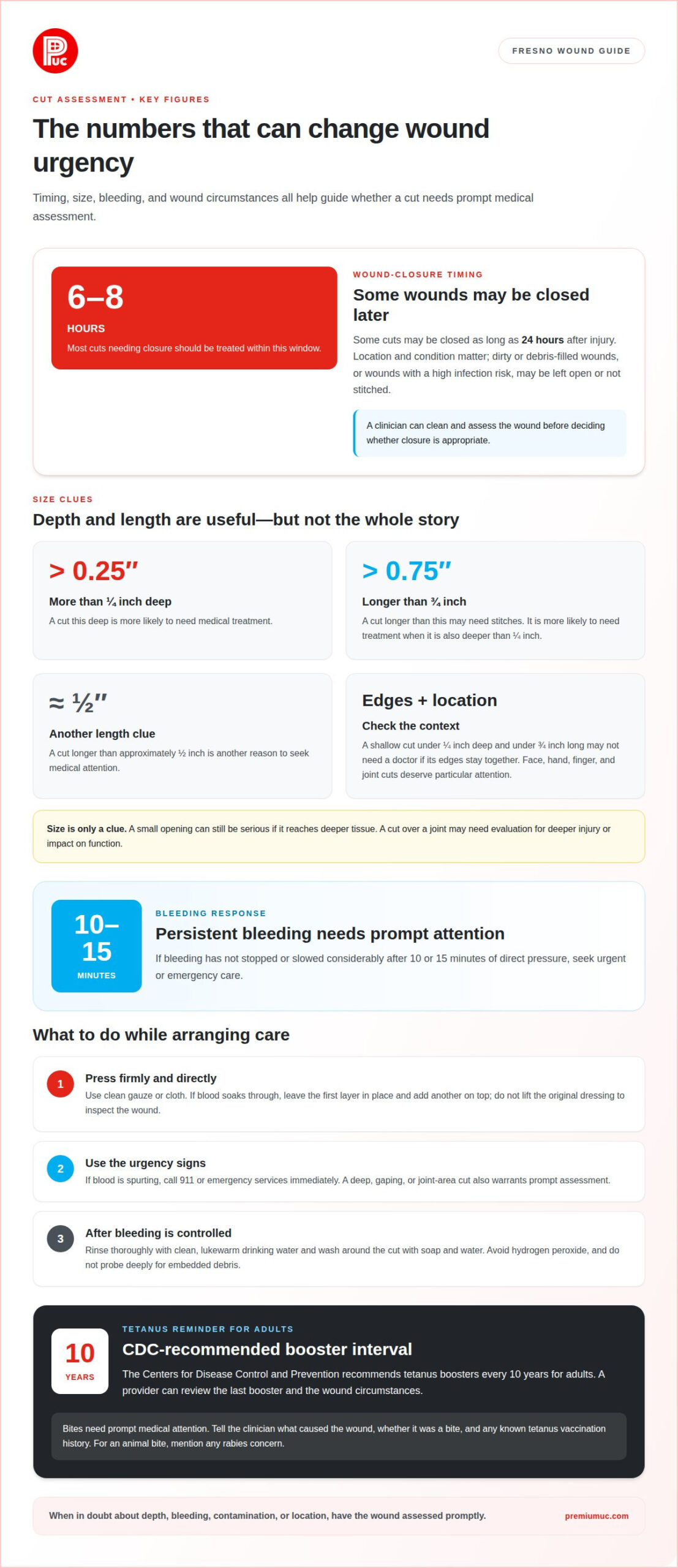
The closure window is the time after injury when a cut can be closed with stitches, staples, or skin adhesive. Most cuts needing closure should be treated within 6 to 8 hours, while some may be closed as long as 24 hours after injury.
Timing depends on the wound’s location and condition. Dirty or debris-filled wounds may be left open, and cuts with a high infection risk may be left unstitched until after 24 hours or not stitched. A clinician can clean and assess the wound before deciding whether closure is appropriate.
Stitches and Skin Adhesive
Stitches or skin adhesive can bring wound edges together when a cut is too deep or open to heal well on its own. A cut more than 0.25 inches deep, or longer than 0.75 inches and deeper than 0.25 inches, is more likely to need medical treatment.
Face, hand, finger, and joint cuts deserve particular attention because location can affect function or scarring. A shallow cut under 0.25 inches deep and under 0.75 inches long may not need a doctor if its edges stay together. A bleeding cut on or affecting a joint may also require evaluation for deeper injury.
An emergency-room visit for stitches in Fresno varies with the care the wound requires and the patient’s coverage. Urgent care clinics that treat lacerations can stitch suitable cuts; hours vary by clinic. Without insurance, a clinic can assess the cut, while the charge depends on the care provided and payment arrangements.
Tetanus and rabies considerations
Tetanus and rabies are separate concerns after a wound. When assessing a laceration, a clinician considers the injury and immunization history, not just whether its edges need closure. A bite that draws blood needs prompt medical attention. Mention any rabies concern after an animal bite, since stitches alone do not address every risk associated with the exposure.
For adults, the Centers for Disease Control and Prevention recommends tetanus boosters every 10 years. After a cut, a provider can review when the last booster was given and consider the wound circumstances. Adults with a bleeding bite wound should seek prompt medical attention, and a clinician can review their tetanus vaccination history.
Immunization history matters even when a cut looks small. A shallow laceration differs from a puncture wound caused by a dirty object. Tell the clinician what caused the injury, whether it was a bite, and any known tetanus vaccination history. This information helps guide wound care and assessment of whether a booster may be needed.
Antibiotics and tetanus immunization serve different purposes. A clinician may consider antibiotics when assessing a bite or contaminated wound, but that does not replace a review of tetanus vaccination. Don’t take leftover antibiotics for a cut. A clinician should assess the wound and determine appropriate care.
While arranging assessment, handle the wound gently and cover it with a clean dressing once bleeding is controlled. If the injury is severe or needs emergency attention, seek emergency care rather than delaying for routine wound closure. For a bite, describe the animal and how the injury happened, if known. This context helps guide assessment of the wound and possible rabies exposure.
Bleeding that continues despite direct pressure
Bleeding that continues under firm pressure can signal a wound that needs medical assessment. Press clean gauze or cloth directly over the cut. If blood soaks through, leave the first bandage in place and add another layer on top. Don’t lift the original dressing to inspect the wound, because that interrupts pressure.
For first aid before medical care, apply steady direct pressure and elevate the injured area above the heart if possible. Once bleeding is controlled, rinse the wound thoroughly with clean, lukewarm drinking water and wash around it with soap and water. Avoid hydrogen peroxide, which can damage tissue.
Use the bleeding response as a guide to urgency. If blood is spurting, call 911 or emergency services immediately. If bleeding hasn’t stopped or slowed considerably after 10 or 15 minutes of direct pressure, seek urgent or emergency care. A cut that still bleeds after 15 minutes is more likely to need treatment by a doctor.
Some wounds need more than home first aid. A deep cut that keeps bleeding may need medical evaluation for closure and assessment of injured structures. High-impact injuries, such as an impalement or bleeding crush injury, should be examined at an emergency room or urgent care center. Tell the clinician if the injured person takes blood thinners.
After bleeding stops, keep the wound clean and covered while arranging care if needed. Cleaning can remove visible dirt, but don’t probe deeply for embedded debris. If the cut came from a dirty object, glass, or a bite, mention the cause during assessment. A clinician can determine whether closure is appropriate after assessing the wound.
If a cut won’t stop bleeding, don’t delay assessment while deciding whether it needs stitches. Persistent bleeding warrants prompt attention, especially when direct pressure hasn’t controlled it.
Cut depth and length thresholds
Length and depth offer useful clues, but a wound’s edges and location matter too. Even a small opening can be serious if it reaches deeper tissue.
Cut Length Thresholds
A length threshold can help you decide when a cut needs medical assessment. In the United States, a cut longer than three-fourths of an inch may need stitches, while a cut longer than approximately ½ inch is another reason to seek medical attention.
Length alone doesn’t determine treatment. A shorter wound may need care if its edges pull apart, it lies over a joint, or it affects the face or hand. If you have a cut that may need stitches in Fresno, consider how it looks when the skin is relaxed, not just its measurement.
Cut Depth and Size
Depth describes how far a cut extends below the skin, and it helps indicate whether deeper tissue may be involved. Cuts more than 0.25 inches deep are more likely to need a doctor’s assessment; a cut over 0.75 inches long and deeper than 0.25 inches also warrants attention.
A shallow cut under 0.25 inches deep and under 0.75 inches long may not need a doctor if its edges stay together. A wound exposing the dermis or yellow fatty tissue needs immediate medical attention and likely stitches. A 3-6 mm cut is borderline, especially if it gapes or affects the face, hand, or joint.
Most puncture wounds don’t need stitches and may heal faster without closure. If the wound is open or bleeding, apply direct pressure to stop the bleeding, then gently clean it with water. Don’t rely on size alone to rule out infection or deeper injury. If you’re concerned about a cut that needs stitches in Fresno, prompt assessment can clarify the next step.
If depth or size makes the decision unclear, get a cut assessed promptly.
Premium Urgent Care
Premium Urgent Care provides urgent care consultations and sutures suitable lacerations. A clinician can assess the wound and determine whether it needs prompt medical attention. Cuts with persistent bleeding, visible deeper tissue, or a location affecting a joint should be assessed without delay. If blood is spurting or the injury is severe, seek emergency care.
For a wound that is not immediately life-threatening but still concerns you, a consultation can help clarify the appropriate next step. Tell the clinician how the injury happened, when it occurred, and whether the bleeding has slowed. These details help frame the assessment.
Contact Premium Urgent Care to discuss your concern and arrange an urgent care consultation.
Make your next step with confidence
If you’re deciding what to do about a cut that may need stitches in Fresno, focus on getting an appropriate assessment rather than judging the wound alone. Explain how the injury happened, when it occurred, and what has changed. Mention any medicines that affect bleeding and relevant vaccination history.
Choose care based on what the wound is doing now. If the injury is severe or the situation feels like an emergency, seek emergency care. For a non-emergency cut that still needs professional attention, Premium Urgent Care can assess the wound and help clarify the next step. You don’t need every answer before seeking care.
Start a conversation with Premium Urgent Care about your wound and the care you may need. Taking action when you’re concerned can help you move forward with a clearer plan.
Frequently Asked Questions
How soon should I come in for a cut that may need stitches?
Get the wound assessed as soon as possible, ideally within 6 to 8 hours if closure may be needed. If you’re unsure when it happened, estimate the time and tell the clinician. Don’t wait for the cut to become more painful or look worse before seeking care. The injury’s location and contamination can affect whether closure is appropriate.
How Do I Know If I Need Stitches?
A cut may need stitches if its edges won’t stay together, deeper tissue is visible, or it affects movement near a joint. For example, a cut across a finger crease deserves attention if bending the finger pulls it open. A clinician can assess the cut’s depth, location, and condition to determine whether stitches, another closure method, or wound care alone is suitable.
What happens if you don’t get stitches?
If a cut needs closure but doesn’t receive it, healing may take longer, and the wound may scar more or become infected. Its edges may also remain separated, affecting healing near a moving area such as a knuckle. Keep the wound clean and seek assessment if it remains open, becomes increasingly painful, or develops redness, warmth, or pus.
Frequently Asked Questions: When Does a Cut Need Stitches?
A cut may need stitches when its depth, location, or separated edges make closure important for healing. For example, a wound that opens each time a nearby joint moves may need professional evaluation. Glass, a dirty object, or a bite can also change the treatment plan because the wound may need careful cleaning before closure is considered.
How Deep Does a Cut Need to Be to Need Stitches?
A cut more than 0.25 inches deep is more likely to need medical treatment. Depth isn’t the only factor: exposed dermis or yellow fatty tissue beneath the skin calls for immediate medical attention and likely stitches. A cut that appears narrow at the surface can still extend deeper, so don’t rely on its opening alone to judge the injury.
How Long Can You Wait to Get Stitches?
Most cuts needing closure should be treated within 6 to 8 hours, though some may be closed as long as 24 hours after injury. That later window doesn’t apply to every wound. A dirty or debris-filled cut may be left open for cleaning, and a high-infection-risk wound may not be stitched. Seek assessment promptly rather than waiting to see if the window applies.