

Can urgent care safely evaluate and lance a boil in Selma? A clinician can assess a painful, swollen bump and determine whether outpatient drainage is appropriate, but not every boil should be treated the same way. The bump’s location and severity matter.
If you’re worried an infection could worsen, or you’re unsure whether the lump is an abscess, seek medical evaluation rather than trying to drain it yourself. This guide to boil lancing Selma explains when a boil may need professional attention, what to expect during an incision-and-drainage evaluation, and how to distinguish a non-emergency urgent care concern from a situation that needs emergency care.
Premium Urgent Care serves patients in Selma, Clovis, and Fresno with urgent care consultations and outpatient abscess incision and drainage. A clinician first evaluates the lesion and decides whether drainage is suitable for your situation. The sections ahead cover signs that warrant assessment, what the clinical process may involve, and where to seek non-emergency care locally.
Key Takeaways
- A painful or swollen bump may be an abscess, but a clinician needs to assess it to determine whether drainage is appropriate.
- With boil lancing Selma care, evaluation comes first. Not every boil needs an incision-and-drainage procedure.
- Know which symptoms may call for urgent evaluation and which warning signs may require emergency care.
- During your visit, share when the bump appeared, how it has changed, and relevant health history or medications.
- Premium Urgent Care serves Clovis, Selma, and Fresno with urgent care consultations and outpatient abscess incision and drainage.
What Is a Boil, and When Should Selma Patients Seek Medical Care?
A tender bump can have several causes, so appearance alone doesn’t tell you what’s happening beneath the skin. A boil is a localized infection that can form a pocket of pus, often starting around a hair follicle. A pimple, cyst, or other skin bump may look similar but need different care. The overview of Boil (furuncle) describes common features, but a clinician examining the area is best placed to assess whether a particular lesion is an abscess and whether drainage is appropriate.
That distinction matters for Selma patients considering boil lancing. Incision and drainage isn’t automatically needed just because a lump is sore or contains pus. A clinician considers its size, location, symptoms, and your health before deciding what care is appropriate. For example, a boil near the face or spine, or one affecting someone with diabetes, warrants medical attention. Don’t try to judge its depth or treat it based on appearance alone.
Stories about severe complications after a boil is lanced at home can be concerning. A published case report describes one patient’s experience, but it can’t show what will happen with every boil or predict an individual outcome. The practical lesson is to avoid puncturing or squeezing a lesion and seek an assessment if symptoms are worsening or the cause of a bump is uncertain.
How can you tell a boil may need medical evaluation?
Pay attention to how the bump changes. Increasing pain, swelling, warmth, or visible drainage are reasons to arrange an assessment, particularly if the area continues to worsen or interferes with normal activity. These signs don’t prove that the bump is an abscess. A small opening or drainage also doesn’t reveal how deep the infection may extend. If you’re unsure what the lesion is, a clinician can examine it and guide the next step.
When should a boil be treated as an emergency?
Fever, redness that spreads rapidly, or feeling severely unwell can signal an infection that needs urgent attention. Seek emergency care for severe symptoms or signs of a life-threatening condition. Emergency care is different from a routine urgent-care consultation: if symptoms are severe or rapidly escalating, don’t delay emergency help to arrange a non-emergency visit. For worsening but non-emergency symptoms, a clinician can assess whether urgent care is appropriate.
When you seek care, share when the bump appeared, how it has changed, and any relevant health conditions or medicines. This context helps the clinician assess the lesion and decide whether observation, drainage, or another approach is appropriate. The decision is based on your examination, not a single symptom or comparison with someone else’s case.
How Does Professional Boil Lancing and Abscess Drainage Work?
Professional incision and drainage starts with an assessment, not an automatic decision to lance the bump. A boil may be small or may not contain a drainable pocket, so treatment depends on the clinician’s findings and your overall health. For people seeking boil lancing in Selma, the goal of the visit is to identify the problem and choose an appropriate plan, which may or may not include drainage.
What happens during the clinical assessment?
The clinician will ask when the lesion appeared, how it has changed, and what symptoms you’ve noticed. Be ready to mention relevant health conditions, previous skin infections, and medications. The clinician then examines the bump and surrounding skin, considering its location and appearance. This history and examination help determine whether an abscess is likely and whether incision and drainage, another treatment, or further evaluation is appropriate.
What does incision and drainage involve?
If the clinician determines that drainage is suitable, a medical professional performs incision and drainage in a clinical setting. At a high level, the procedure involves opening the abscess so its contents can drain. The exact approach depends on the lesion and the assessment. This isn’t a home technique: squeezing or puncturing a boil yourself can injure the skin and may worsen the infection.
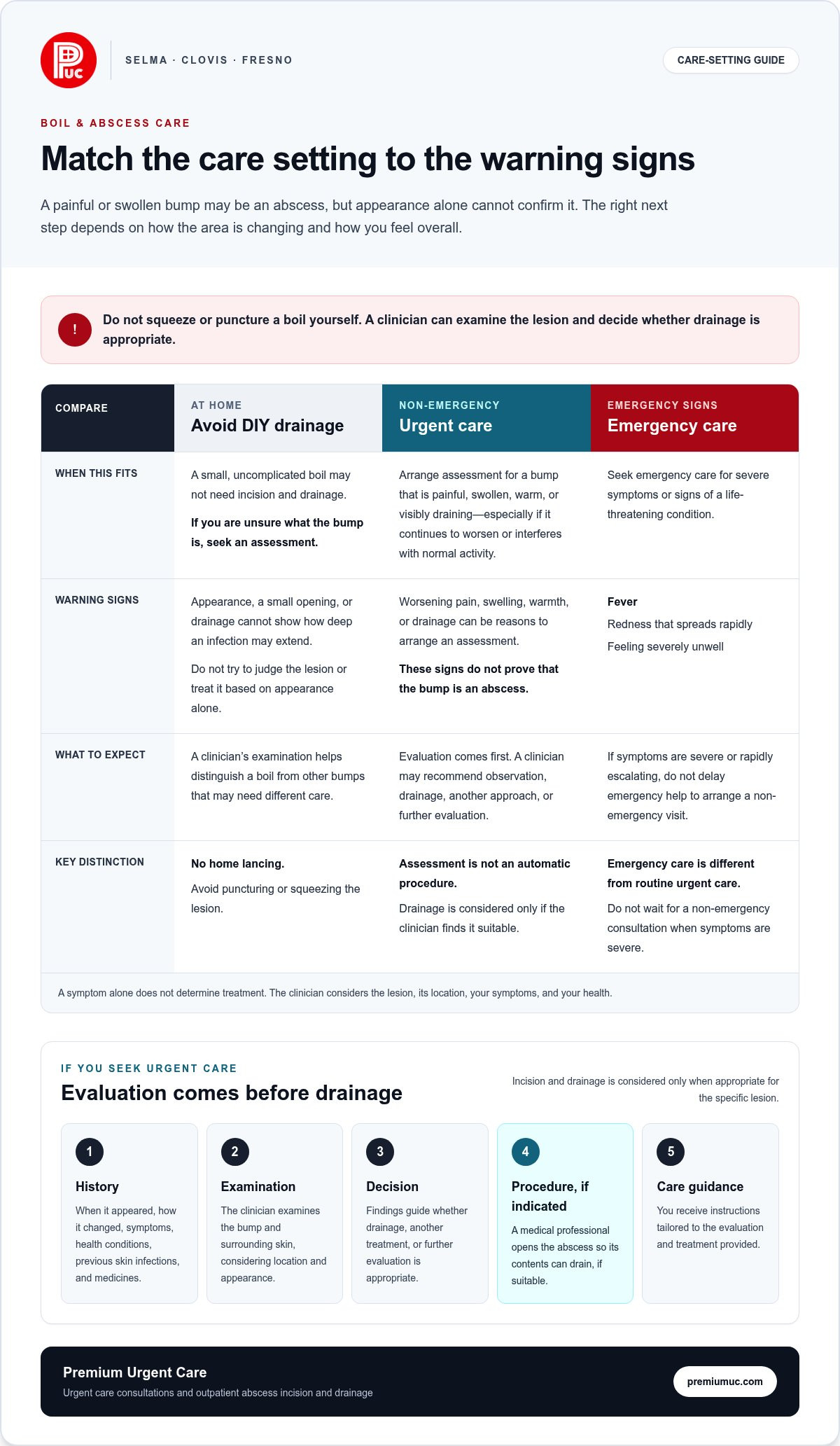
The visit generally follows a clear sequence:
- History: You describe when the bump appeared, its symptoms, and relevant medical background.
- Examination: The clinician assesses the lesion and nearby skin.
- Clinical decision: The findings guide whether drainage is appropriate or another plan is needed.
- Procedure, if indicated: A clinician performs incision and drainage when it’s suitable for the specific lesion.
- Care instructions: You receive guidance tailored to the evaluation and treatment provided.
Not every boil needs drainage. A clinician may recommend a different course based on the lesion’s features and your health circumstances. Antibiotics aren’t an automatic part of every visit either; the clinician decides whether they’re appropriate. The Mayo Clinic on Boil Treatment also describes incision and drainage as an option for some boils, alongside other considerations.
After the assessment, follow the instructions you’re given and ask for clarification if any part of the care plan is unclear. Premium Urgent Care provides urgent care consultations and outpatient abscess incision and drainage. For non-emergency evaluation in Clovis, Selma, or Fresno, learn more about urgent care at Premium Urgent Care.
Boil at Home, Urgent Care, or ER: Which Level Fits?
The right setting depends on how the lesion is changing and how you feel overall. A small, uncomplicated boil may not need incision and drainage, while a painful or worsening bump deserves clinical assessment. Use the guide below to help decide where to seek care. It can’t diagnose a skin problem or replace a clinician’s advice.
| Situation | Possible next step |
|---|---|
| Mild, localized bump with no worsening symptoms or fever | Careful home observation may be reasonable. Keep the area clean and don’t squeeze or puncture it. |
| Pain, swelling, or warmth is increasing, drainage appears, or you’re unsure what the bump is | Seek non-emergency assessment at urgent care. A clinician can evaluate the lesion and decide whether treatment, including drainage, is appropriate. |
| Fever, rapidly spreading redness, severe illness, or signs of a life-threatening condition | Seek emergency care. Don’t treat severe or rapidly escalating symptoms as a routine urgent-care visit. |
When may careful home observation be reasonable?
Observation may be suitable for a mild, stable bump when you feel well and don’t have systemic warning signs. Keep the skin clean, avoid irritating the area, and watch for changes in pain, size, warmth, or drainage. Don’t squeeze, puncture, or cut the lesion. If it worsens, new symptoms appear, or you’re uncertain about the cause, arrange a professional assessment rather than continuing to wait.
When is urgent care or emergency care more appropriate?
Urgent care can assess a painful, worsening, or uncertain lesion when symptoms aren’t severe or life-threatening. For Selma patients considering boil lancing, a clinician’s examination determines whether an abscess needs drainage; a visit doesn’t mean a procedure is always indicated. Fever, rapidly spreading redness, or feeling severely unwell calls for urgent attention, while signs of a life-threatening condition warrant emergency services.
These categories are guides, not guarantees. A lesion that seems minor can change, and its appearance can’t reliably show its depth or cause. People with diabetes or other relevant health conditions should be especially cautious about a new or worsening skin infection and seek medical advice about the appropriate level of care.
Premium Urgent Care provides urgent care consultations and outpatient abscess incision and drainage for patients in Clovis, Selma, and Fresno. For non-emergency symptoms, an urgent-care evaluation can help clarify the next step. If symptoms are severe or rapidly escalating, choose emergency care rather than delaying for a routine visit.
Before and After a Boil Visit: Practical Steps for Selma-Area Patients
A little preparation can make an urgent-care visit more focused. Clear details about how the bump started and changed help the clinician understand your concerns and assess what care may be appropriate. If you’re seeking boil lancing in Selma, remember that the clinician’s findings guide the plan. Don’t squeeze, puncture, cut, or attempt to drain the lesion yourself; doing so can irritate the area or worsen the infection.
What information should you bring to an urgent-care visit?
Before your visit, note when you first noticed the bump and whether pain, swelling, warmth, redness, or drainage has changed. Share related symptoms, such as fever, and mention whether you’ve had boils before or they keep returning. Be prepared to discuss your health conditions, allergies, medications, and any treatments you’ve already tried.
- Timing and changes: When the bump appeared and how it has progressed.
- Symptoms: Pain, swelling, warmth, drainage, fever, or other changes you’ve noticed.
- Health background: Relevant conditions, allergies, medications, and any history of recurring boils.
You don’t need to diagnose the bump before coming in. A clear account of what you’ve observed is useful even if you aren’t sure whether it’s an abscess. If the lesion is in a sensitive area or affecting daily activity, mention that too so the clinician has a complete picture.
What should you do after a clinician evaluates the boil?
Follow the wound-care and follow-up instructions provided for your specific evaluation. Guidance can differ depending on whether the lesion was drained and what the clinician observed. If symptoms worsen or new concerning signs appear, seek reassessment. Don’t use someone else’s medication or change a prescribed treatment without guidance from the clinician who evaluated you.
If you’re given instructions you don’t understand, ask the clinician to clarify how to care for the area and what changes should prompt another assessment. Keep any recommended follow-up and note symptoms that change after the visit. These steps help you follow the care plan without relying on advice intended for someone else or another type of wound.
Care after a procedure is part of the overall evaluation, not a one-size-fits-all routine. For additional information about acute wound care, see this Fresno wound care guide. If you’re in Selma, Clovis, or Fresno and need non-emergency assessment, visit Premium Urgent Care for an urgent-care consultation. A clinician can evaluate the lesion and determine whether outpatient abscess incision and drainage is appropriate.
Boil and Abscess Care Near Selma: Premium Urgent Care
For patients in Selma with a painful or changing skin bump, the first step is a clinical assessment, not an assumption that it needs to be lanced. Premium Urgent Care serves Clovis, Selma, and Fresno, providing urgent care consultations and outpatient abscess incision and drainage. It’s a local option for non-emergency evaluation when you’re concerned a bump may be an abscess. A clinician examines the lesion and determines whether drainage is appropriate for your circumstances.
What can Selma-area patients expect from urgent-care evaluation?
Your evaluation is guided by your symptoms, health history, and what the clinician observes. Explain when the bump appeared, how it has changed, and any relevant conditions or medications. The clinician assesses the lesion and surrounding skin, then discusses the appropriate next step. Treatment depends on the examination and individual clinical circumstances, so a visit doesn’t automatically mean incision and drainage will be performed.
If the clinician determines that outpatient drainage is suitable, Premium Urgent Care provides abscess incision and drainage as an outpatient procedure. If drainage isn’t appropriate, the clinician will guide care based on the assessment. Instructions for care after the visit will reflect the findings and treatment. Share any symptom changes and ask questions if you need clarification about the plan.
How can you take the next step?
Consider urgent-care evaluation for a painful, worsening, or uncertain lesion when symptoms aren’t severe or life-threatening. A clinician can assess whether it may be an abscess and whether outpatient care is appropriate. Avoid trying to open or drain it yourself, and bring a clear account of its progress and your relevant medical history to help inform the evaluation.
Emergency symptoms call for a different level of care. Fever, rapidly spreading redness, feeling severely unwell, or signs of a life-threatening condition should not be handled as a routine urgent-care concern. Seek emergency services for severe or life-threatening symptoms rather than delaying for a non-emergency visit.
If you’re looking for boil lancing in Selma for a non-emergency concern, Premium Urgent Care offers a clear local next step: a clinician-led consultation and outpatient abscess drainage when the assessment supports it. Visit Premium Urgent Care for an urgent-care consultation to have a boil or suspected abscess evaluated.
Take the Next Step Toward Clearer Answers
Uncertainty about a changing skin bump can make it tempting to wait for a definite sign that it needs care. You don’t have to decide alone. If the lesion is becoming more uncomfortable or you’re unsure what it is, a clinical evaluation can help clarify what to do next. Keep track of changes and share them during your visit.
For boil lancing Selma concerns, the right plan starts with an individual assessment, not a home attempt to open the bump. If you’re considering non-emergency care, explore Premium Urgent Care services and take a practical step toward having your concern evaluated.
Seeking guidance is sensible, even when you’re not certain what the bump means. An appropriate assessment can help you move forward with a care plan suited to your situation.
Frequently Asked Questions
Can urgent care lance a boil in Selma?
Yes. Urgent care can evaluate a boil and may perform incision and drainage if a clinician finds it appropriate. For boil lancing in Selma, Premium Urgent Care provides abscess incision and drainage as an outpatient procedure. The clinician first considers the lesion and your health circumstances. Some bumps aren’t abscesses, and some abscesses don’t require drainage, so a procedure or particular result can’t be promised before an examination.
Should I try to lance a boil at home?
No. Don’t cut, puncture, or squeeze a boil, even if it appears close to the surface. Trying to open it can injure the surrounding skin and may worsen infection. A clinician can assess what the bump may be and recommend suitable care without guesswork. Arrange an evaluation if pain or swelling is getting worse, or if drainage or other concerning symptoms develop.
When should I go to urgent care for a boil?
Consider urgent care if a skin lesion is painful, worsening, or difficult to identify, but you don’t have severe emergency symptoms. For example, if a tender bump is enlarging over time or interfering with daily activities, a clinician can examine it and discuss suitable options. The assessment helps distinguish a minor concern from one needing treatment. Seek emergency care instead for severe illness, rapidly spreading redness, or potentially life-threatening symptoms.
Does every boil need to be drained?
No. Drainage isn’t necessary for every boil, and treatment shouldn’t be chosen based on size or appearance alone. A clinician considers the lesion, your symptoms, and individual circumstances. Some boils may be managed without a procedure; others may benefit from clinician-performed incision and drainage. If a bump changes or remains concerning, an examination can clarify the next step rather than waiting for it to look a certain way.
What happens during boil drainage at urgent care?
A clinician first reviews your symptoms and health history, then examines the area to decide whether drainage is appropriate. If a procedure is recommended, the clinician explains the plan and provides care instructions afterward. The approach and any follow-up depend on the individual assessment, so they can’t be determined in advance. Bring a list of your medicines and allergies, and mention any treatments you’ve already tried.
When is a boil an emergency?
Seek urgent medical attention if redness is spreading rapidly, you have a fever, severe pain, feel very unwell, or develop other serious symptoms. Severe or potentially life-threatening symptoms call for emergency services, not a routine urgent-care visit. This list can’t cover every situation or replace an individual assessment. If you’re unsure and symptoms are worsening, get prompt professional advice rather than attempting to manage the lesion yourself.
Can boils keep coming back?
Yes, boils can recur, and repeated episodes deserve clinical evaluation, especially if they return in the same area or come with other symptoms. Keep track of where and when they appear and mention any pattern to the clinician. Recurrence alone doesn’t establish a particular diagnosis. An assessment can consider possible contributing factors, guide care for the current concern, and help determine whether further evaluation is needed.