
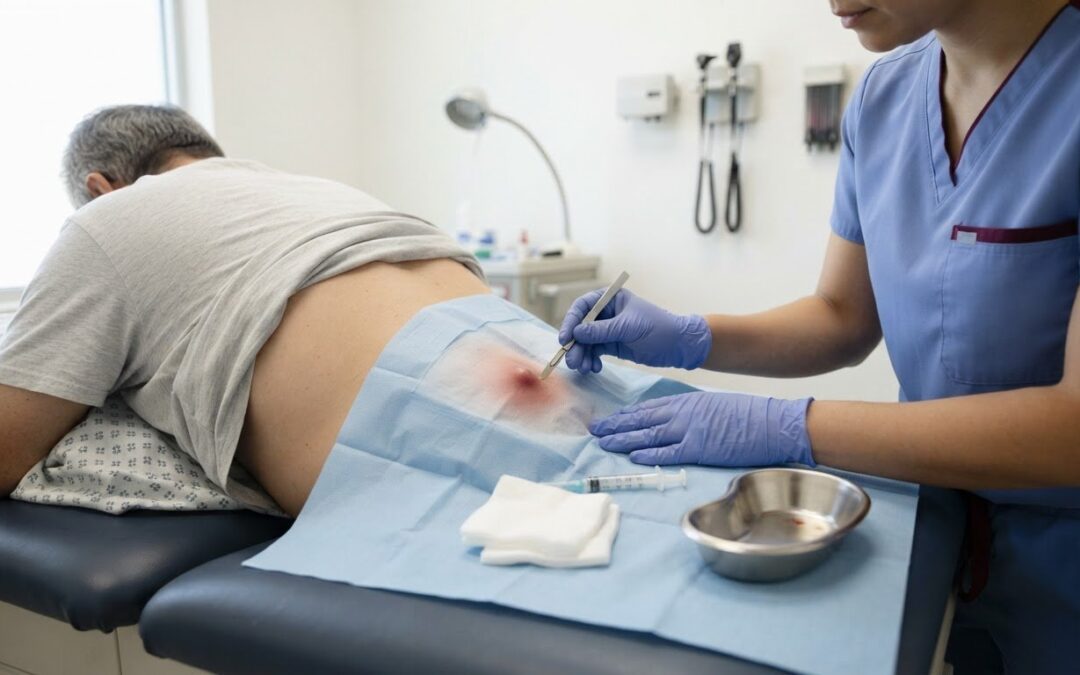
A painful lump may be more than a pimple. An abscess is a pocket of pus caused by infection, often beneath the skin. If you’re searching for abscess drainage near me in Clovis, Premium Urgent Care provides abscess incision and drainage when an assessment shows it’s appropriate. Local anesthesia may help minimize discomfort during the procedure. Don’t squeeze or try to open an abscess yourself, since this can worsen or spread the infection.
It’s understandable to want clear answers before deciding what to do about a tender, swollen area. This guide explains where abscesses commonly form, how to recognize when professional drainage may be needed, and what to expect from incision and drainage with local anesthesia. You’ll also learn when urgent care may be appropriate and when symptoms call for emergency attention, so you can make a more informed next-step decision.
Key Takeaways
- Local anesthesia can help reduce discomfort during abscess drainage, though the area may still feel pressure during treatment.
- Antibiotics may be considered based on the infection and surrounding skin, but they don’t replace drainage for every abscess.
- Fever, warmth, tenderness, or worsening swelling can signal an abscess that needs prompt medical assessment.
- Avoid squeezing or opening an abscess yourself; a clinician can assess whether urgent care drainage is appropriate or more specialized care is needed.
Does abscess incision and drainage hurt?
Local anesthesia may be used before abscess drainage to help minimize discomfort. The procedure opens the infected pocket so pus can drain. Numbing medicine helps with discomfort during treatment, but it doesn’t remove the infection itself. Tenderness can vary depending on the abscess and surrounding inflammation. A clinician assesses the area and explains the treatment before proceeding.
Antibiotics may be considered when an abscess is treated early, but they aren’t needed for every abscess and may not replace drainage. A clinician may consider the infection’s size and whether cellulitis, or spreading redness and inflammation around it, is present. Antibiotics may not fully penetrate a pocket of pus, so medication alone may not clear an abscess that needs drainage.
Antibiotics aren’t pain relievers or a substitute for local anesthesia during a procedure. A clinician determines whether they’re appropriate to treat the infection. If a small, tender mass is warm or increasingly swollen, seek medical assessment rather than relying on leftover medication. Don’t start antibiotics without a clinician’s direction; the choice depends on the infection and surrounding skin.
Care continues after drainage. Keep the wound clean and covered with a bandage, following the care instructions provided. Some drainage may continue briefly, but worsening pain or swelling after the procedure needs prompt medical attention. Healing may take approximately two weeks. If antibiotics are prescribed, complete the course as directed, even if symptoms improve before the medication is finished.
For abscess drainage in Clovis, the decision to use antibiotics depends on the clinical findings, not pain alone. An evaluation can help determine whether medication, drainage, or both are appropriate. A clinician can explain how local anesthesia may be used and what to expect, including how it helps with discomfort while drainage addresses the pocket of pus.
Will urgent care drain an abscess?
Urgent care can assess an abscess and drain it when its size, depth, and location make the procedure appropriate. An abscess is a pocket of pus caused by infection, often beneath the skin. Bacteria can enter through a break in the skin and trigger a tender, swollen area. For abscess drainage near me in Clovis, an urgent care assessment can clarify whether drainage is suitable.
Symptoms vary by location. A skin abscess may look like a red, raised lump that feels warm and tender. In other body areas, swelling or discomfort near the affected site may be more noticeable than a visible lump. Fever, headache, or increasing tenderness can accompany an infection. Since similar symptoms can have other causes, an examination helps distinguish an abscess from another condition.
Early on, an infected area may feel tender and swollen without a clear pocket of pus. As the infection progresses, the lump may become more painful or soft in the center. If you’re considering abscess drainage near me in Clovis, remember that a lump opening on its own doesn’t mean the infection has cleared. Don’t squeeze or cut it, as this can make the problem worse.
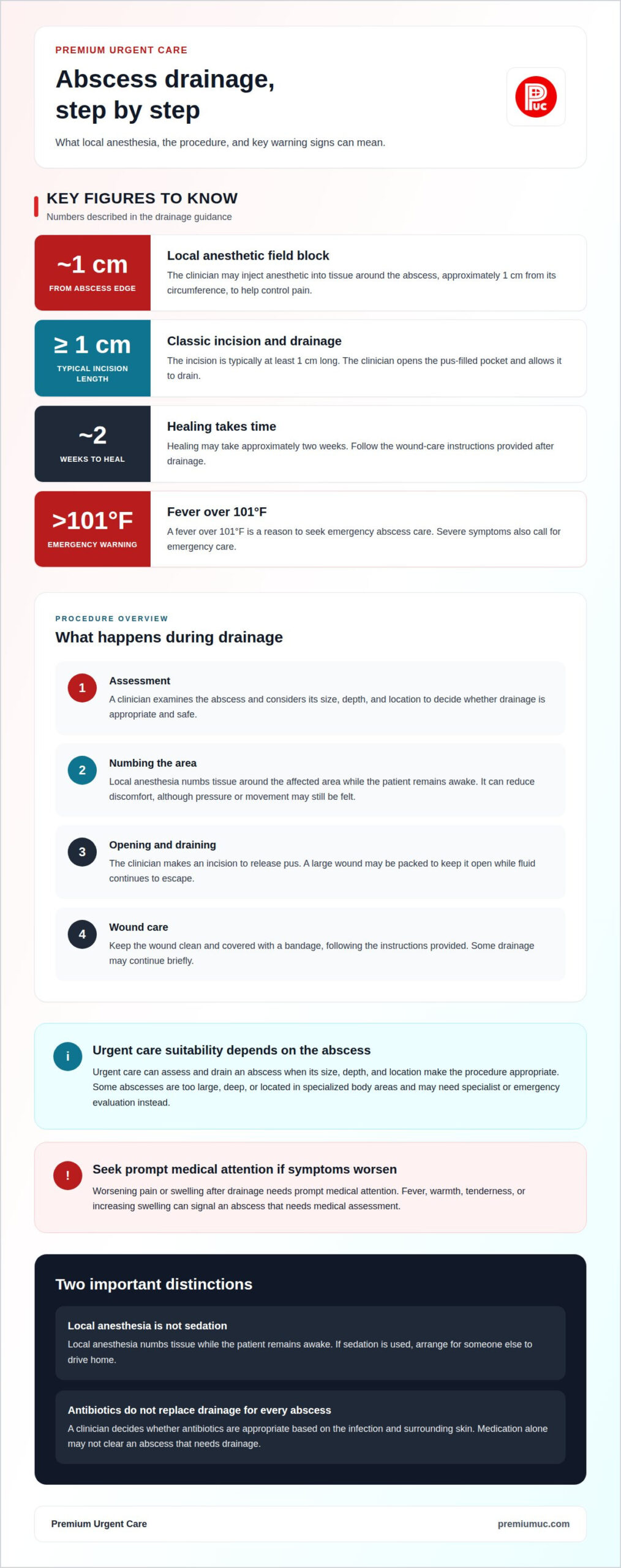
Urgent care is appropriate for assessment of a small, tender mass or symptoms such as fever, headache, or warm skin. A fever over 101°F is a reason to seek emergency abscess care. Some abscesses are too large, deep, or located in specialized body areas for urgent care drainage, and may require specialist or emergency evaluation instead. For abscess drainage near me in Clovis, the abscess’s location and extent help determine whether urgent care is suitable. Seek emergency care for severe symptoms.
Incision and drainage under local anesthesia
Incision and drainage opens a pus-filled pocket so its contents can drain. Local anesthesia may be used to reduce discomfort during treatment.
Local anesthesia for pain control
Local anesthesia numbs tissue around the affected area while the patient remains awake. The clinician may use a field block, injecting anesthetic into the tissue around the abscess, approximately 1 cm from its circumference. This helps control pain during the incision, though pressure or movement may still be felt. The clinician considers the abscess location and the surrounding tissue when planning pain control.
Steps in the drainage procedure
After assessing the abscess, the clinician numbs the area and makes an incision to release pus. In classic incision and drainage, the incision is typically at least 1 cm long. The clinician allows the pocket to drain and may pack a large wound to keep it open while fluid continues to escape. The approach depends on the abscess’s size, depth, and location.
Drainage is typically performed in an outpatient setting. Local anesthesia is different from sedation: sedation may be used rather than general anesthesia. Anyone receiving sedation should arrange for someone else to drive them home. The clinician will determine which approach fits the procedure and the patient’s needs.
Possible complications include infection and bleeding, and, rarely, damage to nearby organs. The risks and suitability of drainage depend partly on the abscess’s location and the tissue affected. Some abscesses are too deep or close to sensitive structures for routine urgent care drainage. An assessment helps determine whether the pocket can be reached safely without causing harm or allowing the infection to spread.
After drainage, follow the wound-care instructions provided, including keeping the area clean and covered. Seek prompt medical evaluation if pain or swelling worsens after the procedure. These changes can signal a complication that needs attention.
How do I know if an abscess needs professional drainage?
A tender, warm lump that grows or becomes increasingly painful may indicate a pocket of pus beneath the skin. Many uncomplicated skin abscesses are treated with incision and drainage, which opens the pocket so pus can escape. A clinician assesses its depth, size, and location to determine whether drainage is appropriate. A deep lump or one near a sensitive area needs careful evaluation.
Very small, early abscesses may improve with warm compresses applied several times a day. Don’t squeeze, pop, or cut the lump yourself. Pressure can worsen the infection or spread it into nearby tissue. If home care hasn’t improved symptoms within a day or two, seek medical evaluation. A small, superficial abscess that hasn’t improved after 2-3 days of home treatment also needs assessment.
Appearance alone doesn’t always show how deep an abscess extends. A deep abscess extending more than 0.4 cm into the skin will likely need drainage by a medical professional. An early abscess without clear softness or a fluid collection may become ready for drainage within 24-36 hours. This is why a clinician’s examination matters, especially if the lump changes or tenderness increases.
Seek prompt medical attention for worsening redness, swelling, warmth, pain, or fever. An untreated abscess can lead to sepsis, a life-threatening infection in the bloodstream. If severe symptoms suggest a serious infection, call 911 or go to an emergency room immediately. Repeated abscesses also deserve medical evaluation, since they can point to an underlying contributing condition.
For a small, superficial lump, note whether its size, pain, or surrounding redness changes while using warm compresses. Don’t wait through worsening symptoms or try to drain it at home. Request an abscess evaluation to assess whether professional drainage is the appropriate next step.
Premium Urgent Care: Abscess Incision and Drainage
Premium Urgent Care provides abscess incision and drainage for patients who need assessment and treatment of a painful, swollen lump. A clinician evaluates the abscess’s size, depth, and location to determine whether drainage is appropriate in urgent care. If it is too deep or in a specialized area, another level of care may be needed.
Seek an evaluation if a lump is tender, warm, growing, or not improving with home care. Avoid squeezing or cutting it yourself, since that can worsen or spread infection. An assessment can clarify whether drainage is the right next step and how to care for the area afterward. For abscess evaluation and treatment in Clovis, contact Premium Urgent Care.
Take the Next Step Toward Care
A painful skin problem can disrupt your day and make the next step feel uncertain. If you’re searching for abscess drainage near me in Clovis, seek an appropriate medical assessment rather than trying to open the area yourself. A clinician can evaluate the lump and explain a suitable next step based on its location and appearance.
Premium Urgent Care also treats colds, coughs, upper respiratory infections, ear and sinus infections, and urinary tract infections. The clinic provides care for a range of common acute health concerns in Clovis, Fresno, and Selma.
Share what you’ve noticed, including changes in discomfort or swelling, so the care team can understand your concern. Contact Premium Urgent Care today to discuss your care. Taking that step can help you move forward with a clearer plan.
Frequently Asked Questions
What is an Abscess?
An abscess is a collection of pus that forms when infection develops in body tissue, commonly beneath the skin. It can appear as a tender lump, but not every lump is an abscess. A cyst, for example, is typically painless unless it ruptures or becomes infected. Medical assessment can help distinguish these conditions and determine whether treatment is needed.
Can antibiotics alone cure an abscess?
Early treatment with antibiotics may sometimes help avoid drainage, but antibiotics alone may not resolve an established pocket of pus. A clinician considers the abscess and surrounding skin when deciding whether medication is suitable. If antibiotics are prescribed, take them as directed and complete the course, even if symptoms improve. Don’t use leftover antibiotics for a new lump.
How to prepare?
Before your assessment, note when the lump appeared and whether its size, pain, or appearance has changed. Be ready to describe any fever and share relevant medication allergies or current medicines. Keep the area clean, and don’t squeeze, pierce, or cut it. These details help the clinician assess the concern and discuss appropriate care.
Is abscess draining considered surgery?
Abscess drainage is an outpatient procedure, not major surgery. It opens the abscess so pus can escape, and local anesthesia may be used to reduce discomfort. The approach depends on the abscess’s location and extent. If it is too deep or in a specialized area, urgent care may determine that another level of evaluation is needed.
What can you expect after having an abscess drained?
The opening may continue to drain for a short time as the wound heals. Follow the wound-care directions you receive, including instructions about keeping it clean and covered. A return visit for a wound check may be advised within 1-3 days. Increasing pain, redness, fever, or swelling after treatment should be evaluated promptly.
What to expect?
A clinician assesses the lump before deciding on treatment. Its location, depth, and surrounding skin help determine whether drainage is suitable in urgent care. Some abscesses need specialist or emergency evaluation instead. Share any changes you’ve noticed and ask for clear aftercare instructions, including which symptoms should prompt another medical assessment.