
Influenza and respiratory syncytial virus (RSV) cases across California are at high to very high levels. COVID-19 levels are low, but there are still positive cases throughout the state.
When your child is sick, it’s important to know what to do. With high rates of influenza and RSV, you want to prevent the illness from worsening and requiring a hospital stay. One way to do this is to get your child vaccinated. What happens if your child is still sick despite the vaccine, or if you didn’t get your child vaccinated?
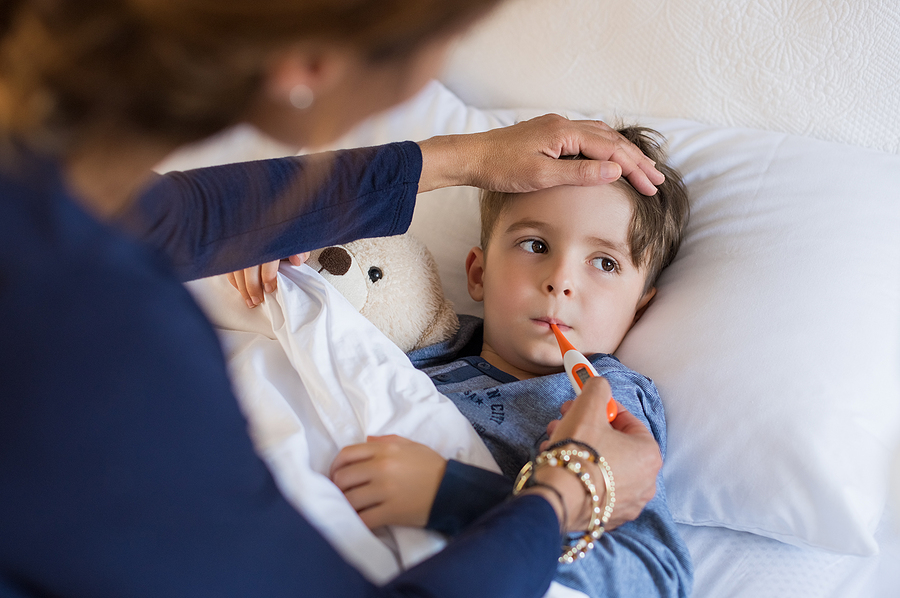
One of the key symptoms of the seasonal flu is a fever. Watching your child deal with a fever, other symptoms of the virus, and a lack of energy is alarming. That’s why it’s important to understand the best ways to manage your child’s fever.
The Problem With Fevers
The immune system is amazing. When there’s an “intruder,” such as a germ or a particle like pet dander, your immune system readies the troops to fight it off. When the invader is a virus, the body raises its core temperature to make the body less appealing to the virus trying to take over. The fever is a good thing.
When a child has a fever, a parent’s first response is often to use medication to lower it. Not only does this keep the body’s immune system from doing what it should, but it can also mask symptoms that help doctors determine whether there’s a more severe infection or whether it’s part of the flu, COVID-19, or RSV.
Other concerns should take precedence. Most fevers resolve on their own and never cause a problem. But a fever can cause excessive sweating. If that happens and your child isn’t drinking enough to replace that fluid, dehydration is a risk. The signs of dehydration are:
- Crying without much tear production
- Dizziness
- Dry mouth (sometimes sticky)
- Extreme irritability
- Less urine
- Sleepier than normal (lethargic)
- Sunken eyes (possibly with dark circles) or a soft spot on an infant
If your child hasn’t urinated in eight hours or longer, is unresponsive, has cold hands or feet, or is breathing heavily, go to urgent care. IV fluids may be necessary to rehydrate your child properly.
Febrile seizures occur in a small number of children with fast-rising fevers. If your child has a fever, go to urgent care immediately. They’re usually harmless and last only a few minutes, but it’s important to have a doctor evaluate your child.
Telling COVID-19, Influenza, and RSV Apart
Before treating a fever, determine what your child has. If it’s the flu, monitor and treat flu symptoms. If it’s something similar, such as COVID-19 or RSV, treat their symptoms rather than fixate on the fever at first.
Knowing the differences between these diseases, even when they share many similarities, helps you determine whether it’s truly the flu.
| INFLUENZA | COVID-19 | RSV | |
| Duration | 10 to 14 days | 7 to 14 days | 7 to 14 days |
| Body Aches | Yes | Yes | No |
| Congestion | Yes | Yes | Yes |
| Cough | Yes | Yes | Yes |
| Difficulty Breathing (Shortness of Breath) | No | Yes | Yes |
| Fever | Yes | Yes | Yes |
| Headache | Yes | Yes | Yes |
| Runny Nose | Yes | Yes | Yes |
| Shallow, Rapid Breathing | No | No | Yes |
| Sleepiness/Fatigue | Yes | Yes | No |
| Sneezing | No | No | Yes |
| Sore Throat | Yes | Yes | Yes |
| Wheezing | No | No | Yes |
With the flu, a fever alone isn’t a red flag for urgent medical care. In some cases, treating the fever isn’t necessary. Time, rest, and fluids are most important. If your child does have the flu but hasn’t been vaccinated, talk to a doctor about getting your child a flu shot. A flu shot reduces the severity of the disease, which prevents complications like pneumonia.
In some cases, the flu will worsen and require hospital care. This is especially true in infants or children with a weakened immune system.
Treatment Depends on the Fever and Illness
Your child’s grandparents may remember being put in a bath of cold water and ice cubes when they had a fever. Treatments have changed significantly over the decades, and this is not recommended because it triggers shivering, which can raise core temperature. There are safer fever remedies.
Use a lukewarm compress to wipe away sweat and offer some relief, especially if there’s a headache. Lukewarm sponge baths help if your child can’t take a shower or bath and wants to clean up.
Instead, make sure your child drinks enough water or a beverage such as Pedialyte. Sipping warm broth is helpful. Easy-to-eat foods high in water (unsweetened applesauce, bananas, and fresh berries) are beneficial.
A fever is a good time to slow down and let your child rest. Set up a tray with drinks and snacks in the living room or family room. Grab some blankets and watch movies together for a lazy afternoon. You’re close by and can monitor changes, which helps your child rest and recover.
Treat other symptoms that occur with the flu, COVID-19, or RSV. If your child has chest congestion, your pediatrician’s recommended decongestant helps loosen phlegm in the respiratory system. You want your child’s cough to be productive, clearing the airways of mucus.
Fever reducers may be unnecessary if your child doesn’t seem overly uncomfortable. If your child is under the age of six months, call a doctor to ask whether acetaminophen or ibuprofen is recommended.
When to See a Doctor
The California Department of Health defines a fever as an oral, forehead, rectal, or armpit temperature above 100.4°F. Children with a fever should not go to school or daycare until the fever resolves without medication (such as acetaminophen or ibuprofen) and the child can participate in activities without being uncomfortable or extremely tired.
- Infants with a fever should see a pediatrician or urgent care doctor ASAP.
- After three months of age, your child should see a doctor if they have a fever of 102°F or higher.
- Teens should see a doctor for a fever of 103°F or higher.
Trust your instincts. If your child’s fever and accompanying symptoms seem unusual or concerning, schedule a telemedicine appointment with Premium Urgent Care. Our doctors will advise you on what to do next and whether it’s important to come in person.
With evening and weekend hours, you don’t have to go to the busy ER and wait for hours in the waiting room, or spend a stressful weekend waiting until your child’s pediatrician is back in the office. Check in online before you arrive at our office to be seen quickly.